Saab Grintek Defence sees strong business ahead.
One Week Wonder project returns to EAA AirVenture Oshkosh in 2027.
TFC Flight Training expands pilot development pathway with Pipistrel Explorer delivery.
Deutsche Aircraft opens D328eco® final assembly line in Leipzig.
Boeing secures order for first full-rate production Grey Wolf helicopters.
Embraer and Mahindra Group advance plans for C-390 Millennium Industrialization in India.
Tecnam launches the FAR 23 Certified P2008JC NG in the United States, delivering a cost-efficient, new-generation ab-initio training platform.
Incomar unveils new generation of autonomous aerospace systems.
This week in history - 4 October 1918, the giant U.S. Navy Curtiss NC-1 flying boat completed its very first flight.
Worldwide Incidents and Accidents
Bonus video - Aero Club Airweek 2023 Event Report
Saab Grintek Defence sees Strong Business Ahead
By Jonathan Katzenellenbogen www.defenceweb.co.za
Saab Grintek Defence (SGD), the 100 percent owned local subsidiary of Swedish defence and aerospace company, Saab AB, expects strong sales growth in the years ahead.
Sara Radu, the recently appointed President and Managing Director of Saab Grintek Defence, speaking at the Africa Aerospace and Defence (AAD) 2026 exhibition at Air Force Base Waterkloof in Tshwane, said the company was in a good position with a strong order book.
“We expect strong growth in all areas of our business,” she said.
Over the past five years, SGD sales have risen fivefold and its number of employees, which now stands at about 500, has grown by 40 percent.
For the past five years, over 99 percent of SGD's revenue has been from international sales. Radu expects this to continue in view of the strong demand for defence products globally. SGD currently sells its products to approximately 25 countries around the world.
The Centurion-based company, which is one of the largest local defence companies, specialises in electronic warfare systems, including self-protection suites for military aircraft, land vehicles, and naval vessels, and avionics.
Previously, Radu, who took up her appointment at SGD in July this year, worked for Business Sweden, a consulting body jointly owned by the Swedish government and the private business sector. As Trade Commissioner and a Country Manager, she worked on developing business for Swedish companies in Southern Africa. Prior to that, she advised Swedish companies on doing business in the wider African region and the Middle East.
An engineer by training, Radu has also held senior positions at Altas Copco, the Swedish multinational industrial company, Epiroc, the mining equipment manufacturer, and Polarium, which specialises in lithium battery energy storage solutions.
Radu said the company has a strong product portfolio and a favourable competitive position due to its location in South Africa.
The company has developed a close relationship with engineering schools at universities across SA and earlier this year received 500 job applications. Of those, 38 candidates were selected for further testing on their coding abilities and in the end, and nine were given jobs.
SGD's VP and Head of Strategy and Country Manager, Dr Nivan Moodley, said the company has a key advantage in its ability to develop and integrate larger platforms. He said that, while the company has many of its own customers, Saab's global presence in a wide variety of defence domains has allowed considerable growth and a ramp-up in production.
He added that the company has a strong competitive advantage in electronic warfare. “We are particularly strong in the production of radio frequency and microwave components,” he said.
The company does not publicly divulge its sales figures or any breakdowns of these. However, Moodley said SGD's largest customer base is in India, where it supplies the country's air force with the SA-developed Integrated Defence Aids Suite (IDAS). Different versions of the flagship product are in use on the South African Air Force's Rooivalk helicopter, the Oryx, and a wide variety of other aircraft across the world.
IDAS, which has gone through a number of versions, integrates radar, missile, and laser warning and countermeasure management features.
Radu said the company will continue to develop its local parts supplier base. Currently, 85 percent of the parts used by SGD are locally sourced.
One Week Wonder Project Returns to EAA AirVenture Oshkosh in 2027
The popular One Week Wonder aircraft building project that creates a finished airplane in seven days is returning to EAA AirVenture Oshkosh in 2027, as attendees are invited to help construct a Zenith CH 750 Super Cruzer, a design unveiled at EAA AirVenture 2026.
The airplane is being built by and on behalf of the Aspiring Aviators Aero Club of Winter Haven, Florida, which will fly the completed aircraft following the build. The project will begin on Monday, July 26 - the opening day of EAA AirVenture 2027 - with a completion goal of Sunday, August 1. It marks the fourth One Week Wonder project at AirVenture in the past 15 years, joining aircraft built in 2014, 2018, and 2022.
“The One Week Wonder's goal is to showcase the relative ease of building a kit aircraft - seeing is believing,” said Charlie Becker, EAA's director of chapters and communities & homebuilt community manager. “AirVenture attendees can participate in the activity and discover more about such concepts as weight and balance, propeller installation, and fuel flow tests. It also highlights EAA's popular programs and support for aircraft builders.”
The project will start on July 26 just as a typical kit arrives from Zenith. Those attending AirVenture can participate by assisting with airframe riveting and becoming a permanent part of the builders' log. In addition, all are invited to help select the paint scheme for the finished aircraft, which will be inspected and ground run during AirVenture. The finished airplane will then go directly to Aspiring Aviators for use in its flying club.
“This will give students the opportunity to experience aviation in a way that very few young people have,” said Brian Hughes, president of Aspiring Aviators. “More than simply building an aircraft, this project represents the power of hands-on learning, mentorship, teamwork, and the aviation community coming together to inspire the next generation. After the build is complete, the aircraft will continue its mission as an educational tool, providing students with ongoing opportunities to learn about aircraft operations, maintenance, and flight.”
The Zenith CH 750 Super Cruzer is designed for current FAA rules, as it is bigger and faster with more capability than previous models while also being easier and faster to build. The three-place aircraft has greater cross-country capability, a 1,900-pound design gross weight, and 800-pound useful load.
“Aviation technology has changed enormously through the years, but the spirit of individual initiative has not,” said Sebastien Heintz, president of Zenith Aircraft. “It's been said that building an airplane is worth a college degree. The young people involved with us in the project will have an amazing educational experience in the best tradition of EAA. In addition, being center stage at Oshkosh shows everyone how achievable building an airplane can be.”
TFC Flight Training Expands Pilot Development Pathway with Pipistrel Explorer Delivery
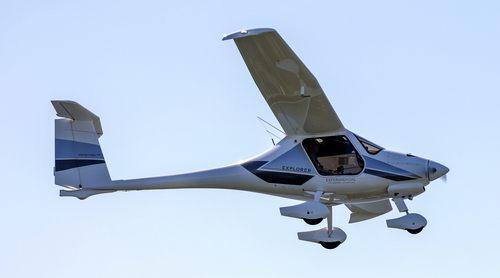
Pipistrel, a Textron Inc. (NYSE: TXT) company and an affiliate of Textron Aviation Inc., today announced the delivery of two Pipistrel Explorer aircraft to TFC Flight Training, making the flight school the first Explorer operator in Germany. The delivery expands Pipistrel's relationship with TFC and demonstrates how flight schools are building complementary fleets to support students across multiples stages of pilot development.
Based in Essen, Germany, TFC Käufer is one of Germanys largest approved flight training organizations and has been training pilots for 45 years. Their existing fleet includes four Pipistrel Velis Electro aircraft and seven Cessna 152 aircraft. Adding the Pipistrel Explorer, TFC aligns aircraft capabilities with different phases of instruction, creating a more connected pathway as students' progress into cross-country flying, day and night Visual Flight Rules (VFR) training and spin recovery training. The combination also gives TFC greater flexibility to match aircraft utilization with specific training requirements.
“The Pipistrel Explorer is an additional step on our continuous journey to more modern and sustainable pilot training,” said Christian Käufer, CEO, TFC Flight Training. “The Pipistrel Explorer fits seamlessly into our broader strategy at TFC: modern flight training, responsible use of resources and a strong focus on safety and quality.”
Flight schools are increasingly evaluating how a combination of purpose-built aircraft can support student progression, operational efficiency and exposure to different technologies. TFC's adoption of both electrically and conventionally powered Pipistrel aircraft provides students with experience across complementary platforms while allowing the school to support a broader range of training missions. With modern avionics, operational flexibility and strong operating economics, the aircraft helps TFC deliver a comprehensive and competitive training experience.
"In today's training environment, flight schools need aircraft that can support diverse mission requirements while providing students with exposure to modern aviation technology," said Chris Crow, vice president of sales, Pipistrel. "TFC Flight Training's adoption of the Explorer demonstrates how training organizations are building integrated fleets that support a wider range of student development needs while preparing the next generation of pilots. We are pleased to support TFC as it becomes Germany's first Explorer operator."
The Explorer combines the durability and performance required for flight-school operations with modern cockpit technologies. Its capabilities include cross-country flying, day and night VFR operations and intentional spin training. A dual Garmin G3X glass cockpit, haptic stall warning system, ballistic parachute and AT-1 traffic transponder provide students and instructors with tools that support situational awareness and effective training.
As Germany's first Explorer operator, TFC provides a new example of how flight schools can structure their fleets around the progression of the student rather than relying on one platform for every training requirement. The delivery also advances Pipistrel's role in providing flight schools with complementary aircraft solutions designed to support pilot development from foundational instruction through more advanced training.
The Pipistrel Explorer combines efficient performance with advanced technology, making it a versatile platform for flight training and recreational flying. Designed to help pilots build experience from the earliest stages of flight training, the aircraft offers durability, strong performance and modern avionics. In 2017, the Explorer received certification from Germany's Luftfahrt-Bundesamt (LBA), the country's Federal Office of Civil Aviation.
Deutsche Aircraft opens D328eco® final assembly line in Leipzig
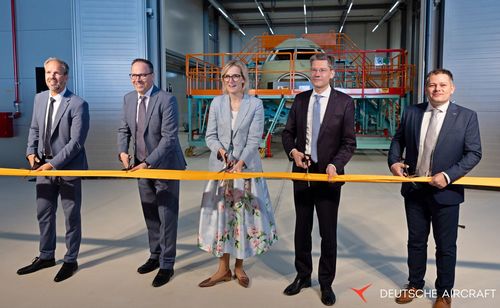
Deutsche Aircraft has officially inaugurated its Final Assembly Line (FAL) at Leipzig/Halle Airport, attended by Christian Hirte, Parliamentary State Secretary to the Federal Minister for Transport, and Dirk Panter, State Minister for Economic Affairs, Labour, Energy and Climate Protection of the Free State of Saxony.
The inauguration marks the transition of the D328eco programme from development to serial production, establishing Leipzig as the production home of Germany's next-generation regional aircraft. The opening also represents the return of aircraft manufacturing to Saxony for the first time in more than 60 years, reinforcing the region's position as a centre for aerospace and innovation.
This new facility embodies the programme's vision: “Made in Germany. Built in Saxony. Delivered to the World” - bringing together German engineering excellence, Saxony's industrial expertise and Leipzig's international connectivity in a single production hub.
Beyond supporting the D328eco programme, the FAL strengthens Germany's ability to design, certify, test, manufacture and support complete aircraft. Deutsche Aircraft's integrated operations across Oberpfaffenhofen and Leipzig create an end-to-end aerospace capability in the country, spanning engineering, certification, flight testing, industrialisation, final assembly and customer delivery.
The site reinforces Germany's industrial resilience and competitiveness while ensuring that critical aircraft manufacturing know-how remains anchored domestically for future generations.
Representing an investment of more than €100 million, the facility has been designed for an annual production capacity of up to 48 aircraft. Spanning 60,500 square metres - equivalent to approximately eight football fields - the site includes the Final Assembly Line, Flight Readiness Hangar, logistics centre and administration building.
Designed as a modern, digital and sustainability-focused production environment, the FAL incorporates advanced manufacturing technologies, automated logistics systems and paperless production processes to increase efficiency, quality and transparency throughout aircraft assembly. Energy-efficient infrastructure, including photovoltaic systems and heat pump technology, reflect Deutsche Aircraft's commitment to sustainable industrial growth.
As one of the most significant aerospace investments in Germany in recent years, the Final Assembly Line represents an important contribution to the economic transformation of Central Germany. Beyond the direct creation of highly skilled jobs, the programme will generate long-term industrial value across the aerospace supply chain and strengthen Saxony's position within Germany's aerospace sector.
Boeing Secures Order for First Full-Rate Production Grey Wolf Helicopters
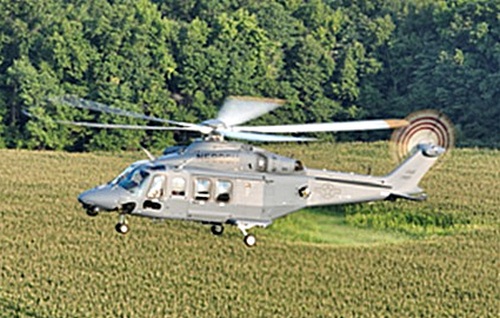
Boeing [NYSE: BA] received an award for the first four full-rate production MH-139A Grey Wolf helicopters following the U.S. Air Force declaring initial operating capability for the program earlier this year.
“This milestone validates key readiness levels for Grey Wolf and supports the service's fielding plans to secure vital national assets across the country's strategic missile fields,” said Kathleen Jolivette, vice president and general manager, Vertical Lift Programs, for Boeing Defense, Space & Security. “Adding these aircraft to the production queue brings additional momentum to ongoing fielding and modernization efforts.”
The first full-rate production award clears the way to scale MH-139A deployment for real-world operations. This contract brings the total number of MH-139As under contract to 42, with Boeing having delivered 27 to date.
Embraer and Mahindra Group Advance Plans for C-390 Millennium Industrialization in India
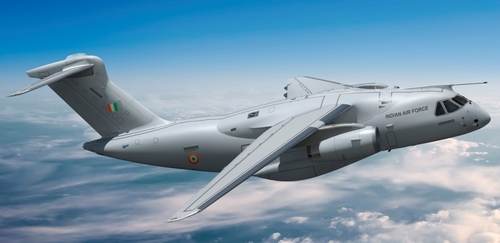
Embraer (NYSE: EMBJ/ B3: EMBJ3) and Mahindra Group are continuing preparatory discussions and planning activities regarding an industrial and support ecosystem for the C-390 Millennium in India, as the companies jointly pursue the Indian Air Force (IAF) Medium Transport Aircraft (MTA) programme.
As part of their ongoing preparations, Mahindra and Embraer are working with the Government of Maharashtra and have identified Nagpur for a potential Final Assembly Line for Embraer C-390 Millennium aircraft production in India. The proposed facility would support the local assembly and industrialisation of the aircraft in India, subject to the Embraer C-390 Millennium being selected by the Government of India and an order being placed under the IAF's MTA programme.
The companies are working closely with the Maharashtra Government on completion of the associated processes, with the objective of ensuring that the required industrial infrastructure can be progressed expeditiously if the programme is awarded to the partnership.
The proposed Nagpur facility would be a state-of-the-art facility in India bringing knowhow on aircraft assembly, system integration, manufacturing engineering, local supply chain development and others into the country. Subject to the programme award, the partnership intends to progressively integrate Indian aerospace companies into the C-390 Millennium ecosystem, to deliver manufacturing, aftermarket services, training and lifecycle support, in line with the Government of India's Make in India and Atmanirbhar Bharat objectives.
The C-390 Millennium is a multi-mission military transport aircraft designed to perform a range of missions including troop and cargo transport, airdrop operations, medical evacuation, search and rescue, firefighting and humanitarian missions. The aircraft has a payload capacity of up to 26 tonnes and is designed to operate from temporary or unpaved runways.
Tecnam Launches the FAR 23 Certified P2008JC NG in the US Delivering a Cost-Efficient, New-Generation Ab-Initio Training Platform
Tecnam is proud to announce the official launch of the P2008JC NG for the United States market. Recognizing the strict regulatory and operational requirements of American flight schools, Tecnam is introducing this aircraft with a strong emphasis on the CS/FAR 23 certification process. By actively pursuing this validation, the P2008JC NG breaks away from the Light Sport Aircraft (LSA) category to provide US academies with a fully certified, modern alternative to aging legacy fleets, perfectly suited for both Part 61 and Part 141 operations.
Designed as the smart evolution of Tecnam's highly successful high-wing trainer, the P2008JC NG introduces a new-generation, ultra-cost-efficient Ab-Initio training platform tailored specifically for the rigorous demands of US flight schools.
The aircraft's global reputation is already firmly established, with hundreds of units successfully delivered and actively operating at the most prestigious flight schools around the world for Ab-Initio training. Combining a robust carbon-fiber fuselage with metal wings and stabilator, the P2008JC NG offers an unparalleled blend of durability, aerodynamic efficiency, and modern ramp appeal.
Crucially for flight training operations, the P2008JC NG is powered by the highly efficient, fuel-injected Rotax 912 iS engine and is fully approved for VFR Day and Night operations. Equipped with ultramodern avionics, the aircraft provides flight academies with a reliable, high-utilization platform that drastically reduces operating costs while offering students a seamless transition into modern, glass-cockpit commercial aviation.
"The American flight training market is growing rapidly, and schools are urgently seeking modern, reliable, and highly cost-efficient platforms to train the next generation of pilots," stated Walter da Costa, Chief Sales Officer at Tecnam. "The P2008JC NG is our direct answer to that demand. By committing our resources to the FAR 23 validation process, we are ensuring that US flight academies will soon have access to a state-of-the-art, fully certified Ab-Initio trainer. Combined with the efficiency of the Rotax 912 iS and VFR Day and Night capabilities, this aircraft lowers overhead costs, maximizes safety, and delivers an exceptional training experience."
The launch of the FAR 23 certified P2008JC NG in the US further solidifies Tecnam's position as a global leader in flight training solutions, offering an unmatched pipeline of aircraft from Ab-Initio single-engine trainers to advanced multi-engine platforms.
Incomar Unveils New Generation of Autonomous Aerospace Systems By Defenceweb.co.za
South African aerospace and defence firm Incomar used the recent Africa Aerospace and Defence (AAD) 2026 exhibition to debut a suite of next generation unmanned platforms, avionics systems and mission control technologies.
Incomar's showcase reflected the rapidly evolving operational environment facing defence forces worldwide. The company unveiled a portfolio designed for real world missions, ranging from radar tracking validation and weapons testing to autonomous strike capability and counter drone defence.
Incomar's capability now spans:
IBIS aerial target drone: A reusable, high-performance target drone engineered to mimic modern unmanned and attack aircraft threats. Powered by a Jet A1-fuelled micro turbine engine, IBIS enables high speed, high altitude flight for radar system evaluation, combat readiness testing and weapons system development.
GANNET precision munition: A low cost, autonomous one-way munition built for beyond-line-of-sight engagements. Offered in long range, medium speed and high-speed variants, GANNET provides flexible precision effect capability against fixed targets and critical infrastructure.
SAHM/DRAGOFLY counter UAS interceptor: A compact quadcopter interceptor designed to neutralise small, agile unmanned threats. SAHM combines rapid deployment, high manoeuvrability and autonomous flight to support tactical counter UAS operations.
New avionics and ground control technologies
Incomar also introduced advanced mission control and avionics systems to improve operator efficiency and platform integration. These include:
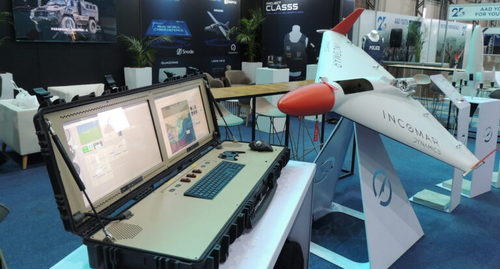
Portable Ground Control System (PGCS): A rugged, rifle case-sized control station featuring dual sunlight readable 21-inch full HD displays, a high-performance computer and an integrated operator interface. The self-contained PGCS is designed for rapid deployment in austere environments.
Peregrine Avionics Suite: A modular, military qualified avionics ecosystem for small to medium unmanned aircraft. Anchored by the Peregrine Flight Computer, the suite includes configurable air data sensing, Ethernet switching and platform specific interfaces.
IMPACT mission planning suite: A next generation software environment that unifies unmanned aircraft and precision effectors under a single operational interface. IMPACT supports mission planning, coordination and execution across diverse systems.
Also showcased at AAD 2026 was the Peregrine Avionics Suite, positioned as a locally developed answer to growing local and international demand for military-qualified avionics for unmanned aircraft and precision effectors. The Peregrine Avionics Suite is a rugged, military-qualified modular avionics system designed specifically for small to medium unmanned aerial vehicles and munitions. At its core sits a high-performance Peregrine Flight Computer, around which Incomar has built a family of modular peripheral functions - including Air Data Sensing, Ethernet Switching and a range of platform-specific interfaces.
The result, according to Incomar, is a scalable avionics architecture that can be tailored to a variety of platforms and mission requirements without forcing integrators back to the drawing board for each new platform.
INCOMER The small-to-medium UAV and loitering-munition segment has become one of the most contested in global defence, with operators demanding platforms that are cheaper, faster to field and easier to sustain than traditional manned aviation. Common to almost all of these programmes is the need for a trusted, qualified avionics stack that can be dropped into different airframes with minimal re-engineering, Incomar said.
Peregrine is aimed squarely at that need. Rather than a single avionics unit, it is a suite: a flight computer as the anchor, with modular peripherals stacked around it to suit the platform. Air Data Sensing supports the flight control and navigation loops, Ethernet Switching handles onboard data distribution, and platform-specific interfaces allow integration with mission payloads, effectors and ground links.
Incomar described the offering as providing “a complete avionics solution ready for integration into any platform” - language that reflects the company's broader turnkey approach to system integration.
A quarter century of engineering for the edge
Founded in 2000 as a flight test and integration specialist, Incomar has grown into a full spectrum aerospace engineering company with in-house flight test aircraft, military trained experimental test pilots and deep systems integration capability. Its quarter of a century milestone coincides with a renewed focus on autonomous systems, rapid deployment and multi-domain operational readiness.
Incomar now employs close to 600 people, and operates from two hangars at Wonderboom National Airport, three offices in Gauteng, Jaffie Aviation Training in Robertson and the Incomar Aeronautical Academy. The company has continued to grow its fleet alongside its flight test workload and this fleet now includes a Learjet 35A and Cessna Grand Caravan as systems test beds, an Aermacchi AM-3C for weapons testing, and a Van's RV-7A for practical training on Incomar's in-house professional flight test course.
4 October 1918, the giant U.S. Navy Curtiss NC-1 flying boat completed its very first flight
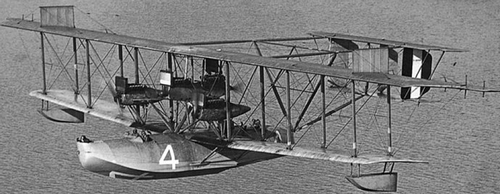
Developed by the Curtiss Aeroplane and Motor Company for the United States Navy, the massive aircraft was designed for long-range maritime patrol during WWI. The innovative flying boat family would make aviation history when the NC-4 completed the first transatlantic flight by an airplane in 1919.
The NC-1 was initially powered by three 400-horsepower Liberty engines, but testing demonstrated that additional power was necessary. A fourth engine was subsequently installed in a pusher configuration.
Tanzania, T Kilimanjaro International Airport (JRO/HTKJ), Makao Mapya: An Embraer EMB-120ER Brasilia, 5H-HLL, with intended destination Zanzibar International Airport (ZNZ/HTZA), struck a zebra on takeoff at Seronera Airstrip (SEU/HTSN), Serengeti National Park, and diverted to Kilimanjaro International Airport (JRO/HTKJ), Makao Mapya, and made precautionary landing at runway 09 with a partly retracted left main gear. The four crew members and twenty-six passengers were not injured and the aircraft received left main gear damage.
France, Rochefort Charente-Maritime Airport (RCO/LFDN), Saint-Agnant: An Elixir Aircraft Elixir crashed during a touch and go session short of runway 12 at Rochefort Charente-Maritime Airport (RCO/LFDN), Saint-Agnant, Charente-Maritime. Both test pilots perished and the aircraft was destroyed. The registration F-WZAG is used by Elixir Aircraft as test registration for new Elixir aircraft. F-WZAG made a similar flight the day before, departing from LFBH, where the Elixir factory is located, and performed some touch and goes at LFDN. While the investigation is still ongoing to determine the exact cause(s) of that accident, Elixir issued Alert Service Bulletin ASB-633-005-R01, grounding all Elixir aeroplanes.
USA, near Winston Field (SNK/KSNK), Snyder, TX: A Cessna 525B CitationJet CJ3, HI1127, sustained substantial damage when it overran runway 35 (5599 x 100 ft) after landing at at Winston Field (SNK/KSNK), Snyder, Texas. The two pilots and one passenger were not injured. Preliminary ADS-B data shows the airplane descending through 3,000 ft on final approach to runway 35 with a groundspeed of 150 knots and an average rate of -1000 feet per minute (fpm). The jet departed the departure end of the runway, crossed a road, and came to rest on its side in a wooded area north of the airport. There was no fire. At 1355, the winds were from 200° at 13 knots, gusting 18 knots. At 1415, the winds were from 210° at 13 knots, gusting 18 knots. The crosswind was calculated at 9 knots.