This Week in Midweek Updates
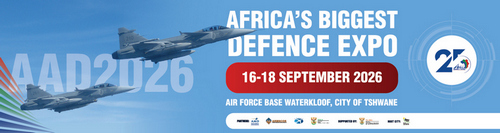
Africa stood tall: AAD 2026 showcased continental capability as attention turns to 2028.
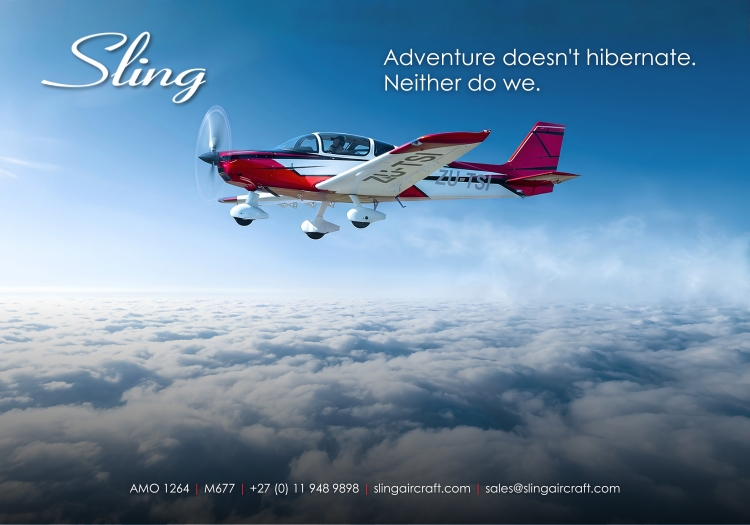
Sling Aircraft - Beyond the familiar.
Denel Aeronautics gaining altitude.
Dinkwanyana rolls out innovative VTOL UAV.
Airbus A350F freighter successfully performs its maiden flight.
Upcoming air traffic reforms will reduce delays, emissions.
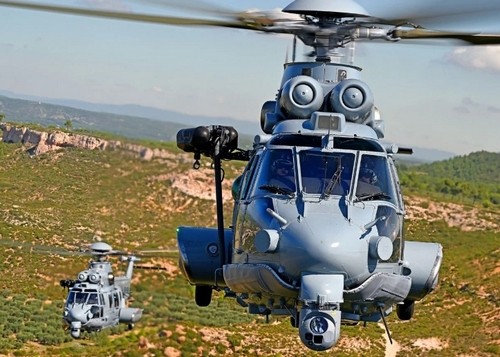
Romania orders 12 Airbus H225M multirole military helicopters.
Bonus video - Goerapan Kalahari Helicopter Safari 2025 Day One
Africa Stood Tall: AAD2026 Showcased Continental Capability as Attention Turns to 2028
The 13th edition of Africa Aerospace and Defence (AAD) came to a spectacular close at Air Force Base Waterkloof in Centurion on 20 September, capping five days that confirmed the event's standing as the continent's premier aerospace and defence platform.
AAD 2026 hosted 52 official delegations from 28 countries and 10 national pavilions, with 287 exhibitors from 33 countries and 27 382 trade visitors. The event reached 12 000 learners through the AAD Youth Foundation, while 55 843 members of the public attended the air show.
Addressing the media at the close of the event, Minister of Defence and Military Veterans Angie Motshekga said: “This week Africa stood tall and we have every reason to. Governments, industry leaders, innovators and young talent came together, and African capability took its place among the best in the world. We are proud of what our continent builds, proud of the people who build it and proud to welcome the world to see it.”
The Minister officially launched AAD 2028, which will take place from 27 September to 1 October 2028, with the Aerospace, Maritime and Defence Association (AMD) as lead partner. “Bring your boldest technologies and your sharpest ideas, because in 2028, Africa will once again open its skies to the world.” said Minister Motshekga.
Over the two air show days, attention shifted to the skies as South African pilots, engineers and aviation professionals showcased the country's aviation and defence capabilities. Families travelled from across the country, many of them first-time visitors. “We are delighted to be here as a family. This event is exciting and well organised,” said Heinrich Lourens from Secunda in Mpumalanga.
For thousands of young people, the event offered a first-hand look at the technology and expertise behind the aerospace industry, and a glimpse of the careers it holds. “It is a beautiful and amazing atmosphere to see South Africans united and celebrating the work of the army together,” said Trisha Naicker from Pretoria, who attended with her son.
Sling Aircraft - Beyond the familiar
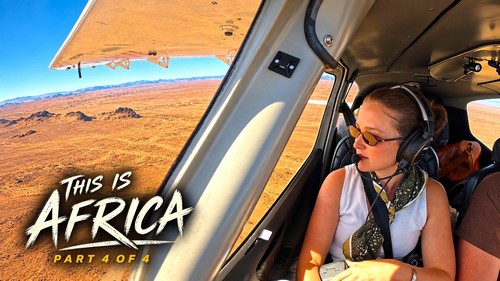
After reaching Cape Town in Part 2, we get Josh Flowers and Chelsea Smith of Aviation101, along with Chris Lammert and Keelyn Costello, back in the air, reunite with friends, and point our Sling aircraft north toward a new country: Namibia.
From Stellenbosch, they cross the mountains and make their way to Tankwa Karoo for the The Tanqua Kuru Bicycle Race. There's formation flying, bike riding, big fires, and a festive night of brandy and singing with the Sling Team. The group then moves on and spends the night at the farm of Sling Hing Wing owner, Matt Cohen.
As a flight of four aircraft, they cross into Namibia and begin exploring one of Africa's most extraordinary landscapes. From the air and from the ground, they experience the vastness of Fish River Canyon before following James deeper into the desert toward a remote campsite.
But there's one thing standing between them and a night beneath the African stars: an off-airport landing.
As the landscapes grow bigger and the familiar comforts grow fewer, the adventure becomes less about following a plan and more about embracing whatever comes next.
Because sometimes the most memorable part of flying isn't what happens in the air.
It's what happens after the engine shuts down.
Watch This is Africa - Part 3 of 4 as the journey continues!
Watch the full video on YouTube NOW!
Denel Aeronautics Gaining Altitude
By Sam Basch www.defenceweb.co.za
From a holding pattern in recent years, Denel Aeronautics is now gaining altitude, so to speak. In a wide-ranging interview, chief executive Chris Boshoff highlighted what is propelling the division to new heights.
“In all our key disciplines within the business, we've made significant progress,” Boshoff stated. “Rejuvenating the engineering, fabrication and maintenance capabilities, coupled with vigorous technical skills development, is boosting both Denel Aeronautics and the South African Air Force. Jointly with the South African Air Force, we're now getting more fixed and rotary wing aircraft in the air. At the same time, we're opening new opportunities in Africa and elsewhere.”
As an example, he noted the recent order for a new drone developed at the behest of an unnamed client. Although the current requirement calls for a surveillance drone, it can be upscaled with increased payload capacity for other applications. Denel Aeronautics has also been collaborating with the CSIR (Council for Scientific and Industrial Research) on a new powerplant to enhance the air vehicle's range and endurance.
Denel Aeronautics is the one division in the state-owned group posting good financial results, with growing revenue and solid profits. DefenceWeb recently reported that the division was pursuing R2.1 billion worth of future revenue.
“In April we signed a collaboration agreement with Brazilian aeronautics company Embraer on their KC-390 transport and Super Tucano trainer aircraft,” Boshoff said. “We're also cooperating with Europe's Airbus on MRO (maintenance, repair and overhaul) and refurbishment of the H215 and H225 military helicopters for Africa.”
Denel Aeronautics is the design authority of the Oryx, South Africa's medium transport helicopter, which is roughly in the same class as the Airbus H215M. Boshoff reiterated that Denel has revived its fabrication capabilities such as metallic and composites manufacturing, as well as engine and component support. These capabilities are critical for Denel Aeronautics' sustainable future.
“Recently we've successfully passed certification audits by the likes of Airbus, Embraer, Pilatus, and Lockheed Martin Aero, which are essential for the support we provide on the SAAF's fleet of helicopters, the PC-7 trainers and C-130BZ transports,” he affirmed. “We're also in discussions with Rolls-Royce to the enhance our aero-engine support on the Hercules.”
He takes great pride in the Denel Training Academy's technical skills development. Trainee numbers have swelled significantly on the back of collaboration with the National Skills Fund (NSF). This provides support to several hundred students being trained in specialised fields like aircraft mechanics, avionics, electrical and fitting and turning.
Denel Aeronautics' Western Cape based Overberg Test Range is likewise contributing to the division's success. Its airborne weapons testing for legacy clients is now augmented by significant new contracts from the Middle East and Asia.
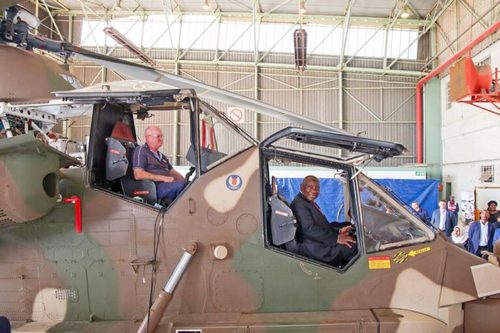
In early September, President Cyril Ramaphosa visited the Denel Aeronautics facilities near Johannesburg, which afforded him the opportunity to appreciate the skills, technologies, people, and capabilities of the business. In a subsequent statement, the Presidency said the visit “underscored the strategic importance of Denel to South Africa's defence capabilities and demonstrated continued government support for the company.”
“The President was shown a pilot's view of the Rooivalk attack helicopter by sitting in the cockpit,” Boshoff said. “This gave him a first-hand experience of the level of South Africa's defence industry achievement - on a par with the best in the world. That same helicopter has just completed routine maintenance at Denel Aeronautics.”
He said the company had submitted a proposal to the SAAF for a phased upgrade of the Rooivalk to Mk1.1 level.
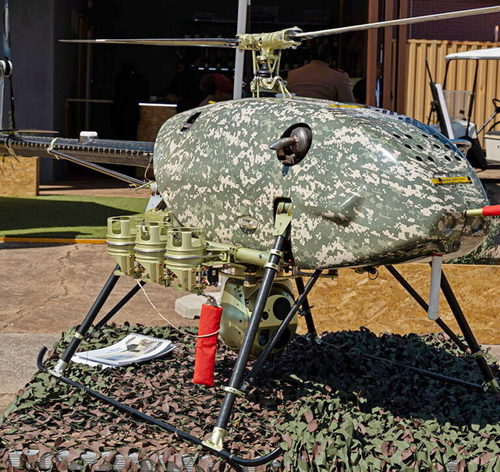
As a new exhibitor at the recent Africa Aerospace and Defence (AAD) 2026 exhibition, start-up OEM (original equipment manufacturer) Dinkwanyana Aerospace was showing its UVH-170 vertical take-off and landing (VTOL) unmanned aerial vehicle (UAV).
Said Msawakhe (Musa) Dlamini, Head of Landward Defence at the company, “it is a versatile and highly capable unmanned system that is operational in Eastern Europe.”
The drone was shown with a 15 kg payload for surveillance and reconnaissance, although it can be equipped to carry weapons, including a rocket system under the fuselage. A set of the canisters mounted on the side are meant for dropping grenades or small bombs.
With a maximum take-off weight of 45 kg, the drone has a cruising speed of 60 km/h, although it can fly at a maximum speed of 120 km/h. Its endurance is listed as 5 hours with a maximum payload of 4 kg.
Designed with improved engine cooling to perform in tropical, hot and moist, climates, the UVH-170 operates with a four-stroke petrol engine. While take-off and landing, as well as mission flight, are carried out automatically, semi-automatic control is an optional function. The drone uses a proprietary autopilot.
According to Dlamini, the UVH-170 has a range of 350 km. Diagnostics, flight planning and remote control are performed via a wireless network connection.
Dinkwanyana Aerospace also offers the larger UVH-500 designed for night operations and flights under severe weather conditions and the UVH-25EL for commercial purposes, such as data capturing using LiDAR.
In addition to unmanned systems, Dinkwanyana is collaborating with South Africa's Council for Scientific and Industrial Research (CSIR) and Twiga on an unmnned land vehicle. It is still in early development stage, but appears to offer mission applications ranging from reconnaissance and surveillance to light tactical operations.
According to Dlamini, the company is now also providing solutions in the area of counter-UAV systems. Among these he notes automatic ROWS (remotely operated weapon system) systems, portable mission protection systems, spoofer equipment and a vehicle-based solution.
Airbus A350F freighter successfully performs its maiden flight
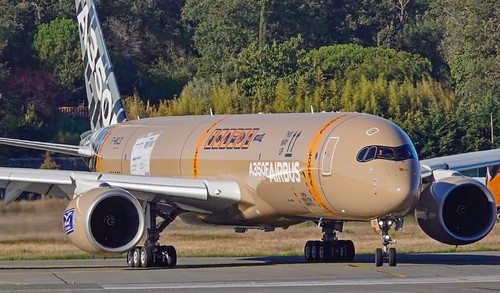
The A350F freighter (MSN 700), the first of two test aircraft, has completed its first flight. The aircraft, fitted with special flight test instrumentation, flew for 4 hours and 10 minutes reaching an altitude of 25,000 feet. The aircraft was flown by a dedicated Airbus Flight Test crew.
"This maiden flight is a major milestone for the A350F and for our customers worldwide. As the latest development of our highly successful A350 platform, the A350F is a true game-changer for the air cargo market, combining unmatched operational flexibility, fuel efficiency, and range," stated Lars Wagner, CEO Commercial Aircraft at Airbus. “I am immensely proud of the extraordinary dedication and hard work of all the teams who have made this achievement possible.”
The second A350F prototype (MSN 701) is now at an advanced stage of final assembly and will enter the paint shop in the next few weeks.
During this inaugural flight, the crew carried out tests focused on verifying the basic airworthiness, fundamental flying qualities, and ensuring basic systems perform as predicted. This marks the start of an over 9 months flight test campaign.
Designed to be the world's most advanced cargo aircraft, the A350F meets the evolving demands of the global air freight market. Thanks to a range capability of up to 8,700 kilometres and a payload of up to 111 tonnes, it will allow operators to deploy it on international long-haul routes. Made of over 70% advanced materials, the A350F is resulting in a 46 tonnes lighter maximum take-off weight (MTOW) compared to competitor aircraft.
Powered by the latest Rolls-Royce Trent XWB-97 engines, the aircraft will bring a reduction in fuel consumption and carbon emissions of up to 40% compared to competitor aircraft with a similar payload-range capability. It is the first new freighter to fully meet the latest ICAO's CO2 emission standards. At the end of August 2026, the A350F had already recorded 115 orders from 14 disclosed customers and it had captured up to 59% market share in the large freighter category.
Upcoming Air Traffic Reforms will Reduce Delays, Emissions
ICAO is accelerating the global roll out of Air Traffic Flow Management
Far fewer flights will be delayed or cancelled following ICAO's global roll out of Air Traffic Flow Management (ATFM).
Recent airspace closures and severe weather events have demonstrated how vulnerable air services can be, and the influx of new aviation technologies is also increasing the complexity of aviation operations across the board. With these challenges and the dramatic growth in air traffic on the horizon, ICAO is now accelerating the implementation of ATFM as a comprehensive international solution.
Comprising of air navigation technologies and new procedures, ATFM improves the reliability of services while reducing fuel consumption and emissions. All flights and everything that impacts their operations are fully coordinated and managed together across international boundaries before they even take off.
Airport Collaborative Decision Making (A-CDM) is among these new procedures. This is a process where airlines, airports, and air traffic controllers exchange real-time information so that decisions like when and how flights take off or land are made together. This directly improves the reliability of flights. The “Total Airport Management” concept further extends this coordination across all airport activities, from baggage and refueling to passenger movements.
It's also about making more space available. The gradual adoption of “free route airspace” will enable pilots to select the most direct and efficient path rather than following pre-established routes. Entire portion of controlled airspace can be dynamically managed to traffic need following the ATFM “flexible use of airspace” principle.
The implementation of ATFM is already required in many circumstances, and now the challenge is to ramp up and expand its general usage. Today, ICAO convened stakeholders representing all areas of operations around the globe for international talks to find the way forward.
A top priority is ensuring that every region and airport can accurately measure and manage airspace and airport “capacity,” which is the maximum number of aircraft that can be safely handled during a given time. ICAO is also renewing focus on the optimization of minimum aircraft separation distances to safely increase the maximum capacity of airspace.
“Together, we will deliver a truly connected network for air traffic flow management, enabling every flight to operate in a predictable and efficient manner while enhancing safety and sustainability,” remarked ICAO Secretary General Juan Carlos Salazar as he welcomed delegates to ICAO Headquarters in Montréal. “By the end of this week, we should ensure we have coherent and practical plans, working side by side in coordination with our neighbours and partners.”
The talks will conclude on 9 October. The findings will inform ICAO's updates to the guidance it provides to Member States and the activities it undertakes to help States with implementation.
Romania orders 12 Airbus H225M multirole military helicopters
The government of Romania has signed a contract for the procurement of 12 Airbus H225M helicopters. The agreement was concluded with the French Armament General Directorate (DGA) in the frame of the European Commission's Security Action for Europe (SAFE). The European Union's financial instrument is designed to provide financial support to Member States to speed up defence readiness by allowing urgent and major investments in support of the European defence industry, with a focus on closing critical capability gaps.
“We are honoured that Romania has chosen the H225M to strengthen its defence capabilities. This selection will also bolster Romania's industrial capabilities through our long term partnership with IAR, Romania's sole helicopter manufacturer,” said Matthieu Louvot, CEO of Airbus Helicopters. “We are proud to welcome Romania within the growing H225M community, establishing the H225M as a key asset of Europe's defence,” he added.
Airbus has been present in Romania for over twenty years through its three businesses. Airbus Helicopters' customer centre keeps proving to be a successful enterprise since its creation, providing support and services to the Romanian Airbus fleets while working for various export customers. Airbus Defence and Space provides turn-key secure communications and systems engineering services through its engineering department, whilst Airbus' Commercial Aircraft business manufactures strategic parts.
The Romanian Air Force currently operates the IAR-330 Puma, a locally produced version of the Puma under an Aerospatiale license. The 12 H225Ms will initiate the replacement of the Puma fleet for conventional and special operations. Romania has also previously ordered two H215Ms in naval configuration.
This contract is the second one signed by Romania and Airbus Helicopters in the frame of the SAFE initiative, with seven H160 and five H145 recently ordered for public services missions.
The H225M has proven its reliability and durability in combat conditions and crisis areas around the world. There are more than 350 H225s and H225Ms in service, totalling more than one million flight hours. The twelve H225M customers include Brazil, France, Hungary, Indonesia, Iraq, Kuwait, Malaysia, Mexico, Morocco, the Netherlands, Singapore, and Thailand.
Goerapan Kalahari Helicopter Safari 2025 Day One 37