Kathryn Sullivan - From Spacewalks to the Deepest Ocean
By Willie Bodenstein
01.12.2026
Google Banner Ad
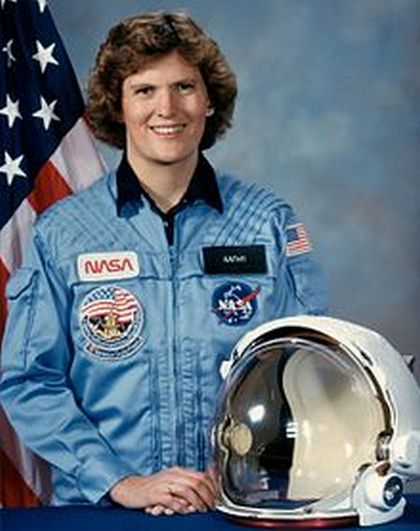
Few people can claim to have travelled to both the vastness of space and the deepest point on Earth. Dr Kathryn Dwyer Sullivan, an American geologist, oceanographer and former NASA astronaut, is one of them.
Born on 3 October 1951, Sullivan has spent much of her life exploring the frontiers of science. In 1984, she became the first American woman to walk in space, and in 2020 she made history again by becoming the first woman to reach Challenger Deep, the deepest known point in the world's oceans.
Her remarkable journey began long before she left the Earth.
Sullivan studied Earth sciences at the University of California, Santa Cruz, graduating in 1973. She later earned a doctorate in geology from Dalhousie University in Canada in 1978. Before joining NASA, she worked as an oceanographer, including conducting research in Alaska.
In 1976, her brother Grant, an aerospace engineer and corporate jet pilot, told her that NASA was recruiting a new group of astronauts and, for the first time, was actively seeking women candidates.
Sullivan applied and was selected in January 1978 as one of six women among 35 astronaut candidates. It was a historic class, marking the first time women had been included in NASA's astronaut corps.
During her training, Sullivan became the first woman to qualify to wear a United States Air Force pressure suit. She also qualified as an operator of NASA's high-altitude WB-57F research aircraft, combining her interests in aviation, geology and atmospheric science.
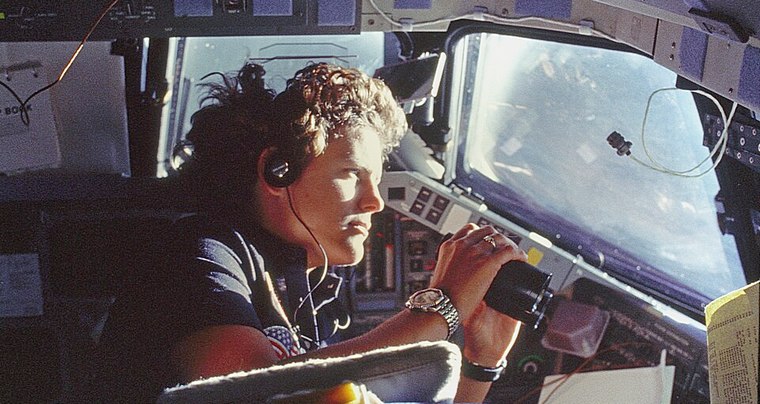
On 5 October 1984, Sullivan launched aboard the Space Shuttle Challenger on mission STS-41G. It was her first spaceflight and a mission that would place her name in the history books.
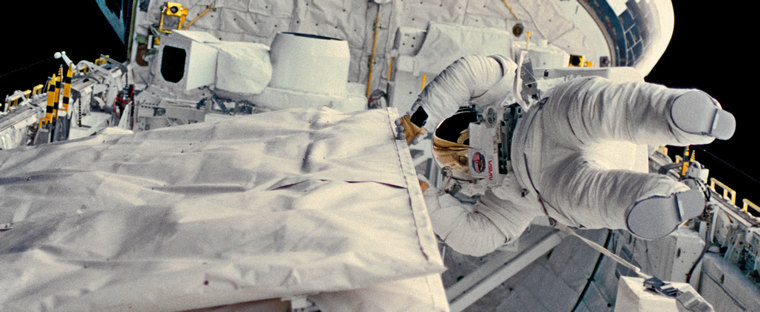
Two days after her 33rd birthday, she and fellow mission specialist David Leestma prepared for an extraordinary undertaking. On 11 October, they left the shuttle's pressurised cabin and ventured into the open cargo bay, high above the Earth.
Sullivan became the first American woman to perform an extravehicular activity (EVA), commonly known as a spacewalk.
The two astronauts spent approximately three hours and 29 minutes outside Challenger, working on a demonstration designed to show that satellites could be refuelled while in orbit. Leestma demonstrated the refuelling procedure, while Sullivan assisted and carried out tasks during the EVA.
The achievement was particularly significant because the Soviet cosmonaut Svetlana Savitskaya had become the first woman to walk in space earlier that year. Sullivan's spacewalk nevertheless marked a major milestone for the American space programme and opened the door for generations of women who would follow.
The mission lasted eight days, during which Challenger completed 132 orbits of the Earth, travelling approximately 5.3 million kilometres. The shuttle returned to Kennedy Space Centre, Florida, on 13 October 1984.
Sullivan returned to space in April 1990 aboard Space Shuttle Discovery on mission STS-31. One of the most important tasks of the flight was the deployment of the Hubble Space Telescope, which would go on to transform our understanding of the universe.
Her third and final spaceflight took place in March 1992 aboard Space Shuttle Atlantis on mission STS-45. Sullivan served as payload commander of the first Spacelab mission dedicated to NASA's Mission to Planet Earth.
The mission carried twelve scientific instruments designed to study the atmosphere, including its chemistry, physical properties and interaction with the Sun.
When she left NASA in 1993, Sullivan had flown on three space shuttle missions and accumulated more than 532 hours in space.
Her career did not end with the astronaut corps. She served in senior positions at the National Oceanic and Atmospheric Administration (NOAA), including as its chief scientist and later as Under Secretary of Commerce for Oceans and Atmosphere and NOAA Administrator.
She also served in the United States Naval Reserve as an oceanography officer from 1988 to 2006, retiring with the rank of Captain.
For most people, reaching space would be the adventure of a lifetime. For Sullivan, there was another frontier still waiting to be explored.
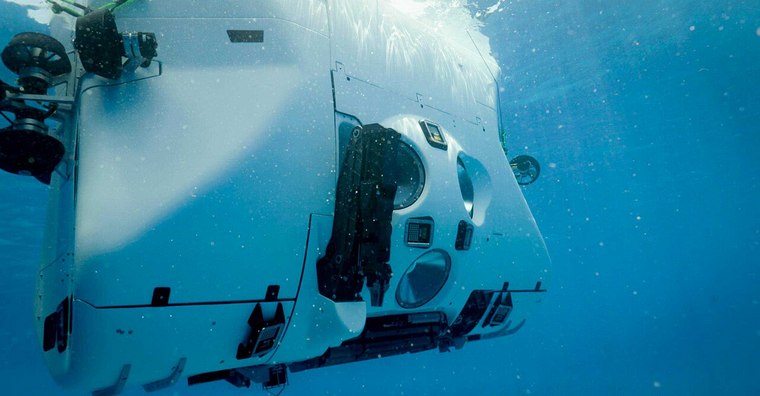
In June 2020, she joined an expedition aboard the submersible Limiting Factor, operated by Triton Submarines, for a descent into Challenger Deep in the Mariana Trench in the western Pacific Ocean.
At nearly 11 kilometres below the ocean's surface, Challenger Deep is the deepest known point in Earth's oceans.
Sullivan became the first woman to reach this extraordinary depth and the first person to have travelled both into space and to the deepest point of the ocean.
The expedition brought together two worlds that had defined her career: the exploration of the atmosphere above our planet and the mysterious depths beneath its oceans.
Kathryn Sullivan's achievements have earned her numerous honours. Among them are NASA's Space Flight Medal, Exceptional Service Medal and Outstanding Leadership Medal.
She was inducted into the U.S. Astronaut Hall of Fame in 2004 and elected to the National Academy of Engineering in 2016. In 2020, she was named to the BBC's 100 Women list.
In September 2023, she was inducted into the National Aviation Hall of Fame in Dayton, Ohio, recognising her extraordinary contribution to aviation, space exploration and science.
Kathryn Sullivan's story is one of curiosity, courage and a determination to explore beyond the boundaries of what was once thought possible. From the cockpit of a high-altitude research aircraft to the cargo bay of a space shuttle, and from the vastness of space to the deepest ocean on Earth, she has continually pushed the limits of human exploration.
She is a pioneer whose achievements remind us that the spirit of discovery knows no boundaries - whether those boundaries lie above the clouds or nearly seven miles beneath the sea.