Unveiled: the cargo plane that delivers whole squadrons
30.11.2025
Google Banner Ad
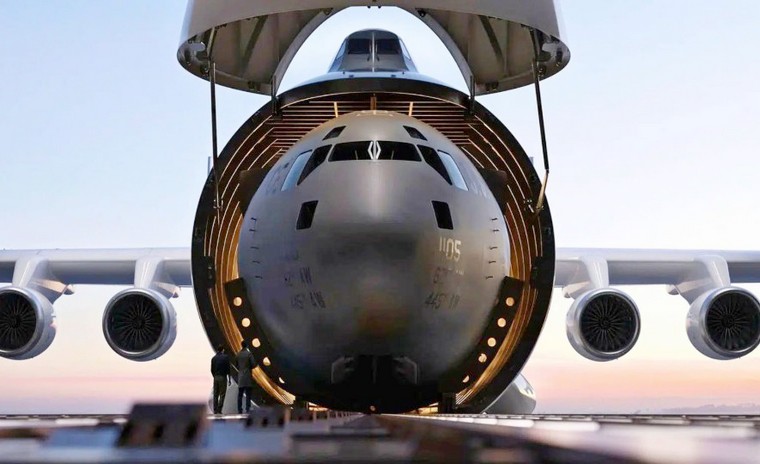
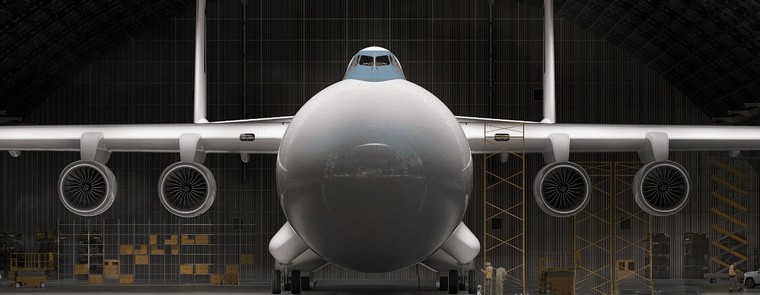
The skies are about to get a lot more impressive. A new, colossal aircraft is set to transform how the United States moves its combat power around the globe. Imagine transporting entire squadrons of helicopters and fighter jets fully assembled-no disassembly, no fuss. That's exactly what the revolutionary WindRunner cargo plane promises to deliver.
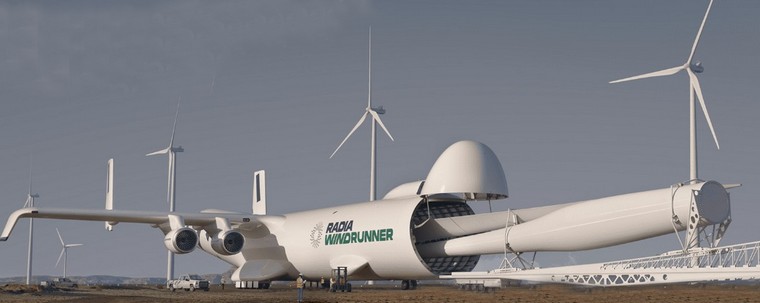
Unveiled at the Air, Space & Cyber conference in Maryland by American aerospace firm Radia, this plane isn't just another transport aircraft. It's a radical rethink of 21st-century military logistics, designed for environments where traditional air transport simply can't keep up.
A new kind of airlift for modern warfare
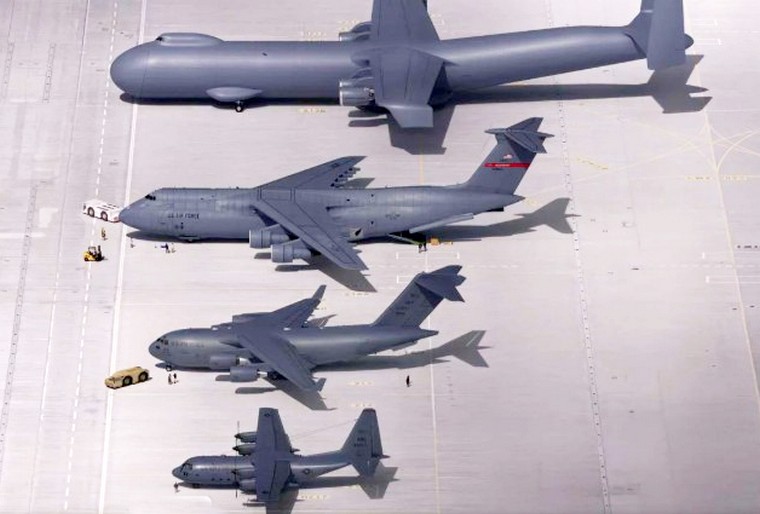
Unlike Cold War-era giants still in service, such as the C-5 Galaxy or the An-124 Ruslan, the WindRunner isn't built to lift the heaviest weight. Its goal is to move fully operational systems-helicopters, fighters, even space boosters-directly to where they are needed, without disassembly and without relying on perfect infrastructure.
The design choices may surprise some. While the WindRunner's payload capacity is about 160,000 pounds, roughly half of a C-5, its cargo volume is a staggering 6,800 cubic meters-seven times that of the Galaxy and twelve times a C-17 Globemaster III. That means it could carry twelve AH-64 Apaches, six CH-47 Chinooks, or four F-35Cs fully assembled in a single flight.
“It's no longer about moving tanks,” says Mark Lundstrom, founder and CEO of Radia. “It's about quickly delivering operational systems to places that were previously impossible: no aerial refuelling, no runway prep, no delays.”
Speed is critical. Agile Combat Employment (ACE) strategies are becoming central to U.S. and NATO doctrine. The ability to disperse forces and equipment rapidly to rudimentary or damaged airstrips is crucial, especially in the Indo-Pacific region, where expanding Chinese defenses threaten conventional supply chains.
Strategic advantages in contested and harsh environments
The WindRunner is engineered to operate on runways as short as 5,900 feet, making it viable for advanced deployments even in disaster-stricken or conflict-damaged zones. Current air transport fleets lack this flexibility-the C-5, for instance, needs at least 7,900 feet of runway at full load.
This design addresses mounting pressure on older airlifters. The last C-5 rolled off the production line in 1989, while no new An-124s have been built since 2004. The Chinese Y-20, currently the largest military transport in production, is still significantly smaller than the WindRunner. According to a 2023 RAND report on logistics in contested environments, “The ability to deliver oversized cargo rapidly and intact is a critical bottleneck in any future scenario involving peer competitors.”
Radia's aircraft could bridge that gap, particularly thanks to its roll-on/roll-off delivery feature, which eliminates the need for specialized loading equipment or infrastructure. In today's world, where urgent humanitarian missions, mobile hospitals, and rocket recovery operations increasingly intersect with military needs, this capability could be a game-changer.
Also Read: Revolutionary perovskite sensor boosts resolution and light capture threefold using pixel stacking
I remember visiting a regional airbase years ago and watching cargo operations with fascination. The meticulous process of dismantling and reassembling helicopters and jets took hours, even days. Thinking about how WindRunner could replace that grueling process is mind-blowing-it's the kind of efficiency that can literally change mission timelines in critical situations.
The road to a Moonshot first flight
Radia is aiming for a first flight around 2030, leveraging certified parts and proven aerospace technology to speed up development. Still, industry observers remain cautious. “We haven't seen a new strategic airlifter in the West since the C-17,” notes Dr. Ian MacLaren, senior researcher at the Royal United Services Institute (RUSI). “It's ambitious-and expensive-but if it works, it will be a game-changer.”
The company has already secured five key aerospace partnerships to support its supply chain, according to a June 2025 press release. It's also collaborating with the U.S. Department of Defense to evaluate WindRunner's potential in civil-military applications, including spaceport logistics and energy infrastructure support.
Challenges remain. Funding, certification hurdles, and the question of whether military planners will adopt a platform that prioritizes volume over raw lifting power are all open issues. The Air Force has not yet committed to the program, leaving the future of WindRunner in a delicate balance between ambition and practicality.
Implications beyond the battlefield
The WindRunner isn't just a military tool-it has implications for global logistics and rapid response. Its ability to deploy large, intact systems anywhere in the world could accelerate disaster relief, humanitarian aid, and even space missions. Imagine moving an entire mobile hospital to a hurricane-stricken region, or deploying rockets for urgent launches without dismantling them. This is a plane that doesn't just lift cargo ; it moves capabilities and readiness wherever they're needed.
As usual, the last Pilot's Post report for 2025 will be published on 10 December and publication will recommence on 10 January 2026.
If your business wants to connect directly with the most engaged and influential audience in South African aviation, there's no better platform than Pilot's Post Online Aviation. In 2024 alone, we published 48 Midweek Updates and 192 in-depth Sunday feature reports, keeping readers informed, inspired, and invested in the latest developments across the aviation world. We remain the only South African publication providing daily coverage from Oshkosh and most major UK airshows, giving our audience exclusive insights they can't find anywhere else.
Over the past 14 years, we've produced an unmatched 3,729 articles and reports, building a reputation for credibility, quality, and consistency that both readers and advertiser's trust. No other aviation publication in South Africa can rival our reach, depth, or engagement and none can offer better exposure at more affordable rates. Whether you're launching a new product, promoting a service, or strengthening your brand presence, advertising with Pilot's Post ensures your message soars directly to the people who matter most in aviation.
Take your marketing to new heights-advertise with Pilot's Post and be part of South Africa's leading aviation voice.
Contact Willie on 082 442 8815 for a free no-obligation quote, and unbeatable value!