If your business wants to connect directly with the most engaged and influential audience in South African aviation, there's no better platform than Pilot's Post Online Aviation.
Aero Club Communique Dec 2025 year-end message.
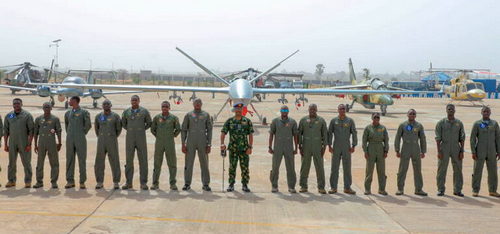
SAAF secures South Africa's airspace for historic G20 summit.
SAAF cleared of improper conduct regarding catering on 2022 VVIP flight.
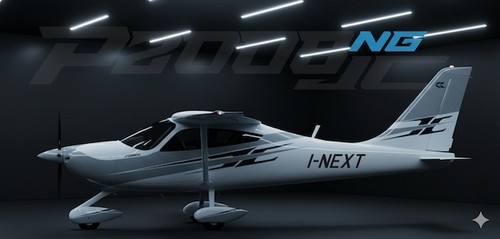
Tecnam announces the P2008JC NG
Africa's drone wars are growing - but they rarely deliver victory.
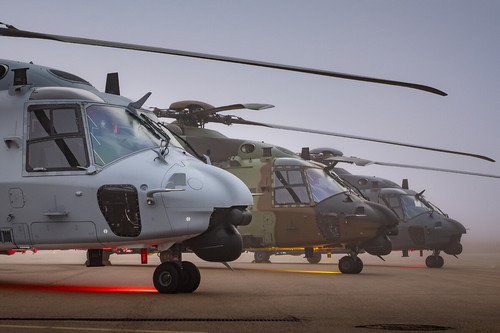
Spanish Ministry of Defence orders 100 Airbus helicopters.
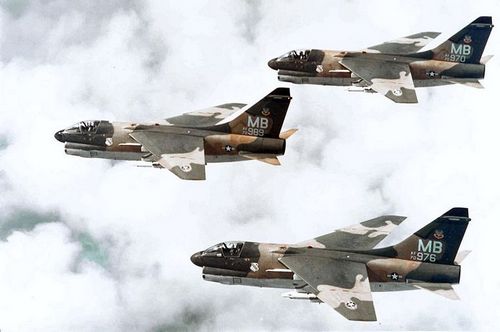
This week in history - The A-7 Corsair II strike aircraft enters combat for the first time, operating from the aircraft carrier USS Ranger (CVA-61) over Vietnam
Worldwide Incidents and Accidents
Bonus video - JLPC Fly in September 2023
If your business wants to connect directly with the most engaged and influential audience in South African aviation, there's no better platform than Pilot's Post Online Aviation.
In 2024 alone, we published 48 Midweek Updates and 192 in-depth Sunday feature reports, keeping readers informed, inspired, and invested in the latest developments across the aviation world. We remain the only South African publication providing daily coverage from Oshkosh and most major UK airshows, giving our audience exclusive insights they can't find anywhere else.
Over the past 14 years, we've produced an unmatched 3,729 articles and reports, building a reputation for credibility, quality, and consistency that both readers and advertiser's trust. No other aviation publication in South Africa can rival our reach, depth, or engagement and none can offer better exposure at more affordable rates. Whether you're launching a new product, promoting a service, or strengthening your brand presence, advertising with Pilot's Post ensures your message soars directly to the people who matter most in aviation.
Take your marketing to new heights-advertise with Pilot's Post and be part of South Africa's leading aviation voice.
Contact Willie on 082 442 8815 for a free no-obligation quote, and unbeatable value!
Aero Club Communique Dec 2025 Year-end Message
If we look back at the past year, it seems as if December 2024 was just yesterday. The past year went quickly and, as with every year, 2025 brought new challenges to the Aero Club.
The cost of our various recreational aviation activities remains high. This is mostly due to anything from fuel, parts and other equipment having a large import component. The exchange rates have improved and we hope this trend continues which may bring some relief in 2026.
Also, on the international front, we had a most informative and productive meeting with Greg Principato, the President of the FAI. Greg is committed to a good relationship with the Aero Club of South Africa and views us as the leader in organised recreational aviation in Africa. The proof of the FAI president's sentiments about the Aero Club are echoed by the exceptional achievements of our pilots in international competitions.
At the yearly awards dinner, Protea colours were awarded to two SAHPA, nine SAMAA and two SAPFA members for their international participation. A further four special recognition awards were made to SAPFA and SAMAA members for international participation. The FAI also recognised two gliding records set by our SSSA members, one for the African speed record and for a long-distance gliding record, achieved by two of our gliding pilots. Our SAPFA members did us proud by being placed first in the landing competition at the World Rally Flying Championships. We salute these pilots whose efforts showcased the Aero Club as an internationally recognised FAI member.
The yearly awards dinner was held again at the Birchwood Conference Centre. It was a stylish event, very ably hosted by our master of ceremonies, David le Roux. The acting chairperson, Walter Doubell, welcomed all and introduced the guest speaker, Rob Jonkers, the immediate past-chairman of the Aero Club. Rob highlighted the challenges facing the Aero Club in an ever-changing and increasingly complex regulatory environment.
Over 40 of our members who excelled in several recreational aviation discipline were honoured with awards. We congratulate all. The Aero Club values and admires the effort and commitment of all the award recipients.
For a full report on the 2025 Aero Club awards dinner please see the Pilot's Post article at www.pilotspost.com/PsPpyarn3709.
In March this year we had a highly successful Airweek at the Middelburg airfield. The weather was kind to us with a weekend without rain. It was the first time that an air show was introduced as part of the programme. This proved to be an excellent idea with many local people coming to see the air show. This Airweek would not have been possible without the dedicated hard work by all from the Middelburg Aero Club, the Aero Club and all the sections of the Aero Club, our exhibitors and participants who contributed to making this Airweek a success.
We have already started the planning for Airweek 2026 which will be from the 5th to the 8th of March 2026. At this stage it is not certain if we will have an air show as in 2025, but Airweek 2026 is definitely on. We will be communicating more information in January 2026.
The past year has been very active on the advocacy front for the Aero Club. One of many challenges were changes by insurers to third-party liability insurance. There is a world-wide tendency by insurers to regard third-party liability insurance for aviation events being subjected to an increasing risk profile. This resulted in the Aero Club not being able to secure the renewal of cover for our events as in the past. Our brokers and insurers now consider cover for each event on a per-event basis.
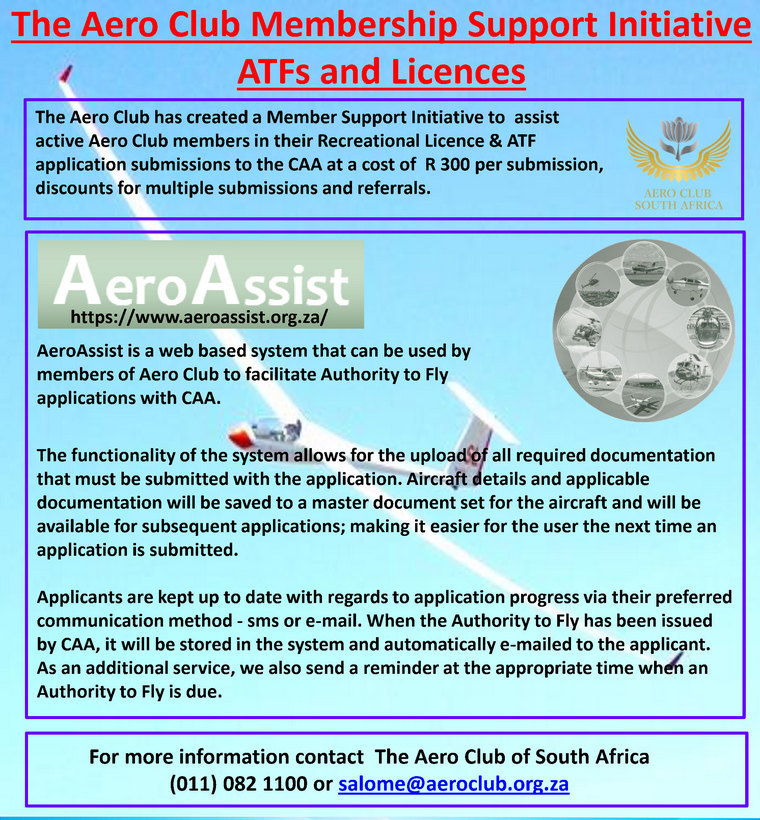
There were interactions with the CAA on several regulatory issues. The matter of designation of certain powers and authority by the CAA to AROs was debated at two in-person meetings in May. Presentations were done by SAHPA and PASA on their systems and abilities to manage many functions of their sections. The Aero club also presented its Aero Assist program that is the platform whereby we assist aircraft owners to renew their Authorities to Fly at the CAA with a view to provide an industry wide solution for this administrative activity.
Sadly, after many years of meetings and all the effort to produce the presentations, the CAA decided to recommend to the Minister of Transport that no designation to AROs or 3rd parties will be granted. This effectively means that we need to restart the entire process of the rewriting of Part 149 and find common cause in the usefulness of recreational aviation entities being an ARO.
The issue which probably has had the largest impact on general aviation in many years was the imposition of the 12-year engine overhaul requirement. The Aero Club was part of the AIC18.19 Task Team that sought to gain interim relief via litigation - given that previous engagements since 2023 in various regulatory workgroups had not brought any solutions, and unfortunately after significant effort and investment by our industry this went against us. Given the controversy of this obdurate requirement and going against world best practice, in the last few weeks, we have seen the CAA now propose amendments to Parts 91 and 43 as an olive branch to the industry.
The proposals for Part 91 have been published for public comment. Although this may bring some relief to Part 91 owners and operators, there are aspects of the proposed amendments that need to be interrogated - as there are potentially unintended effects to other regulatory elements. The Aero Club will be submitting its views on the Part 91 amendments as part of the public comment process and proposing alternatives to the proposed changes to Part 43.
Apart from the above we actively participated, among others, in the processes to amend the following Parts of the CAA regulations or technical standards: Part 96 - commercial operations of NTCA, Part 95 - special air events, Part 62 - radio telephony, and to the overfly rules for protected areas.
An issue that has not been entirely resolved is that of the presence of air traffic controllers at special air events, as current regulations do not cover these circumstances. There has been some progress between ATNS and the CAA to resolve this by proposing new regulatory elements, it will take time to have this in place through the normal acceptance and promulgation process. At present the difficulty of having ATCs at our events remains a serious concern.
Regarding the challenges that we face in 2026, I want to quote Rob Jonkers in his 2024 end of the year communique: “Our aim also continues to focus to make aviation appealing to the recreational aviator and the youth, in order for them to share and progress in the wonderful passion of all types of aviation sport offered by the various sections of the Aero Club in South Africa, as such we are fortunate to have in our midst many professional and retired professional career and military aviators that continue to share their mentorship and guidance freely to anyone who is interested in aviation in South Africa. With this, let us all work together and support the structures that represent recreational aviation to make 2025 a success to achieve growth, as it will only be our coordinated collective efforts that will ensure the survival of our disciplines into the future. If you have any comments or contributions to make you are most welcome to contact us at the Aero Club.”
These words are just as or even more true today than a year ago. Let us work together to make 2026 a memorable year.
The 2026 Aero Club membership renewal commenced on the 1st of December. Please visit the Aero Club website renewal portal at https://aeroclub.org.za/membership/ to renew or to register as a new member.
We want to thank the exco members, the sections chairpersons, the council members and especially the Aero Club members for being there and their support during this challenging year.
Have a joyous and peaceful festive season and please fly and drive safe. We look forward to a good 2026. Regards, The Aero Club Exco
SAAF secures South Africa's airspace for historic G20 summit
By Dean Wingrin www.defenceweb.co.za
The 2025 Group of Twenty (G20) Summit, held at the Johannesburg Expo Centre in South Africa from 22 to 23 November, was the first G20 summit to take place on the African continent. Throughout the event, the South African Air Force (SAAF) maintained a highly visible presence.
South Africa significantly beefed up its security posture ahead of and during the summit to safeguard delegates and heads of state. Over the course of the Leaders' Summit, numerous SAAF units played a vital role in securing the national airspace, deploying a range of specialised assets and accumulating more than 133 flying hours in support of the operation.
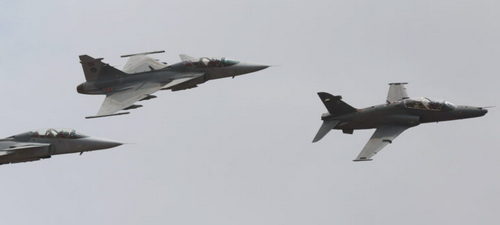
Drawing on lessons learned from its air-cover responsibilities during the 2010 FIFA Soccer World Cup, the SAAF delivered an impressive performance despite tighter budget constraints and a reduced operational fleet. The Directorate Combat Systems employed four Gripen fighter aircraft from 2 Squadron, five Hawk Mk 120s from 85 Combat Flying School, and a Mobile Ground Signal Intelligence System (MGSS) to conduct tactical air reconnaissance.
SAAF capabilities, forms part of the SAAF's Mobile Communications Unit (MCU). The MCU is responsible for delivering operational, mobile and deployable communications and electronic warfare (EW) support to the Air Force.
The Directorate Helicopter Systems deployed three Rooivalk attack helicopters from 16 Squadron, two Oryx medium-transport helicopters, and two Agusta A109 light-utility helicopters to provide command and control, close air support, and counter-incursion capability against potential surprise raids.
Meanwhile, the Directorate Command and Control Systems operated a Plessey Tactical Mobile Radar, as used by 142 Squadron. This system, based on the Marconi S711 radar, is mounted on MAN 8×8 vehicles, enabling rapid mobility and deployment. The Directorate also provided a Sector Control Centre at Bushveld Airspace Control Sector (BACS), two anti-drone Sentries, a frequency-spectrum analyser, and mobile communications facilities to maintain a comprehensive air situational picture across South Africa's airspace.
Although not officially confirmed, the anti-drone Sentries may refer to DroneShield's DroneSentry mobile counter-drone (C-UAS) system, which integrates various sensors, including radio frequency (RF), radar and optical, to detect, track and defeat unmanned aircraft systems (UAS).
Spectrum analysers, vital to communications and EW operations, are used to detect and identify radio emissions across unknown frequencies, assisting in the localisation and classification of communication or radar signals.
In terms of flying hours, the four Gripen aircraft accumulated 25.8 flight hours, while the Hawks recorded 39.1 hours on G20 support duty. The Rooivalk fleet logged 21.6 hours, Oryx helicopters flew 10 hours, and the A109s contributed 36.7 hours.
Rear Admiral (JG) Prince Tshabalala, Director of Defence Corporate Communication, told DefenceWeb that “the SAAF successfully met all operational objectives set for the G20 Summit.”
In addition to the SAAF's efforts, the South African Army undertook ceremonial duties, with the National Ceremonial Guard receiving and bidding farewell to heads of state from 20 to 25 November 2025 at OR Tambo International Airport. The Army also maintained a standby force to respond to any eventuality.
SAAF cleared of improper conduct regarding catering on 2022 VVIP flight
By Kim Helfrich www.defenceweb.co.za Photo by Dean Wingrin.
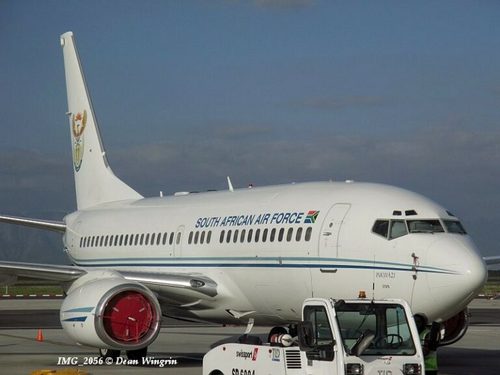
The South African Air Force (SAAF), specifically its VVIP transport unit 21 Squadron, was exonerated of financial mismanagement and improper conduct as regards catering onboard the Presidential Boeing 737-7ED by Public Protector (PP) Kholeka Gcaleka.
The allegation was made by Democratic Alliance (DA) leader John Steenhuisen after the aircraft - ZS-RSA Inkwazi - carried an 18-strong official delegation to and from the State funeral of Queen Elizabeth II in September 2022.
Steenhuisen, now agriculture minister in President Cyril Ramaphosa's Government of National Unity (GNU), told the Chapter Nine institution catering costs for the flight amounted to over R600 000, including “expensive liquor, chocolates and biltong” according to a 31 December PP statement.
Evidence showed that catering costs for the London flight totalled R139 319.73, significantly less than alleged. The procurement process adhered to the Presidential Handbook and SAAF guidelines and no alcohol or luxury items were included in the catering orders, the statement reads on the United Kingdom flight.
On a cancelled flight to Turkey, reportedly for a South African government presence at a presidential inauguration the PP found that while the situation had resulted in additional costs due to the cancellation, the evidence suggests that reasonable care was exercised, and mitigation steps were taken, such as some of the catering being utilised on two aircraft returning to Pretoria, and non-perishable items being stored for future use to avoid complete wastage, the Public Protector added.
Cancellation of the Turkey flight saw payment of R82 037.84 for catering services - “in line with the supplier's cancellation policy”.
The Public Protector concluded both The Presidency and the Department of Defence (DoD) “acted within legal and policy frameworks and their conduct did not amount to maladministration or improper behaviour”.
The Inkwazi complaint was one of 768 PP investigation outcomes made public on the last day of 2025. All were finalised in the third quarter of the 2025/26 financial year with by far the majority - 638 - relating to service delivery. A hundred and seven concerned what is termed “good governance and integrity matters” with the balance of 23 being early resolution cases.
Tecnam announces the P2008JC NG
Tecnam launches P2008JC NG, a major evolution of one of the world's most popular flight training aircraft. Certified to rigorous EASA CS-23 airworthiness standards, the P2008JC NG redefines the modern trainer market by integrating the efficient Rotax 912 iSc fuel-injected engine with a robust, safety-centric airframe.
Moving to the CS-23 category places the P2008JC NG in the highest safety tier for General Aviation aircraft, offering Flight Training Organizations an asset with superior certification margins, operational flexibility, and long-term value, all while delivering unparalleled economic efficiency.Tecnam P2008JC NG will be certified under EASA CS-23 (accepted in all EASA recognized countries) and is available for order immediately.
Giovanni Pascale Langer, Managing Director at Tecnam commented: “The P2008JC NG represents a significant leap in training safety. By certifying to the latest CS-23 Amendment 6 standards, we have enhanced the aircraft's safety characteristics specifically at very low speeds-the typical mission profile for ab-initio training. We needed an aircraft that works hard, consumes little, and inspires confidence. This is the only trainer on the market that combines superior safety of CS-23, state-of-the-art avionics, and the unbeatable efficiency of modern injection technology.”
In a market polarized between hard-to-repair full-composite aircraft and ageing 50+ years old design all-metal fleets, the P2008JC NG stands alone. It retains Tecnam's signature Hybrid Airframe Technology: a sleeker, more aerodynamic carbon-fibre fuselage for superior performance and cabin width, coupled to robust metal wings and stabilator.
This unique combination addresses the specific pain points of Flight School CEOs and CFIs: Robustness where it matters: The metal wings are resistant to “hangar rash” and can be repaired quickly and economically. Modern Appeal: The carbon fuselage allows for a stylish, wide cabin that offers students an automotive-style comfort level, far surpassing legacy metal trainers.
The transition to the Rotax 912 iSc engine is a game-changer for both operational costs and environmental impact. Drastic Cost Reduction: With a fuel consumption of just 14 liters/hour (3.7 USG/h) and the ability to use a wide range of automotive fuels, the P2008JC NG significantly lowers hourly operating costs compared to heritage AvGas powered competitors.Energy & Utilities
A Greener Choice: This efficiency directly translates to sustainability. By burning up to 30% less fuel than legacy trainers, the P2008JC NG drastically cuts CO2 emissions, allowing flight schools to offer a cleaner, more eco-conscious path to a pilot license.
For Flight Training Organizations already operating the Tecnam P-Mentor or the P2006T NG twin, the introduction of the P2008JC NG creates a powerful strategic advantage. Schools can now standardize their entire flight line, from ab-initio to instrument rating and multi-engine training, on a common “All-Injected” fleet. This synergy simplifies maintenance, streamlines spare parts management (sharing the Rotax iS architecture), and provides students with a seamless transition across platforms.
Africa's Drone Wars are Growing - But they Rarely Deliver Victory
By Brendon J Cannon www.defenceweb.co.za
In the last decade, armed drones have become one of the most visible symbols of modern warfare. Once the preserve of advanced militaries, armed drones are now widely available on the global arms market. Countries such as Turkey, China and Iran are producing lower-cost models and exporting them. In Sudan's ongoing war, which began in 2023, drones have been used by the two major warring parties to gain ground - but have caused massive civilian casualties in the process.
A drone is essentially a remotely piloted aircraft that can observe, track and sometimes strike targets with missiles or bombs. The promise of armed drones is alluring: a lethal, precise and affordable weapon that can surveil and strike enemies without troops being exposed. But can these drones deliver on their promise in African battlespaces? Brendon J. Cannon shares insights from his study of drone use in Sub-Saharan African conflicts.
What's driving up the use of drones in sub-Saharan Africa?
Drones offer tactical advantages. They are seen as a solution to pressing internal security problems, from jihadist incursions in the Sahel to armed insurgencies in Ethiopia and civil war in Sudan.
Since 2019, a growing number of African states - among them Niger, Ethiopia, Togo, Sudan and Somalia - have acquired medium-altitude long-endurance (Male) drones. Among these types of drones, Turkey's Bayraktar TB2 - along with its successors, the TB3 and Kizilelma (Red Apple) - has captured outsized attention. In the case of the Turkish TB2 model, for instance, some sources estimate 40 units have been sold to more than 10 African countries since 2019, but actual figures are not public.
The TB2 is cheap by military standards (roughly US$5 million a unit) and relatively easy to operate. It has been hailed as a “game-changer” for its reliability, cost and ready availability.
It has been combat-tested in Syria, Libya and the Caucasus, a natural border between Europe and Asia.
Its success in destroying tanks, artillery and air defence systems in these conflicts impressed African leaders. As Turkish president Recep Tayyip Erdogan boasted, “Everywhere I go in Africa, everyone talks to me about drones.”
What has been the effectiveness of these drones in African conflicts?
Medium-altitude long-endurance drones like the TB2 are entering African conflicts, which are marked by vast geography, difficult terrain and complex insurgencies that frequently span borders. While drones can deliver lethal force, their ability to shape battlefield outcomes is also contingent on variables like distance, terrain and weather the competence of operatorsthe existence of supporting intelligence, logistics and command systems.
With these variables in mind, my recent research with my colleague, Ash Rossiter, found that drones are unlikely to significantly alter the course of conflicts in much of sub-Saharan Africa, for a couple of reasons.
First, there is a general absence of modern integrated air defences in the region. This is required to deploy drones as lethal precision weapons, particularly in targeting isolated groups.
Second, the success of these drones depends on competent operation, their employment in sufficient numbers, and adequate support infrastructure, such as fuel, communication masts and ground control stations. These are often lacking in remote places where insurgents operate in places like Somalia, Niger and northern Burkina Faso.
What factors limit the lethality of drones?
Where adversaries lack modern, integrated air defences - as is currently common among insurgent and militia forces in much of sub-Saharan Africa - drones can loiter with minimal risk. They can collect actionable intelligence, and conduct precise strikes against vehicles, small groups and supply lines.
This lethality, however, is limited by a number of factors.
Distance: Africa's size and scale blunt drone range - and therefore efficacy. The TB2's circa 300km range, for instance, means it worked well in the Caucasus. However, 300km will not get you far in Ethiopia or the Sahel. In Ethiopia, for example, the TB2s had to be repositioned by the government in 2022 from bases near Addis Ababa to Bahir Dar. This was a distance of about 300km, to reach targets in Tigray. This shows how drone bases, security architecture and forward infrastructure, such as communications masts and logistics support closer to conflict areas, are needed. This increases range and, therefore, outcomes.
Terrain and weather: Dust and sandstorms in the Sahel can impair the drones' visible-light sensors. Sandstorms occur frequently in the region, particularly during the dry season. Dense forest canopies in central Africa can conceal movement from drones. Persistent cloud cover over Ethiopia's highlands or along the Gulf of Guinea may limit efficacy. Electro-optical and infrared payloads, which provide high-definition and thermal imaging, give drones like the TB2 a 360-degree view. This allows them to operate in diverse weather conditions. But they may need to fly under the weather to see targets in these African terrains. This brings its own risks, as it exposes the drones to potential small-arms fire. This has happened in Sudan, where paramilitary troops reported shooting down army drones in August 2025.
Operator capabilities: Effectively operating a drone requires trained operators, disciplined targeting procedures and dependable maintenance. Failures can be costly. A Burkinabè TB2 crash in 2023 exposed maintenance and operational fragilities, destroying one of five TB2 drones from the Burkinabè arsenal. A Nigerian drone strike in 2023 that was reportedly aimed at terrorists instead killed about 85 civilians. This was after an incorrect grid reference. It underscored how weak operator capabilities can transform precision weapons into harbingers of tragedy.
Fit to conflict: Drones are most useful for hitting supply convoys, eliminating specific targets and targeting loose militant networks. These are missions typical of low-intensity, irregular warfare. They are far less decisive in conflicts against massed troop formations or for holding territory, which has characterised recent wars in Ethiopia and Sudan. These tasks still rely on fighter-bombers or attack aircraft, and ground forces.
What does all this mean for the use of drones in sub-Saharan African conflicts?
First, medium-altitude long-endurance drones can deliver tactical gains but rarely provide a silver bullet.
The initial impression of the TB2 has unfortunately obscured some of its limitations, such as operations across extreme distance, in inclement weather, and the importance of operator proficiency.
Second, in conflicts like Ethiopia and the Sahel, geography and logistics play a critical role. Basing, relay links and forward-deployed maintenance determine a drone strike's coverage, persistence and power.
Third, a drone's overall effect depends on trained crews, reliable maintenance, and disciplined targeting and command review. Weakness in any of these can result in tragedy, such as civilian deaths.
Finally, as non-state armed groups increasingly adopt drones and some African states like Rwanda and Kenya begin to field better air defences, the advantage currently held by national governments that own drones will narrow.
Lasting utility, therefore, requires three things. First, counter-drone defences, which means countries need to develop strategies and acquire sensors, jammers and systems to detect, track and neutralise hostile drones. Second, better protection of the locations and networks from which drones are controlled so that these are not disrupted, sabotaged or targeted. Third, sustained investment, not just in drone acquisition but also in maintenance, operator training and basing infrastructure to support continuous flight operations and extend drone reach deeper into battlespaces.
Written by Brendon J Cannon, Associate Professor, Khalifa University. Republished with permission from The Conversation.
Spanish Ministry of Defence orders 100 Airbus helicopters
Spain is placing orders for 100 Airbus helicopters through the Directorate General for Armament and Material (DGAM) of the Ministry of Defence. These four contracts, framed within the National Helicopter Plan announced in May, aim to boost the modernisation of Spain's defence and security assets.
The contracts, which represent the largest helicopter purchase by the DGAM, include four different models for the three branches of the Spanish Armed Forces. Specifically, the agreement includes the following programmes:
13 H135 helicopters: 12 units for the Spanish Air and Space Force and 1 for the Navy. They will be used for advanced pilot training, light utility, and observation missions.
50 H145M helicopters: All for the Spanish Army (FAMET). Their missions cover military pilot training, light attack (equipped with HForce, complementing the Tiger), light utility and disaster relief.
6 H175M helicopters: For the Spanish Air and Space Force. These super-medium utility helicopters will be used for governmental missions, including the transport of authorities, replacing obsolete fleets from Wing 48.
31 NH90 helicopters: 13 for the Army, 12 for Air and Space Force, and 6 for the Navy. Destined for tactical transport, manoeuvre, and special operations missions, as well as completing the Navy's amphibious warfare fleet.
"By formalising these contracts, the Ministry of Defence fulfils its commitment to provide our Armed Forces with the latest generation of helicopters that are essential for their operations," stated María Amparo Valcarce García, Secretary of State for Defence. "This investment is strategic and is focused on significantly increasing Spain's security and defence capabilities, ensuring national strategic autonomy in a key sector of European defence."
“This award is the tangible realisation of the National Helicopter Plan and the programmes included represent a qualitative shift in the capabilities of the Armed Forces. We are proud to be strengthening Spain's national defence and security resilience,” said Bruno Even, CEO of Airbus Helicopters. “Furthermore, they consolidate and advance Airbus Helicopters' industrial footprint in Spain, projecting the country as a reference hub in the European aeronautical industry,” he added.
In addition to strengthening the current industrial capabilities of Airbus Helicopters in Spain, this plan is expected to have a direct impact on the creation of highly-qualified jobs, estimated at more than 300 direct positions over the next three years. The industrial footprint in Albacete will continue to grow with a new military helicopter customisation centre and an international training centre for H145M pilots and technicians. These developments will further supplement the ongoing construction of facilities dedicated to the Tiger mid-life upgrade.
In parallel, Airbus Helicopters aims to develop its Albacete site into a Centre of Expertise for digital capabilities. Within this framework, a Digital Campus is being developed, in collaboration with the University of Albacete and the Science and Technology Park of Castilla Mancha, specializing in the creation of digital tools and cybersecurity for all Airbus Helicopters. Additionally, the areas of support engineering, software development, connectivity and maintenance for the Spanish Armed Forces' military helicopters will be strengthened.
4 DECEMBER 1975
The A-7 Corsair II strike aircraft enters combat for the first time, operating from the aircraft carrier USS Ranger (CVA-61) over Vietnam
The LTV A-7 Corsair II is an American carrier-capable subsonic light attack aircraft designed by Ling-Temco-Vought to replace the Douglas A-4 Skyhawk. Its airframe design was a somewhat smaller version of the supersonic Vought F-8 Crusader. The Corsair II initially entered service with the United States Navy (USN) during the Vietnam War
To minimize costs, all proposals had to be based on existing designs. Vought, Douglas Aircraft, Grumman and North American Aviation responded. The Vought proposal was based on the successful Vought F-8 Crusader fighter, having a similar configuration, but shorter and more stubby, with a rounded nose. It was selected as the winner on 11 February 1964, and on 19 March the company received a contract for the initial batch of aircraft, designated A-7
The A-7 had a fast and smooth development. The YA-7A made its first flight on 27 September 1965, and began to enter Navy squadron service late in 1966. The first Navy A-7 squadrons reached operational status on 1 February 1967, and began combat operations over Vietnam in December of that year.
Pilots of the early A-7s lauded the aircraft for general ease of flying (with the exceptions of poor stability on crosswind landings and miserable stopping performance on wet runways with an inoperative anti-skid braking system) and excellent forward visibility but noted a lack of engine thrust. This was addressed with A-7B and more thoroughly with A-7D/E. The turbofan engine provided a dramatic increase in fuel efficiency compared with earlier turbojets - the A-7D was said to have specific fuel consumption one sixth that of an F-100 Super Sabre at equivalent thrust. An A-7D carrying 12 x 500 lb (227 kg) bombs at 480 mph (775 km/h) at 33,000 ft (10,000 m) used only 3,350 lb (1,500 kg) of fuel per hour.
In a sortie against the Thanh Hóa Bridge on 6 October 1972, four A-7Cs from VA-82 successfully delivered 8,000 lbs of high explosives with two aircraft carrying two 2,000 lb (910 kg) Walleyes, while two others also carried 2,000 lbs in Mk 84 GP bombs. In a simultaneous attack, the center piling on the bridge's west side was hit and broke the span in half. After this, the Thanh Hoa bridge was considered permanently destroyed and removed from the target list.
A total of 98 USN A-7 Corsairs were lost during the war.
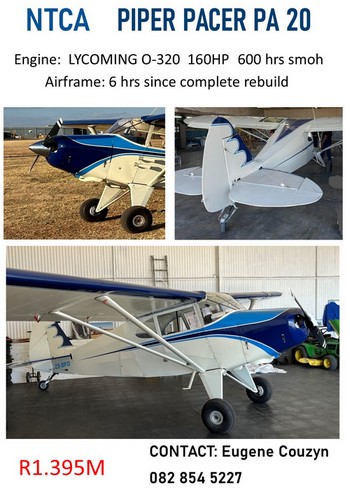
South Africa, Ferreira, Free State: The aircraft crashed under unknown circumstances near a field in Ferreira, Free State Province. The sole pilot onboard was killed and the plane was destroyed. The aircraft was said to have been ZS-WEZ. It was built as a Piper PA-22 Tri Pacer and later converted from tricycle landing gear to a tailwheel PA-20 Pacer.
USA, Broomfield-Rocky Mountain Metropolitan Airport, CO (BJC/KBJC): Two pilots were traveling with no passengers when the aircraft "experienced a rapid, uncommanded loss of pressurization," Buffalo River Aviation, which owns the plane, said in a statement. The two pilots immediately put on their oxygen masks and the Autoland system "automatically engaged exactly as designed when the cabin altitude exceeded the prescribed safe levels," the company said. The pilots decided to leave the system engaged due to the "complexity" of the situation, according to Buffalo River Aviation. "While the system performed exactly as expected, the pilots were prepared to resume manual control of the aircraft should the system have malfunctioned in any way," the company said.
USA, Burnet Municipal Airport/Kate Craddock Field (BMQ/KBMQ), Burnet, TX: The airplane unexpectedly became airborne during start up and the pilot jumped onto the wing. The airplane subsequently struck a fence on the west side of the airport. The pilot sustained serious injuries.
UK, Hanningfield Reservoir, Essex: A Beagle B121 Pup crashed into the Hanningfield Reservoir, Essex. The pilot died in the crash. ADS-B data show the aircraft departing North Weald Airport at 12:40 UTC. A flight plan had been filed for Southend.From about 13:15 UTC the aircraft began circling south of Chelmsford. At 14:02 UTC it entered a high rate of descent and impacted Hanningfield Reservoir. According to local media, police later uncovered notes at the pilot's home suggesting he planned to take his own life.
USA, Hammonton, NJ: An Enstrom F-28A, N520H, and an Enstrom 280C Shark, N280MG, were both destroyed following a mid-air collision and impact with terrain in Hammonton, New Jersey.
The Enstrom 280C burst into flames and the main fuselage was consumed by fire. The pilot was killed. The F-28A did not catch fire and the pilot survived with serious injuries and died later in hospital. ADS-B data shows that earlier in the day, at 0950 LT, the helicopters departed Vineland-Downstown Airport (28N) Vineland, New Jersey, and flew together northeast towards Hammonton Municipal Airport (N81), Hammonton, New Jersey. The helicopters were seen again southwest of N81 just a few seconds before the collision and in the general vicinity of each other. Both pilots were known to each other and flew together on weekly bases.