If your business wants to connect directly with the most engaged and influential audience in South African aviation, there's no better platform than Pilot's Post Online Aviation.
Aero Club Communique # 2 of 2026.
Ramaphosa lauds SA Air Force role in flood rescue.
Motshekga officially launches AAD 2026 during silver anniversary celebration.
Pipistrel Velis Electro, Explorer, Velis Club aircraft earn type certificate validation from Transport Canada.
Daher's TBM and Kodiak aircraft continued their market expansion with deliveries in 2025.
Enstrom achieves FAA compliance for CRFS, reenters U.S. helicopter market.
First T-7A Red Hawk advanced trainer inducted into service.
Delta Air Lines orders up to 60 Boeing 787 Dreamliners.
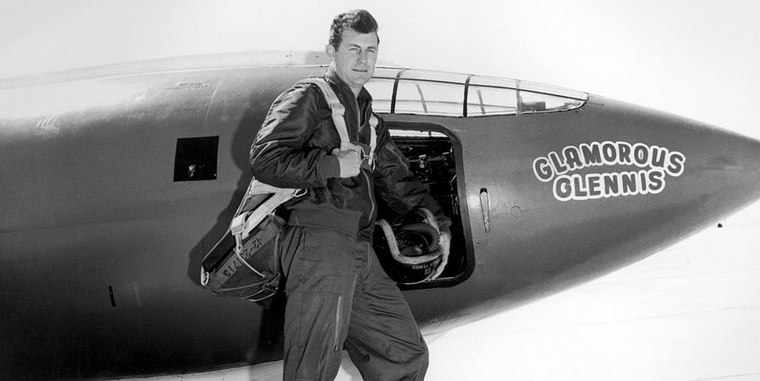
This week in history - Charles "Chuck" Yeager using a Bell X-1 carried out the only conventional (runway) take off performed during the X-1 program.
Worldwide Incidents and Accidents
Bonus video - Top Guns RCs at Mobile Deployment Wing AFB Swartkop
If your Business Wants to Connect Directly With the Most Engaged and Influential Audience in South African Aviation, There's no Better Platform than Pilot's Post Online Aviation.
In 2024 alone, we published 48 Midweek Updates and 192 in-depth Sunday feature reports, keeping readers informed, inspired, and invested in the latest developments across the aviation world. We remain the only South African publication providing daily coverage from Oshkosh and most major UK airshows, giving our audience exclusive insights they can't find anywhere else.
Over the past 14 years, we've produced an unmatched 3,729 articles and reports, building a reputation for credibility, quality, and consistency that both readers and advertiser's trust. No other aviation publication in South Africa can rival our reach, depth, or engagement and none can offer better exposure at more affordable rates. Whether you're launching a new product, promoting a service, or strengthening your brand presence, advertising with Pilot's Post ensures your message soars directly to the people who matter most in aviation.
Take your marketing to new heights-advertise with Pilot's Post and be part of South Africa's leading aviation voice.
Contact Willie on 082 442 8815 for a free no-obligation quote, and unbeatable value!
Aero Club Communique # 2 of 2026
Good day all Aero Club members.
The year has started a quite a pace. The 12-year engine overhaul matter continues to dominate. But we can share today that there has been positive progress with the 12-year issue.
During this past week two marathon meetings were held between the SACAA and industry members. In these meetings the proposed amendment to Part 43 of the S A Civil Aviation Technical Standards was discussed in detail. This amendment will be in the form of an additional appendix to the SA CATS of Part 43, Appendix 3, which will detail the process that the owner or operator needs to follow to maintain the safe operation of an aircraft fitted with a Lycoming or Continental engine that is older that 12 years.
In the two meetings various industry experts comprising, among others, aircraft maintenance engineers, private pilots and interested aviators together with the colleagues from the SA CAA met to discuss the proposed amendment. The debate at times was robust, but after two whole days consensus was reached about what should be in the document and how the process going forward should be managed.
At an Aviation Safety Operations meeting today it was decided that the final draft of the Appendix 3 will be circulated to all who were in the meeting and that it would be 1 ratified at a meeting on the 20th of January and then sent to the Civil Aviation Regulations Committee with a recommendation that it is sent for public comment.
Here are a few of the salient features of the content of Appendix 3:
• The main objective of the proposed amendment is to permit safe, traceable continued operation of piston aircraft engines beyond the manufacturer's recommended time/date TBO limits. This will be done through a documented, risk-based condition-monitoring regime.
• This condition monitoring applies to privately-operated, type-certified piston engines installed on South African-registered General Aviation (GA) aircraft where an owner/operator elects an on-condition approach under Parts 91 and 43.
• The condition monitoring programme will determine if an engine is fit to be “on condition” by way of detailed inspections and checks of all engine and other related components.
• The inspections and checks will be done with the Original Engine Manufacturers' recommended limits, standards and intervals as the guideline for the basis to determine if the engine remains satisfactory and if it can be continued to be used on an on-condition basis.
A number of Aero Club members have spent a lot of time and effort to work through the SACAA's proposal to formulate suggestions for alternative wording that will make the process as proposed in Appendix 3 easier for the Part 91 general aviation pilot with a TBO / 12-year-old engine to continue flying on an on condition basis. Apart from the work on the proposal there was the time spent in meetings this week.
We believe the effort was well worth it because the final draft of Appendix 3 is the best compromise that should suit affected Part 91 operators. This result obviously is the work of a collaborative effort between the SACAA, many other industry members and the Aero Club.
We want to sincerely thank the General Aviation Department at the SACAA, our AMO and AME colleagues, other interested and concerned aviators and the Aero Club members for their assistance in getting a workable solution to the 12-year engine issue.
It needs to be emphasised that the proposed amendment needs to follow a proper legal process before it can be officially promulgated. The legal process for the promulgation of the amendment must take its course and we abide by it. However, in this regard we mention that it is documented in the official minutes of SACAA meetings that the Aero Club has stated its commitment to assist in hastening the process, if possible, in any way.
At this stage it is not possible to predict a date when the proposed SA CATS
Appendix 3 will be promulgated.
Thank you to all our members. Till next week
Regards
Walter Doubell
Acting Chairman, Aero club of SA walter@aeroclub.org.za
Ramaphosa Lauds SA Air Force Role in Flood Rescue
Three of five SA Air Force (SAAF) helicopter squadrons were in action this week assisting people overcome the ravages of Mother Nature and, reportedly in certain instances, arsonists, prompting President Cyril Ramaphosa to praise the rotary wing rescues. www.defenceweb.co.za
The squadrons - 17 at Air Force Mobile Deployment Wing in Gauteng's Centurion, 19 at Air Force Base (AFB) Hoedspruit in Limpopo and 22 at AFB Ysterplaat in Cape Town - were tasked in response to requests to the SAAF Command Post at its Pretoria headquarters.
As far as can be ascertained four rotary wing aircraft were authorised for sorties to fight fires in the Western Cape province and rescue people stranded in the wake of torrential rain across the Limpopo and Mpumalanga provinces.
22 Squadron pilot Major Kobus de Beer reported an Oryx medium transport helicopter provided critical aerial fire fighting support to ground crews in the Hermanus and Stanford areas over the weekend of 10 and 11 January.
“Working as a seamless team, PIC (pilot in command) Major Warren 'Chico' Jobe; co-pilot Major Harvey 'Buksie' Strauss and flight engineer Sergeant Hanroh 'Wouter' Nortjé conducted more than 100 drops using the Bambi bucket under challenging conditions, helping to slow the spread of the fires and support ground firefighting efforts.
“Equally important to the success of the operation was the hard work behind the scenes. Ground crew from 22 Squadron and AFB Overberg ensured the Oryx was serviceable, refuelled and ready to fly at short notice, enabling sustained operations when they were needed most,” De Beer wrote.
Around 1 200 nautical miles to the north in Limpopo, another SAAF Oryx and an Agusta A109 light utility helicopter (LUH) flew numerous sorties bringing residents stranded by floods to safety. An unknown number of sorties were flown over a 25-hour period ending at 02h00 on 15 January, hoisting people from rooftops and trees.
An SA National Defence Force (SANDF) Directorate Corporate Communication (DCC) statement has it one aircrew was tasked to rescue a family from Mbaula village, outside Giyani. The community informed the crew and they rescued other people from rooftops and high-lying areas with at least one family member rescued from a tree in the flooded Olifants River. SAAF personnel, according to the DCC statement, brought a local chief to safety after he evaded floodwaters by climbing onto a house roof.
“Aircrews are still assisting others trapped on trees and those requiring medical attention are being taken to Maphutha hospital, near Phalaborwa,” the 15 January statement said.
“The deployed Oryx brought Border Management Authority (BMA) and SA Police Service (SAPS) personnel to safety after they were trapped by rising waters at the Pafuri port of entry (PoE). The A109 was tasked to hoist 18 people from the flooded Khambaku Lodge outside Phalaborwa in another sortie,” the SANDF added.
Summing up the 22 Squadron mission, which is also applicable to the humanitarian ops executed by 17 and 19 squadrons in Limpopo, De Beer wrote the deployment(s) “again highlighted the professionalism, skill and commitment of the SAAF in serving the people of South Africa”.
“Sincere thanks go to everyone involved, aircrew and ground crew alike, for their dedication and teamwork in making the operation a success.”
Ramaphosa this week visited Limpopo after heavy rainfall and flooding left at least 19 people dead and caused destruction to homes, businesses and infrastructure. More than 400 mm of rain that fell in the Vhembe and Mopani Districts.
Ramaphosa noted that government officials have been on the ground “doing everything they can to assist the people who have been affected by the floods. Provincial government…has come out in a very strong way. So much as disaster befalls us with climate change, with rains that are now devastating, we've been able to find a response. Of course, we need to do a little bit more.
“And of course, our South African Airforce came out with their helicopters and rescued a number of people from rooftops and from trees. That shows that our response to disaster is getting better both at the institutional level like the Airforce, the South African Defence Force and also at local government level,” he added.
Motshekga Officially Launches AAD 2026 during Silver Anniversary Celebration
Guy Martin www.defenceweb.co.za Photo: Guy Martin
The Africa Aerospace and Defence (AAD) exhibition is one of the longest running such events on the continent, and is celebrating 25 years of existence. Defence Minister Angie Motshekga was the main functionary at an anniversary event and official launch of the 2026 edition at Air Force Base Waterkloof.
Delivering her keynote address on Thursday 15 January, Motshekga said AAD is a global and continental platform that allows exhibitors to engage on the evolving nature of the industry. The exhibition, Motshekga said, promotes exports that sustain the defence industry, firms up partnerships, attracts investment, cultivates skills, and strengthens Africa's industrial base.
As no nation can meet the challenges of security by themselves, AAD allows participants to share knowledge and strengthen partnerships. Motshekga emphasised the critical role of defence in ensuring stability and fostering development, as a safe and secure environment attracts investment, stimulates growth, and allows economies to thrive. “Peace efforts may not always make headlines but their impact is real as economies can thrive,” she said. Defence, for example, plays a developmental role by securing borders.
Mike Clark, President of the Commercial Aviation Association of Southern Africa (CAASA), said AAD is the largest aerospace and defence platform on the continent, and has stood the test of time, including enduring the Covid-19 pandemic. “Through resilience we pivoted back to healthy and thriving status.”
“This expo is a bridge between nations, people, and industry, bringing them together for shared progress.” He said government recognition as strategic national event underscores the importance of AAD, with the 2026 iteration set to be a groundbreaking edition.
Entrepreneur and AAD Youth Development Programme Chairperson Kholisile Khumalo highlighted the economic impact of AAD, which amounts to R500 million, according to a University of Pretoria study.
Part of the official launch on Thursday 15 January included an awards ceremony, with Contribution to AAD awards presented to members of the South African National Defence Force, CAASA, Aero Club of South Africa, Air Show South Africa, and AAD organisers. Winners of the AAD photographic competition were announced: Meghan McCabe received top spot for her winning photo, receiving a R6 000 prize, while Sebastian Horrell received R5 000 as the youth category winner. Francois Louw received R4 000 as the runner-up.
After Motshekga officially launched the 2026 edition of AAD, Exhibition Director Nakedi Phasha said it is now all systems go. “We are building a launchpad for Africa's airspace and defence future. AAD 2026 is set to be bigger, better and bolder. AAD is not just an event but a platform to be reckoned with. As the longest serving such exhibition in Africa, it has stood the test of time.”
AAD 2026, scheduled to take place from 16 to 20 September 2026 at Air Force Base Waterkloof, has been formally declared a national event by the South African government, signalling commitment to strengthening South Africa's aerospace, defence and advanced manufacturing capacity.
“It also broadens the platform's relevance by giving companies outside the traditional defence environment, including those in mining, information and communication technology, engineering and high-precision manufacturing, a space to showcase dual-use technologies that support both industrial and national capability,” Phasha said.
AAD organisers and its partners, Armscor, the Aerospace, Maritime and Defence Industries Association of South Africa (AMD) and CAASA, remain committed to ensure local manufacturers remain connected to international markets despite growing uncertainty.
“Through collaboration with the Department of Trade, Industry and Competition, South African firms also participate in key international exhibitions under the national pavilion programme, widening their visibility and improving export readiness,” Phasha told Engineering News.
She said that universities, research institutions and technology bodies use AAD to connect with industry, helping to support innovation across civilian aviation, space, robotics and advanced manufacturing. AAD's impact has seen international partnerships formed at the exhibition resulting in joint ventures, co-production agreements and meaningful technology transfer into South Africa's industrial base.
AAD has been promoted far and wide, including at other major global defence shows, including the International Defence Exhibition and Conference (IDEX) in the UAE, the Naval Defence Exhibition (NAVDEX) in the UAE, the Defence and Security Equipment International Exhibition (DSEI) in the UK, and the International Defence Industry Fair (IDEF) in Turkey. “These engagements help position the South African industry within global networks and secure interest from government and corporate delegations,” Phasha said.
CAASA is the lead partner for the 2026 edition of AAD. Organisers are expecting more than 300 global exhibitors, 30 000 trade visitors, and 80 000 public visitors during the weekend air show days.
DefenceWeb has partnered with the AAD organisers to run the three-issue Show Daily magazine and three-day AAD Conference. For more information contact Robert Mace (sales), Guy Martin (editorial), or Ros Hinchcliffe (conference).
Pipistrel Velis Electro, Explorer, Velis Club Aircraft Earn Type Certificate Validation from Transport Canada
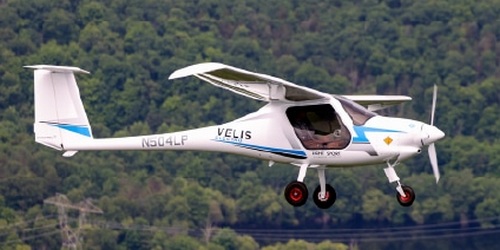
Pipistrel, a Textron Inc. (NYSE: TXT) company, today announced that Transport Canada has validated the type certificate for the currently produced Pipistrel Explorer, Velis Club and Velis Electro. This milestone paves the way for operators to own and fly the validated aircraft models, opening new opportunities for flight schools to incorporate these aircraft into their curriculum, providing future pilots advanced training opportunities.
“Transport Canada's validation of these aircraft type certificates serve as an acknowledgement of our teams engineering expertise and highlights the growing international recognition of our products in key global markets,” said Gabriel Massey, president and managing director of Pipistrel. “This validation not only strengthens our position in the Canadian market, but also significantly enhances flight training capabilities across the country.”
The Pipistrel Velis Electro offers a lower-cost and zero emissions platform for pilots. The aircraft's low-noise profile, producing noise levels of only 60 decibels, and user-friendly avionics, make it an ideal solution for flight training with zero carbon emissions. The aircraft achieved EASA type certification in 2020, UK CAA certification in 2022 and subsequent FAA LSA airworthiness exemption in 2024. Notably, in 2024, the Velis Electro's electric engine was the first electric engine to receive type certification validation in Canada.
In 2022, Pipistrel delivered its first Velis Electro to Canada, to the Waterloo Institute for Sustainable Aeronautics (WISA) at the University of Waterloo and its partner Waterloo Wellington Flight Centre (WWFC), supporting research and evaluation of battery-powered electric flight.
The Pipistrel Explorer offers superior performance with minimum power required, making it suitable for remote operations in varied temperatures and altitudes. The aircraft is approved for day and night VFR operation, intentional spins and comes with an IFR-ready avionics package. The type certification for the original Explorer model (Virus SW 121) was issued in 2016, and the Pipistrel Explorer (Virus SW 121A) achieved EASA type certification in 2021.
Daher's TBM and Kodiak Aircraft Continued Their Market Expansion with Deliveries in 2025
A total of 76 airplanes were delivered by Daher Aircraft during the year: 51 TBM 960s were from the Tarbes production site in southwest France; while 25 Kodiaks were provided from the company's U.S. industrial facility at Sandpoint, Idaho, with this total involving both the cornerstone Kodiak 100 and the larger Kodiak 900 versions.
“Our teams remained fully mobilized through the final days of the year with one clear priority: delivering for our customers, » explained Daher Aircraft CEO Nicolas Chabbert. « Their efforts underscored Daher Aircraft's capacity to stay focused on execution and customer commitments, especially as conditions evolved during the year.”
Among the 2025 highlights was the 600th delivery of a TBM 900 series aircraft, confirming this category's distinction as the most popular since the TBM airplane family's service entry in 1990.
The current top-of-the-line TBM 960 version benefits from Daher's application of digital power, featuring a dual-channel digital Engine and Propeller Electronic Control System (EPECS); as well as the TBM e-copilot® functions with an icing protection system; flight envelope monitoring, and the HomeSafe™ emergency autoland system.
Daher Aircraft's 2025 deliveries included key achievements in the multi-mission segment for both the TBM and Kodiak. The Canadian-based Conair Group received its second and third TBM 960s as “birddog” airplanes for support operations to fight wildfires.
In the highly demanding “birddog” role, the TBM 960s are continuously flown over a fire to monitor the affected area, assess risks, and strategize airtanker drops of water/retardant. During the introductory service in the 2025 fire season, the TBM 960s demonstrated their capability and reliability while deployed by Conair for aerial firefighting in British Columbia.
Overall, the top geographical markets for TBM deliveries continued to be North and South America, with more than 75 percent of the total going to these regions during 2025. Europe accounted for 23 percent of the 2025 volume, with 12 aircraft delivered.
During the previous 12 months, Kodiak deliveries by Daher Aircraft once again confirmed the significant demand for these airplanes in multi-mission roles, representing 30 percent of the year's total. The majority was for law enforcement agencies, with customers taking deliveries of Kodiak 100s that included the Virginia State Police, New York State Police, and San Jose Police Department. A Kodiak 900 was delivered to the Maricopa County Sheriff's Office in the state of Arizona, while the first Kodiak 900 version for firefighting support operations was accepted by the Montana Department of Natural Resources.
The Kodiak 100 entered service in 2008 and currently is produced by Daher Aircraft in the enhanced Kodiak 100 Series III version. The larger and faster Kodiak 900 was introduced by Daher in 2022.
Daher Aircraft expanded its international presence during 2025 with the establishment of a Brazilian operation based in São Paulo, marking a key step in the long-term strategy to support and expand the presence of TBM and Kodiak aircraft in Brazil and across Latin America.
As of December 31, 2025, a total of 1,294 TBMs and 390 Kodiaks had been delivered worldwide, with the global fleet accumulating approximately three million flight hours.
Enstrom Achieves FAA Compliance for CRFS, Re-enters U.S. Helicopter Market
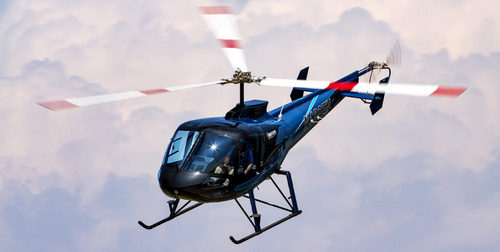
Enstrom Helicopter Corporation has received full Federal Aviation Administration (FAA) certification for the crash resistant fuel system (CRFS) on its 480B turbine-powered helicopter. This achievement enables Enstrom to resume sales of newly produced 480B helicopters to the global market.
The U.S. Congress had previously approved an FAA mandate requiring all helicopter manufacturers to implement CRFS technology into new helicopters. The CRFS is designed to minimize the risk of post-impact fuel fires during crashes. It's comprised of a new type of bladder material, breaks away fittings to close off fuel lines, and reinforced structural elements to protect the fuel system from penetration and leaking.
“This certification marks a pivotal moment for Enstrom as we reaffirm our commitment to safety and innovation, protecting pilots, passengers, and crew,” said Charles Wade, Senior Vice President of Product, Sales, and Customer Excellence. “The 480B has long been a trusted platform for flight training, law enforcement, and personal transport. Not only are we exceeding modern regulatory demands, but we're also delivering enhanced survivability that customers can rely on in the most demanding environments.”
This FAA validation occurred simultaneously with validation for the European Union Aviation Safety Agency (EASA). EASA authorities are finalizing a package in the coming weeks to signify full compliance. Once complete, Enstrom will fully re-enter the European helicopter market.
Enstrom partnered with Safran Aerosystems in developing and supplying the fuel bladders the necessary components for the CRFS. Safran also managed product-level testing to support Enstrom's aircraft-level certification.
This certification paves the way for FAA approval of the CRFS developed for Enstrom's piston-powered 280FX model, for which Enstrom and Safran Aerosystems are working together closely.
Wade said, “We are in the final stages of ground and flight test for the CRFS in the 280FX, with a Q1 2026 target for certification. This will enable sales of newly produced 280FX helicopters globally.”
First T-7A Red Hawk advanced trainer inducted into service
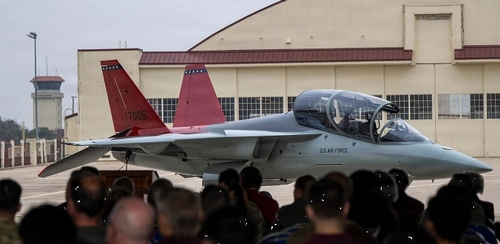
The U.S. Air Force, state and federal legislators, and Boeing leaders converged on Joint Base San Antonio-Randolph Air Force Base, Texas, Friday, to officially induct the T-7A Red Hawk advanced trainer into U.S. Air Force Air Education and Training Command service.
Why it matters: The jet, APT-5, delivered on Dec. 5, 2025, is the first of 351 jets that will provide training for future U.S. Air Force fighter and bomber pilots in the digital age.
The T-7A Red Hawk replaces the T-38 trainer that has been in service for almost 65 years.
“This is the airplane that we need to get us to the next level,” said Lt. Gen. Scott L. Pleus, acting vice chief of staff, U.S. Air Force. “It has been an absolute wonder to watch as we've gone from clean sheet design all the way to an airplane that now sits at Randolph Air Force Base, ready to start flying.”
“Today marks the beginning of a new chapter in the history of our Air Force,” said Air Force Lt. Gen. Clark J. Quinn, commander, U.S. Air Force Air Education and Training Command. “The T-7A represents our commitment to staying ahead of the curve and ensuring our Air Force remains the most dominant air power in the world.”
Zoom in: Hundreds at the ceremony watched as the Red Hawk taxied to Hangar 41, the aircraft's red tails - in honour of the Tuskegee Airmen and their red-tailed P-51 Mustang fighters of World War II - drawing contrast against an overcast sky. The ceremony had been postponed last month due to severe winter weather.
The big picture: The digitally designed, built and tested jet will provide advanced training for the rigors of modern-day missions, with an advanced cockpit, open architecture digital fly-by-wire control system and state-of-the-art avionics for a new level of safety.
All five engineering and manufacturing development (EMD) jets have now been delivered contractually. This is the first Red Hawk aircraft that has been officially inducted into service at an Air Force base.
Companion ground-based training systems with 8K projection resolution and live, virtual and constructive capabilities have also been delivered and are operational.
Catch up quick: In 2018, the U.S. Air Force awarded Boeing a $9.2 billion contract for the advanced trainers and 46 leading-edge simulators and support. The jet went from firm concept to first flight in just 36 months due to its digital design and new production techniques.
The bottom line: “It's inspiring to see the progress we are making together with the U.S. Air Force on this program,” said Dan Gillian, vice president and general manager, Boeing Air Dominance. “We made a commitment to deliver this trainer, both the aircraft and the Ground Based Training System, on Dec. 5 and it was great to celebrate that accomplishment.”
Delta Air Lines Orders up to 60 Boeing 787 Dreamliners
Boeing (NYSE: BA) and Delta Air Lines today announced the U.S. carrier placed its first direct order for up to 60 787 Dreamliners to support long-haul international growth and renew the airline's wide body fleet. Delta's purchase of 30 787-10 jets - with opportunity for up to 30 more of the largest 787 variant - will enable the airline's expansion and modernization plans on high-demand transatlantic and South American routes.
"Delta is building the fleet for the future, enhancing the customer experience, driving operational improvements and providing steady replacements for less efficient, older aircraft in the decade to come," said Ed Bastian, Delta's chief executive officer. "Most importantly, these aircraft will be operated by the best aviation professionals in the industry, providing Delta's welcoming, elevated and caring service to travellers worldwide."
With capacity for up to 336 passengers and 25% lower fuel use than the airplanes it replaces, the 787-10 offers the lowest operating cost per seat of any wide body airplane. Delivering superior comfort for passengers, the 787 Dreamliner features the largest windows of any wide body airplane flying today and air that is pressurized at a lower cabin altitude, which will help Delta's customers arrive at their destinations feeling more refreshed.
"We are excited that Delta Air Lines has selected the 787-10 to join its fleet of the future. The 787 Dreamliner's unmatched efficiency, range, and passenger comfort make it a perfect fit for Delta's international expansion and fleet modernization," said Stephanie Pope, president and CEO of Boeing Commercial Airplanes. "Our team looks forward to delivering new Dreamliners to Delta and supporting their commitments to provide an exceptional passenger experience and advance sustainability in aviation."
With more than 460 Boeing airplanes currently in service, Delta has flown most Boeing single-aisle and wide body models across its domestic and international networks over the decades. This new wide body order further strengthens that partnership and supports U.S. aerospace manufacturing jobs across Boeing's production system and supply chain.
Today's purchase brings Delta's firm order book to 130 Boeing airplanes, including the airline's order for 100 737-10 jets. The efficiency and flexibility of the 787-10 and 737-10 will enable Delta to fly more passengers on more routes as the airline expands and diversifies its network.
5 JANUARY 1949
Charles "Chuck" Yeager using a Bell X-1 carried out the only conventional (runway) take off performed during the X-1 program, reaching 23,000 ft (7,000 m) in 90 seconds.
The X-1, piloted by Chuck Yeager, was the first manned airplane to exceed the speed of sound in level flight and was the first of the X-planes, a series of American experimental rocket planes (and non-rocket planes) designed for testing new technologies.
As the design might have led to a fighter, it was intended to take off from the ground, but the end of the war made the B-29 Superfortress capable to carry it into the air.
India, Delhi-Indira Gandhi International Airport (DEL/VIDP): An Air India flight AI101, Airbus A350-941, had returned to Delhi due to closure of Iranian airspace. While taxiing to the parking bay in thick fog, one of the engines of the airplane ingested a cargo container.
Indonesia, Bulusaraung Pangkep mountain, Maros Regency, South Sulawes: An Indonesia Air ATR 42-512, operated for the Marine and Fisheries Resources Surveillance (PSDKP) impacted a mountainside while approaching the destination, Makassar-Sultan Hasanuddin International Airport (UPG). The airplane was carrying seven crew members and three passengers. The Transportation Ministry reported that, at 04:23 UTC (11:23 LT), the aircraft was cleared by the Makassar Area Terminal Service Centre (MATSC) air traffic control for an approach to Runway 21 at UPG. During the approach, ATC identified that the aircraft was not on the correct approach path and subsequently instructed the crew to adjust its position. ATC issued several additional course instructions. Contact was lost after the final instruction was transmitted. The aircraft impacted a cliff on Mount Bulusaraung, with debris falling into a ravine below. The wreckage coordinates reported by the search and rescue agency Basarnas point to a 4327 feet peak, 14 nm north-east of the threshold of runway 21. Minimum Sector Altitude in the area is 8500 feet with an ATC surveillance minimum of 6000 feet.
Top Guns RCs at Mobile Deployment Wing AFB Swartkop 399