Aero Club Communique # 6 of 2026
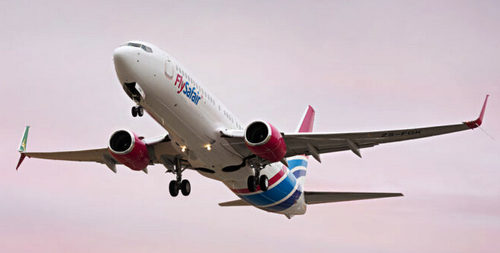
FlySafair welcomes proposed new shareholder, reaffirms business as usual.
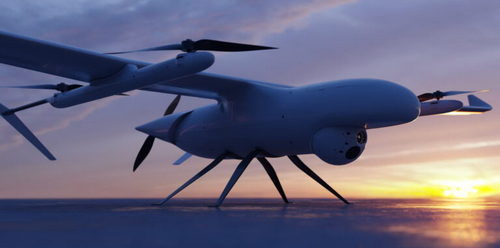
CSIR demonstrates propulsion for hydrogen fuel cell-powered UAV.
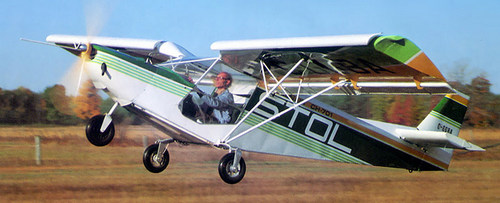
Did you know Zenith is celebrating the 40th anniversary of the STOL CH 701?
The French Navy to become first operator of Airbus' Aliaca vertical uncrewed aerial system.
Boeing flight deck modernization keeps C-17A mission ready.
Bell 505: introducing the height of military VTOL Pilot training.
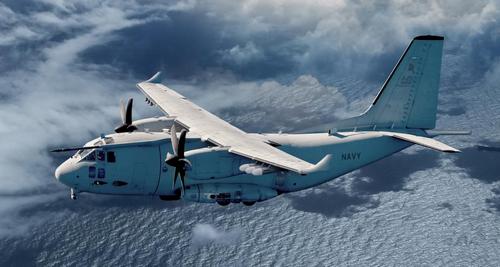
KSA's Ministry of Defence to introduce advanced maritime patrol and multi-mission capabilities with contract for four C-27J MPA aircraft.
This week in history - Pacific Southwest Airlines Flight 1771, a BAe 146, is hijacked and deliberately crashed near Cayucos, California.
Worldwide Incidents and Accidents
Bonus video - A busy Saturday morning flying.
Aero Club Communique # 6 of 2026
Good day to all our Aero Club members and the GA Industry.
The Thirty-Fourth Amendment of the Civil Aviation Regulations, 2026 was published earlier this week. It will be signed by the Minister of Transport and probably come into effect on the 1st of April 2026. This amendment is about changes to the fee structure of the SACAA and includes fee increases to various Parts of the regulations that affect general and recreational aviation.
A brief summary of our involvement in this fee amendment process is: The Aero Club first objected to the proposed fee increases in May 2023 after the increases were proposed by the SACAA. The basic principles of our objection at the time were stated as: “The Aero Club represents the individual recreational aviation pilot. These pilots are from all the various flying disciplines. We have members who offer training and/or maintenance facilities; these are typically small entities that employ a few people. It follows that our members are cost conscious and will not be able to afford large fee increases.
Any costing model has its flaws. We feel that your ABC cost model is geared to the larger corporate enterprise and does not accommodate the small aviation business or the individuals who are involved only with recreational aviation. This was mentioned in the meeting on the 17th of March 2023. Also, to be noted that Recreational Aviation is not required to be ICAO aligned, thus there can be simpler administrative processes applied within the CAA which do not need to be costly.”
We additionally commented on the structure of the fee increases: “We wish to add the following: the average increase for the 17 items that we are objecting to for the 2023 / 2024 years is 92% and range from 35% to 277%. The average increase for the 17 items for the 2024 / 2025 years is 52% and range from 22% to 80%.
In some cases, the actual Rand amount of the increase is not that large, but we need to emphasize that we are dealing with individuals and small businesses to whom every cent counts.”
• Another aspect of the fee increase that was questioned was that the increase was based upon 50% of the CAA's Activity Based Costing model (ABC model) and CPI. In some cases, we suggested a 25% increase on the ABC figure plus CPI to limit the impact on the user.
• We compared certain elements of the cost structure of the SACAA to the same elements in the yearly financial statements of the aviation authorities in the USA, the UK, New Zealand and Australia. It was found that our CAA cost in terms of the examined elements is similar to the mentioned authorities.
• Once we had the necessary information, we submitted proposed changes to the fee increase proposal. The outcome of a number of discussions and four meetings was that in a final meeting with the Finance Department of the SACAA and the Aero Club, an agreement was reached on the proposed fee increases for certain fees in terms of Parts 61, 62, 66, 69 and part 105, as well as their payment frequency as some payments could be extended to every two years to align with renewal terms.
We thank the Finance Department of the CAA for their cooperation in reaching an agreement on the proposed fees.
The regulatory changes that affect the 12-year engine matter are the proposed amendments to the regulations in Part 43.02.1 and Part 91.09.1. These have been approved for promulgation. Appendix 3 of Part 43 which sets out the technical process for the maintenance of engines older than 12 years has been approved for public comment. We are hopeful that both the amendments to Parts 43 and Part 91 and Appendix 3 will be sent for publishing in the Government Gazette during next week.
Although there is good progress here, it will still take time to seek relief for those who are stuck without a renewed CoA as once the public comment phase is concluded, the proposals have to be submitted to CARCom which is in April, after which when approved, relief can be secured.
At the CARCom meeting on the 5th of December 2025 an exemption request for interim relief for aircraft with engines older than 12 years was personally delivered to the relevant department at the CAA. This exemption request was submitted on behalf of the AIC 18.19 task team. The necessary fee was paid and in early January a few queries were answered. At this stage we are still waiting to hear the outcome of this exemption application.
At a meeting of the Aero Club Airweek planning committee this week, it was a pleasure to see the plans coming together. The team is doing a stellar job and have been able to secure many exhibitors who will be on hand to support your interest.
There are also AeCSA sections who will be carrying out their specialist activities during the weekend.
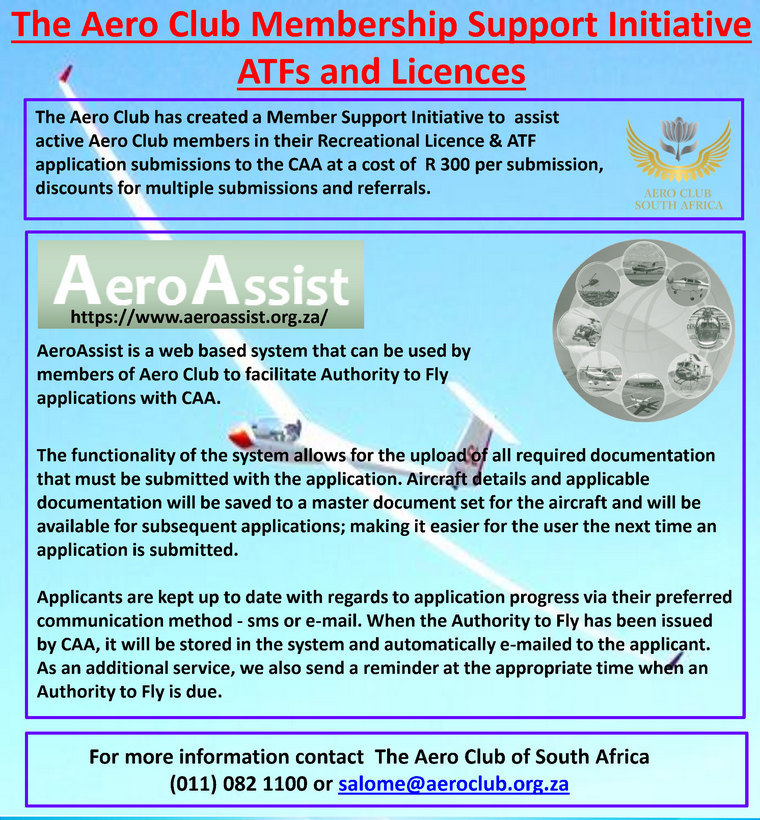
If you need to renew your Authority to Fly, see the information below about our Aero Assist system. The 2026 Aero Club membership renewal commenced on the 1st of December. Please visit the Aero Club website renewal portal at https://aeroclub.org.za/membership/ to renew or to register as a new member.
Enjoy the week, keep it safe, till next week.
Regards
Walter Doubell
Acting Chairman, Aero club of SA
walter@aeroclub.org.za
Flysafair Welcomes Proposed New Shareholder, Reaffirms Business as Usual FlySafair confirmed that its shareholders have entered into a Sale and Purchase Agreement with Harith and its affiliates to acquire the airline, subject to the required regulatory approvals.
For FlySafair's customers, employees and partners, it is business as usual. The airline will continue to operate under its existing brand, leadership and strategy, delivering the same affordable fares, reliable operations and strong on-time performance that customers have come to expect.
The proposed transaction reflects confidence in a business built on operational discipline, a committed workforce and a clear strategic focus, positioning FlySafair for long-term sustainability.
A regulatory process relating to FlySafair's structure, following findings issued by the Air Services Licensing Council in early 2025, remains ongoing. The proposed transaction was not initiated in response to those findings, which are subject to an ongoing legal review. Transactions of this scale and complexity are typically developed over an extended period and have been under discussion for some time. While the transaction would result in the airline being owned by South African investors, it does not automatically resolve the matters under consideration by the licensing authorities, who will assess the proposed structure in accordance with their statutory mandates. The transacting parties respect the independence of those institutions and will continue to engage fully and transparently as required.
Harith celebrates 20 years this year as a long-term investor in mobilising capital for infrastructure developments across Africa and this transaction supports their strategy of establishing a highly effective integrated transport ecosystem that connects Africa. The proposed investment is aligned with FlySafair's existing trajectory and supports the airline's continued focus on operational excellence and sustainable growth. By providing patient, long-term capital, Harith supports FlySafair's existing strategy to enhance affordability, reliability and connectivity.
The transaction remains subject to the usual regulatory approval processes, including review by the Competition Commission and aviation authorities, amongst others. FlySafair and its shareholders will continue to engage constructively with the relevant authorities as those processes unfold.
Timelines for the conclusion of the transaction are entirely dependent on the approval processes that follow.
Harith's approach as a trusted, value-focused investor is centred on acquiring established businesses with proven operating models and supporting them over time. In this instance, Harith has identified a strong brand and a disciplined, successful operating formula at FlySafair. Consistent with that approach, the intention is for the airline to continue operating under its existing strategy and leadership, with a focus on sustaining performance, long-term value creation, and bolstering Harith's strategy to secure an integrated transport network in Africa.
CSIR Demonstrates Propulsion for Hydrogen Fuel Cell-Powered UAV
Researchers at the Council for Scientific and Industrial Research (CSIR) have demonstrated hydrogen fuel cell-propulsion for unmanned aerial vehicles (UAVs) in a hardware-in-the-loop (HWIL) simulation. Guy Martin www.defenceweb.co.za
CSIR researchers used a simulation of a hybrid fixed-wing, vertical take-off and landing (VTOL) UAV (H2UAV) for the demonstration in May last year. The HWIL simulation included the fuel cell module and hydrogen storage vessel, and amongst others simulated in a laboratory the electrical loads that would be experienced in flight. Future tests will simulate fuel cell performance in different environmental conditions.
The aviation industry still largely relies on fossil fuels for propulsion, the Council noted. The benefits of hydrogen propulsion for UAVs include longer flight times than electric propulsion due to higher fuel energy density, zero-emission potential, faster refuelling, and increased payload capacity.
“While the hydrogen fuel cell research is still in the development stage, once completed, a commercially viable fuel cell-propulsion system and the hydrogen-powered UAV will be licensed to a local partner for industrialisation and commercialisation,” the CSIR said.
The H2UAV is designed from the outset for hydrogen propulsion and is currently under development at the CSIR. Weighing less than 35 kg, with a four-meter wingspan, the vertical takeoff and landing UAV will handle a 5 kg payload and have a flight time of approximately 10 hours or more. It will be able to operate in adverse conditions, including light rain and temperatures ranging from -19 to +45 degrees Celsius.
A modular design will allow for rapid payload reconfiguration, making it adaptable for different mission types, such as patrolling, monitoring or surveillance. As the hydrogen-powered UAV will operate quietly, it will be ideal for surveillance and reconnaissance missions.
The multi-year project was initiated and funded by the Department of Science, Technology and Innovation (DSTI). Development of the H2UAV is a first step in a roadmap towards the expanded use of hydrogen in South African aviation including general aviation aircraft and regional airliners. This is in line with the DSTI's Hydrogen Society Roadmap that aims to develop a sustainable and competitive hydrogen economy in South Africa by 2050.
Kevin Jamison, Head Engineer: Aerospace Systems at the CSIR, told DefenceWeb that when it comes to decarbonising aviation, it is easier to start somewhere affordable. From a risk management point of view, it is easier to start small and then scale up, with hydrogen fuel powered regional airliners and manned aircraft the end goal.
Katleho Ramotsabi, Senior Project Manager: Aerospace Systems at the CSIR, said the Council's role in the Hydrogen Society Roadmap is to establish and localise manufacturing towards the ultimate goal of decarbonising the transport sector. The Roadmap covers the mining, air mobility, and heavy-duty transport sectors. The CSIR has also initiated work with regulators around hydrogen generation, filling, storage and transportation.
Ramotsabi noted that there is big demand for hybrid VTOL UAVs, with market forecasts predicting around 20% compound annual growth over the next five years, and demand coming from multiple key sectors such as commercial, military, law enforcement, and government.
The CSIR Impact Area Manager for Aerospace Systems, Biko Managa, reiterated his team's intent to push the boundaries of propulsion in aviation for the local industry. “We are working to position South Africa as a leader in hydrogen-based aviation technologies, reducing reliance on fossil fuels and contributing to a cleaner future for aerospace,” he said.
“The pursuit of hydrogen alternatives is not only about reducing gas emissions that harm the environment but at the CSIR, we also view it as an opportunity for exploring new fields of science, developing new skills, creating jobs, fostering partnerships and driving up exports of South African products,” he added.
The project is benefitting from work being done by Hydrogen SA (HySA), a DSTI initiative, through its Centres of Competence (CoCs), which has amongst others developed a portable on-site hydrogen generator that can produce 2.5 kg of hydrogen a day. The system weighs 850 kg. HySA Infrastructure has also developed a storage vessel weighing 1.7 kg and able to store 4.7 litres of hydrogen.
Jamison said the government is very interested in fuel cells because they require platinum in their catalyst - and South Africa is a major producer of platinum. Although hydrogen has its pros and cons, it is a promising green energy alternative. Although funding for the fuel cell and H2UAV project has been inconsistent, the CSIR is putting together a funding framework and there is renewed focus on getting the project going again, Jamison said.
There is already interest in the H2UAV from the South African Army, and the Department of Trade, Industry and Competition has approached the CSIR noting interest from the Border Management Authority in a long-endurance quiet UAV. Jamison believes there are many potential customers for a fuel cell-powered UAV, such as the Department of Forestry, Fisheries and the Environment, which would like such an aircraft for anti-pollution patrols.
Did You Know Zenith is Celebrating the 40th Anniversary of the STOL CH 701?
Over the past forty years, the Zenith STOL CH 701 has developed an almost legendary reputation for one simple reason: it delivers what it promises. Designed by famed aeronautical engineer Chris Heintz as a true Short Take-off and Landing (STOL) aircraft, the 701 combines' rugged capability with remarkable simplicity. It's an airplane that invites pilots to explore off-airport: grass strips, riverbanks, and mountain clearings.
Introduced in 1986, the STOL CH 701 aircraft was developed to fulfill the requirements of both sport pilots and first-time builders, and combined the features and advantages of a “real” airplane (all-metal, enclosed cockpit with side-by-side seating, tricycle gear) with the short-field capabilities and fun of an “ultralight” aircraft (popularized in the early eighties).
What makes the design especially unique is its “form follows function” philosophy. The fixed leading-edge slats, full-span flaperons, large rudder, steerable tricycle landing gear, and highly effective high-lift wing allow the aircraft to fly comfortably at very low airspeeds while maintaining excellent control. The result is not just short takeoffs and landings, but precise and predictable, yet forgiving handling - a trait that builders and pilots consistently praise. It's a durable all-metal light aircraft engineered to perform its task extremely well rather than just look sleek. Read more about the Zenith STOL design elements.
Both stock and custom STOL CH 701 aircraft have demonstrated (and won) at numerous STOL demos and competitions in the U.S. and around the world.
Zenith Aircraft's STOL CH 701 helped define the modern kit aircraft movement by proving that a highly capable light utility airplane could also be straightforward and affordable to build and to own. Thousands of first-time builders have succeeded building their very own CH 701, often discovering that constructing the airplane became just as rewarding as flying it. The builder-friendly approach championed by Chris Heintz is now even easier and quicker with Zenith offering final hole size match-drilled parts and assemblies, revolutionizing ease of kit assembly.
Perhaps the strongest testament to the CH 701's special status is its global footprint. From the "outback" country to the far north, from African bush flying to weekend American backcountry adventures, the "Sky Jeep" aircraft has demonstrated a versatility few designs can match. Forty years on, the CH 701 isn't just relevant - it remains a benchmark for practical STOL performance and a reminder that great engineering never goes out of style.
While the basic design has remained the same, many significant enhancements and customizations have been introduced over the years, including a higher useful load and many options and refinements.
The success and endearing qualities of the original STOL CH 701 spawned the full line of high-wing Zenith STOL designs, including the STOL CH 801 (with four seats), STOL CH 750 (optimized for the Light Sport Aircraft category), and newer variants including the faster CH 750 Cruzer and rugged STOL CH 750 Super Duty, with higher load carrying capability (and rear jump seat).
The French Navy to Become First Operator of Airbus' Aliaca Vertical Uncrewed Aerial System
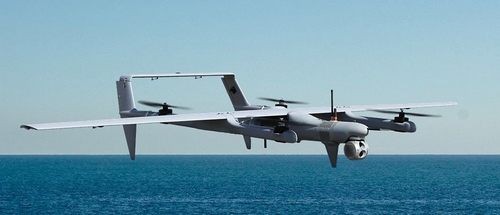
The French Directorate General of Armament (DGA) has ordered a new version of the SMDM ("Onboard Mini Aerial Drone Systems for the Navy") from Airbus Helicopters (via its subsidiary Survey Copter). This UAS will now be delivered in the new vertical take-off and landing configuration (VTOL). The DGA has ordered a total of 34 Aliaca systems for the French Navy since 2022. Deliveries of this new version will begin in May 2026, following a qualification campaign.
"We are proud to be able to deliver the VTOL version of the Aliaca to the French Navy for the first time," said Christophe Canguilhem, Aliaca programme director at Airbus Helicopters. "The French Navy has successfully operated the Aliaca from its ships and from land for several years. The SMDM, as it is named in the French Navy, has demonstrated its full potential in operation," he added. "With the VTOL version, the French Navy will be able to operate the Aliaca with even more flexibility. This amendment to the initial contract demonstrates that our solution is now mature and available for our customers worldwide."
The Aliaca VTOL was tested on land and at sea at the end of 2024 and throughout 2025. Unveiled in April 2025, the Aliaca VTOL was developed in less than a year from a version already proven in operations within the French Navy. This tactical mini-drone is equipped with four propellers, allowing for vertical take-off and landing while maintaining its fixed-wing propulsion mode during the mission. It has a maximum take-off weight of 25 kg, a wingspan of 3.5 m, and a length of 2.1 m. With an endurance of two hours, a range of 50 km, Aliaca is equipped with a camera, a high-performance gyro-stabilised electro-optical/infrared system, and an Automatic Identification System that is capable of identifying a ship within a radius of several hundred kilometres.
This evolution of the SMDM maintains the performance and architecture of the existing system while offering faster deployment and a reduced logistical footprint due to the absence of launch-and-recovery systems. Operators retain the same ground station, which is already proven and recognised for its ease of use.
Qualified by the DGA and operational since 2022 as the "remote binoculars" of the French Navy, the SMDM currently equips patrol vessels (PHM - high-sea patrol vessels and POM - overseas patrol vessels) and surveillance frigates. Since the summer of 2023, it has also been deployed from the French coast for search and rescue missions in the English Channel. The vertical take-off and landing version will equip other types of French Navy vessels to perform various missions: maintaining tactical situational awareness, combating illegal activities, traffic and coastal surveillance, search and rescue, and detection of suspicious behaviour. In the long term, the system is also expected to be operated from land to support the coastal surveillance network.
This new configuration of the SMDM will enter a qualification phase by the DGA in early 2026 for land and sea trials before being declared operational. The SMDM, in its "fixed-wing" version, will continue to be implemented on equipped ships and maintained in operational condition for a period of at least seven years.
Boeing Flight Deck Modernization Keeps C-17A Mission Ready
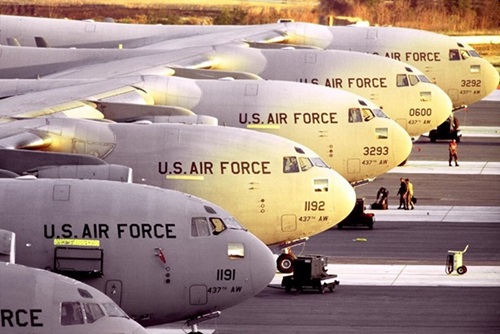
The Boeing Company announced a contract award from the U.S. Air Force that will keep the 17A Globemaster III flying and mission-ready for decades to come.
The contract provides for the design, manufacture, integration, qualification and military certification of a modernized flight deck for the C-17A. The program replaces critical avionics and mission essential equipment with modern, modular open systems architecture (MOSA) that enables plug-and-play enhancements and ensures the fleet can adopt new capabilities rapidly and affordably.
The C-17A has been the backbone of global air mobility for over three decades,” said Travis Williams, Vice President of United States Air Force Mobility & Training Services, Boeing. “With the U.S. Air Force requirement to keep the C-17A viable through 2075, we already have a clear and achievable roadmap to support their needs, and the needs of our international partners around the globe. By resolving avionics obsolescence and introducing MOSA, we're preserving a proven, highly dependable, heavy airlifter and keeping it at the forefront of performance and efficiency for decades to come.”
Boeing delivered 275 C-17A aircraft between 1993 and 2015. The Air Force received 222 and our international partners received 53, forming what is now a well-established fully integrated virtual fleet support system across nine partner nations.
Bell 505: Introducing the Height of Military VTOL Pilot Training
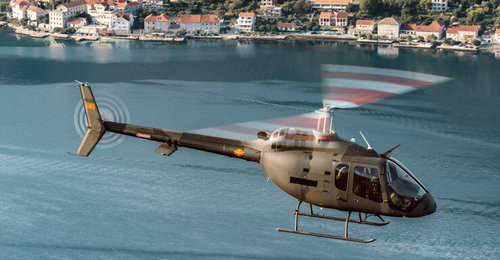
In its 90-year history, Bell has trained more than 130,000 pilots and mechanics including the first U.S. Army pilots in 1946. To date, the Bell 505 serves as the premier training platform for militaries in Jordan, Bahrain, United Arab Emirates, Montenegro, Indonesia, Iraq and South Korea, preparing pilots for mission readiness in modern warfare.
Since its introduction in 2017, the Bell 505 has accumulated more than 300k flight hours and operates in more than 55 countries across six continents. Based on the proven Bell 206L-4 drivetrain, the Bell 505 brings that familiar feel of its predecessor and elevates it with intuitive avionics, supreme handling and fuel efficiency, supported by a global network of trusted specialists in their respective fields for MRO, simulator training and innovation.
The Bell 505 experience enables cadets to learn the basic principles of flight and their instructors to focus on teaching. Reassuringly predictable in its handling and performance, the platform is not only forgiving, with a rotor system that allows for longer reaction times, it's responsive and stable, even in turbulence or challenging terrain. Metal rotor blades with high inertia allow for excellent auto-rotational capability - giving great lift with minimal drag. The powerful Safran Arrius 2R engine is equipped with dual-channel FADEC - the only one of its kind in its class - and offers supreme fuel efficiency and superior power at altitude. These and so many elements that have been carefully considered, combine to build confidence in pilots.
Single-pilot flight can happen from the left or right seat in the front, with plenty of room for pilots with headsets, helmets and NVGs. The open cabin design, with its stadium seating for passengers in the back, means that students can follow what is happening from all seats, maximizing the training capability for that classroom in the sky feel. The surrounding glass cockpit also allows optimal visibility all round.
The all-glass cockpit and intuitive Garmin G1000H™ flight deck present critical data in one location and a moving map display all help to simplify procedures, even in emergency situations. Pilot workload is reduced, and confidence is increased.
Designed to be affordable throughout its lifecycle, the Bell 505 delivers operational readiness, in a platform that can be tailor-made for cadets to train on the platform most suited to their real-world needs.
Predictive maintenance results in minimal downtime and low operating costs; while the avionics suite collects data that maintenance staff can quickly diagnose and resolve any issues that arise. World-wide parts support and a team of dedicated round-the-clock Customer Service Engineers and Product Support Engineers ensure any Bell 505 maintains optimal readiness.
Most recently, Bell added additional capability through its sister company, TRU Simulation™, by offering comprehensive training in a simulated environment that combines real-world experience with advanced technology. The Veris Virtual Reality Flight Simulator, paired with the Bell 505, is FAA Level 7 qualified and sets a new standard for military aviation readiness.
Equipped with a six-degrees-of-freedom motion platform and a full Garmin G1000H avionics suite, students can fully immerse themselves in realistic, high-stress situations - in a safe and controlled environment. When they take to the air, they have built experience and confidence in the platform to take on real-world challenges in this, the beginning of their career as a military pilot.
KSA's Ministry of Defence to Introduce Advanced Maritime Patrol and Multi-Mission Capabilities with Contract for Four C-27J MPA Aircraft
The global presence of the Leonardo C-27J Spartan multi-mission tactical transport aircraft, with more than 290,000 flight hours worldwide, is set to grow with a new addition to the number of leading operators that have chosen and are using the aircraft to meet their demanding requirements. Leonardo will supply four C-27J Maritime Patrol Aircraft (MPA) to the Kingdom of Saudi Arabia's Ministry of Defence, providing the capabilities needed to cope with modern submarine and sea surface threats, to guarantee effective Search and Rescue (SAR) services and to perform transport and airdrop missions.
The C-27J MPA retains all the features and capabilities of the C-27J Spartan Next Generation platform, including its state-of-the-art avionics, navigation, communication, identification and self-protection systems, enabling seamless, safe and low workload operations in all weather and lighting conditions, both in military and civil controlled airspaces, also in high threat scenarios.
For the specific purpose of guaranteeing multi-domain surveillance capabilities, the C-27J MPA integrates a dedicated mission suite, including sensors optimized for detection, identification and tracking of surface and submarine targets, managed by an advanced mission management system (the Leonardo Airborne Tactical Observation and Surveillance system) with data fusion capabilities. A complete communication system allows real time data sharing with control centres and secures cooperation with other units, also in Beyond Line Of Sight (BLOS) conditions. Moreover, in addition to its maritime patrol and surveillance capabilities, the C-27J MPA can carry a significant weapons payload to counter multiple threats, including torpedoes, anti-ship missiles and depth charges in accordance with the specific mission needs.
By removing the mission management system consoles and other components of the mission suite, the C-27J MPA cabin can be easily reconfigured to perform the transport, airdrop and medical evacuation missions typical of the baseline C-27J Spartan Next Generation, providing the Customer with unparalleled flexibility. C-27Js for maritime roles are already in service with the US Coast Guard.
Photo by Ted Quackenbush commons.wikimedia.org
Pacific Southwest Airlines Flight 1771, a BAe 146, is hijacked and deliberately crashed near Cayucos, California, by a disgruntled airline employee. All 43 passengers and crew aboard the plane died, five of whom, including the two pilots, were presumably shot dead before the plane crashed.
The perpetrator, David Burke, was a disgruntled former employee of USAir, the parent company of Pacific Southwest Airlines. USAir, which had recently purchased Pacific Southwest Airlines (PSA), terminated David A. Burke, a ticketing agent, for petty theft of $69 from in-flight cocktail receipts. He had also been suspected of involvement with a narcotics ring. After meeting with Ray Thomson, his manager, in an unsuccessful attempt to be reinstated, Burke purchased a ticket on PSA Flight 1771, a daily flight from Los Angeles International Airport (LAX) to San Francisco International Airport (SFO). Thomson was a passenger on the flight, which he regularly took for his daily commute from his workplace at LAX to his home in the San Francisco Bay Area
The most plausible theory as to what happened was deduced from the pattern and audible volume of the shots on the CVR. According to the Mayday episode, Burke likely first shot Thomson twice. Thomson's own seat was never recovered, but part of a seat that was identified from its serial number as being directly behind Thomson's, which had not been sold and was therefore presumably vacant, was found to contain two bullet holes. As Burke was using a particularly powerful revolver, investigators concluded that the bullets could have travelled through Thomson's body, his seat and then through the seat behind. First Officer Nunn immediately reported to air traffic control that a gun had been fired, but no further transmissions were received from the crew.
The crash was the second-worst mass murder in Californian history, after the similar crash of Pacific Air Lines Flight 773 in 1964.
Nigeria, SW of Benin City: Arik Air flight WP740 from Lagos to Port Harcourt, operated by a Boeing 737-700, 5N-MJF, suffered a number 1 engine failure while en route. The crew diverted to Benin City (BNI), where a safe landing was carried out. Photos from the scene show the engine inlet is missing and both cowlings are badly torn. One fan blades appears to be missing (suggesting a Fan Blade Off [FBO] event), with other fan blades damaged. Additionally, damage was observed on the leading edge of the vertical stabilizer. ADS-B data indicated that WP740 took off from Lagos (LOS) at 06:24 UTC (07:24 LT). At 07:38 LT, having climbed through FL270, the aircraft began to descend and subsequently diverted to BNI, where it landed at 08:05 LT.
Namibia, near Okahao, Omusati: A Tecnam P2004 Bravo experienced engine failure and crashed during an apparent emergency landing near Okahao, Omusati. The pasenger was injured and the pilot was unharmed and the ultralight received substantial damage.
Libya, Maaten al-Sarra Air Base: Crashed on just before landing at Maaten al-Sarra Air Base. All five occupants were killed.
Indonesia, Korowai Batu Danowage Airport (WAKY): Smart Cakrawala Aviation Cessna 208B Grand Caravan EX, PK-SNR, had been shot while landing at Korowai Batu Danowage Airport (WAKY). After landing they fled into the forest along with the passengers. It was reported that both pilots were killed by an anti-Indonesian armed group and the thirteen passengers escaped unharmed.
USA, near Sulphur, LA: An Air Tractor AT-502A, N254LA, and an Air Tractor AT-502B, N598LA, were both substantially damaged following a mid-air collision near Sulphur, Louisiana. The sole pilot onboard each aircraft was not injured. The FAA reported the following for N254LA: "Aircraft landed on top of N598LA while both were on final." and for N598LA: "Aircraft N254LA landed on top of N598LA while both were on final."