AERO South Africa your aviation community trade show.
CSIR developing new target drone for the SANDF.
Pioneers of flight bring unique early aircraft to AirVenture 2026.
Robinson Helicopter Company R66 surpasses 2,300 hours across U.S. military training fleet in seven months.
U.S. Pacific Air Forces to highlight aircraft, personnel at AirVenture 2026.
Embraer and Valkyrie Aero expand A-29 Super Tucano capabilities for C-UAS mission.
The World's first PC-12 PRO aeromedical delivered to the Royal Flying Doctor Service of Australia.
Sikorsky Ramps Up Production of New Variant S-92® Helicopter.
This week in history - Robert Goddard launches the first liquid-fuelled rocket near Auburn, Massachusetts.
Worldwide Incidents and Accidents
Bonus video - Ford Tri Motor Flight 2013
Aero South Africa your Aviation Community Trade Show June 2026 Lanseria
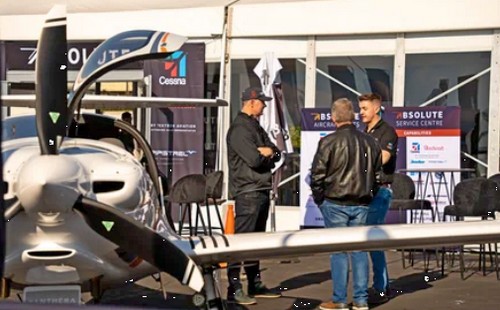
AERO South Africa will host its sixth edition in June 2026 at Lanseria International Airport, where it will remain the ultimate general aviation platform. Organised by Messe Frankfurt South Africa in partnership with Fairnamic GmbH, the joint venture of Messe Frankfurt and Messe Friedrichshafen, AERO South Africa continues to gather momentum.
AERO South Africa allows for aircraft fly-ins, demo flights, and an immersive experience for serious prospective buyers. It's an excellent opportunity for exhibitors to showcase their products and for attendees from across the globe to conveniently attend the event.
Prepare to explore a spectrum of products and services at AERO South Africa 2026, featuring the latest innovations, developments, and regulations in the General Aviation industry. Building on the success of previous years, we aim to deliver an even more engaging experience with captivating workshops, product launches, Business matchmaking, and demonstrations.
Join us as we continue to shape the future of General Aviation in Southern Africa. Trade visitors, come join us at AERO South Africa 2026 and get ready for an unforgettable journey in the world of aviation!
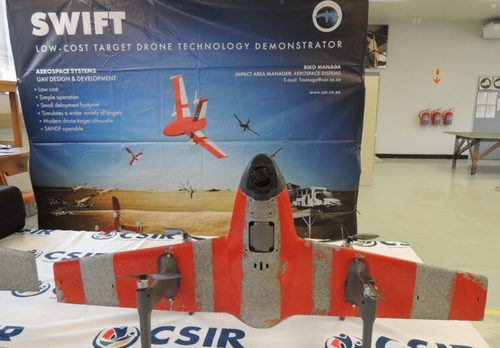
CSIR Developing New Target Drone for the SANDF
The Council for Scientific and Industrial Research (CSIR) is developing a low-cost target drone for the South African National Defence Force (SANDF) to replace older systems and respond to modern air defence artillery training requirements. Guy Martin www.defenceweb.co.za
The drone is being developed under Project Swift. According to Tshegofatso Teane, Senior Project Manager and Adrian Niken, Principal Researcher: Aerospace Systems at the CSIR, the project is divided into three phases, with the first being a technology demonstrator. Later this year advanced development models will be operated by the CSIR and the SANDF, possibly flying at Exercise Vukuhlome in November. This phased approach allows better user involvement and development flexibility. Once test flights are done, production can then take place for the SANDF, which is providing some funding for the project along with the CSIR.
A commercial off the shelf (COTS) electric vertical takeoff and landing (VTOL) drone was used to demonstrate the concept to the SANDF during the SA Army's Exercise Vukuhlome in November 2025. This was the Swan tail sitter fixed wing drone, sourced from an international manufacturer.
Kevin Jamison, Head Engineer: Aerospace Systems at the CSIR, explained that using an electric VTOL platform reduces the system's logistics footprint as the drone can launch from anywhere and requires a smaller team than an internal combustion rail-launched and parachute landing system: only one vehicle and a pilot and drone technician are needed. At Vukuhlome 2025, the Swan target drone was launched directly at the exercise area, something that would have been difficult with an older system like LOCATS, which requires a dedicated rail-based launch unit.
Jamison told DefenceWeb that the SANDF encountered rebels using small unmanned aerial vehicles (UAVs) to drop grenades in the Democratic Republic of Congo, so the new target drone will expand threat simulation capabilities to train against those and other threats like drone swarming and saturation. Addressing these new threats will be part of Swift development.
The production Swift target drone will be larger than the Swan demonstrator, and will have a three metre wingspan. It will be designed to be manufactured in significant numbers at low cost and use new manufacturing techniques like 3D printing.
The SANDF has for years used the Denel LOCATS (Low Cost Aerial Target System) to train Air Defence Artillery crews. The 3.2 metre wingspan LOCATS is launched from a ramp typically fitted to the back of a truck and recovered by parachute. It can reach a maximum speed of 310 km/h.
Development of the propeller-powered LOCATS began in 1989, with introduction into service by 1991. The target drone has successfully been flown for various types of gunnery practice, missile development tests, and missile practice firings.
Denel also produced the Skua turbojet-engined drone to simulate fast-moving targets during surface-to-air and air-to-air training exercises. The Department of Defence has no more target drones left to qualify missiles and provide targets for force preparation exercises, and is consequently developing a high-speed target drone demonstrator under Project Loki. This was unveiled by Denel Dynamics at the Africa Aerospace and Defence 2022 exhibition. It weighs 180 kg, has a wingspan of 2.45 metres and length of 3.2 metres. It has an endurance of 45-70 minutes depending on flight profile and is powered by two TJ40-G1 turbojet engines developing 40 kg of thrust each, giving a top speed of 630 km/h and a maximum altitude of 8 000 metres with 38 kg payload.
Pioneers of Flight Brings Unique Early Aircraft to AirVenture 2026
A collection of early aircraft that showcase the inaugural years of powered aviation will be a special attraction at EAA AirVenture Oshkosh 2026, as the 73rd EAA fly-in convention comes to Wittman Regional Airport in Oshkosh on July 20-26.
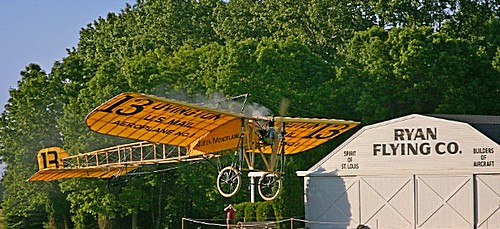
The "Pioneers of Flight" collection features original and reproduction aircraft from the first 25 years of flight that followed the Wright brothers' initial success at Kitty Hawk, North Carolina, in December 1903. The group that will be based in AirVenture's Vintage aircraft area represents innovations by American and international designers.
"The earliest designs were conceived by individuals and appear fragile by today's standards, but they accomplished many of the first milestones in flight," said Rick Larsen, EAA's vice president of communities and member programs, who coordinates AirVenture features and attractions. "The pace of innovations during aviation's first quarter century is astonishing as one looks at where it started to where it was by the late 1920s."
Among the original aircraft, reproductions, and replicas initially confirmed for the display are:
1907 Demoiselle - Alberto Santos-Dumont design, replica built by Club Ae´ro des Garrigues in France
1909 Blériot XI - First aircraft design to successfully fly the English Channel
1915 Morane-Saulnier Type L - Replica WWI fighter built by Daher and Moraine-Saulnier employees
1916 Standard J-1 - Restored to flying condition by EAA volunteers in 2013-14
1927 Swallow biplane - Early air mail biplane that still flies passengers at EAA's Pioneer Airport
1927 Spirit of St. Louis reproduction - Built by EAA to flying condition to honour Charles Lindbergh
Other vintage aircraft are expected to join this lineup in the coming months. Activities planned include forums hosted by EAA's Vintage Aircraft Association, evening programs about aircraft of the era, engine run-ups, and select aircraft demonstrations during the afternoon air shows. A complete schedule of events will be released as it is finalized.
Robinson Helicopter Company R66 Surpasses 2,300 Hours across U.S. Military Training Fleet in Seven Months
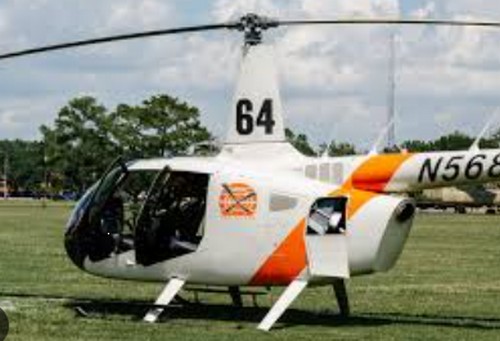
Robinson Helicopter Company's (RHC) combined fleet of six R66 helicopters has collectively surpassed a total of 2,300 flight hours in just over seven months this year across U.S. Army and Navy/Coast Guard/Marine training efforts in Florida and Texas. This milestone underscores the R66's durability and capability in rigorous flight instruction environments.
The R66's current success in meeting the demanding requirements for military training programs validates its credentials as a highly effective, reliable training platform. The Robinson R66 helicopter is currently a part of multiple bids for the Flight School Next program; the U.S. Army's initiative to modernize helicopter pilot training, focusing on real-world skills to prepare aviators faster and more effectively for future Army needs.
"The R66's strong performance in these early training missions speaks for itself," said David Smith, president and CEO of Robinson Helicopter Company. "Logging over 2,300 flight hours with sustained operational availability confirms its capability to deliver the essential flight hours required to prepare future military rotorcraft pilots. The extremely low rate of unscheduled maintenance events directly drives flight line efficiency, ensuring maximum time in the air for our future aviators."
Robinson also provides an American-made advantage, manufacturing all its helicopters, including the R66, in its Torrance, California, facility. The company's highly vertically integrated factory produces more than 85% of all aircraft parts required to build its helicopters. This manufacturing model significantly reduces reliance on foreign nations or the global supply chain compared to competitors, providing enhanced security and stability for long-term fleet support.
The R66's simple, responsive flight characteristics are crucial for teaching core stick and rudder skills, helping the nation's military aviators focus on the fundamental inputs necessary to fly confidently in any situation. This focus on foundational training, combined with the exceptional reliability proven across the current fleet and its robust American manufacturing base, strongly supports the company's assertion that the R66 meets all the U.S. military's stringent criteria for Flight School Next (FSN) and the Contract Operated Pilot Training-Rotary (COPT-R) rotorcraft training.
U.S. Pacific Air Forces to Highlight Aircraft, Personnel at AirVenture 2026
U.S. Pacific Air Forces will take center stage as the featured service component at EAA AirVenture Oshkosh 2026, scheduled for July 20-26, 2026, at Wittman Regional Airport in Oshkosh, Wisconsin.
"As we aim to highlight a specific Air Force command every year at Oshkosh, the incredible work of Pacific Air Forces' mission is more critical than ever, and its strategic location makes it the center of gravity for security in the Indo-Pacific," said Rick Larsen, EAA's vice president of communities and member programs, who coordinates AirVenture features and attractions. "This command will add a distinct highlight to the activities at AirVenture 2026, as we celebrate America's 250th anniversary."
Headquartered at Joint Base Pearl Harbor-Hickam, Hawaii, PACAF and its commander, Gen. Kevin B. Schneider, lead the charge in strengthening alliances and deterring aggression across half the globe. The command's mission includes everything from large-scale joint exercises with partners throughout the Indo-Pacific region and bomber task force missions, to humanitarian assistance and disaster relief.
"It's an honor to share the story of Pacific Air Forces with the Oshkosh community. In the Indo-Pacific, a region vital to global stability, PACAF stands as a steadfast and lethal force, ready to defend the United States and our allies," Gen. Schneider said. "Our strength lies not only in our advanced aircraft and skilled Airmen but also in our deep and abiding partnerships. We are committed to our Homeland Defense and deterrence, working seamlessly with our joint force and international partners to ensure a free and open Indo-Pacific.
"We are focused on readiness, innovation, and the lethality of our force to deter aggression, and are excited to share that legacy and commitment with Oshkosh. Events like this are a fantastic opportunity to demonstrate the advanced capabilities and professionalism that our Airmen bring. It is this readiness and cutting-edge airpower that allows us to stand shoulder-to-shoulder with our allies and partners, reinforcing our shared commitment to a stable and secure Indo-Pacific region."
Pacific Air Forces is a major command of the U.S. Air Force and the air component of the U.S. Indo-Pacific Command. PACAF's primary mission is to provide ready air power to promote U.S. interests in the Indo-Pacific region. Honoring more than 80 years of history and spanning 36 nations, PACAF's area of responsibility covers more than 100 million square miles. Its airmen are on the front lines of defending American interests. Immediate news is available on the official PACAF website and social media channels.
"The display of airpower scheduled for this summer will be a powerful showcase of the professionalism, lethality, and readiness of the aviators, maintainers, and support staff who secures our nation at home and abroad," Schneider said.
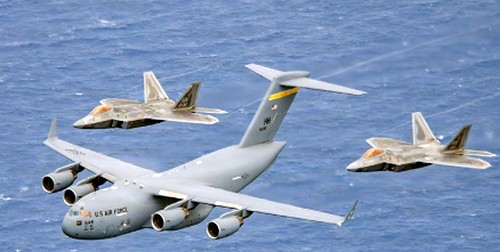
To commemorate 20 years of "Global Reach in the Pacific," the command will also showcase a C-17 Globemaster III static display from the Hawaii Air National Guard. A symbol of Total Force Integration and readiness between the 15th Airlift Wing and the 154th Wing, 2026 marks 20 years since the C-17's arrival in Hawaii, transforming air mobility for the state and the Indo-Pacific. Two decades later, the C-17 continues to deliver global mobility, humanitarian support, and joint operational excellence across 14 time zones - a lasting legacy of service, partnership, and aloha.
The C-17 and additional aircraft will be based on AirVenture's showcase Boeing Plaza. Additional details on aircraft and programming at EAA AirVenture Oshkosh will be announced as it is finalized.
Embraer and Valkyrie Aero Expand A-29 Super Tucano capabilities for C-UAS Mission
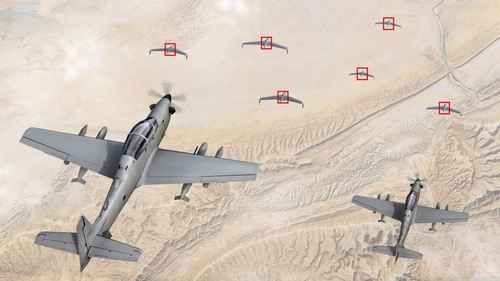
Embraer (NYSE: EMBJ/ B3: EMBJ3), a global leader in the aerospace industry, and Valkyrie Aero are partnering to bring cutting-edge, Artificial Intelligence-enabled Counter Unmanned Aerial Systems (C-UAS) capabilities to the A-29 Super Tucano through Valkyrie's Gunslinger.
Valkyrie's proprietary Gunslinger AI (Artificial Intelligence) suite enables real-time, enhanced C-UAS tactical decision making on the battlefield supporting the Find, Fix, Finish of unmanned threats. The Gunslinger is built for the evolving UAS threat landscape, ensuring an enduring and scalable solution. Valkyrie Aero's Gunslinger further enhances the A-29 C-UAS capabilities that currently rely on existing, integrated sensors.
Militaries worldwide have invested enormous resources against disruptive and persistent unmanned threats by tasking high-end platforms such as mainstream fighter jets to counter drones with significant cost per mission. The A-29 equipped with Gunslinger offers extremely effective and low-cost counter drone capabilities, leveraging the Super Tucano's advanced tandem cockpit, extended loiter time, and agility. Its ability to safely match the speed of one-way attack drones creates a stable, precise engagement platform for guns, guided rockets, and other effectors.
"We are proud to partner with Valkyrie to further enhance the A-29 C-UAS mission capabilities. With over 60,000 combat flight hours, the A-29 Super Tucano is the gold standard for light attack globally, and the ideal platform for manned C-UAS operations," said Marcio Monteiro, Market Intelligence Vice-President of Embraer Defense & Security.
"Valkyrie is excited to partner with Embraer to deliver Gunslinger on the A-29 platform for customers worldwide. Gunslinger is born from the immediate needs of the frontline warfighter, whom Valkyrie trains and engages with every day," said Chris Turner, Senior Vice President, Corporate Strategy of Valkyrie Aero.
The World's first PC-12 PRO aeromedical delivered to the Royal Flying Doctor Service of Australia
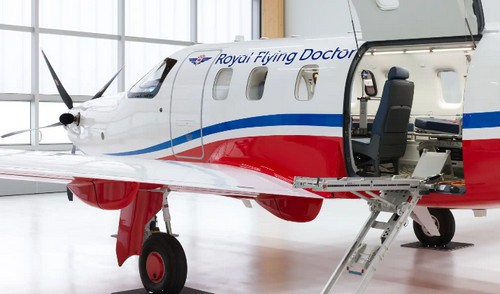
Serial number 3010 arrived in Australia - the first of five brand-new PC-12 PROs for delivery to the Royal Flying Doctor Service of Australia (RFDS) Central Operations. The RFDS is a highly valued customer for over 30 years, so it seems fitting that the world's first PC-12 PRO in aeromedical configuration should go to our longest-standing aeromedical partner.
These new PC-12 PROs will form part of the Central Operations fleet, regularly flying through the central corridor of South Australia and Northern Territory, delivering world-leading medical care to some of Australia's remotest regions. The spacious pressurized cabin of over nine cubic meters can comfortably accommodate patients, crew, and high-tech medical equipment. The large cargo door and lift system facilitate quick and easy patient loading.
"The PC-12 has an outstanding safety record, and a proven history of reliability operating in the diverse and challenging environments where we deliver services, from southern Australia to the tropics in the Top End. It will strengthen our fleet reliability and our ability to respond quickly, safely and efficiently", said RFDS SA/NT Chief Executive Tony Vaughan ASM.
At Pilatus, we are extremely proud to support the RFDS with the introduction of the new PC-12 PRO into their fleet. This brand-new aircraft builds on the proven legacy of the PC-12, delivering enhanced performance, advanced avionics and increased capability to support the RFDS in achieving its mission of 'Furthest corner, Finest care,' said Dave Scutchings, CEO of Pilatus' subsidiary in Australia.
André Zimmermann, VP Business Aviation, Pilatus Aircraft Ltd, added: "We are proud to support our long-term partner RFDS as they expand their air ambulance fleet with the acquisition of the latest model of the proven PC-12 PRO. This milestone reflects not only the strength of our enduring relationship, but also a shared commitment to delivering critical, life-saving services to communities in Australia. We look forward to continuing our collaboration and to supporting them in their mission for many years to come."
The PC-12 PRO is the latest development in the worldwide-proven PC-12 family, which boasts a purpose-built Garmin 3000 avionics system and a suite of innovative safety features such as the new Safety Autoland System, while still retaining its defining features such as short and unpaved runway capabilities and, of course, the large cargo door. With over 2,200 PC-12s delivered worldwide and more than twelve million flight hours logged, the PC-12 PRO continues the legacy of proven reliability, unmatched safety, and state-of-the-art technology, making this aircraft an obvious choice for the aeromedical community.
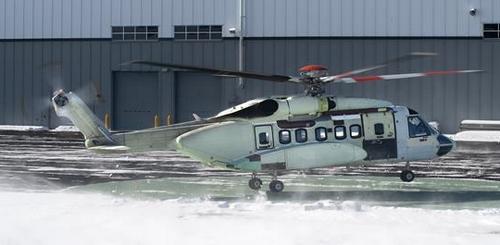
Sikorsky Ramps Up Production of New Variant S-92® Helicopter
Sikorsky, a Lockheed Martin company (NYSE: LMT) is preparing to build the first production batch of S-92A+™ helicopters, the latest variant of its flagship commercial heavy-lifter. A+ model aircraft will be manufactured and assembled in Stratford and Owego, New York, for a new head-of-state transport customer, and anticipated orders from Head of State and offshore-energy customers, marking an exciting development for current and future operators.
"The S-92A+ helicopter is another example of how we are modernizing the fleet and transforming for the future, and we are building in surge capacity to meet expected demand," said Rich Benton, Sikorsky vice president and general manager. "The S-92 remains the aircraft of choice for Head of State, offshore energy and search and rescue operators who want the highest available flight-time helicopter to perform long-range missions in any weather condition."
A 14th country recently ordered two aircraft for head-of-state transport. Sikorsky will assemble these two aircraft plus three additional S-92A+ aircraft. Sikorsky has capacity to produce up to 12 S-92A+ aircraft annually to meet rising global demand for Head of State, personnel or cargo transport, offshore energy, firefighting and military operations.
Skilled artisans at Sikorsky's headquarters in Stratford will produce S-92 dynamic components, including the main gearbox, blades and drivetrains. In Owego, the workforce will continue its proven record of assembly, having delivered 23 new U.S. presidential helicopters based on the S-92A platform.
In 2025, Sikorsky delivered two S-92A aircraft to head-of-state customers in Asia and the Middle East.
16 MARCH 1926
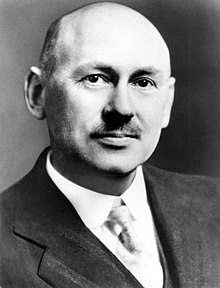
Robert Goddard launches the first liquid-fuelled rocket near Auburn, Massachusetts.
Robert Hutchings Goddard (5 October 1882 - 10 August 10 1945) was an American engineer, professor, physicist, and inventor who is credited with creating and building the world's first liquid-fueled rocket. Goddard successfully launched his model on 16 March 1926, ushering in an era of space flight and innovation. He and his team launched 34 rockets] between 1926 and 1941, achieving altitudes as high as 2.6 km (1.6 mi) and speeds as fast as 885 km/h (550 mph).
Goddard's work as both theorist and engineer anticipated many of the developments that were to make spaceflight possible. He has been called the man who ushered in the Space Age. Two of Goddard's 214 patented inventions-a multi-stage rocket (1914), and a liquid-fuel rocket (1914)-were important milestones toward spaceflight. His 1919 monograph A Method of Reaching Extreme Altitudes is considered one of the classic texts of 20th-century rocket science. Goddard successfully applied three-axis control, gyroscopes and steerable thrust to rockets to effectively control their flight.
Although his work in the field was revolutionary, Goddard received very little public support for his research and development work. The press sometimes ridiculed his theories of spaceflight. As a result, he became protective of his privacy and his work.
Years after his death, at the dawn of the Space Age, he came to be recognized as one of the founding fathers of modern rocketry. NASA's Goddard Space Flight Centre was named in Goddard's honour in 1959.
NAMIBIA, Gobabeb Airfield (FYGO), near Gobabeb, Erongo region: A British registered Groppo Trail, amateur built by A. M. Wilson, crashed after take-off at Gobabeb Airfield (FYGO), before conducting research on wildlife near the Gobabeb Namib Research Institute, Gobabeb, Erongo region, Namib Desert. Both occupants perished and the aircraft was written of. The aircraft took off at about 17:00 to look for animal collars in the dunes. Note: c/n is 39322 and LAA 372-15120 is its CAA Light Aircraft Association number.
ALGERIA, Boufarik Air Base (DAAK): An Algerian Air Force Beechcraft 1900 crashed under unknown circumstances while taking off from Boufarik Air Base. Both pilots died in the crash, four other crew members were injured. Later two occupants died in hospital from the injuries sustained in the crash.
IRAN, near Latyan Dam, Lavasan, Tehran Province: On 4 March 2026 an Israeli Air Force F-35I "Adir" shot down an Islamic Republic of Iran Air Force Yak-130 jet trainer in the vicinity of the Latyan Dam, located to the North-East of Tehran, during the 2026 Israel-Iran War. Footage released by the Israeli Air Force from the F-35I's electro optical targeting system shows the aircraft targeted and hit, erupting into a large fireball. Therefore, it is unknown if the crew were able to eject from the aircraft. According to IDF Spokesman Brigadier General Effie Defrin, the aircraft had taken off from Mehrabad Airport. The Yakovlev Yak-130 is primarily intended as a jet-trainer, but possesses limited combat capabilities, specifically for the downing of unmanned aerial vehicles. The downing of the aircraft marks the first air-to-air kill for the Lockheed Martin F-35, as well as the first air-to-air engagement for the Israeli Air Force in over 40 years.
USA, near Phoenix-Deer Valley Airport (DVT/KDVT), Phoenix, AZ: A Piper PA-28-140 Cherokee, N7744T, sustained substantial damage when it impacted a residential structure in Phoenix, Arizona. The pilot and one passenger sustained serious injuries, and one passenger sustained unknown injuries. The FAA reported that the airplane experienced engine issues on departure and attempted to return but crashed into a house. A video captured the airplane in a slow descent until the right wing dropped causing the airplane to roll right before crashing into the house.