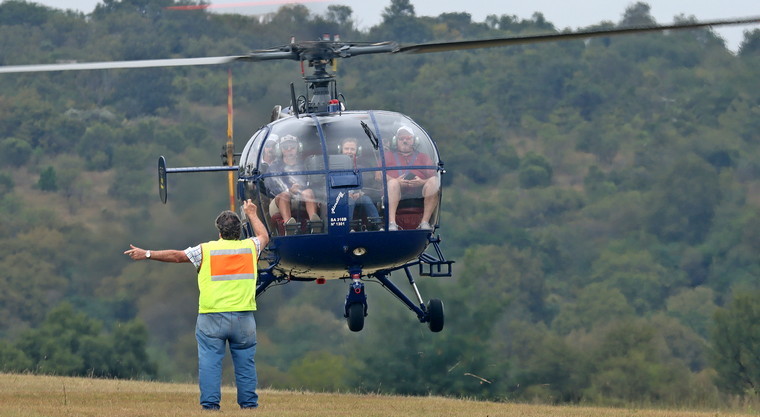
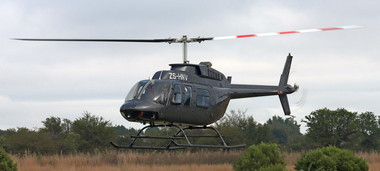
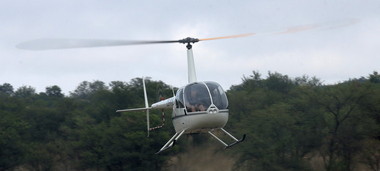
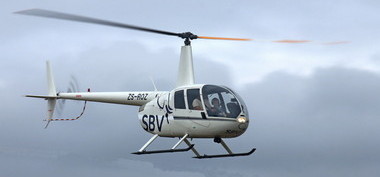
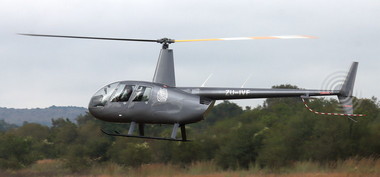
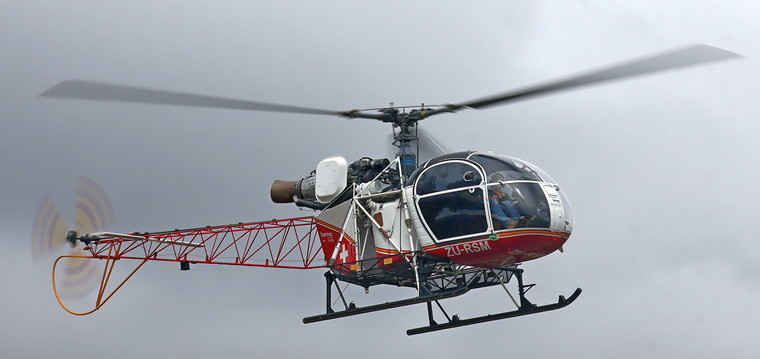
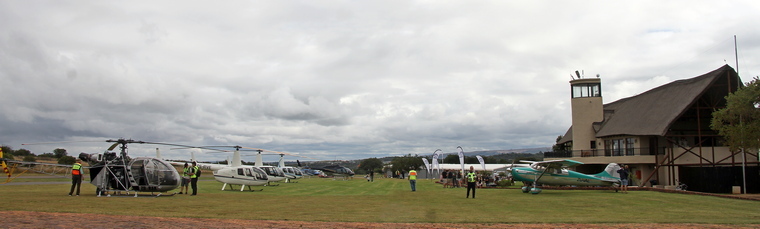
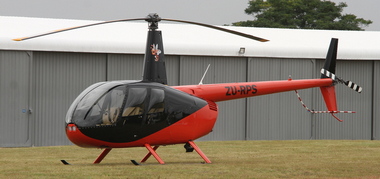
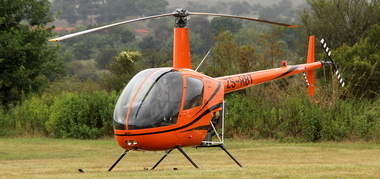
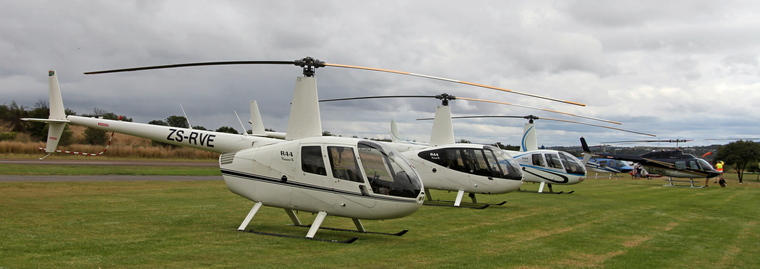
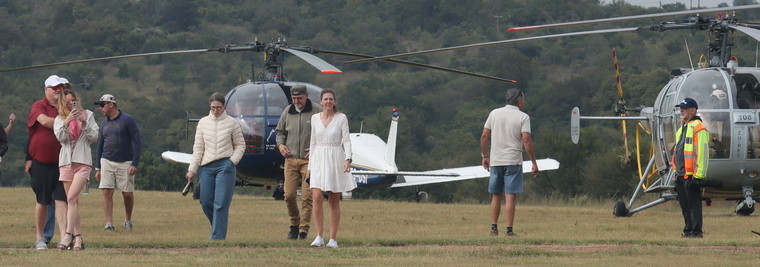
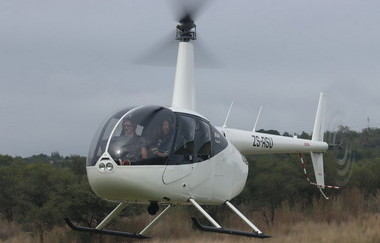
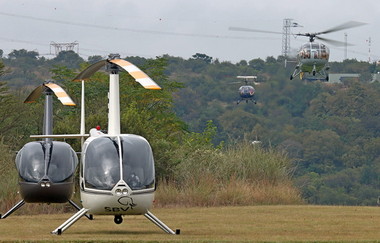
The unmistakable thump of rotor blades filled the air over Kitty Hawk Airfield on Saturday morning as helicopters began arriving for one of the airpark's popular fly-in gatherings. Despite somewhat iffy weather conditions, nineteen helicopters made their way to the field, drawing plenty of attention from both pilots and visitors who arrived by road to enjoy the relaxed aviation atmosphere.
The story of the helicopter, however, stretches back far further than the machines that gathered at Kitty Hawk that morning.
The earliest references to vertical flight originate from China, where children played with bamboo flying toys as far back as around 400 BC. This bamboo “copter” was spun by rolling a stick attached to a rotor between the hands. The spinning created lift and the toy would fly when released.
Jumping ahead to 1861, French inventor Gustave de Ponton d'Amécourt built a small steam-powered model of what he called a hélicoptère. Unfortunately, the machine never left the ground and the model itself did not survive. The name, however, endured. Hélicoptère was derived from the Greek helix (spiral) and pteron (wing), from which the English word helicopter is derived.
More than sixty years later the first true helicopter flight recognised by the Fédération Aéronautique Internationale (FAI) was achieved by another Frenchman, Étienne Oehmichen, who flew his quadrotor helicopter a distance of 360 metres (1,180 ft).
Only weeks later, on 18 April 1924, Raúl Pescara surpassed Oehmichen's record by flying 736 metres (2,415 ft) in 4 minutes and 11 seconds at approximately 13 km/h (8 mph), maintaining a height of about 1.8 metres (6 feet). Shortly afterwards, on 4 May, Oehmichen completed the first one-kilometre closed-circuit helicopter flight in 7 minutes and 40 seconds with his No. 2 machine.
The Focke-Wulf Fw 61, first flown in 1936, became the first successful, practical and fully controllable helicopter. A few years later, in 1942, the Sikorsky R-4 became the first helicopter to enter full-scale production.
Back at Kitty Hawk, Robinson helicopters were by far the most common type present, followed by several ex-military Alouettes. Among them was the former Netherlands Alouette III that regularly flew Queen Wilhelmina, as well as an Indian-built HAL Cheetah (Lama) - essentially an Alouette II on steroids, powered by the Alouette III's Artouste IIIB engine.
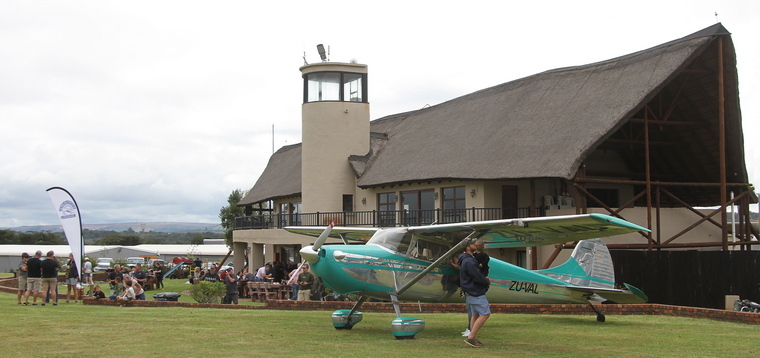
Many visitors also arrived by road to enjoy the scrumptious buffet breakfast which I, being too afraid of missing anything airside, almost always manage to miss.
Kitty Hawk has over the years established itself as one of Gauteng's most welcoming aviation gathering spots, and Saturday's helicopter fly-in once again proved why. From the distinctive thump of rotor blades overhead to the camaraderie on the ground, it was a morning that reminded everyone present why rotary-wing aviation holds such a special place in the flying community.
The next event planned for 18 April at this popular venue will, for now, remain a closely guarded secret, but judging by the turnout and atmosphere at this fly-in, it is certainly one that aviation enthusiasts will not want to miss.