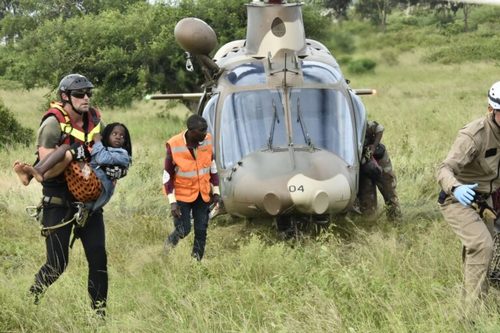
SAAF still deployed to Mozambique for flood relief duties.
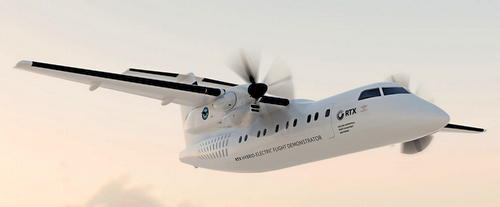
RTX's hybrid-electric plane is one step closer to the sky.
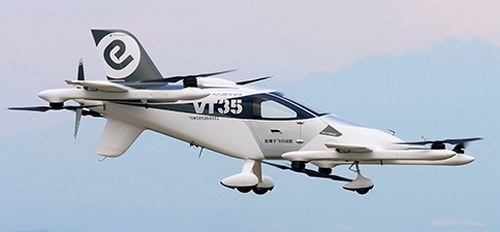
Global Debut: EHang Introduces VT35, a Next-Generation Long-Range Pilotless Passenger eVTOL.
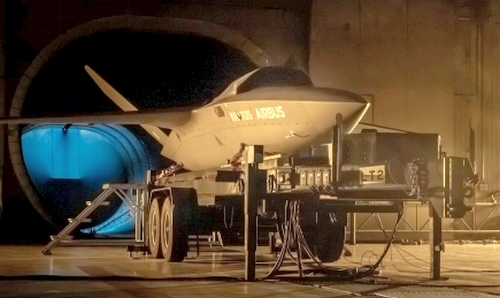
Airbus is preparing two uncrewed combat aircraft from Kratos for first flight with a European mission system.
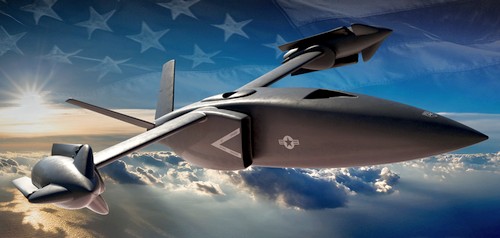
Bell completes critical design review on DARPA SPRINT X-Plane Program, receives official X-plane designation.
Vietnam Airlines finalizes order for 50 Boeing 737 MAX airplanes.
Hydrogen aviation OEM Beyond Aero reaches key aircraft design milestone.
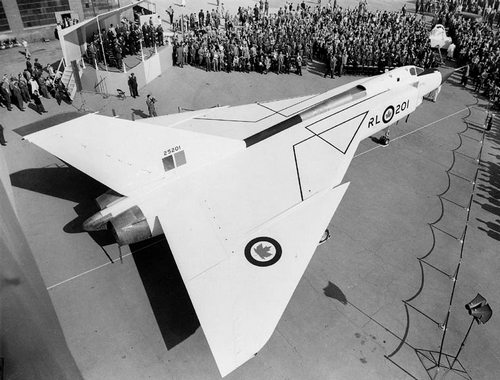
This week in history - Canada's era of supersonic flight began when pilot Jan Zurakowski took off from Malton Airport near Toronto in an Avro CF-105 Arrow for a 35-minute maiden flight.
Worldwide Incidents and Accidents
Bonus video - EAA National Convention Vryheid, KZN 2019.
SAAF Still Deployed to Mozambique for Flood Relief Duties
By Kim Helfrich www.defenceweb.co.za
South African Air Force (SAAF) helicopters are still deployed in Mozambique to assist with humanitarian operations in the aftermath of extreme weather earlier this year and have, to date, rescued 759 people and delivering much-needed food and fuel.
The deployment, which started on 18 January and is still active, was done as per the standing SA National Defence Force (SANDF) Joint Operations Division tasking Operation Chariot. It is currently referred to as Operation Climate Change.
As of the first week in March the deployment has seen four helicopters operational, according to information supplied to DefenceWeb by the SAAF Directorate Corporate Staff Services (DCSS) and distributed by the SANDF Directorate Corporate Communication (DCC). The rotorcraft are on the asset registers of 17 Squadron based at the Air Force Mobile Deployment Wing (Oryx), 19 Squadron at Air Force Base (AFB) Hoedspruit (A109), and 87 Helicopter Flying School at AFB Bloemspruit (A109).
The 17 Squadron Oryx leads the individual hours logged at present with 31.2 hours while the A109s have between them logged 40 hours plus of search and rescue. A replacement A109 from an unspecified unit has logged 5.5 hours flying time to date.
Food supplies totalling 2 920 kg have been delivered to needy communities with Jet A1 fuel totalling 920 kg put safely on the ground.
Names and numbers of the deployed SAAF search and rescue team (SRT) cannot be disclosed due to security around the mission, but in January the SAAF said aircrew involved in the Mozambique operations included Oryx Commander Major Jaun-Pierre Hendrick du Preeze, Co-Pilot Major Jacobus Johannes Blom, and Flight Engineer Sergeant Johanna Magrieta Muller. A109 crew were Commander Lieutenant Colonel Zanele Vayeke, Co-Pilot Major Tumelo Motse, Flight Engineer Sergeant Kamogelo Raphiri, Commander Major Simphiwe Moloi, and Flight Engineer Sergeant Scelo Kwanele Mpontshane.
The SRT remains in Mozambique ready to assist if and when called on by Mozambican authorities.
Earlier this month the National Disaster Risk Management Institute (INGD) reported that nearly 870 000 Mozambicans have been affected by flooding in the current rainy season, which runs from October to April. Some 270 people have died, while 399 749 hectares of agricultural land has been lost and 530 000 animals killed, including cattle, goats and poultry. Nearly 7 900 kilometres of roads, 36 bridges, and 123 culverts have been affected. Nearly 7 000 people required being rescued, and thousands remain in temporary shelters.
Heavy rains have been again falling in Mozambique this week, resulting in some ports of entry between South Africa and Mozambique being shut as water levels rise. Flooding has also affected the far northern region of the Kruger National Park.
RTX's Hybrid-Electric Plane is One Step Closer to the Sky
The project is supported by the Canadian federal government and provincial government of Quebec along with a range of partners across industry and academia. It also reflects RTX's company-wide approach to innovation; it combines an advanced thermal engine from Pratt & Whitney Canada, a 1-megawatt electric motor from Collins Aerospace, and a 200-kilowatt-hour battery system from the startup H55, backed in part by RTX Ventures, the company's venture capital arm.
The RTX Hybrid-Electric Flight Demonstrator is a collaboration between Pratt & Whitney Canada, Collins Aerospace and industry partners that aims to improve fuel efficiency by up to 30%. The hybrid-electric propulsion system will fly on a modified De Havilland Canada Dash 8-100 regional turboprop aircraft.
The project recently passed a significant milestone when it successfully operated the propulsion system and batteries at full power for the first time.
The demonstrator combines an advanced fuel-burning thermal engine from Pratt & Whitney with a 1-megawatt electric motor built by Collins Aerospace. A special gear system connects the two and keeps the propeller turning, whether the power comes from the engine, the motor, or both.
The motor will get its energy from a battery pack with a 200-kilowatt hour capacity - enough to power the average American home for nearly a week. Thermal engines convert only about 30% to 40% of their fuel to useful energy - the rest is lost to heat or friction between moving parts. Electrical systems are more efficient, converting more than 90% of their energy into mechanical power.
Hybrid-electric propulsion for a regional aircraft requires thousands of battery cells linked together operating at high voltage levels. That creates a risk of overheating or electrical arcing, where electricity jumps from its path and forms a miniature lightning bolt between the battery and something next to it.
For help on the battery system, Pratt & Whitney enlisted H55, a Swiss company with backing from RTX Ventures. The demonstrator's battery is based on technology H55 has already put into flight on smaller aircraft, including an all-electric two-seater.
The two first prototypes of H55's aircraft propelled by the company's fully electric propulsion technology. Pratt & Whitney is using a modified version of H55's battery system for its hybrid-electric demonstrator that will fly on an experimental De Havilland Canada Dash-8 regional turboprop aircraft.
RTX's demonstrator is much larger but will rely on a modified version of H55's existing system, with more batteries and added protections at the aircraft level. Pratt & Whitney Canada built on H55's safety mechanisms with features specific to the demonstrator, including an extra fireproof box that can vent gases and flames in an emergency. It is also modular, meaning batteries can be installed throughout the aircraft to distribute weight.
By using a battery system whose baseline version is already in flight and has passed relevant European Union Aviation Safety Agency tests, Pratt & Whitney can take advantage of a system that's designed for safety and proven compliance, said Anthony D'Ambrisi, who leads design, testing and certification for H55's electric propulsion systems.
At RTX, the demonstrator has already marked many firsts. Teams at Collins Aerospace and Pratt & Whitney overcame many challenges as they modified the engine and electric motor and worked to integrate the two.
Over the next year, the RTX Hybrid-Electric Demonstrator team will continue ground testing and begin working with AeroTEC in Moses Lake, Washington, to install hardware on the aircraft. As they prepare for their first flight, they'll meet the same rigorous safety standards that they would for certification while setting precedents for new standards, which will provide valuable insights for future projects.
While they've already demonstrated their concept, Robache said taking it a step further to flight will show its true potential and answer more questions about how to best use hybrid-electric propulsion.
“We could have just gone in a test cell, run the engine and proved that it works fine, but we really wanted to actually fly it to maximize the learning,” Robache said. “This is us getting out of our comfort zone to push the boundaries of technology.”
Global Debut: EHang Introduces VT35, a Next-Generation Long-Range Pilotless Passenger eVTOL.
EHang Holdings Limited (Nasdaq: EH) ("EHang" or the "Company"), a global leader in advanced air mobility (AAM) technology, today announced the launch of its new-generation long-range pilotless electric vertical take-off and landing (eVTOL) aircraft, the "VT35”.
Building on the foundation of the earlier VT30 prototype, VT35 is an upgraded lift-and-cruise model designed for medium- to long-range applications including intercity, cross-sea, and cross-mountain transportation. With its autonomous flight capability, point-to-point efficiency, and eco-friendly electric propulsion, VT35 is set to play a pivotal role in advancing the low-altitude aerial mobility ecosystem from urban to intercity corridors. This launch not only marks a significant expansion of EHang's product portfolio, but also represents a new milestone for China's intelligent manufacturing on the global eVTOL stage.
The unveiling ceremony was attended by representatives from the Hefei Municipal Government, customers and suppliers, media and other guests. During the event, EHang's new-generation long-range eVTOL aircraft-VT35-was officially revealed, drawing significant attention for its cutting-edge design and advanced technological features. EHang also announced the official price of the VT35 standard version in the China domestic market, set at RMB6.5 million. Following the comprehensive preliminary design validation and rigorous R&D debugging, VT35 has successfully completed its transition flight test, achieving a critical step in its technical breakthrough. The flight video was unveiled at the launch event.
VT35 features a tandem-wing layout with a two-seat configuration. It employs eight distributed lift propellers for vertical take-off and landing, transitioning to a pusher propeller and fixed wings for efficient cruise flight. With a fully loaded design range of approximately 200 kilometres, VT35 delivers both long-range capability and compact versatility. Compared to its predecessor VT-30, VT35 maintains superior aerodynamic efficiency and flight stability while achieving a more compact footprint - measuring approximately 8 meters in length and wingspan, and 3 meters in height, with a maximum take-off weight of 950 kg. This compact design reduces ground operational risks and enhances cost-effectiveness. Notably, VT35 is compatible with existing EH216-S vertiports and can utilize a wide range of urban take-off and landing sites, including parks, rooftops, parking lots, etc. This interoperability greatly enhances infrastructure utilization and supports seamless intercity air mobility directly between city centres.
Building upon EHang's technological strengths in autonomous flight system, fleet management, and full-redundancy design, and supported by its command-and-control system, standardized vertiports, and charging platforms, VT35 can operate automatically and enable coordinated fleet operations based on pre-set flight routes. It is also equipped with obstacle detection and avoidance, ensuring a high standard of operational safety. It is engineered to transform intercity aerial travel into a safe, routine, and efficient transportation experience-redefining spatial connectivity and unlocking the full potential of the low-altitude economy.
In March 2025, the Civil Aviation Administration of China (CAAC) accepted EHang's type certificate (TC) application for the VT35 eVTOL aircraft. The model is currently undergoing airworthiness certification, with internal testing and experimental flights progressing steadily. Drawing on the successful certification experience of the EH216-S, EHang is applying its proven technical and regulatory insights to streamline VT35's review and approval process.
Airbus is Preparing two Uncrewed Combat Aircraft From Kratos for First Flight with a European Mission System
Airbus is working at full throttle to offer the German Air Force an operational Uncrewed Collaborative Combat Aircraft (UCCA) system by 2029. In Manching, near Munich, the company is currently preparing the first two Valkyries it acquired from its US partner Kratos Defense & Security Solutions, Inc. (NASDAQ: KTOS) for their maiden flight with a sovereign European mission system. They are scheduled to fly later this year. The two companies are bringing their respective industry-leading capabilities to integrate, missionise, and ultimately produce and deliver the Airbus UCCA system.
Airbus is currently equipping the UCCAs with its sovereign European mission system, the Multiplatform Autonomous Reconfigurable and Secure (MARS) system. MARS also contains an AI-supported software brain called MindShare which not only replaces the missing pilot, but is also capable of coordinating entire mission groups by being distributed across many manned and uncrewed platforms.
“By combining the Kratos Valkyrie with our MARS mission system, we are offering the German customer exactly what Germany and Europe urgently need in the current geopolitical situation: a proven flying uncrewed combat aircraft with a sovereign European mission system that does not have to be developed from scratch in a time-consuming and costly manner,” said Marco Gumbrecht, Head of Key Account Germany at Airbus Defence and Space. “Our objective is to deliver credible combat capability in time of relevance, while assuring key sovereign aspects. And we are confident that we can do this at a very affordable price - which is a key driver for UCCAs.”
Steve Fendley, President of Kratos Unmanned Systems Division, said, “We couldn't be more excited about the opportunity, the capability we're providing, and the teaming relationship with Airbus. By taking the flight-proven and in-production Valkyrie and integrating the Airbus MARS mission system, the Airbus-missionised Valkyrie UCCA is a multi-mission, affordable system that can operate independently, in teams of UAS, or in Manned-Unmanned-Teaming operations. Along with the technical and production backing Airbus and Kratos bring, we are realising an optimal capability system that can be bought and deployed as 'affordable mass'; the consistent discriminator identified in today's peer to peer wargames.”
To enable the Eurofighter to act as a “command aircraft” with cross-platform connectivity performance, Airbus and Rafael are enhancing the Litening 5 Advanced Targeting Pod, already contracted for the Eurofighter fleet, with a connectivity capability. Along with minor updates to the Eurofighter's avionics, these enhancements will significantly increase the aircraft's lethality in combat.
The Kratos Valkyrie has a length of 9.1 m, a wingspan of 8.2 m, and a range of over 5,000 kilometres. The maximum take-off weight (MTOW) is around three tons. It can fly at an altitude of up to 45,000 feet. The maiden flight of the Valkyrie already took place in the USA in 2019; and additional aircraft have been flying regularly since that time. The maiden flight of the Airbus variant is scheduled for 2026.
Fully autonomous or commanded by a Eurofighter, the Valkyrie will be able to take on sensitive mission tasks that would pose too great a danger to the pilot. The UCCA can service kinetic and non-kinetic mission sets in several roles. For the German customer, Airbus and Kratos are initially focusing on a specific role to deliver credible combat air power on time and on target.
Bell Completes Critical Design Review on DARPA SPRINT X-Plane Program, Receives Official X-Plane Designation
Bell Textron Inc., a Textron Inc. (NYSE: TXT) company, successfully held the Critical Design Review (CDR) for the Defense Advanced Research Projects Agency (DARPA)'s SPeed and Runway INdependent Technologies (SPRINT) program. This milestone allows Bell to begin building the next-generation aircraft demonstrator, recently designated as the X-76.
“Bell is honored to receive the X-76 designation and continue the spirit of American innovation honoring the founding of the United States in 1776,” said Jason Hurst, Bell SVP, Engineering. “This is an important milestone as the Bell and DARPA team advances to a historic first in aviation history and fulfill our mission of developing next-generation vertical-lift aircraft.”
In July 2025, Bell announced the company was down-selected for Phase 2 of the program in the latest chapter of its 90-year history of X-plane development. The goal of the SPRINT program, jointly funded by DARPA and U.S. Special Operations Command, is to advance next generation runway independent technologies that can be scaled to different military aircraft through designing an aircraft with the ability to cruise at speeds from 400 to 450 knots at relevant altitudes and hover in austere environments from unprepared surfaces. In Phase 1A and 1B, Bell completed conceptual and preliminary design efforts for the SPRINT X-plane. Phase 2 includes detailed design, build, and ground testing culminating in flight test during Phase 3.
Since its inception, Bell has pushed the known boundaries of flight through pioneering high speed and vertical lift aircraft from the X-1 to the XV-3 and XV-15. The SPRINT program brings together all of this into one vehicle to provide runway independence with jet speeds.
“The Bell team looks forward to seeing X-76 take flight and bring this capability to our warfighters,” added Hurst.
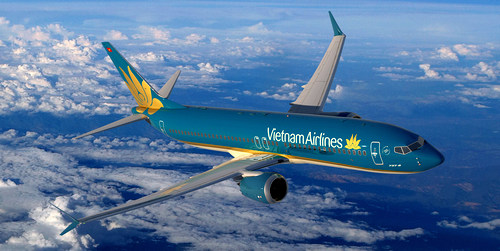
Vietnam Airlines Finalizes Order for 50 Boeing 737 Max Airplanes
Boeing [NYSE: BA] and Vietnam Airlines announced today the Vietnamese flag carrier finalized its first Boeing single-aisle order for 50 737 MAX airplanes. The addition of the 737-8 will enable Vietnam Airlines' domestic and regional route growth plans as air travel demand continues to rise across Southeast Asia.
"Vietnam Airlines is taking a comprehensive and forward-looking approach to strengthening its capabilities, spanning fleet modernization, financial resilience and the development of high-quality talent, to support our long-term growth ambitions," said Dang Ngoc Hoa, chairman of the Board of Directors of Vietnam Airlines.
"The investment in 50 Boeing 737-8 aircraft marks a significant step in building a modern, fuel-efficient fleet while enhancing operational performance and elevating service standards to meet international benchmarks," Chairman Hoa said. "This agreement also deepens the long-standing strategic partnership between Vietnam Airlines and Boeing, creating a strong foundation for our ambition to become a five-star international airline by 2030."
Vietnam Airlines will gain reliability and capacity by introducing the 737-8, as the country's air traffic is expected to double to more than 75 million annual passengers over the next 10 years. As the market's most versatile single-aisle airplane, the 737-8 can carry up to 200 passengers depending on configuration with a range of up to 3,500 nautical miles (6,480 km) for the airline's short- and medium-haul network expansion.
Vietnam Airlines currently operates 17 787 Dreamliners, serving regional and international routes between Vietnam and Europe. Together, the 737 MAX and 787 deliver 20-25% fuel-use improvement compared to the airplanes they replace, supporting the airline's network expansion while lowering operating costs.
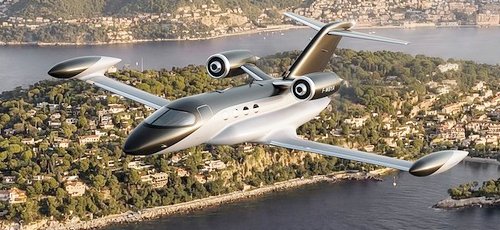
Beyond Aero has completed the Preliminary Design Review (PDR) of its hydrogen-electric business jet and advanced its certification pathway under CS-25 and Part 25 - the transport-category standards of EASA and the FAA, marking a key milestone as hydrogen aviation moves toward industrial execution
The milestone concludes the aircraft's preliminary design phase, confirming the integration of hydrogen storage, electric propulsion, thermal management, fuel cell system and safety systems into certifiable aircraft architecture. The program now progresses on schedule toward detailed design, engineering, and the definition of the validation plan.
The aircraft uses a twin-propfan configuration powered by fuel-cell electric propulsion. It will operate on gaseous hydrogen stored at 700 bar in externally mounted tanks integrated above the wing structure. This configuration enables natural ventilation and compatibility with existing and emerging airport refuelling infrastructure, while avoiding the added complexity of cryogenic liquid storage for early entry into service.
A comprehensive wind tunnel test campaign validated the aerodynamic assumptions and confirmed the correlation between computational models and physical testing during the preliminary design phase.
The Preliminary Design Review confirms that the aircraft configuration and its major systems - propulsion, hydrogen storage, aerodynamics and avionics - have reached the level of maturity required to support a certifiable architecture. With this milestone completed, the program moves on schedule into detailed design and verification of the aircraft's integrated systems.
Beyond Aero has secured over $50 million in funding, backed by investors such as Giant Ventures, Bpifrance, and prior supporters like Initialized Capital, Female Founders Fund, and 7 Percent Ventures. Beyond Aero also completed Y Combinator in 2022. The company has secured $1.1bn in Letters of Intent (LOIs), completed France's first manned, fully hydrogen-electric flight, and acquired Universal Hydrogen Co.'s assets, IP, and flight data. Beyond Aero is a member of the World Economic Forum's First Movers Coalition and the Alliance for Zero Emission Aviation, underscoring its commitment to electrifying aviation with hydrogen propulsion.
21 MARCH 1958
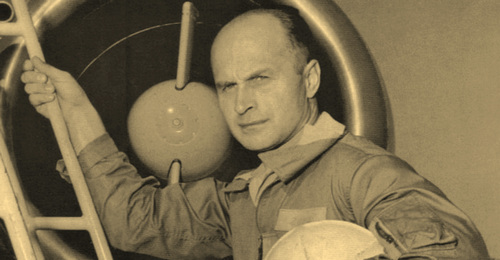
Canada's era of supersonic flight began when pilot Jan Zurakowski took off from Malton Airport near Toronto in an Avro CF-105 Arrow for a 35-minute maiden flight. Less than a month later, Zurakowski flew the Arrow at Mach 1.5 at an altitude of 50,000 ft (15,000 m). In spite of the aircraft's early promise, the Canadian government scrapped the project before the Arrow could be put into production.
Janusz Zurakowski (12 September 1914 - 9 February 2004) was a Polish fighter and test pilot. At various times in his life he lived and worked in Poland, the United Kingdom, and Canada.
Zurakowski was born in 1914 to Polish parents in Ryzawka, Poland. He was educated at a high school in Lublin, where he learned to fly gliders. In 1934, he joined the Polish Air Force and entered the Polish Air Force Officers' School. After learning to fly powered aircraft, he graduated in 1935 as a sub-lieutenant. He went on to serve as a fighter pilot posted to 161 Fighter Squadron in Lwów, and in 1939 he served as a flying instructor at Deblin
After the war, Poland's Soviet-imposed communist government exiled all of the Polish fighter pilots who had flown with the RAF as part of a ploy to downplay Polish patriotism. As a result, S/L Zurakowski, among many other Polish war heroes, chose to stay in Britain. In 1944, he was posted to the Empire Test Pilots' School, graduating from No. 2 Course on 5 January 1945. From 1945 to 1947, Zurakowski worked as a test pilot with "C" Squadron of the Aeroplane and Armament Experimental Establishment (A&AEE) at RAF Boscombe Down, testing naval aircraft for the Air Ministry.
Never having landed an aircraft on a carrier before, he practised landing on a deck painted on a runway at Naval Air Station East Haven. Following a brief training period, he proceeded to land the Supermarine Seafire, a navalised Spitfire, on the deck of HMS Ravager without incident.
In April 1952, Zurakowski and his family left for Canada, where he became a test pilot for A.V. Roe Canada, concentrating on experimental testing. He broke the sound barrier on 18 December 1952, diving the CF-100 fighter, the first straight-winged jet aircraft to achieve this feat.
A United Airlines Boeing 737 MAX 8 N17300, performing flight UA2384 from New York to Chicago. The flight performed two rejected take offs and suffered a fume event in the cabin. UA2384 then declared an emergency, and emergency vehicles were dispatched. One of these have then collided with the Air Canada flight 8646 (C-GNJZ).
USA, Newark-Liberty International Airport, NJ (EWR/KEWR): FedEx Express flight FX721, a Boeing 777-F (N853FD), and Alaska Airlines flight AS294, a Boeing 737 MAX 9 (N738AL) were involved in a loss of separation incident on approach to Newark, NJ (EWR). FX721 was on final approach to runway 29 while AS294 was on final approach to intersecting runway 22L. Both flights were cleared to land and the controller radioed to AS294 that a heavy B777 was landing prior to them on runway 29, with a caution for wake turbulence. Subsequently both aircraft were on a converging course. The controller then instructed AS294 to go around. ADS-B data indicates that AS294 overflew FX721, which had just landed, at about 400 feet. AS294 then circled or another approach and landed uneventfully.
USA, New York-La Guardia Airport, NY (LGA/KLGA): A United Airlines Boeing 737 MAX 8 N17300, performing flight UA2384 from New York to Chicago. The flight performed two rejected take offs and suffered a fume event in the cabin. UA2384 then declared an emergency, and emergency vehicles were dispatched. One of these have then collided with the Air Canada flight 8646 (C-GNJZ).
USA, New York-La Guardia Airport, NY (LGA/KLGA): An Air Canada Express flight AC8646, a CRJ-900, from Montreal collided with a fire truck on runway 4 at LaGuardia Airport during landing. The pilot and co-pilot died in the accident, 41 persons were injured, partly serious, 39 passengers of the airplane and 2 occupants of the fire truck. (The moral of the story is never take your seatbelt of until the aircraft comes to a complete stop.)