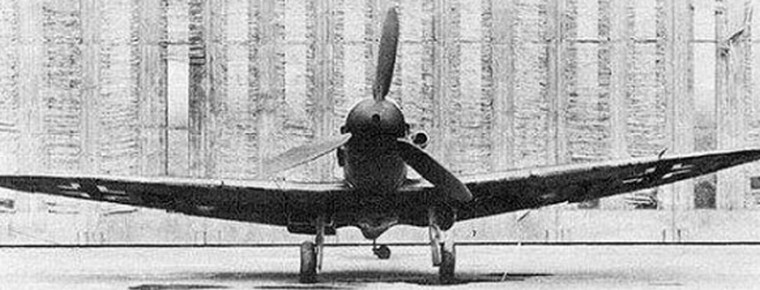
A Spitfire with a German Heart - The Messerspit Saga
By Willie Bodenstein
15.03.2026
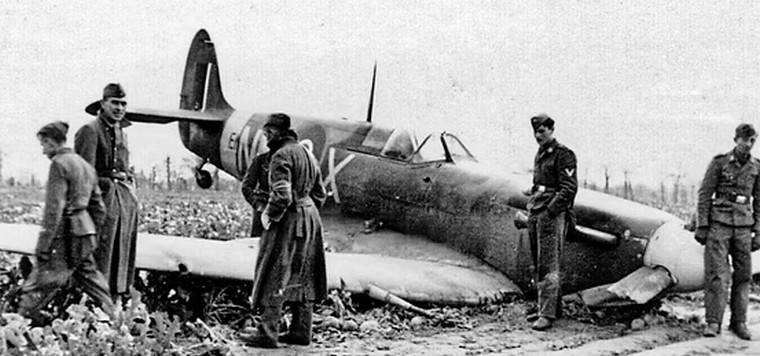
The “Messerspit” saga began when Lieutenant Bernard Scheidhauer, flying with the RAF's Free French Forces, was hit by German flak over northern France while piloting a Supermarine Spitfire Mk Vb (serial EN830).
The damage severed his fuel line and knocked out both his radio and compass.
Disoriented, Scheidhauer inadvertently flew west instead of north. Over open water he eventually sighted land, which he believed to be the Isle of Wight, still under British control. Spotting what appeared to be a suitable landing site, he executed a textbook wheels-up landing in a field of turnips.
Climbing from the aircraft, he was quickly approached by locals who delivered the unwelcome news; he had in fact landed on the Isle of Jersey, then under German occupation.
Scheidhauer attempted to destroy the aircraft, but with insufficient fuel to ignite it, the effort failed. German forces recovered the Spitfire largely intact, and Scheidhauer was taken prisoner and sent to Stalag Luft III, the Luftwaffe-run camp later made famous by the The Great Escape.
On the night of 24-25 March 1944, seventy-six prisoners escaped through a tunnel painstakingly dug beneath the camp. Scheidhauer escaped alongside the operation's organiser, Roger Bushell. Both men were later recaptured and executed by the Gestapo.
The Fate of the Captured Spitfire
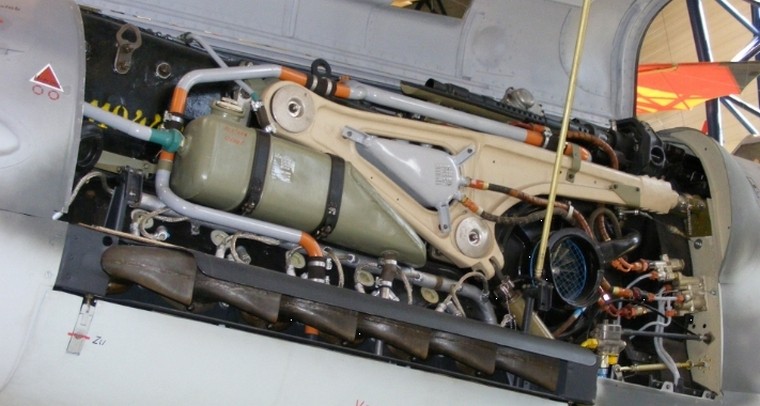
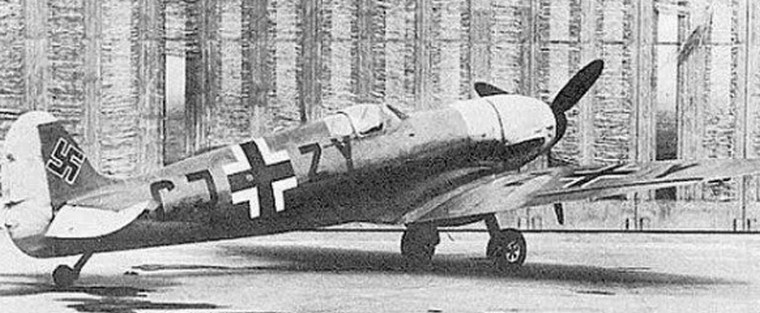
What followed is one of the more unusual and partly speculative episodes of wartime aviation history. The captured Spitfire's Rolls-Royce Merlin 45 engine was removed and replaced with a Daimler-Benz DB 605A, the same powerplant used in the Messerschmitt Bf 109G. Its armament and radio were stripped, and the aircraft was repainted in German test colours.
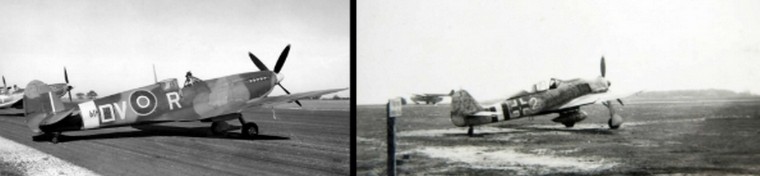
The resulting hybrid-soon dubbed the “Messerspit”-was a unique blend of British airframe and German engineering. Test pilots reportedly praised its excellent visibility, ground handling, climb performance, and service ceiling when compared to both the standard Spitfire Mk Vb and the Bf 109G.
Two main theories attempt to explain the reasoning behind this unusual conversion.
The first points to engineering curiosity-an effort to combine the Spitfire's superb airframe with the fuel-injected Daimler-Benz engine, which offered advantages over the Merlin in certain flight regimes.
The second suggests a more pointed motive: a technical dispute within German aviation circles. Daimler-Benz engineers reportedly sought to challenge Messerschmitt's claims that cooling limitations restricted the DB engine's performance. By installing the DB 605A in a Spitfire-an aircraft with a markedly different cooling system-they aimed to prove that large radiators were not essential.
Sometime in late 1943, Scheidhauer's aircraft was taken from storage and re-engined. Apart from the engine installation and the removal of operational equipment, the airframe remained largely unchanged.
Testing produced mixed results. While the DB 605A functioned effectively with smaller radiators than those used on the Bf 109G, the Spitfire's high-pressure cooling system proved difficult to replicate within German industrial constraints.
Regardless of its exact purpose, the “Messerspit” saw extensive evaluation use before its story came to an abrupt end. On 14 August 1944, the aircraft was destroyed during a United States bombing raid on Echterdingen.
The “Messerspit” remains one of the more fascinating footnotes of the air war-a remarkable fusion of two rival technologies, born out of necessity, curiosity, and competition. In a conflict defined by rapid innovation, it stands as a symbol of how even enemy designs could briefly converge in the relentless pursuit of performance.