This week in Midweek Updates
Aero Africa spotlight on light sport aircraft.
Aero Club Communique April 2026 #1 AGM notification.
Aeronautical Aviation the SACAA'S proposed condition monitoring programme: what it means for your engine and why a digital engine monitor is now essential.
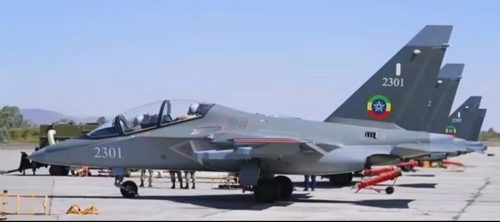
African air forces update their fleets.
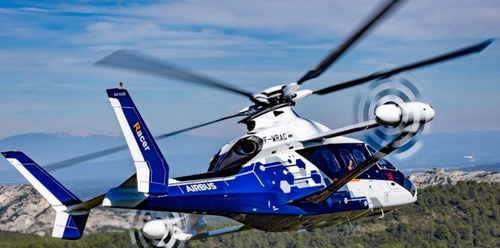
Airbus Racer expands flight-test envelope.
Bell Sets New Records in Latin America.
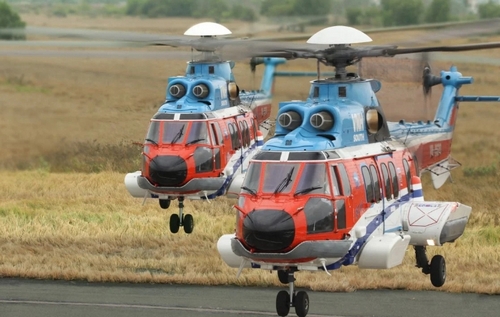
Vietnam Helicopter Corporation bolsters offshore operations with Airbus H225 helicopter order.
NASA Mission Artemis II: first crewed return to the moon in 50 years could set new FAI world records.
This day in history - 13 April 1931: Ruth Rowland Nichols set a Fédération Aéronautique Internationale (FAI) World Speed Record.
Worldwide Incidents and Accidents
Bonus video - Westland Gazelle Low Level Flying
Aero Africa Spotlight on Light Sport Aircraft
Join us from 10-12 June 2026 at Lanseria International Airport, forYour Aviation Community Trade Show.In this edition, we're taking a closer look at light sport aircraft featured at AERO South Africa 2026. Join us and experience it up close!
The Sling TSi
More speed. More power. More capability. The Sling TSi is the ultimate cross-country machine, offering exceptional performance, comfort, and reliability. With seating for four, responsive controls, and effortless cruising at high altitudes, it's built for pilots who want more from every flight.
The Sling LSA
Designed for the modern flight school environment, the Sling LSA is built on the proven Sling 2 platform, with hundreds of thousands of training hours logged globally. Its robust all-metal construction and low-wing design deliver predictable handling while still requiring true “stick and rudder” skill-making it an ideal aircraft for serious pilot training.
The Sling High Wing
A perfect blend of innovation and versatility, the Sling High Wing features a carbon fiber composite fuselage for strength and efficiency. Its spacious cabin, removable seats, and optional open-door configuration make it ideal for everything from adventure flying to aerial photography-all while delivering unmatched visibility and performance.
Manufactured by BRM Aero in the Czech Republic, BRISTELL is a global leader in Light Sport Aircraft-now officially available in South Africa through their local dealership, based in Plettenberg Bay and led by Master Boatbuilder and pilot, Kevin Fouché.
With over 1,000 custom-built aircraft flying around the world, BRISTELL is known for outstanding quality, cutting-edge design, and customisation to suit every pilot's needs. Their flagship B23 model is currently the #1 preferred LSA in Germany and won Best LSA at the 2025 SUN 'n FUN in Florida.
Cirrus Aircraft has long established itself as a global leader in general aviation, redefining safety, performance, and innovation across the industry. With pioneering technologies such as the Cirrus Airframe Parachute System (CAPS), advanced avionics, and luxurious, ergonomic cabin design, Cirrus continues to set the benchmark for what modern personal and business aviation should be. Their SR Series remains the bestselling piston aircraft line in the world, while the Vision Jet-the first single engine personal jet-has transformed the way owner pilots and businesses access jet travel.
In Africa, Cirrus' success is amplified through a single, trusted partner: CSA Aviation. As the exclusive Cirrus Aircraft partner on the continent, CSA Aviation has played a crucial role in expanding Cirrus' footprint and delivering world class support to African operators. Their commitment to excellence spans sales, training, maintenance, and long term customer care, ensuring that aircraft owners experience the full value and capability of the Cirrus ecosystem.
Join us to connect with industry leaders, discover innovations, and gain valuable aviation insights.
We look forward to welcoming you to AERO South Africa 2026!
REGISTER HERE! www.messereg.com/events/visitor/aero-south-africa-2026
Aero Club Communique April 2026 #1 AGM Notification
Dear Member, we are pleased to invite you to the Aero Club of South Africa NPC's Annual General Meeting (AGM) of 2026, which will take place on 6th May 2026 at 18:00 for 18:30. The meeting will be held virtually on Teams by following the link below this message. All members in good standing are encouraged to attend. In accordance with our constitution, we are delivering this notice of the AGM via email and publication on the Aero Club website. This notice is being sent 21 clear days in advance, as required.
Only members in good standing may attend the AGM. If you are unsure about your membership status, please reach out to us prior to the meeting. Members who are unable to attend may appoint a proxy. Proxies must be members in good standing, and the proxy form must be completed, signed, and submitted to the Chairman at least 48 hours before the AGM. You can find the proxy form and additional meeting documents on the Aero Club website. Nominations for a council seat and exco members are also open.
We encourage you to participate in this important event, where we will discuss key developments and plans for the future of Aero Club. Your attendance and input are highly valued.
The AGM agenda, proxy from and nomination form can be accessed on the Aero Club website at: https://aeroclub.org.za/annual-general-meeting/
You can also access the AGM information on the website at www.aeroclub.org.za under Governance at the top right of the launch page.
Aeronautical Aviation - The SACAA's Proposed Condition Monitoring Programme: What It Means for Your Engine - and Why a Digital Engine Monitor Is Now Essential
If you fly a privately operated, type-certificated GA aircraft in South Africa - a Cessna, a Piper, a Beechcraft, a Robin - your piston engine's future just got a great deal more interesting.
The South African Civil Aviation Authority has formally proposed a new Appendix 3 to Document SA-CATS 43, which introduces a structured Condition Monitoring Programme (CMP) for piston engines. If adopted, this regulation creates a legal, documented pathway for private aircraft owners to operate their engines beyond the manufacturer's recommended Time Between Overhaul - on condition - rather than being forced into a calendar- or hour-based overhaul regardless of actual engine health.
This is significant. And for owners who understand what it means and prepare accordingly, it represents both a regulatory lifeline and a meaningful opportunity to extend engine life safely, legally, and with full SACAA backing.
But - and this is the important part - the regulation is built on documented, continuous condition data. And that means the era of flying a GA aircraft without a proper digital engine monitor is, for any serious owner, effectively over.
Why this proposed regulation exists
To understand why this matters, you need to know what came before it.
For many years, South African GA operators relied on Advisory Information Circular AIC 18.9, which provided a framework for operating certain piston engines on condition beyond their manufacturer-recommended TBO. When the SACAA withdrew AIC 18.9, the result was strict reversion to manufacturer recommendations - meaning calendar and hourly TBOs became hard limits. For many aircraft owners, particularly those flying low annual hours, this was a serious problem.
Consider a Cessna 172 or PA-28 flown for weekend recreation, accumulating perhaps 100 to 150 hours per year. A Lycoming O-360 has a manufacturer-recommended TBO of 2,000 hours. At 150 hours per year, reaching TBO in hours takes over 13 years. But calendar-based limits - typically 12 years from the last overhaul - could force an overhaul on an engine with fewer than 1,800 hours on it, based purely on age, regardless of its actual condition.
The proposed Appendix 3 to SA-CATS 43 addresses this directly. As the SACAA's own motivation states: the withdrawal of AIC 18.9 "negatively impacted certain aircraft owners due to non-compliance with this strict requirement." The proposed amendment provides "relief to private aircraft owners to use their aircraft for private flying beyond the time and/or calendar TBO limitations of the piston engine(s) fitted to such type-certificated aircraft, subject to a condition monitoring system."
Subject to a condition monitoring system. That phrase is the cornerstone of the entire regulation - and it is where your digital engine monitor becomes indispensable.
What the proposed regulation actually requires
The proposed Appendix 3 is structured, rigorous, and evidence-based. Here are the key requirements every private owner needs to understand.
Scope and applicability. The CMP applies to privately operated, type-certificated piston engines on South African-registered GA aircraft maintained under Part 43, where the owner elects to operate on condition. It covers aeroplanes up to 5,700 kg MCM and rotorcraft up to 3,175 kg MCM.
The owner's legal responsibility. The owner must ensure a CMP is prepared, must sign a CMP adoption statement, and "accepts legal responsibility for continuing airworthiness decisions." This is not a passive arrangement - the owner is formally accountable.
Baseline condition assessment before entry. Before any engine can enter the CMP, an approved AMO (Part 145) must conduct a comprehensive baseline condition assessment. This includes oil filter inspection and oil sample analysis, borescope inspection of cylinders and exhaust components, cylinder leak-down or blow-by assessment, magneto timing and spark plug condition checks, fuel system inspection, and an engine run-up assessment. If the engine is found unserviceable at this baseline stage, it must be rectified before CMP entry.
Continuous operational monitoring. The regulation requires that "the pilot shall record engine hours and flight time and shall note any abnormal engine indications or behaviour observed during operation in the flight folio." Abnormal indications include "unexpected changes in engine temperatures, pressures, vibration, power output or oil consumption relative to normal operation."
Oil analysis. Spectrographic oil analysis is required, using SANAS-accredited laboratories. Results must be interpreted on a "trend and rate-of-change basis."
The Green / Amber / Red condition framework. The regulation formalises a three-tier condition classification. A Green condition means stable parameters within limits - continued operation permitted. An Amber condition means emerging adverse trends - increased monitoring, investigation, possible operational limitations. A Red condition means unacceptable risk - the aircraft is grounded until rectification.
Record keeping. All monitoring data, trend analyses, findings and corrective actions must be documented in engine maintenance logbooks and retained for the life of the engine. Records must include date, aircraft hours, engine hours, description of findings, corrective action taken, and the signature and licence number of the certifying person.
The on-condition placard. Every aircraft operating on condition must carry a placard stating "this aircraft engine is operated on condition" in a clearly visible position.
Why a digital engine monitor is not optional under this framework
Read through those requirements again. Now consider what they are actually asking of you as a pilot and aircraft owner.
You are required to detect and record unexpected changes in engine temperatures, pressures, and other parameters relative to normal operation. You are required to identify trends. You are required to provide a documented, evidence-based picture of your engine's health over time, sufficient for an AMO to make an informed condition assessment at each inspection interval.
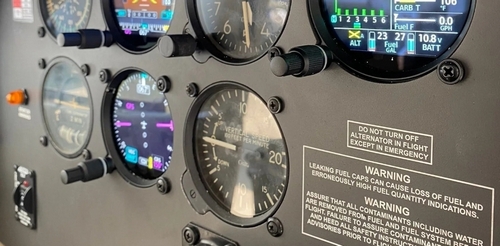
An analogue instrument panel - a single CHT gauge, a single EGT probe on one cylinder, an oil temperature needle - cannot do any of this. It shows you a snapshot of one parameter, imprecisely, with no recording, no trend data, and no ability to detect the gradual changes that the CMP framework is specifically designed to catch.
A digital engine monitor does exactly what this regulation demands:
Continuous multi-cylinder temperature monitoring. A modern engine monitor measures EGT and CHT on every cylinder simultaneously. Where an analogue gauge might show you that one cylinder is in the green, a digital monitor shows you that cylinder four is running 25°C hotter than cylinders one through three and has been trending upward over the last six flights. That is an Amber condition. That is the data the CMP regulation expects you to have.
Oil pressure and temperature trend data. The regulation specifically calls out unexpected changes in oil pressure relative to normal operation. A digital engine monitor logs oil temperature and pressure every few seconds for every flight. An oil pressure that takes five minutes longer to stabilise in cold weather than it did six months ago is a data point that only a logged, timestamped system can provide.
Fuel flow monitoring. Mixture management is one of the biggest contributors to premature engine wear. A digital engine monitor with fuel flow capability lets you fly precise lean-of-peak or best-power procedures, and proves - with recorded data - that you did. This directly supports the "documented, risk-based condition-monitoring regime" the regulation requires.
The flight folio record. The proposed regulation requires pilots to note abnormal indications in the flight folio. A digital engine monitor with SD card data logging essentially automates this process - every deviation from normal is timestamped and stored, creating an objective, tamper-proof record that supplements the pilot's own notes.
Trend analysis for AMO assessments. When your AMO conducts the periodic condition review required under the CMP, what data do they have to work with? If your engine monitoring is analogue, the answer is: very little. If you have been flying with a digital engine monitor for two or three years, the answer is: a complete, time-stamped record of every EGT, CHT, oil temperature, oil pressure, fuel flow, RPM, and manifold pressure reading across every flight hour since installation. That is the foundation of a meaningful trend analysis. That is what the regulation envisions.
The three-tier condition system in practice - and what your monitor tells you
The Green / Amber / Red framework in the proposed Appendix 3 maps directly to the alerts and trend analysis functions of a modern engine monitor.
A Green condition is confirmed by stable CHT and EGT values within normal operating ranges, consistent cylinder-to-cylinder spread, stable oil temperature and pressure, and normal fuel flow for the power setting being flown. Your engine monitor shows you this in real time and logs it for every flight.
An Amber condition - "emerging adverse trends, including gradual deterioration or an increase in oil analysis values, minor compression deterioration, or operating parameters trending toward published limits" - is precisely what a digital engine monitor is designed to detect before it becomes something worse. A slowly rising CHT on one cylinder. An EGT spread widening between cylinders over several flights. An oil temperature that has shifted 8°C higher than your established baseline. These are Amber signals. Without a digital monitor logging data across multiple flights, you will never see them coming.
A Red condition - "confirmed abnormal metallic debris, rapid deterioration of compression, severe structural or combustion distress, or a significant loss of engine performance" - is the scenario every pilot dreads. But even here, a digital engine monitor plays a role: a sudden, significant change in EGT on one cylinder, a rapid CHT spike, an abnormal oil pressure reading - these are the in-flight indicators of something serious developing. A monitor with alert thresholds will warn you immediately. Flying without one means you find out when the engine tells you directly - which is considerably less pleasant.
What system should you be looking at?
At Aeronautical Aviation, we install and support the full Garmin, JP Instruments, Dynon Avionics and Insight Avionics engine monitoring ecosystems for GA aircraft. Our recommendation depends on your existing panel:
If you are building or significantly upgrading your avionics, a Full Flightdeck integrates full engine monitoring - EGT, CHT per cylinder, oil temp and pressure, fuel flow, manifold pressure, and more - into a single, unified primary flight and engine display. All data is logged automatically to an SD card every flight.
If you are fitting engine monitoring to an aircraft with an existing panel, there are dedicated engine data units that integrate with or operate independently, providing the same comprehensive data-logging capability without requiring a full panel replacement.
For the purposes of the proposed CMP, the critical specification is this: the system must monitor all cylinders individually, must log data with timestamps, and must be capable of providing trend data across multiple flights. Any of the engine monitoring solutions we install meets this requirement.
The financial case settles itself
A piston engine overhaul - even a straightforward one - on a Lycoming O-360 or Continental IO-520 runs between R 800,000 and R 1,500,000 or more, depending on what is found inside. If the proposed CMP is adopted and your engine is in good documented condition, that overhaul may be deferred - potentially significantly.
The cost of a properly installed, certified digital engine monitor is a fraction of that figure. If it extends your engine's safe, documented operational life by even one additional year, it has paid for itself many times over. If it catches an early cylinder problem - detectable as an Amber trend on a monitor, invisible to an analogue gauge - and allows a targeted cylinder repair rather than a full overhaul, the financial case is overwhelming.
And beyond the money: you are the pilot in command. Knowing precisely what your engine is doing on every flight - in real time, with trend context - is not an upgrade. It is the baseline standard of informed aircraft operation.
What to do now
The proposed Appendix 3 to SA-CATS 43 is currently in the CARCom proposal process. It has not yet been formally promulgated, but the direction of travel is clear, and forward-thinking owners are preparing now.
Here is what we recommend:
First, speak to your AMO about your engine's current status - hours since overhaul, calendar time, and whether you are approaching either limit. Second, consider a digital engine monitor installation as part of your next annual or avionics upgrade. Third, begin building the condition monitoring data record that the CMP framework will require - because when the regulation is formalised, the owners with historical engine data are the ones who will have the smoothest path through the baseline assessment and CMP entry.
We are Garmin's largest authorised dealer in Africa, Dynon Avionics only Certified Approved Installer in Africa, and our technicians are Garmin, Dynon and Collins Aerospace factory-trained. We work from Lanseria International Airport and serve aircraft owners across South Africa and sub-Saharan Africa.
If you want to talk through engine monitoring options for your specific aircraft - including what system suits your panel, what installation involves, and how it positions you for CMP compliance - contact Clinton and the team at aeronautical.co.za, or come and see us at Lanseria.
Your engine is talking. It is time to start listening.
Considering an Upgrade
Complete our Complimentary Aircraft Upgrade Advisory
"This article is based on the SACAA's formal proposal for amendment of Document SA-CATS 43. The proposed Appendix 3 Condition Monitoring Programme has not yet been promulgated. Owners should confirm current regulatory status with their AMO before making maintenance decisions."
Aeronautical Aviation (Pty) Ltd is based at Lanseria International Airport and is Garmin's largest accredited dealer and distributor in Africa and Dynon Avionics only Certified Installation Center. Clinton Carroll is a qualified pilot and the founder and CEO of Aeronautical Aviation.
African Air Forces Update their Fleets
Africa Defense Forum www.defenceweb.co.za
Some African air forces are overhauling their fleets while weighing affordability, the types of fighter aircraft to buy, and getting rid of older aircraft too expensive to maintain.
The air forces are investing in advanced aircraft to deal with terrorists, criminal groups and regional security threats. They also are working toward defense partnerships with such countries as Italy, Türkiye and the United States.
Regional powerhouse Nigeria has announced plans to accelerate its acquisition of more than 46 advanced military aircraft, including fighter jets and helicopters, as part of a “fleet modernization initiative,” according to a February 2026 Business Insider Africa Report. The country has been a leader in using lighter attack aircraft to fight terrorists. Insider Africa said the fleet expansion is to address “insurgency and internal security challenges.”
Nigeria's A-29 Super Tucano attack aircraft have been a major success story in the fight against terrorism. The country is weighing the advantages of acquiring more small aircraft versus committing to larger, more expensive “next generation” full-size fighter jets. These are more accurately referred to as “fifth generation” aircraft which can include stealth technology, small radar profiles, and advanced avionics and computer systems. Such jets are designed to network with other technology during operation.
Egypt, with Africa's largest Air Force fleet, has expressed interest in joining Türkiye's fifth-generation KAAN fighter jet program. The Egyptian Air Force's current fighter fleet includes a mix of Lockheed Martin F-16s, as well as Dassault Rafales and MiG-29 fighter jets.
Algeria, with Africa's second-largest Air Force fleet, has become the continent's first to begin integrating fifth-generation fighters, according to Business Insider Africa, with the introduction of the Sukhoi Su-57. “This acquisition is a direct response to regional rivalries and a bid to maintain qualitative superiority in the Maghreb,” Business Insider reported, adding that the arrival of jets “fundamentally alters the balance of power in North Africa, giving Algiers a platform capable of challenging advanced Western defences.”
Increases in global insecurity has led Morocco to continue to modernize its Royal Armed Forces, according to the Spanish news agency Atalayar Between Two Shores. Morocco is competing with neighboring Algeria's significant military spending, Atalayar reports.
“The African country is not only increasing its capacity in terms of quantity, but is also developing state-of-the-art bases which, together with the implementation of compulsory military service, form a tandem of growth and development that is positioning Morocco as a player to be reckoned with on the international stage,” Atalayar reported.?
In addition to its fighter jets, Morocco has 24 Apache AH-64Es attack helicopters, which are believed to be among the most modern and effective attack platforms of any kind on the market.?
Some military researchers say that stealth fighter jets are not the best tool for hunting insurgents and terrorists. Africa has relatively few high-intensity country-on-country conflicts that require such firepower. Burkina Faso, Mali, Somalia and other countries dealing with terrorists need light attack planes, along with drones, helicopters and surveillance aircraft, researchers say.
Other countries, including Algeria, Egypt and Ethiopia, rely on conventional fighter jets for deterrence, especially in dealing with neighboring countries. Ethiopia, for instance, has neighboring countries with “limited and largely aging air assets,” leaving the country with “clear qualitative and quantitative advantages,” according to the Institute of Foreign Affairs. The institute said in early 2026 that Ethiopia's air superiority “strengthens deterrence while increasing Ethiopia's freedom of action in crisis scenarios.”
On paper, several African countries appear to have significant air firepower, but statistics are deceptive. Many countries' fleets are made up of secondhand planes, donated or bought at a discount from other world air powers. These planes often are old and unreliable, and maintenance and parts have become too expensive. Some nations still rely on aircraft that are “statistically closer to museum pieces than cutting-edge combatants,” according to Military Africa, calling the maintenance of such planes “a logistical nightmare.”
As the landscape changes rapidly, air forces are deciding what types of aircraft to purchase to modernize their fleets in the coming years.
“Air power that can fly, adapt and endure is ultimately more valuable than air power that looks impressive on paper,” wrote military analyst Joan Swart in a February 2026 report. “In that sense, Africa's path forward is not about imitation, but about designing force defence capabilities that reflect its own realities - and priorities.”
Written by Africa Defense Forum and republished with permission.
Airbus Racer Expands Flight-test Envelope
Airbus' Racer is continuing to expand its flight-test envelope, with the high-speed demonstrator having logged more than 50 flight hours to date. During recent elements of this campaign, the experimental aircraft conducted new missions, including landing on uneven terrain, achieving an elevated rate of climb, and performing sharp 2G turns.
The aircraft's ability to land on a 14-degree slope is attributed to Racer's unique compound architecture, which Airbus said enables “the Racer to land in areas that would have been considered off-limits for conventional helicopters.”
Airbus also attributes the side-mounted propellers to Racer's ability to execute “sharp 2G turns while flying at 370 kilometres an hour,” allowing it to change speed while remaining level. The aircraft achieved a rate of climb of 3,600 fpm, roughly twice as fast as a conventional rotorcraft.
These milestones will be crucial in expanding the operational possibilities of this configuration of aircraft, with Airbus stating that “speed does not have to come at the expense of cost-effectiveness, fuel efficiency, and mission performance.”
Airbus believes its first phase of testing-performed under the European Next Generation Rotorcraft Technologies (ENGRT) project-proves the “maturity and mission capacity” of its high-speed airframe. This initial phase formally finished in February. Subsequent testing will now focus on what Airbus terms “two promising environmental initiatives:” its Eco-Mode technology and optimized low-noise trajectories.
Bell Sets New Records in Latin America
Bell Textron Inc., a Textron Inc. (NYSE: TXT) company, announced today at FIDAE 2026 that the Bell 505 has set a new record for the number of aircraft orders in Latin America in 2025. This achievement highlights the growing demand the region has seen for the Bell 505 and its multi-mission capabilities.
“This milestone is a proud achievement for Bell, showcasing the trust we have with our customers and the exceptional efforts of our team,” said John Ramos, managing director, Latin America. “The Bell 505 has been a highly sought after aircraft in Latin America since its introduction to the market, and that really highlights how well it meets the needs of such a diverse region while also offering exceptional performance and adaptability.”
In the Southern Cone, there are more Bell 505s in operation than any other area in Latin America, making Bell's support network critical to the success of the Bell 505. Through a system of customer service and authorized maintenance facilities, Bell delivers reliable, around-the-clock support that builds trust and confidence. This infrastructure strengthens the ownership experience and distinguishes Bell, highlighting the Bell 505's versatility while cultivating long-term customer relationships that lead to repeat sales, new sales and customer upgrades.
The Bell 505 was introduced in 2014 and certified by the Federal Aviation Administration (FAA) in 2017. There are now more than 600 Bell 505s operating in more than 66 countries on six continents, surpassing 300,000 total fleet flight hours. With a speed of 125 knots (232 km/h) and a useful load of 1,500 pounds (680 kg), the Bell 505 is designed to be easy to fly while providing significant value to the operator and best-in-class cabin visibility. The customer-driven design of the aircraft places safety, performance and affordability at the forefront, blending proven systems with advanced technology and a sleek, modern design. Visit the Bell product page to learn more.
Vietnam Helicopter Corporation Bolsters Offshore Operations with Airbus H225 Helicopter Order
The Vietnam Helicopter Corporation (VNH)'s subsidiaries, Southern Vietnam Helicopter Company (VNH South) and Northern Vietnam Helicopter Company (VNH North), have placed an order for three Airbus H225 helicopters, to support the continued expansion of its offshore energy operations, and progressively replace ageing aircraft in its fleet.
This latest order reinforces a trusted partnership between VNH and Airbus Helicopters that has spanned more than 40 years, and reflects the Vietnamese operator's long-term strategy to modernise and strengthen its heavy helicopter capabilities.
“The H225 has proven itself time and again across our offshore missions, delivering the reliability, performance, and safety we expect. As we look ahead, we see the H225 forming the backbone of our future fleet, allowing us to modernise our operations while expanding capacity and mission flexibility,” said Kieu Dang Hung, CEO of VNH.
“We are honoured to continue supporting VNH and its subsidiaries as they strengthen and revitalise their fleet. Their decision to centre future operations around the H225 underscores the aircraft's exceptional reliability and performance in demanding offshore environments,” said Matthieu Louvot, CEO of Airbus Helicopters. “Our enduring partnership with VNH is built on trust and shared commitment to mission success, and we look forward to supporting their growth for many decades to come,” he added.
The new H225s will join VNH's existing Airbus fleet consisting of Super Puma and H155 helicopters, for deployment across offshore energy transport, utility missions, search and rescue, and broader transport operations.
As the latest addition to the Super Puma family, the H225 is recognised for its high performance in challenging conditions as well as its outstanding range and payload capacity. The aircraft's state-of-the-art avionics and autopilot systems provide increased safety while reducing pilot workload.
There are more than 360 H225s and H225Ms in service around the world, totaling more than one million flight hours. Military customers include Brazil, France, Hungary, Indonesia, Iraq, Kuwait, Malaysia, Mexico, the Netherlands, Singapore, and Thailand.
NASA Mission Artemis II: First Crewed Return to the Moon in 50 Years Could Set New FAI World Records
With the NASA Artemis II crew on a mission that will mark the first time in over 50 years that humans travel in the vicinity of the Moon, history is set to be made. FAI, the World Air Sports Federation, stands ready to review any record claims submitted following the 10-day flight and to ratify new world records in accordance with the FAI Sporting Code.
At the dawn of what may become a sustained human presence on the Moon, the Artemis II mission crew, Reid Wiseman, Victor Glover and Christina Koch of the USA, and Canadian Jeremy Hansen, will pave the way for a return to the Moon and future missions to Mars.
The FAI Sporting Code, including its astronautic section developed by the Astronautic Records Commission (ICARE) defines the parameters by which any spaceflight records are assessed. The review of record claims and the ratification of any resulting world records are carried out by ICARE.
Under the current code the Artemis II crew could set new FAI Astronautic world records by going higher and further than ever before.
Altitude Record
For height above the Earth while in Earth orbit (Class K2 in the sporting code).
According to the planned trajectory, the highest altitude above Earth should be 70,000 km. This will be greater than the current world record of 1369 km set by Gemini 11 in 1966 and the women's record (1408 km) set in September 2024 by Sarah Gillis and Anna Menon on the Polaris Dawn mission. Setting a new world altitude record is therefore very likely for Artemis II, with potential for a women's record given Christina Koch's presence on board.
Distance from Earth
Absolute spacecraft record.
The current record (377,668.9 km) is held by Frank Borman and was set during the 1968 Apollo 8 mission. (Apollo 13 travelled further - 400,171 km - but this was not submitted for an FAI record.) According to the current Sporting Code, a new record must exceed the old one by 5%.
FAI and the Artemis II mission
Greg Principato, President of FAI, and Amy Spowart, President and CEO of FAI Member the National Aeronautic Association (NAA), are attending the launch of Artemis II. The record attempts are overseen by NAA, which is the Air Sport Control organisation in the United States.
Greg Principato states: “As President of FAI, I am honoured to be able to witness the launch of Artemis II in person. This mission marks the beginning of a new era in human spaceflight, and I am proud to see the first woman travel in the vicinity of the Moon. FAI has long played a defining role in shaping space activities, from establishing the Kármán Line to recognising and ratifying records. We look forward to recognising any record performances arising from this mission.”
ICARE President, Scott Neumann adds, “FAI and its Astronautic Records Commission, ICARE, are excited to watch the historic mission of Artemis II and eager to validate any new spacecraft world records the crew may set on their flight to the Moon. This is just the beginning of the renaissance in space travel that will take humanity further into our solar system than we have ever been. ICARE is pleased to be a witness to these bold missions and ready to document these amazing accomplishments as the future history of spaceflight!”
In order for FAI records to be validated, the crew members must have valid FAI Sporting Licences, a process which has been prepared in advance by FAI Members the Aero Club of Canada and the National Aeronautic Association of the USA. NAA will certify the record requirements are met prior to their submission to FAI for ratification.
A pivotal part of the FAI Astronautic Records Commission's activity is defining and ratifying astronautical world records which date back to the earliest space exploration missions in the 1960s. ICARE meticulously logs and verifies new record claims to preserve these important achievements in space exploration history.
To accompany the new era in space travel, ICARE is undertaking a revision of the FAI Sporting Code and rules for astronautical records so that future space travellers have a set of carefully defined rules from which to compare and record astronautic achievements in space. In addition, ICARE's newly instituted Miliarium Ad Astra Grand Challenges are ready to recognise the new firsts in space exploration.
13 April 1931
All records for airplane speed with a woman pilot were shattered when Miss Ruth Nichols, using a Lockheed Vega plane, powered with a Wasp motor, raced over the three kilometre course at Grosse Ile an average speed of 210.65 miles an hour. Amelia Earhart Putnam formerly held the record at 181.1 miles per hour.
On one dash she attained a speed of 226.88 miles an hour. After a few warm-up turns over the course she was ready. The flight was doubly hazardous because she was forced to fly extremely low.
The course, one of these recognized in the United States, is laid out along the Detroit, Toledo and Ironton Railroad Line. In addition to the rails for guide lines, white strips of cloth marked the route.
Nichols' airplane was a 1928 Lockheed Model 5 Vega Special, serial number 619, registered NR496M, and owned by Powell Crosley, Jr. He had named the airplane The New Cincinnati.
South Africa, near Mohlakeng, Randfontein: A Jora Jora exerienced an engine failure and made a forced landing in a field near Mohlakeng, Randfontein. The pilot was not injured and the ultralight received minor damage.
Sweden, Göteborg-Landvetter Airport (GOT/ESGG): Ryanair flight RYR9672, a Boeing 737-800, was conducting a ferry flight with only the crew on board. Shortly before landing on runway 21 at Gothenburg (GOT), it encountered severe turbulence. The landing was discontinued and a go-around was initiated. Due to strong winds and turbulence, the aircraft became difficult to control and was flown outside the permitted limits for this aircraft type, which created a risk of serious damage to the aircraft. Although the pilot attempted to climb, the aircraft initially descended, but then climbed to the intended altitude, after which a normal landing was carried out at another airport.
Slovakia, over mt. Borišov, Velká Fatra: Mid air collision during the first task of FCC gliding competition held in Prievidza. Czech pilot bailed out and was saved with moderate head and leg injuries, the Polish pilot sadly died in the accident.
Mexico, Copalquin area, Guadalupe y Calvo: A Cessna airplane was being shot at by gunfire by armed militias and was forced to land on an airstrip in Copalquin area, Guadalupe y Calvo. All four occupants were injured. The Cessna plane sustained substantial damage. The four occupants were linked to the company Drummond Gold Compañía Minera SA de CV. After landing, they indicated that they detected the presence of a drone in the area, which led them to abandon the aircraft and take refuge among the pine trees. They added that the device was later used to inflict damage to the plane.