Dassault's VTOL Mirage IIIV nine engine Mach 2 contender
By Willie Bodenstein
19.04.2026
An ambitious attempt to combine vertical take-off capability with Mach 2 performance, Dassault's Mirage III V pushed the boundaries of aviation technology in the 1960s. Although ultimately unsuccessful as an operational aircraft, the programme demonstrated both the promise and the complexity of high-speed VTOL fighter design.
During the late 1950s and early 1960s, both the British aerospace company Hawker Siddeley Aviation (HSA) and the French aircraft manufacturer Dassault Aviation showed strong interest in vertical take-off and landing (VTOL) combat aircraft. Hawker Siddeley, in particular, was keen to develop a new generation of fighters capable of supersonic speeds, eventually producing the world's first operational Vertical/Short Take-Off and Landing (V/STOL) fighter.
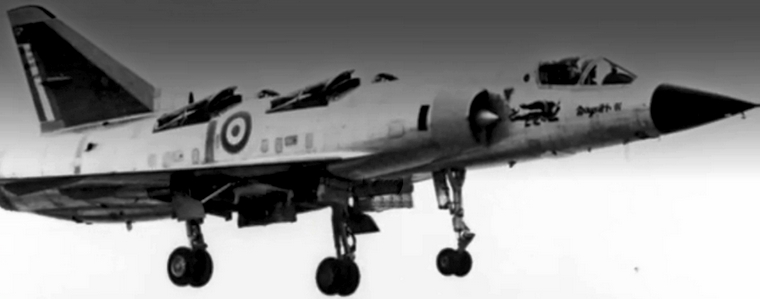
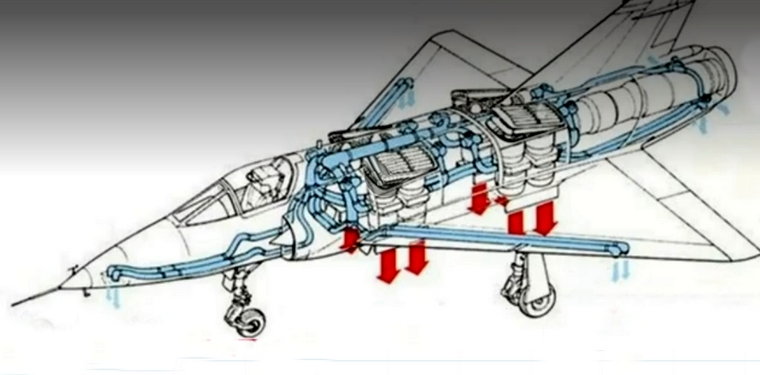
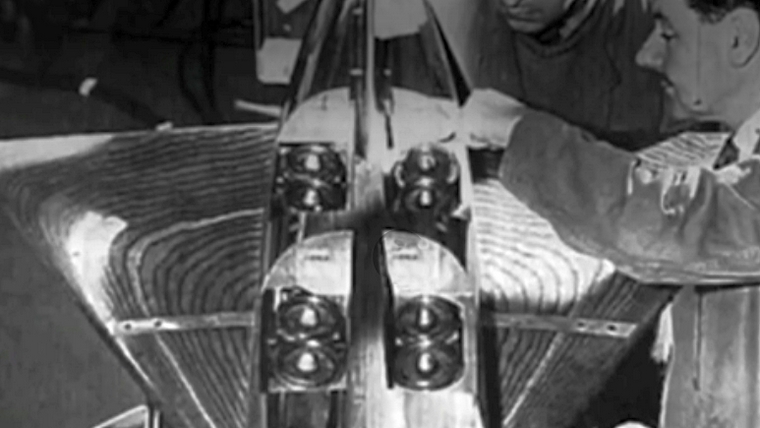
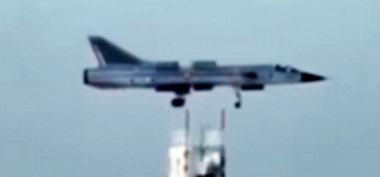
In August 1961, the French military procurement agency ordered the design and development of two Mirage III V vertical take-off prototypes, to be produced jointly by Dassault Aviation and Sud-Aviation. The preferred version, the Mirage III V, featured eight Rolls-Royce RB162-1 lift jets and a Snecma TF106 main engine with afterburner. It made its first stationary hover flight at Melun-Villaroche on 12 February 1965, piloted by René Bigand.
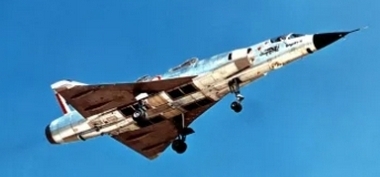
The VTOL variant, which never managed to take off vertically and achieve supersonic flight during the same sortie, shared the general layout of earlier Mirage fighters but featured a longer and relatively broader fuselage along with a larger wing. The Mirage IIIV was considerably bigger than most contemporary fighters of its era.
The aircraft's first transition from stationary hover to horizontal flight was made by Jean-Marie Saget on 24 March 1966. Unfortunately, the lateral behaviour of the aircraft during the transition phase proved problematic. On 28 March 1966, for both technical and financial reasons, the French Defence Ministry halted the production programme, although flight testing was allowed to continue.
During its 11th sortie, on 12 September, the aircraft reached Mach 2.03 in level flight, becoming the only VTOL aircraft in the world to have exceeded Mach 2. On 28 November, the prototype was accidentally destroyed during crabbing flight tests, effectively ending the programme.
Although the Mirage III V proved that Mach 2 performance was technically possible for a VTOL aircraft, it also highlighted the enormous penalties in weight, complexity, and maintenance associated with multiple lift engines. The concept, while impressive on paper and in demonstration, was simply not practical for frontline service. Nevertheless, the Mirage III V remains a remarkable technological milestone; a bold experiment that showcased French engineering ingenuity and stands to this day as the fastest VTOL aircraft ever flown.