This week in Midweek Updates
AERO South Africa 2026 - One month to go!
Why choose a KFA Aircraft?
Robinson Helicopter Company to add crewchief, digital aircraft management and maintenance intelligence to future aircraft
Bell Operator celebrates his new Bell 505 with a Transatlantic Flight.
Pilatus Breaks Ground on Delivery Centre as well as Manufacturing and Engineering Facility in Colorado USA.
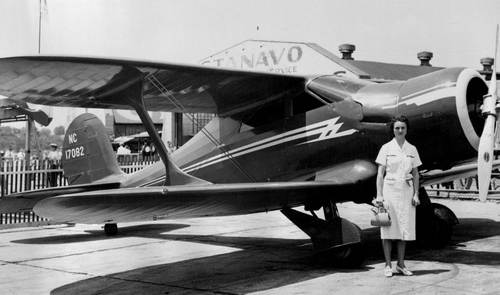
This week in history - Iris Louise McPhetridge Thaden took from Lambert-St. Louis Airport and flew east to Scott Field, Belleville, Illinois. She returned less than twenty minutes later
Worldwide Incidents and Accidents
Bonus video - Celebrating the opening of boating season on the Vaal River
AERO South Africa 2026 - One month to go!
The countdown has officially begun forAEROSouth Africa 2026 - the aviation event where industry, community, innovation, and opportunity come together under one roof. Join us 10-12 June at Lanseria International Airport.
Join us for an exciting experiencefeaturing: Aircraft Displays, Fly-Ins, Presentation Theatre, Workshops & LiveDemonstrations, Business Matchmaking Opportunities, Networking with Industry Professionals & much more.
Keep an eye out for more updates, announcements, and event highlights coming soon.
OUR DEDICATED SALES TEAM
Louise Olckers - Show Director
Tel: +27 (0)10 599 6150
Louise.Olckers@za.messefrankfurt.com
Valentia Madube - Sales Executive
Tel: +27 (0)82 362 8138
Valentia.Madube@za.messefrankfurt.com
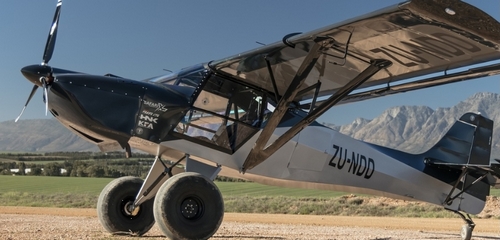
Why Choose a KFA Aircraft?
Join us on a journey where the horizon is endless, and the possibilities are boundless. Whether you're a passionate bush pilot, an intrepid explorer, or simply someone with a thirst for adventure, KFA Aircraft has the perfect aircraft for you. So, fasten your seatbelt, and let your dreams take flight with us.
KFA has the best builder support in the Industry. You become part of the KFA family when you build or own one of our aircraft and we will always be there to support you, no matter where you are in the world. No real special tools are required to build your own aircraft and the ones we recommend can be bought with the kit for less than 100 usd.
Engineering adventure is at the heart of what we do, and 'Built for the Bush' is our guiding motto. Our aircraft are designed for off-field operations and rugged environments, offering exceptional STOL performance, impressive payload capacity, and good cruising capabilities.
Most KFA models are available in either kit form or as ready-to-fly aircraft. Fully assembled Safari aircraft are now available directly from the factory. (Please note that export regulations differ by country, which may affect the acceptance of foreign-produced aircraft.) Kit delivery times vary depending on factory workload but currently average between 12 to 14 weeks. Production-built aircraft have lead times ranging from 4 to 7 months.
The kits are designed for ease of assembly, with the average builder completing a standard non-quickbuild kit in under 700 hours. Quick-build options are also available to significantly shorten assembly times.
VISIT US AT OSHKOSH 2026
Booth 902, 903, 910
Robinson Helicopter Company to Add Crewchief, Digital Aircraft Management and Maintenance Intelligence to Future Aircraft
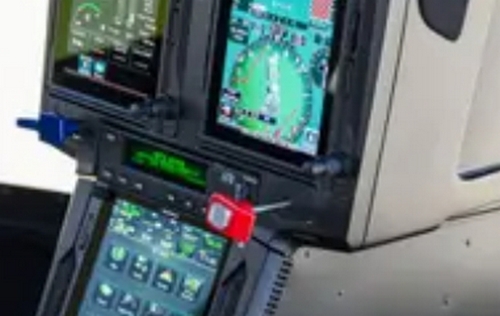
Robinson Helicopter Company, (RHC) will implement Crewchief Systems next-generation digital aircraft management capabilities across the future R66 NxG and R88 helicopters, along with all legacy R22's, R44's and aircraft sent in under the new RHC trade in program. Adding the Crewchief platform to future and legacy Robinson helicopters offers owners and operators a secure, cloud-based digital infrastructure with lifetime visibility into each aircraft's operational and maintenance history. The initiative replaces fragmented, paper-based logbooks and disconnected systems with a secure, structured digital environment that delivers real-time operational and maintenance intelligence.
For decades, aircraft records have been stored in physical logbooks and disparate databases, creating an administrative burden and proactive maintenance planning. Crewchief enables real-time trend analysis and next-generation maintenance tracking, allowing operators and service teams to monitor component history, inspection intervals, airworthiness directives, and service bulletin compliance with greater precision. Records can then be consolidated within a centralized system featuring redundancy safeguards, version control, and structured data organization to ensure accuracy, traceability, and long-term preservation.
"The integration of Crewchief Systems into our helicopters represents a shift in how we support owners and operators. We aren't just delivering reliable aircraft; we are providing a digital nervous system that supports the safety, efficiency and ease of maintenance for the life of the helicopter," said David Smith, president and CEO of Robinson Helicopter Company. “By supporting the transition away from paper logbooks, we are giving our customers the real-time intelligence they need to stay ahead of the maintenance curve and prolong the life of their helicopter.”
The platform also provides immediate visibility with A.I. assistance in airworthiness directives, inspection requirements, and maintenance status, keeping documentation organized and audit-ready. This proactive digital approach allows operators to continuously monitor aircraft health, strengthening regulatory adherence and operational confidence.
“Our role is to ensure that every record, inspection, component change, and operational input is organized, traceable, and accessible in real time while maintaining the highest standards of verification and quality assurance,” said Aaron de Zafra, CEO of Crewchief Systems. “This partnership with Robinson reflects a shared commitment to safety, compliance, and long-term asset integrity.”
Bell Operator Celebrates His New Bell 505 with a Transatlantic Flight
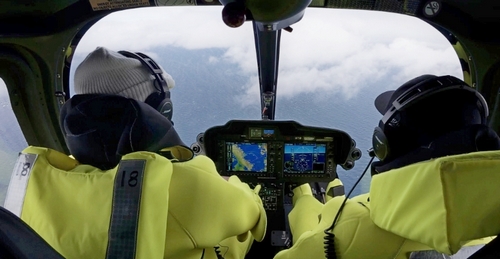
Max Lunov, Airborne Group owner, and Nazar Doroshkevych, crew member and drone operator, have recently celebrated completing a transatlantic flight in their newly acquired Bell 505, covering more than 10,000 kilometers over 55 flight hours and crossing 10 countries during their two-week mission. The journey began at the Bell Textron Canada Commercial Centre of Excellence and concluded in mainland Europe.
This marks the second successful transatlantic flight by Lunov, following his 2021 mission in a Bell 407GXi. Unlike that journey, which was supported by IFR capability, the most recent flight in the Bell 505 was completed entirely under VFR, without autopilot - a far greater challenge requiring exceptional skill, concentration, and endurance.
“This flight demanded absolute precision in planning and execution,” said Max Lunov, pilot and founder of Airborne Group. “Flying VFR across the Atlantic in a light helicopter without autopilot is not just about endurance, it's about trust in your aircraft, your crew, and your own capabilities. The Bell 505 performed flawlessly, giving us the confidence to complete this extraordinary journey.”
The flight celebrates many accomplishments for the Bell 505, marking one of the longest transatlantic flight of its type, the first with two people on board, and including the longest individual legs ever completed in the aircraft.
Since its introduction in 2017, more than 500 Bell 505 aircraft have been delivered, accumulating over 100,000 flight hours. Combining its Safran Arrius 2R engine, dual channel FADEC, and Garmin G1000H NXi all-glass avionics suite with a moving map display - the Bell 505 is one of the most technologically advanced platforms in its class. The added benefit of wide panoramic windows, open cabin design, and Synthetic Vision technology has classified the Bell 505 as an ideal aircraft for long-haul journeys.
Pilatus Breaks Ground on Delivery Centre as well as Manufacturing and Engineering Facility in Colorado USA
Pilatus marked the official start of construction on a new state-of-the-art facility at Rocky Mountain Metropolitan Airport in Broomfield, Colorado. The new building will house a premium customer delivery center, where customers from all over the country can configure and personalize their PC-12 or PC-24. Additionally, Pilatus will significantly expand its existing engineering as well as passenger seat processing capabilities for the growing fleet.
The groundbreaking ceremony brought together senior Pilatus executives and representatives from Jefferson County Government, Rocky Mountain Metropolitan Airport, and numerous local and regional stakeholders.
Markus Bucher, CEO of the Pilatus Group, emphasizes the importance of the investment: “This new facility with an investment of 50 million US dollars will allow Pilatus to expand local engineering capabilities by creating more than 50 new, highly paid jobs. Together, these functions will support Pilatus' continued commitment to quality, innovation, and Swiss craftsmanship while ensuring an exceptional customer experience”.
Thomas Bosshard, CEO of the Pilatus subsidiary, Pilatus Aircraft USA Ltd, added: “The United States is the most important market for Pilatus, and this investment underscores our commitment to a personalized and seamless customer experience throughout the ownership journey”.
Sustainability is a key element of the project and a core value for Pilatus. The new building has been designed to achieve LEED Gold certification and will incorporate photovoltaic panels to harness solar energy, reflecting the company's commitment to responsible growth and environmentally conscious operations. By integrating sustainable energy solutions and high-efficiency design standards into the facility, Pilatus continues to prioritize long-term environmental stewardship as it expands its global footprint.
Effective January 1, 2026, Pilatus consolidated its US subsidiaries into a single entity, Pilatus Aircraft USA Ltd, creating a unified organization of approximately 400 employees with harmonized systems across all American operations. The company's US footprint includes its headquarters in Broomfield, Colorado, as well as additional locations in Westminster (Maryland), Rock Hill (South Carolina), and Atlanta (Georgia).
29 May 1937
At 6:35 p.m., Iris Louise McPhetridge Thaden took from Lambert-St. Louis Airport and flew east to Scott Field, Belleville, Illinois. She returned less than twenty minutes later. She had set a U.S. national speed record, covering a 100 kilometer course with an average speed of 197.956 miles per hour (318.579 kilometers per hour).
Mrs. Thaden's record attempt had been scheduled to start five hours earlier, at the start of the St. Louis air races, but it was delayed while she waited for the official National Aeronautic Association sealed barograph to arrive.
The event organizers awarded her a $250 prize and the Phil Ball Trophy.
The Beechcraft Staggerwing got its name because its lower wing was placed ahead of the upper wing (negative stagger). While most biplanes had staggered wings, the Staggerwing was unusual in having negative stagger. This not only increased the pilot's field of vision, but improved the airplane's stability in a stall. The Staggerwing was a fast airplane for its time and set several speed and altitude records.
Namibia, Hammersdal near Sossusvlei, Hardap Region: The airplane crashed in Hammersdal near Sossusvlei in the Hardap Region in Namibia. All four occupants, a pilot and three passengers, died in the crash. The airplane was destroyed.
South Sudan, about 20 km SW of Juba: A CityLink Cessna 208B Grand Caravan crashed onto a hill in about 20 km from the destination Juba Airport (JUB).
There were 13 passengers and a pilot ?onboard, including two Kenyan nationals and 12 South Sudanese nationals. All 14 perished. The aircraft had taken off from Yei at 09:15. Poor visibility is reported.
USA, Denver International Airport, CO (DEN/KDEN): Frontier flight F94345, an Airbus A321neo, was rolling for takeoff on runway 17L at Denver Airport, CO (DEN) when the aircraft hit a person on the runway. The take-off was aborted and the crew received an engine fire warning. A subsequent evacuation of the aircraft was carried out. The person on the runway was killed.
Atlantic Ocean, off Fort Pierce, Florida: A Beechcraft 300 King Air carrying 11 occupants crashed under unknown circumstances off Fort Pierce, Florida. The pilot declared an emergency while en-route between Marsh Harbour and Freeport, before communication was lost with air traffic control. U.S. Coast Guard crews later located the downed aircraft off the coast of Fort Pierce and rescued all 10 people on board. Three people suffered injuries.
Germany, over Hockenheim: A light aircraft and a motorglider suffered a minor collision in mid-air over Hockenheim, Germany, while flying at an altitude of approximately 800 meters. The propeller and one wing of the motor glider sustained minor damage. The wing and tail assembly of the powered aircraft were also slightly damaged. The 30-year-old pilot of the powered aircraft was able to fly his aircraft back to Speyer and land safely at the airfield there. The 63-year-old pilot of the motor glider also landed his aircraft safely in Hockenheim. Neither the two pilots nor the 20-year-old passenger in the motor glider were harmed.
Celebrating the opening of boating season on the Vaal River