De Havilland Chipmunk - Celebrating its 80th Anniversary
By Willie Bodenstein
Google Banner Ad
17.05.2026
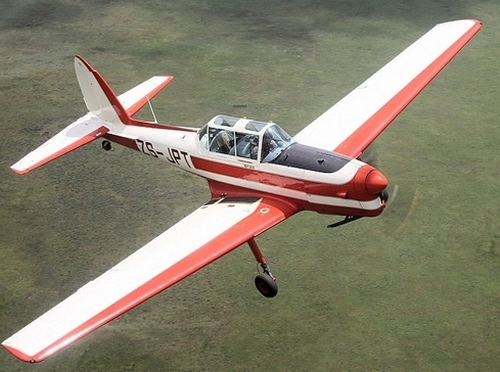
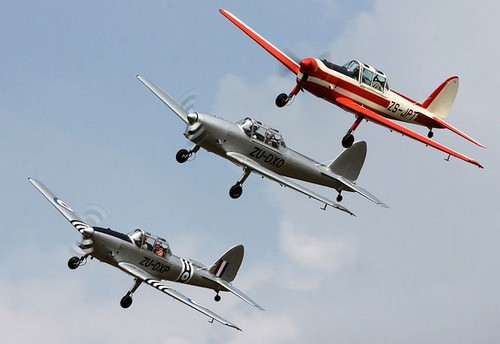
Few post-war training aircraft achieved the worldwide success and affection earned by the de Havilland Chipmunk. Designed as the modern successor to the legendary Tiger Moth, the nimble little “Chippie” combined gentle handling characteristics with fully aerobatic performance, making it an ideal trainer for generations of military and civilian pilots alike. More than seven decades after its maiden flight, the Chipmunk continues to charm aviators around the world with its classic lines, delightful flying qualities and enduring versatility.
The Chippie, as it is affectionately known, was designed by WJ Jakimiuk of de Havilland Canada in 1946. Designed to succeed the iconic de Havilland Tiger Moth as a primary trainer for the Royal Air Force amongst others, the de Havilland Chipmunk flew for the first time on 22 May 1946 at Downsview, Toronto in Canada.
The all-metal, low-wing, tandem-seat stressed skin monoplane's prototype was powered by a 145-hp (108-kW) de Havilland Gipsy Major 1C and most Canadian versions were built with multi-panelled sliding canopies and later versions with a clear Perspex bubble canopy.
Manufacturing started in 1948 and 218 fully aerobatic Chipmunks were built in Canada between 1946 and 1951. In the United Kingdom, 1,014 Chipmunks were built, with the RAF receiving 735 of them for the Oxford University Air Squadron, replacing the Tiger Moth at all 17 other university air squadrons. Another 60 aircraft were built under licence in Portugal.
Different variants of the Chipmunk were built to accommodate the needs of various air forces around the world, including Canada, Portugal, Burma, Chile, Colombia, Denmark, Egypt and Iraq amongst others.
According to The de Havilland Aircraft Association of South Africa , a non-profit volunteer organisation based in Johannesburg, approximately 41 de Havilland Chipmunks saw service in South Africa. Their website contains a dedicated page listing all known Chipmunk aircraft, together with their construction numbers, registrations, histories and, where available, photographs. The association is dedicated to preserving the history of all de Havilland aircraft that have seen service in South Africa and carried South African registrations.
Recreating the Past Crete to Cape Vintage Aircraft Rally