Aero South Africa - Celebrating our partners and sponsors.
EAA and The Krugersdorp Flying Club will host an 80th Anniversary breakfast at Jack Taylor Airfield this Saturday, 23rd May.
Great news from Oshkosh! The world-famous Red Arrows will be performing at this year's EAA AirVenture Oshkosh!
How the SAAF's new Chief plans to do more with less.
SANDF air charter spend totalled R2.3 billion over five years.
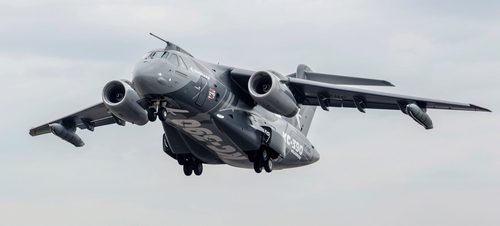
KC-390 Millennium visits 11 countries and flies more than 140 hours during global demonstration tour.
Airlink to launch first ever non-stop Cape Town-Zanzibar service.
AirAsia places landmark order for 150 A220s.
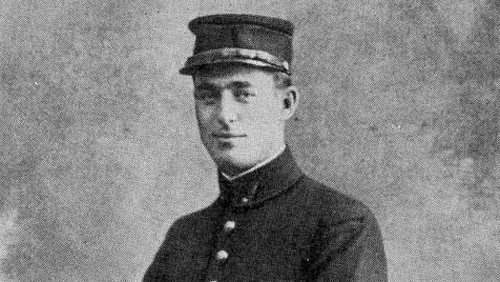
This week in history - Corporel Kiffin Yates Rockwell, Escadrille de La Fayette (Escadrille Nº. 124), shot down an enemy airplane.
Worldwide Incidents and Accidents
Bonus video - An overdose of Warbirds Legends at Duxford
Aero South Africa - Celebrating Our Partners and Sponsors
As we build excitement for AERO South Africa 2026, we are proud to highlight the incredible partners and sponsors whose support continues to elevate the event and strengthen the aviation industry across the region.
Join us 10 -12 June at Lanseria International Airport.
Free Trade Ticket Registration below.
https://app.messereg.com/events/visitor/aero-south-africa-2026
View our List of Exhibitors Here www.aerosouthafrica.za.messefrankfurt.com/pretoria/en/exhibit/2026-exhibitors.html
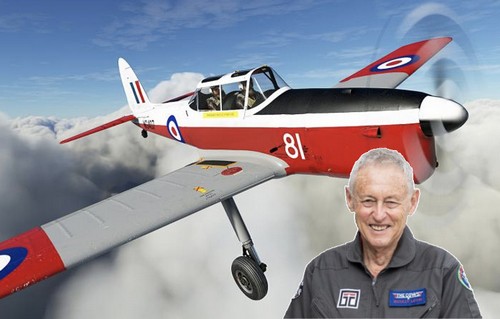
EAA and The Krugersdorp Flying Club will host an 80th Anniversary breakfast at Jack Taylor Airfield this Saturday, 23rd May
>Breakfast, tea and coffee will be served from 07h30. We are also honoured to welcome aviation legend Scully Levin as guest speaker. Scully will share stories and insights on the beloved Chipmunk, along with other de Havilland aircraft he has flown throughout his remarkable aviation career.
All de Havilland pilots, Chippies, Tiger Moths …, will receive a free commemorative cap and breakfast as well as be allocated “Pride of Place” parking on the airfield.
All are welcome to attend, fly in or drive in, but please register to help us plan catering!
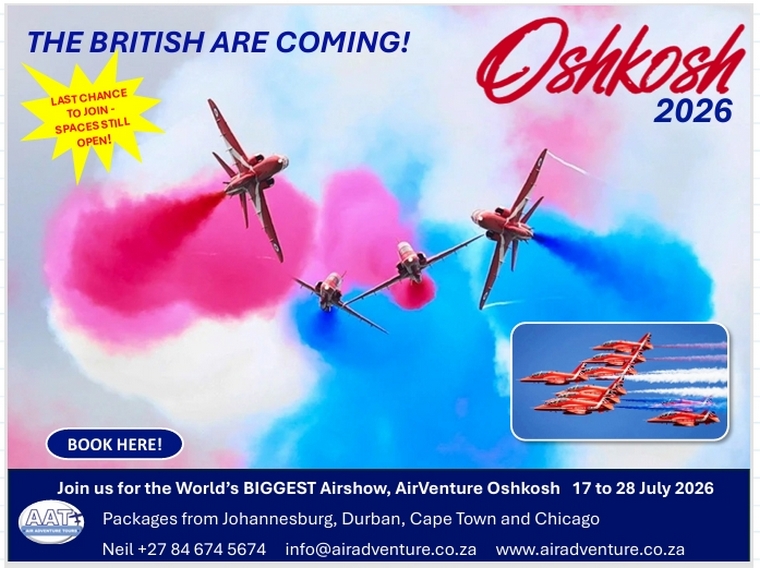
Great news from Oshkosh! The world-famous Red Arrows will be performing at this year's EAA AirVenture Oshkosh!
Limited spaces are still available on our 2026 AirVenture tour ex Johannesburg, Durban, Cape Town and Chicago.
Join us for the world's greatest aviation celebration, including unique South African camping right on the airfield at Wittman Regional Airport!
If you have not yet secured your seat, don't delay - only 2 months to go before departure!
www.airadventure.co.za/booking.html
How The SAAF's New Chief Plans to do more with Less
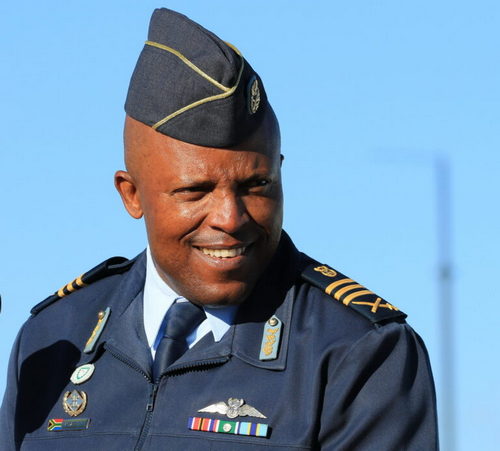
Having conquered four Comrades Marathons, Lieutenant General Carl Moatshe is no stranger to discipline and overcoming formidable challenges. By Dean Wingrin Photo by Guy Martin www.defenceweb.co.za
It has been over a month since Moatshe took over command as the new Chief of the South African Air Force (SAAF), with effect from 1 April 2026. DefenceWeb recently sat down with him to discuss his plans and vision for the next five years, where he emphasised people-centred leadership and empowerment under a severely constrained budget. An upcoming workshop will determine how the SAAF can meet these challenges.
Moatshe is modest about his appointment. “It's something that I don't take for granted,” he said. “It's a privilege, it's an honour. But at the end of the day, it's not about the Chief. It's about mobilising close to 9 000 Air Force members to produce the mandate, which is air defence.”
However, Moatshe made it clear that the concept of air defence itself is evolving: “With changes in technology, change in warfare… updating the doctrines… is the structure still fit for that purpose? … I think there's part of the structure that is outdated.”
Chief among those demands are drone capabilities and space.
“Everybody's buying drones, but… which ones are actually Air Force drones?” he asked. “Do we elevate the Air Force drones to strategic drones?”
He pointed out that historically the SAAF has operated largely at a tactical level. “Since 1920… the South African Air Force has never been strategic… we've always operated at an operational level, tactical level, the Air Force in support of the Army. And we've never stretched our missions beyond our region.”
Out of area operations, such as that during the Second World War and Korea, have always had the logistical support of other allied nations. However, he points out, there were some strategic elements, such as the Boeing 707 tanker.
The establishment of a Space Command represents the most dramatic shift in the Air Force's self-conception since its founding.
“Air power should change to air and space power,” he said. The question of whether Space Command ultimately becomes a national, joint-force capability (rather than purely an Air Force one) is something Moatshe said will need to be resolved collectively.
But, the new Chief said, “behind every capability, there's a human element. So who's going to manage this process?”
Underpinning all of this is what Moatshe described as his most pressing priority: human capital. For Moatshe, people remain the decisive factor. “I call them the weapon systems,” he said of SAAF personnel. “You cannot replace that weapon system… you keep on equipping them, you keep on upgrading them.”
He highlighted the need to rethink training and professional development. The military and its culture struggles to accommodate the younger digital generation entering the Defence Force. “The youth today want independence of thinking. It's not a bad thing, but you struggle to match them traditionally.”
Rather than suppress that impulse, Moatshe said he intends to harness it. He recounts how, as Chief Director Force Preparation, he challenged a group of young airmen to reimagine the business card. Within a week they had produced a digital card embedded in a blank that activates on contact with a smartphone.
“You need to give them that opportunity… there's things that they do with the system that is actually unheard of,” he said. “If I limit them to what I know, then I'm denying the Air Force the opportunity to grow,” he said.
Moatshe is largely reassured on recruitment quality. The SAAF's entry requirements, particularly for engineers, pilots and navigators, remain high. The challenge lies not in attracting talent but in cultivating it once it arrives.
“What type of courses are you going to put in place to re-capacitate this human capital?” he asked. “What courses are going to happen at the Air Force College?”
He pointed to the model used by countries like India, where staff college graduates are retained as assistant directing staff and then dispatched to foreign staff courses, returning with a layered, multicultural grounding that feeds back into local staff courses.
“The product that comes out of that is an experience of multiple cultures and methods of training in different countries, integrated with the foundation of the local staff course,” he said. “Their level of finishing is completely different.”
So, given that Treasury is unlikely to dramatically increase defence funding in the foreseeable future, where does the SAAF direct its limited resources to remain a credible force into the next century?
Moatshe is under no illusions about the fiscal reality. “One should not ignore the fact that we are an unfunded Defence Force. We need to do more, cover more ground with the little that is allocated.”
In that context, he sees the integration of existing systems, Council for Scientific and Industrial Research (CSIR) research, space sensing, and maritime domain awareness, as more achievable than wholesale procurement. “The integrations of those systems are what we need to focus on,” he said, citing the dramatic miniaturisation of computing power as proof that cost need not be a barrier to capability.
He pointed to emerging threats such as drones and autonomous systems with AI. “That precision drone… it's actually a very advanced guerrilla,” he said. “How do you deal with it?”
Looking to the future, Moatshe warned that technological change is reshaping warfare. “You can have all these gadgets… and then you go into war, you lose against somebody that's got a system… one-eighth of your cost with greater capability than you have,” he said.
Operational demands also remain pressing: maritime patrol, search and rescue across South Africa's vast continental shelf, air mobility for the Army, border surveillance.
“How do I support the Navy at sea? How do I support the Army… with air mobility…?” he asked. “There's still the tactical and operational part that we still have to play.”
“The (maritime) borders are there… but because they are imaginary elements at sea, you actually need to police them,” he said. “If you are not there, that border in principle does not exist. The vulnerability of our blue economy carries a huge burden.”
The upcoming work session in June, bringing together Air Force leadership, academics and industry, will be critical to translating this philosophy into doctrine. This, he hopes, will challenge the minds present.
“If we go there and we don't come up with the answer,” Moatshe quipped, “it's going to be like the Conclave: We'll blow the black smoke until the white smoke comes out.”
Noting the recent increase in aircraft availability as a result of measures implemented over the past few years, Moatshe suggested that the Air Force's motto of “Free the Eagle” has done its work.
“The eagle is freed. Now I need to fly this freed eagle,” he remarked.
For Moatshe, flying it means regenerating the mindset of his force, positioning it for a century of challenges that are only beginning to take shape, and trusting the people and senior leadership around him.
Ultimately, Moatshe returns to the central role of people. “The appointment is about the Air Force… about serving the nation… about bringing the people together,” he said.
SANDF Air Charter Spend Totalled R2.3 Billion over Five Years
Publicly elected representatives not part of the Government of National Unity (GNU) use the Parliamentary questions mechanism to let Cabinet Ministers know they - and their actions - are under scrutiny. By Kim Helfrich www.defenceweb.co.za
Two recent examples saw National Assembly (NA) Members of Parliament (MPs) Mzwanele Manyi of Parliamentary party newcomer and - in number terms - the official opposition MKP (uMkhonto we Sizwe Party) along with Economic Freedom Fighters (EFF) Thapelo Mogale quiz Defence and Military Veterans Minister Angie Motshekga on specific SA Air Force (SAAF) functions.
Manyi was informed his request to know how many 2 Squadron Gripen C and D multi-role fighters were fully operational and combat ready or non-operational due to maintenance and/or budget constraints could not be disclosed in public. “The matter can only be discussed in a closed session,” he was told with the second part of his question - the quantified funding shortfall needed to restore and sustain full air combat capability - receiving a monetary reply.
R4.96 billion, the MKP MP, was told is “required to restore and sustain a full air combat capability”.
The 2026/27 defence budget vote allocates the airborne service of the SA National Defence Force (SANDF) R7.57 billion, which includes fighter capability maintenance for both the Gripen and Hawk Mk 120 lead-in fighter trainers at 85 Combat Flying School (CFS). This was as per the Estimates of National Expenditure (ENE) in budget vote number 23 presented by Finance Minister Enoch Godongwana on 25 February.
Of the R7.57 billion for the SAAF, the Helicopter Capability will receive R1.1 billion; Transport and maritime R630 million; and Air Combat Capability R825 million. Operational support and intelligence is allocated R426 million while command and control gets R467 million, and base support R2.4 billion. The Training Capability is allocated R535 million, and Technical Support Services R794 million.
Mogale had aircraft charters and their cost in mind when he asked Motshekga for a breakdown over the past five years. A written response, posted by the Parliamentary Monitoring Group (PMG), has it the SANDF spent R2.3 billion on charter flights in total over the past five financial years.
The yearly breakdown as supplied in the ministerial reply reads R15 million for 2021/22; R753 million for 2022/23; R622 million for 2023/24; R629 million for 2024/25; and R374 million for 2025/26.
The use of chartered aircraft is by and large necessitated because SAAF platforms, including 28 Squadron's ageing C-130BZ Hercules medium transports - the lone long distance cargo and troop carrier in the inventory - are with one exception not operational. 21 Squadron, the dedicated SAAF VIP and VVIP transport unit, also has availability and airworthy problems in an ageing inventory that includes the Presidential Boeing 737-ED (Inkwazi) as well as two different Dassault Falcon types. Other transport tasked squadrons are 41 and 44, both based as are 21 and 28 at Air Force Base (AFB) Waterkloof.
Declining defence spending has seen the SA Air Force unable to meet its targeted hours flown per year. Against a target of 12 000 hours, the SAAF flew 6 210 hours in 2024/25 and 6 904 hours in 2023/24.
However, as per the latest budget document, an additional R1.4 billion has been allocated over the three-year Medium Term Expenditure Framework (MTEF) period in the Air Defence programme for the maintenance of the South African Air Force's fighter capability. These funds are expected to ensure that 12 000 hours are flown each year over the medium term, “thereby strengthening the fighter fleet's readiness for urgent internal and external deployments.”
KC-390 Millennium visits 11 countries and flies more than 140 hours during global demonstration tour
After flying more than 47,000 nautical miles, completing 54 flights, and operating across 11 countries over a period of more than 70 days, the KC-390 Millennium finished it most recently world tour, with 100% mission accomplishment in its international demonstration campaign. The aircraft returned to Brazil following its latest appearance at FIDAE (Feria Internacional del Aire y del Espacio) in Chile, landing at Embraer's Defence headquarters in Gavião Peixoto, Brazil.
Throughout the Demo Tour, the KC-390 accumulated approximately 140 flight hours and operated under extreme conditions, with temperatures ranging from the severe cold of the Arctic to the hot and humid climate of Asia. The campaign put the next-generation military transport aircraft to the test across a wide range of operational scenarios, consistently demonstrating high performance and outstanding availability across all mission profiles.
The demonstrations featured a broad spectrum of cargo operations, including the transport of containers, medical modules, light and heavy vehicles, palletized loads, among others. These activities highlighted the KC-390's versatility and robustness in both tactical and logistical missions, as well as its ability to adapt to diverse operational demands.
Each of the 54 flights conducted during the tour reinforced the maturity of the program and the aircraft's readiness for demanding global operations, consolidating key attributes such as interoperability, operational flexibility, efficiency, reduced operating costs, and the capability to meet the most stringent requirements of modern air forces.
The international campaign began at the Singapore Airshow in late January and covered several strategic regions around the world, including Poland, Sweden, the United States, among others, culminating in the aircraft's participation at FIDAE in Chile. Once again, the Demo Tour reaffirmed the positioning of the KC-390 Millennium as the most effective aircraft in its category, designed and built in the 21st century to perform the most complex missions in the most challenging environments and operational scenarios.
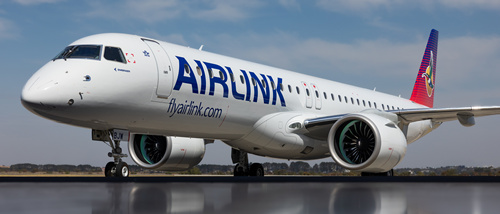
Airlink to launch first ever non-stop Cape Town-Zanzibar service
Airlink, Southern Africa's premier airline will launch the first-ever non-stop Cape Town-Zanzibar route in October 2026 with its brand new Embraer E195-E2 jets.
Bookings are now open for flights on the route, which will operate weekly to and from the Indian Ocean island renowned for its spices, beaches, marine life, resorts and historical, UNESCO-listed Stone Town, which dates back hundreds of years to the island's historical role in the spice trade.
This will be Airlink's second route to the increasingly popular destination and follows the imminent start of its Johannesburg-Zanzibar services on 03 June 2026.
Customers currently holding Airlink tickets for Cape Town-Johannesburg-Zanzibar flights will be able to switch their bookings to the non-stop direct flight at no extra charge, irrespective of the fare class booked provided it's in the same cabin. For bookings made on Airlink's website, customers should contact Airlink Reservations. Travel agents who wish to change their customers bookings should call the Airlink Contact Centre.
Airlink will operate its brand new, state-of-the-art Embraer E195-E2 flagship aircraft on the new Zanzibar service. They accommodate 124 passengers in a 2-class cabin configuration with only window and aisle seats - there are no middle seats on any Airlink flights.
“The introduction of our new flagship aircraft, the E195-E2, with its innovative business class and comfortable economy seats, enables Airlink to bring destinations such as Zanzibar within convenient non-stop reach of Cape Town, which is an important source market for travel to the island. Cape Town is also our second hub and a popular connecting point for long-haul, regional and local customers travelling with Airlink or any of our partner airlines from around the world,” said de Villiers Engelbrecht, Airlink CEO.
Flights to the increasingly popular island, which will have a flying time of just over six hours, will operate on Saturdays.
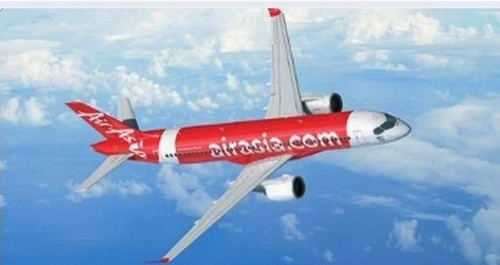
AirAsia places landmark order for 150 A220s
Malaysia's AirAsia has placed an order for 150 latest generation A220-300 aircraft. The purchase agreement is the largest single firm order placed for the A220 and propels the programme beyond the 1,000 firm order milestone, underscoring the aircraft's global market appeal.
The contract was announced at a ceremony at the Airbus facility in Mirabel attended by Tan Sri Tony Fernandes, Chief Executive Officer of Capital A and Advisor to AirAsia Group and Lars Wagner, Chief Executive Officer Commercial Aircraft at Airbus. The event took place in the presence of the Right Honourable Mark Carney, Prime Minister of Canada and the Honourable Christine Frechette, Premier of Quebec.
The purchase agreement makes AirAsia a new customer for the A220. The airline also becomes the launch customer for the aircraft's new cabin configuration of 160 seats. The increase in capacity, adding 10 seats, is made possible by the addition of an extra overwing exit on each side of the aircraft.
The A220 complements AirAsia's existing Airbus fleet and will play a key role in advancing the Group's network and growth. The aircraft will service destinations across ASEAN and into Central Asia, freeing up larger aircraft to fly longer routes.
“We have built AirAsia by making bold decisions at the right moment, not the easiest moment. This order reflects our long-term discipline and the scale of our ambitions. The A220 unlocks new markets and routes and brings us closer to building the world's first true low-cost network carrier,” said Tony Fernandes, CEO of Capital A and Advisor to Air Asia Group. “Our partnership with Airbus spans more than two decades and has been central to everything we have achieved. Today is another milestone in that journey, and there are many more to come.”
“The A220 will provide an optimal platform for AirAsia, combining low operating costs with the range that will enable the carrier to open new routes across Asia and beyond,” said Lars Wagner, CEO Commercial Aircraft at Airbus. “Airbus and AirAsia teams have been working tirelessly to reach this landmark agreement, which is fully aligned with the airline's new network strategy.”
Combining the longest range, lowest fuel consumption and widest cabin in its class, the A220 is the most modern airliner in its size category, carrying between 100 to 160 passengers on flights of up to 3,600 nautical miles (6,700 km). At the end of March 2026, 501 A220s had been delivered to 25 operators worldwide.
As with all Airbus aircraft, the A220 is already able to operate with up to 50% Sustainable Aviation Fuel (SAF). Airbus aims for all its aircraft to be capable of operating with up to 100% SAF by 2030.
18 May 1916
Corporel Kiffin Yates Rockwell, Escadrille de La Fayette (Escadrille Nº. 124), shot down an enemy airplane near Hartmannswillerkopf, a 956 meter (3,137 feet) peak in the Vosges Mountains, along the border between France and Germany.
Rockwell is credited as the first American pilot to shoot down an enemy aircraft during World War I. ¹
Cote d'Ivoire, near Abidjan-Felix Houphouet Boigny Airport (ABJ/DIAP): Kenya Airways flight KQ520 from Nairobi to Abidjan, operated by a Boeing 737-800, 5Y-CYA, was on approach to Abidjan when the aircraft suffered a bird strike. The aircraft landed safely. The next flight was cancelled.
Russia, Yeysk Air Base (EIK/URKE): On 15 May 2026 a Russian Naval Aviation Beriev Be-200 flying boat was destroyed by a Ukrainian Starlink-enabled one way attack drone while on the ramp at Yeysk Air Base in Krasnodar Krai.
USA, Lake Havasu City Airport (HII/KHII), Lake Havasu City, AZ: A Mooney M20J 201, N4665H, crashed at Lake Havasu City Airport (HII/KHII), Lake Havasu City, Arizona. The pilot and a passenger suffered serious injuries and another passenger minor injuries and the aircraft received substantial damage. The FAA reported that the aircraft departed and experienced an unknown issue and crashed while trying to return. ADS-B data shows that the aircraft departed runway 14 and entered a 180 right turn back to runway 32 a few seconds after liftoff and crashed at the right side near the runway.
Atlantic Ocean, off Fort Pierce, Florida: A Beechcraft 300 King Air carrying eleven occupants crashed under unknown circumstances off Fort Pierce, Florida. The pilot declared an emergency while enroute between Marsh Harbour and Freeport, before communication was lost with air traffic control. U.S. Coast Guard crews later located the downed aircraft abou 80 NM off the coast of Fort Pierce and rescued all eleven people on board. Three people suffered injuries.