This week in Midweek Updates
Aero Africa - Unlock new aviation opportunities through strategic matchmaking.
Oshkosh 2026 - It's not too late.
Update on this year's Royal International Air Tattoo.
The future of Africa's defence industry to come under the AAD 2026 Conference spotlight.
Baykar and EDGE to integrate Al Tariq PGM onto Akinci UAV.
The Royal Thai Air Force orders two Airbus C295 tactical transport aircraft.
Eve completes hover & low-speed flights block, advancing eVTOL toward transition flight testing.
Cessna SkyCourier to support expanded inter-island service for AIR Marshall Islands.
This week in history - 24 May 1962: Lieutenant Commander Malcolm Scott Carpenter, United States Navy, NASA Astronaut, was launched aboard Mercury-Atlas 7
Worldwide Incidents and Accidents
Bonus video - Gyrocopters at Bona Bona 20.05.23
Aero Africa - Unlock New Aviation Opportunities through Strategic Matchmaking
As part of your AERO South Africa registration, you'll receive complimentary access to our exclusive Business Matchmaking platform hosted by Espresso Meet Up.
Designed to connect exhibitors, delegates, buyers, operators, and aviation professionals, this service helps you schedule valuable meetings before the event even begins. Simply log in, explore your recommended matches, and connect with the businesses and decision-makers most relevant to your goals.
Expand your network, discover new suppliers, explore partnerships, or generate new business opportunities, our dedicated Matchmaking Concierge Team will support you every step of the way.
Once registered, you'll receive a welcome email from jason@businessmatchmaking.company containing your login details and access to the platform - so you can start connecting immediately.
Link to Youtube Video www.youtube.com/watch?v=fjldqZkrc60 Elevate your experience at AERO South Africa 2026.
Register today and complete your profiling questionnaire to unlock curated business matchmaking opportunities tailored to your organisation's goals and interests.
Need help navigating the Business Matchmaking® platform?
Click the link below to view the user guide.
www.canva.com/design/DAGouFEh2ns/54PcpAB6STuwey-ITsLFvA/view?utm_content=DAGouFEh2ns&utm_campaign=designshare&utm_medium=link2&utm_source=uniquelinks&utlId=he6690c173f#10
Where: Lanseria International Airport
When: 10 - 12 June 2026
Time: 09:00 - 16:00, Daily.
Oshkosh 2026 - It's not too late
Limited space still open on this year's adventure!
With just over 2 months to go until EAA AirVenture Oshkosh 2026 begins, the good news is, if you have not yet booked, it's not too late to join our tour to the world's GREATEST aviation celebration!
A few spaces are still available for this year's aviation adventure. Join us for an aviation experience like no other at the home of General Aviation in Oshkosh, USA.
Enjoy camping right on the airfield in the unique South African camp, surrounded by fellow aviation enthusiasts from around the world.
Don't miss the excitement, aircraft, airshows, forums, camaraderie, and unforgettable atmosphere of AirVenture 2026!
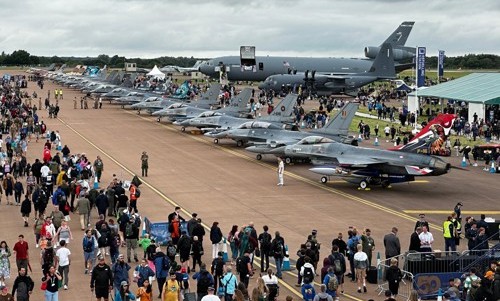
Update on this year's Royal International Air Tattoo
It is with great disappointment that we are letting you know this year's Royal International Air Tattoo will not be taking place.
We understand how much RIAT means to so many people; our visitors, volunteers, partners, and the wider community who return year after year. We know the memories, traditions, and anticipation that build around the event.
This has not been an easy decision. It follows extensive discussions with the Royal Air Force and the United States Air Force regarding uncertainty over access to RAF Fairford, given the ongoing situation in the Middle East.
We want to thank you for your continued support and understanding. Everyone who has purchased a ticket will be offered the choice to roll over their tickets to RIAT27, receive a full refund, or donate the cost of their tickets to the RAF Charitable Trust, supporting our wider charitable work.
Gavin Gager, Chief Executive Officer of Royal Air Force Charitable Trust Enterprises, said: “We know how much RIAT means to everyone, and recognise how disappointing this news will be. It is a disappointment we feel just as strongly.
“We would like to thank everyone for their support, loyalty, and understanding. Looking ahead, we remain fully committed to returning in 2027, and to making sure RIAT comes back stronger than ever. We very much look forward to welcoming you all again.”
The future of Africa's defence industry to come under the AAD 2026 Conference spotlight
By Armand Liebenberg www.defenceweb.co.za
Covid-19, the Russian invasion of Ukraine, and renewed conflict in the Middle East have delivered a series of global shocks in recent years. Yet in each case, a clear lesson has emerged: those able to manufacture, stockpile, and sustain their own defence capabilities are far less exposed than those that cannot.
This has not gone unnoticed in Africa, prompting an increasingly important question: how can the continent build a viable, sustainable, and ultimately competitive defence industry?
This is set to be a key theme at the African Aerospace and Defence (AAD) 2026 Conference later this year. Day Two of the Conference will focus on the African defence-industrial landscape, bringing together government, military, industry, and strategic stakeholders.
Africa is one of the world's most resource-rich and conflict-affected continents, yet its militaries remain heavily dependent on imported equipment. Russia, the United States, China, and Turkey do not just supply advanced systems, but even the basic equipment needed to sustain day-to-day operations. However, these systems are, more often than not, designed for a different context and doctrine. In practice, this has meant that these expensive and state-of-the-art systems often fail to enjoy significant longevity, as national forces do not have the skill sets or budgets to ensure their operability through effective maintenance or repairs.
These challenges are compounded by the growing capability of non-state actors, whose use of low-cost drones and improvised systems has allowed them to achieve tactical advantages over, theoretically, better-equipped state forces. The implication is uncomfortable: in many cases, the capability gap stems less from what African militaries have acquired than from their inability to keep it operational once deployed.
The roots of this problem run deeper than logistics. Defence procurement across the continent has historically been shaped by external partnerships, driven as much by political alignment, financing arrangements, and legacy relationships as by operational requirements. This model has delivered short-term capability while entrenching long-term dependence, limiting both strategic autonomy and industrial development.
However, the disruptions of recent years have forced a reckoning. Pandemic-era supply chain collapses, the surge in global ammunition demand triggered by the war in Ukraine, and rising risks linked to foreign technology dependence in an increasingly unpredictable geopolitical environment have together prompted a difficult realisation: access to arms, munitions, communications systems, space-based technologies, and even basic components needed to keep equipment operational can no longer be assumed.
As a result, an increasing number of African states are turning to indigenous systems. South Africa, Egypt, Algeria, Morocco, Nigeria, and even smaller countries such as Namibia and Rwanda have all made significant strides in developing their domestic defence industrial base.
South Africa, sporting Africa's most advanced defence-industrial capability, continues to lead the way in armoured vehicle and electronic warfare development, with the country making significant strides in other areas as well, including advanced unmanned aircraft, with the Milkor 380 being a key example. Nigeria, for its part, has begun expanding local production of small arms, ammunition, armoured vehicles, as well as small single-use drones. Meanwhile, Egypt and Morocco have advanced efforts to become regional defence manufacturing hubs through partnerships with foreign defence firms.
The AAD 2026 Conference will seek to explore these developments through a series of focused sessions designed to unpack the key building blocks of a sustainable defence industry. From financing and industrial strategy to supply chains, localisation, and export development, Day Two's programme is expected to explore not just what is needed, but how it can be achieved in practice.
Undoubtedly, funding remains one of the most significant constraints on Africa's defence-industrial development. Limited budgets, competing socio-economic priorities, and, at times, inconsistent political will continue to restrict long-term investment. As a result, discussions around financing models and public-private partnerships are expected to feature prominently, with the emphasis not only on unlocking capital but on structuring it in a way that supports sustainable industrial growth rather than short-term procurement cycles.
Closely linked to this is the question of supply chains. The sharp decline in Russia's arms exports to Africa since its invasion of Ukraine in 2022, coupled with wider global disruptions, has exposed the vulnerability of an over-reliance on global supply networks. This has reinforced the case for greater localisation, particularly in terms of maintenance, repair, and munitions production. Of course, localisation is not without trade-offs, especially in terms of cost, efficiency, and technical complexity, making the balance between domestic production and external sourcing a central theme of discussion.
Building on this, the Conference's attention is also expected to turn towards export development, an essential component of building a viable modern defence industry. Most African defence manufacturers operate in relatively small defence markets, limiting their ability to take advantage of economies of scale. Access to regional and international markets is therefore essential. Discussions are expected to explore practical pathways to competitiveness, including certification and compliance requirements, regional partnerships, and the development of both affordable and operationally relevant product offerings.
The Africa Aerospace and Defence 2026 exhibition and conference will take place from 16 to 18 September 2026 at Air Force Base Waterkloof, just outside Pretoria, South Africa. Across the three days, attendees can expect to engage with these themes, and many others, through a programme designed to bring together policy, industry, and operational perspectives in a single forum.
Beyond the conference itself, AAD 2026 will offer a broader showcase of the African defence and aerospace sector. The event will feature an extensive exhibition and airshow, with more than 200 exhibitors from over 30 countries expected to participate. For attendees, this provides an invaluable opportunity to engage directly with the technologies and leading military, government, and industry figures shaping Africa's evolving defence landscape.
DefenceWeb has partnered with the AAD organisers to run the three-issue Show Daily magazine and three-day AAD Conference. For more information contact Robert Mace (sales), Guy Martin (editorial), or Ros Hinchcliffe (conference).
Further details on the AAD 2026 Conference programme and participation will be released in due course.
Baykar and EDGE to integrate Al Tariq PGM onto Akinci UAV
By Guy Martin www.defenceweb.co.za
The United Arab Emirates' EGE group and Turkiye's Baykar have signed a contract to arm the Turkish company's Akinci unmanned aerial vehicle (UAV) with Al Tariq precision guided munitions (PGMs).
The contract expands an ongoing partnership, offering Baykar's UAV customers a broader portfolio of advanced smart weapons from EDGE, the Emirati company said earlier this month at the SAHA 2026 defence exhibition in Turkiye.
One contract, signed by Hamad Al Marar, Managing Director and CEO, EDGE, and Haluk Bayraktar, CEO of Baykar, will see Baykar provide support services to EDGE to integrate and demonstrate Al Tariq line of all-weather, day/night, long-range PGMs on the Akinci multirole high-altitude, long-endurance (HALE) unmanned combat aerial vehicle (UCAV).
A second agreement, signed by Murat Kilinc, Business Development Director at Baykar and Yousef Al Blooshi, Senior Sales Manager at EDGE, establishes a commercial framework under which both parties will be authorised to market and offer products from each other's range as part of their respective customer propositions. The agreement further opens the door for broader cross-selling opportunities across both companies' wider product offerings.
“The defence industry is moving towards integrated, end-to-end solutions, and this partnership with Baykar is a direct reflection of that. By combining our advanced and proven smart weapon systems with the Akinci UCAV platform, we are demonstrating the value of collaborative innovation in delivering precision, scalability, and operational flexibility across complex mission environments. Together, we can offer our customers across international markets a truly seamless, integrated capability that meets the highest operational standards,” Al Marar said.
“Thanks to the different ammunition integrations we have added to our Bayraktar Akinci platform, we offer our users a much wider range of options and operational flexibility in the field. With this strategic collaboration, we are enhancing the capabilities of our platforms while further strengthening our global partnerships and leading position in the defence industry,” Bayraktar said.
These agreements follow an earlier deal to integrate the Desert Sting 16 guided-glide weapon onto the Bayraktar TB2.
Al Tariq is a modular family of precision guided munitions designed for the Mk 81, Mk 82, and Mk 83 (250 lb, 500 lb, 1 000 lb) aerial bombs, offering long stand-off ranges exceeding 120 km and multiple seeker options. The system offers a wireless integration option or a digital solution for aircraft requiring either MIL-STD-1760 or DIGIBUS interfacing. The standard Al Tariq kit gives a range of up to 40 km while the Al Tariq-LR version has fold-out wings for a range of 120 km.
The Al Tariq weapon started life as the Denel Dynamics Umbani (Lightning) guided bomb system, which has a terminal accuracy of 3 metres circular error probable (half of the weapons land within that distance of the aim point) using laser target-designation or an imaging infra-red seeker.
The Umbani was first test dropped off a South African Air Force Hawk in 2011 and then became the first product (the Al Tariq) of a joint venture between Denel Dynamics (49%) and Tawazun (51%). Tawazun became Barij Dynamics in 2018 and in November 2019, Barij became AL TARIQ when it was consolidated along with 25 other UAE defence entities under the EDGE group.
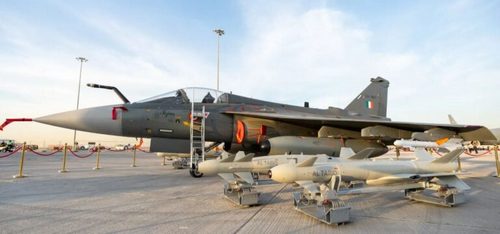
Tawazun Dynamics supplied the Al Tariq to the UAE Air Force, where it equips its Mirage 2000s and Hawks. It is believed to have been used in combat in Yemen. More recently, Egypt acquired the Al Tariq for its Mirage 2000 and F-16 Fighting Falcon combat jets. In 2023, AL TARIQ and India's Bharat Dynamics Limited signed a memorandum of understanding for the production of Al Tariq precision guided weapons in India. The Al Tariq was subsequently fitted to HAL's Tejas fighter.
The Royal Thai Air Force orders two Airbus C295 tactical transport aircraft
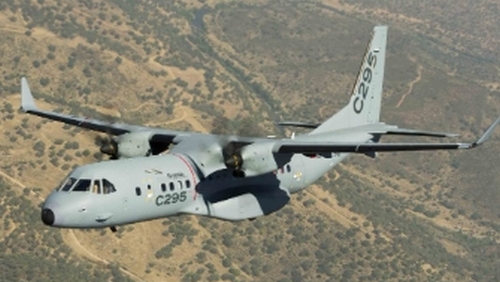
The Royal Thai Air Force has acquired two Airbus C295 in tactical transport configuration, which will enhance Thailand's defence capabilities. The two C295s will be operated by the 46th Wing Division of the Royal Thai Air Force from the Phitsanulok air base.
Thailand already has three C295s operated by the Royal Thai Army, performing cargo and troop transport missions since 2016.
The aircraft will be assembled at the Airbus Defence and Space facilities in Seville, Spain, with the first delivery scheduled in the first half of 2029.
The C295s in transport configuration have the capacity to carry 70 troops or 49 paratroopers, take off and land on unprepared runways, perform cargo and paratrooper drops, as well as undertake medical evacuation.
Airbus contributes to the Thai defence industry through a partnership with Thai Aviation Industries (TAI) for their support in the maintenance of the C295 fleet through advanced training means.
Thailand is one of the seven countries in the Asia-Pacific region that operates the C295. As the global leader in its segment, the C295 holds 85% of the market share with a total of 333 orders from 39 countries across four continents. To date, the global C295 fleet has achieved 750,000 flight hours.
59 successful flights and 2:27:33 of accumulated flight time strengthen confidence in control, loads and aero-propulsion models, as ground tests prepare the aircraft for transition flight testing.
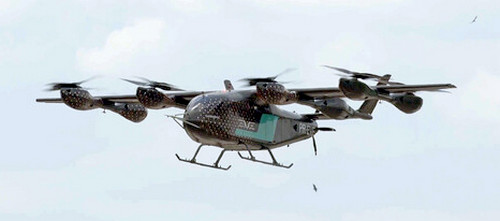
Eve Air Mobility (“Eve”) (NYSE: EVEX, EVEXW; B3: EVEB31), a global leader in advanced air mobility solutions, today announced the successful closeout of the hover & low-speed flights block in the flight test campaign of its full-scale engineering prototype. The completed block generated high-fidelity data and knowledge gains that continue to mature the program as Eve progresses toward transition flight testing.
The milestone reflects Eve's disciplined building-block approach, which expands the flight envelope step-by-step and validates models, control laws and aircraft behavior against real-world data before moving into more complex tests. Each completed block strengthens the technical foundation for the next, tightening the correlation between simulation predictions and flight behavior.
“Closing this phase validates the discipline behind our flight test strategy,” said Johann Bordais, CEO of Eve. “Across 59 flights, we confirmed stable hover performance and predictable control behavior within the envelope, while expanding our understanding of loads, aerodynamics, propulsion and energy management, key foundations for the transition phase and the certification path ahead with the conforming prototypes.”
In this phase, the aircraft demonstrated stable hover performance and predictable handling through progressively more demanding maneuvers. The team first completed the low-speed input phase below 15 knots, executing activities to validate control laws, downwash effects, thermal behavior and the propulsion model. As testing progressed, operations expanded to approximately 20 knots of ground speed (vehicle speed), including simultaneous four-axis maneuvers to further validate aerodynamic and load models, supporting progression to higher speeds, a broader envelope and larger control deflections.
Notable milestones from this phase include the execution of more than 100 flight test points and the first demonstrations of autoland and the simplified fly-by-wire mode, a secondary layer of the fly-by-wire system that is activated when the normal mode is unavailable. The aircraft also reached 215 feet above ground level (AGL) and flew for 3 minutes and 48 seconds. Throughout testing, the aircraft showed consistent behavior under simultaneous four-axis inputs. Recorded noise levels remained in line with expectations, while propulsion and battery performance were better than anticipated.
“Completing hover and low-speed testing gives us high-confidence data to validate and refine our aerodynamic, propulsion and load models,” said Marcelo Basile, Head of Tests of Eve. “That model correlation is what enables disciplined envelope expansion. With planned ground tests next, we will be ready to begin transition flights, in which we validate the lifter-pusher synchronization before moving on to the cruise phase.”
Over the coming weeks, Eve's engineering prototype will conduct planned ground tests in preparation for the transition flights block, expected to begin in summer 2026 (July/August). The transition phase is designed to further strengthen the development of the final aircraft by expanding the envelope and validating performance as the program advances toward wing borne flight.
Cessna Skycourier to Support Expanded Inter-Island Service for AIR Marshall Islands
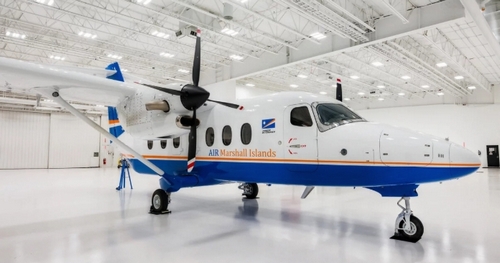
The Cessna SkyCourier has reached a new milestone with the recent delivery of the first aircraft into the Republic of the Marshall Islands (RMI). The 19-passenger variant delivered to AIR Marshall Islands Inc. (AMI) is equipped with the optional passenger-to-freighter conversion kit, enabling the aircraft to transition between full passenger and full cargo configurations. The delivery marks a significant milestone in strengthening essential air service across the country.
With communities comprised of widely dispersed islands, regional air service plays an important role in supporting commerce, travel and vital freight transport in the region. The SkyCourier's flexible cabin configurations and strong runway performance will help AMI streamline inter-island services.
“Built with customer needs and operational efficiency at the forefront, the Cessna SkyCourier provides a dependable platform to support consistent, day-to-day operations,” said Juan Escalante, vice president, SkyCourier sales. “The aircraft was designed for operators like AIR Marshall Islands who require adaptability and unparalleled performance across a wide variety of missions.”
Based in the capital, Majuro, AIR Marshall Islands is a commercially operated airline owned by the Government of the Republic of the Marshall Islands. With an additional SkyCourier expected to deliver this year, AMI selected the aircraft to enhance connectivity and expand services throughout the nation's atolls and outer islands.
The twin-engine, high-wing Cessna SkyCourier turboprop offers a combination of performance and lower operating costs for air freight, commuter and special mission operators around the world. The Cessna SkyCourier is offered in two variants-the freighter and the passenger-along with optional kits that allow the aircraft to be configured from passenger to freighter, or in a Combi configuration that accommodates up to nine passengers while carrying freight.
The freighter variant is sized to handle up to three LD3 shipping containers with a payload capacity of 6,000 pounds, while the 19-passenger variant features large cabin windows for natural light and views. Both versions offer single-point pressure refueling to enable faster turnarounds and feature two crew doors and a large side door used for cargo loading or passenger boarding, depending on the configuration.
The SkyCourier is powered by two wing-mounted Pratt & Whitney Canada PT6A-65SC turboprop engines and features the McCauley Propeller C779, a heavy-duty 110-inch aluminum four-blade propeller, which is full feathering with reversible pitch, designed to enhance the performance of the aircraft while hauling tremendous loads. The SkyCourier is operated with Garmin G1000 NXi avionics and has a maximum cruise speed of more than 200 ktas and a maximum range greater than 900 nautical miles.
24 May 1962
24 May 1962: Lieutenant Commander Malcolm Scott Carpenter, United States Navy, NASA Astronaut, was launched aboard Mercury-Atlas 7 at 12:45:16.57 UTC (7:45:16 a.m., Eastern Daylight Time) from Launch Complex 14 at the Cape Canaveral Air Force Station, Cape Canaveral, Florida.
This was the fourth manned space flight of the American space program. Carpenter was the sixth human to fly in space.
Scott Carpenter reported: “When the ignition signal was given, everything became quiet. I had expected to feel the launch vehicle shake, some machinery start, the vernier engines light off, or to hear the lox valve make some noise, but I did not."
"Nothing happened until main engine ignition; then I began to feel vibration. There was a little bit of shaking. Lift off was unmistakable.”
Austria, near Zell am See, Salzburg: A mid-air collision between a flex wing paragilder and a Cessna F182Q Skylane (Reims) occurred just 1.2 NM West-NW of the published traffic pattern near Zell am See, Salzburg, after a paraglider was not recognized by the approaching Cessna pilot in time. The gear and textiles of the flex wing were ripped off by the left wing of the Cessna. The paragilder pilot was able to land unhurt with the emergency parachute and the Cessna landed with minor damages and the paraglider gear still wrapped around the left wing.
USA, near Woodlake Airport (O42), Woodlake, CA: A Moony M20J 201 experienced engine problems on takeoff from runway 25 at Woodlake Airport (O42), Woodlake, California, and crashed when attempting an impossible turn. The pilot perished and the aircraft was destroyed by fire.
Argentina, LAD2437 near of Oliveros: A witness near the airfield stated that LV-S142 departed normally from LAD2437 - Oliveros during the afternoon. Shortly after take-off, the sound of the engine suddenly decreased, and the aircraft began descending while continuing straight ahead. According to the witness, the pilot appeared to maintain full control of the aircraft and carried out a precautionary landing in an open field located ahead of the departure path. The aircraft came to a stop in the field and the pilot exited normally a few moments later. No injuries were reported.