This Week in Midweek Updates
Aero Club Communique # 15 of 2026.
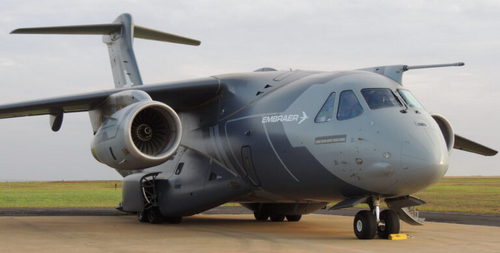
Embraer sees KC-390 Millenium as transport aircraft of choice for SAAF.
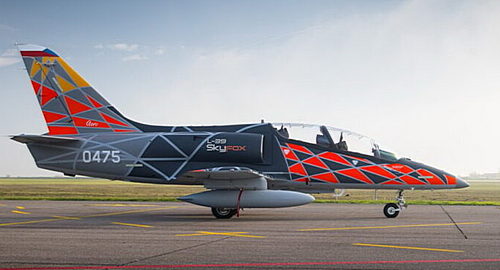
L-39 Skyfox set for African debut as Angola places first order.
NASA astronauts, Memphis Belle cast headline Theater in the Woods at AirVenture 2026.
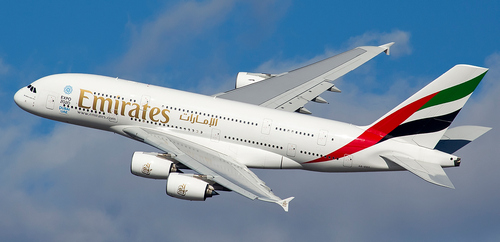
Airbus said it would inspect 16 A380 planes, five of them immediately, after cracks were found in a key wing component.
FAI Helicopter World Cup 2026 attracts over 25,000 spectators in Poland.
Belgium takes delivery of first Airbus H145M helicopter.
Piper Aircraft introduces 7-blade MT-Propeller as factory option for the M700 Fury.
Leonardo and Baykar set major milestone for advanced crewed/uncrewed capability development with successful first K-swarm live trials.
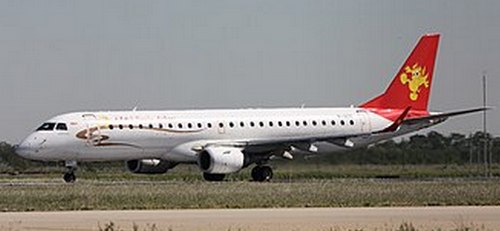
This week in history - On 29 June 2012, an Embraer E190 was hijacked by men armed with aluminum crutches and explosives.
Bonus video - Gordon Dyne's Brakpan Based Mirage F1 Squadron newest addition
Aero Club Communique # 15 of 2026
Good day to all our Aero Club members and the GA Industry. I hope it is not too cold and trust you are well.
12-Year Engine Rule
There is some news about the process of the signing of the amendments to Parts 43 and 91 by the minister. The 36th Amendment which includes the amendments to Parts 43 and 91 was circulated to the DoT on 11 May 2026. Comments were received by the CAA on 29 May and were answered by the DCA on 4 June 2026. Further comments were addressed with the DoT on 10 June 2026. So, it would appear that the minister now has all that is needed to sign the amendments. However, there is still no indication when the amendments will be signed. We hope it will be soon.
The Commercial Aviation Association of South Africa (CAASA) sent a request to the SACAA to enquire about the processes once the amendments are signed and owners want to return aircraft to operation.
While the Aero Club was not a formal signatory to the letter, we collaborated with CAASA. The requests sent to the CAA and their responses were as follows:
Request: What is the way to returning aircraft to operation?
CAA response was that the process will be in terms of the Condition Monitoring Program and that any such implementation can only proceed once the proposed amendments have been promulgated by the Minister and the proposed CATS have been approved by the DCA. The process will be in terms of the promulgated CATS.
Request: The process applicable to Certificates of Airworthiness Inspections where validity has lapsed.
The reply was that aircraft inspections remain a CAA function and the CAA does not make a blanket determination that a particular type or category of aircraft must be inspected or not. SACAA is monitoring the situation and may make assessments and adjustments to determine the resources required.
Request: SACAA inspection capacity and resource allocation to address the anticipated volume of applications and inspections; CAA answered that they are mandated to ensure that the services that are required are rendered, and the associated capacity planning is undertaken. Considering that capacity augmentation is a financially demanding activity, such activation may not be exercised on anticipation of volumes, as they are currently not known. As such, the resource allocation will be determined at the correct time when analysis of human capital requirements has been extensively undertaken.
Request: Definitive implementation timelines
The request about set timelines was answered by stating that: “the acceleration of Part 91 and Part 43 implementation is an activity that is managed by the Department of Transport (DOT), a fact which we are all aware of. However, SACAA will continue with its established liaison protocols with the DOT whom we understand to be giving due regard to these promulgations. SACAA remains committed to continue with the follow ups as necessary.”
From the above it is clear that we will have to wait until the minister has signed the amendments and the CAA has received requests to renew CofAs to determine how and to what level the process will be done. From informal discussions I believe that some work is being done to prepare for an increased workload.
The information given here and in previous Communiques is what we know. Now that the proposed engine Condition Monitoring Program has been sent for promulgation, there is not much that can be done until the minister signs the amendments. I have a few Aero Club members who contact me regularly to find out what the progress is with the whole 12 year engine issue. I want to extend an invitation to all Aero Club members and any other interested person to please contact me if you need information.
Air Traffic Control at Special Air Events
During 2023 the SACAA decide to withdraw the permission for air traffic controllers to assist at special air events. This had a major effect on events of the Aero Club where an increased air activity occurred. The yearly Airweek, the President's Trophy Air Race, air shows, competitions and other events were affected.
It is absolutely necessary to have qualified, experienced air traffic controllers at special air events. To get to an equitable solution that could facilitate the presence of qualified air traffic controllers at special air events, many meetings, work groups and consultations were held during the last 3 years.
Members of the Aero Club, CAASA and industry, Air Traffic and Navigation Services and the SACAA worked together. A manual of procedure has been agreed to by ATNS and the SACAA which this week resulted in a formal Alternative Means of Compliance (AMOC) being issued by the DCA. Earlier this year we also participated in formulating amendments to the CATS of Part 172 which improved the standards applicable to ATC at events.
With the AMOC and the amendments to Part 172 we now have structured, regulatory compliant documents that clearly set out the process for supplying air traffic services at special air events I want to thank the colleagues at ATNS and the CAA for the great effort in getting this finalised. Also, of course, a big thank you to the Aero Club members, CAASA and other industry members for your effort in getting this finalised.
Other Aero Club information
The 2026 Aero Club membership renewal commenced on the 1st of December.
Please visit the Aero Club website renewal portal at www.aeroclub.org.za/membership/
to renew or to register as a new member.
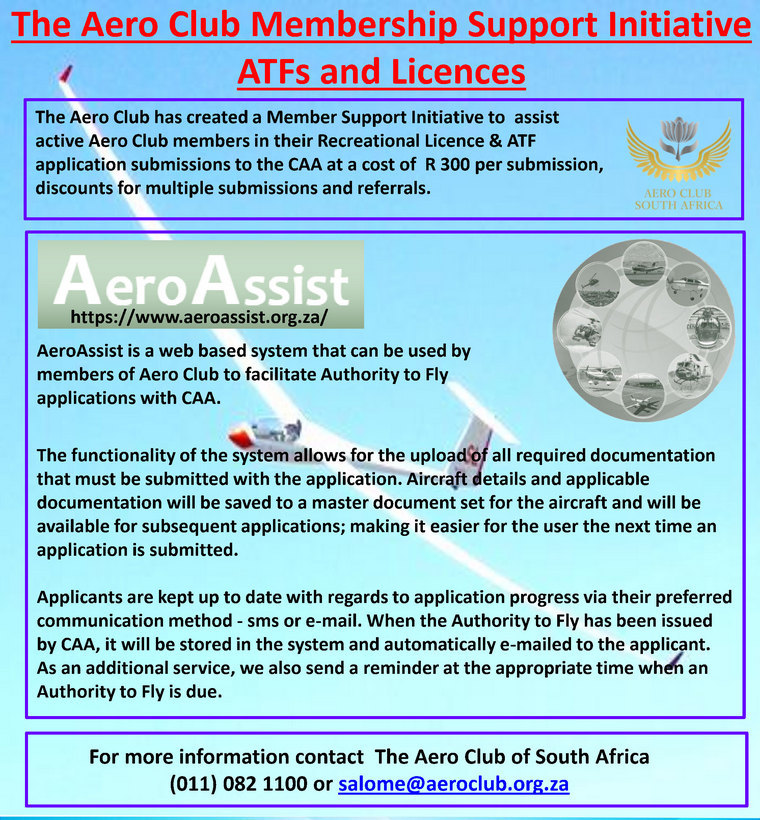
Please also see below the information on our Aero Assist system whereby you can easily renew your Authority to Fly. The contact numbers for the SACAA for confidential hazard reporting and the Aeronautical Rescue Coordination Centre are also listed below.
If you fly or drive, be safe.
Regards,
Walter Doubell, Chairman, Aero club of SA, 26 June 2026 walter@aeroclub.org.za,
079 830 6452
Embraer sees KC-390 Millenium as transport aircraft of choice for SAAF
By Guy Martin www.defenceweb.co.za
Brazilian aircraft manufacturer Embraer is hopeful the South African Air Force (SAAF) will select its KC-390 Millenium as its next transport aircraft. This is according to Marcio Monteiro, Chief Marketing Officer for Embraer Defence & Security, who was speaking to DefenceWeb during a media tour at Embraer's São José dos Campos facility in São Paulo state on 10 June.
Embraer has been pursuing a South African contract for a number of years. In line with this goal and in support of securing other defence business in the region, Embraer earlier this year appointed a Business Development Director for the Southern African Region.
At the time of the appointment in January, Embraer said it reflects the company's long-term strategic vision to deliver state-of-the-art operational capabilities while fostering collaboration with Southern African countries and local industry, driving growth and contributing to the country's economic development.
Embraer has brought its KC-390 to South Africa twice: first in November 2023, when it was shown to representatives from various government departments, including for disaster relief. In April 2024, Embraer officials met with the South African National Disaster Management Centre (NDMC) to explain the aircraft's use for missions such as fire-fighting and humanitarian airlift. The second visit was for the September 2024 Africa Aerospace and Defence exhibition.
In April 2025 Embraer signed a memorandum of understanding (MoU) with Denel, outlining the framework for a potential future collaboration on the KC-390, with a focus on aerostructures manufacturing, maintenance, repair, and overhaul activities. At the time, Chris Boshoff, Group Executive CEO Aerospace at Denel said the collaboration “will further strengthen our ties. Denel is well-equipped and is a suitably qualified industrial partner to undertake the necessary tasks envisaged for the collaboration and will significantly enhance the strategic airlift support capabilities on the African continent.”
“We are looking forward to providing South Africa with the most advanced aircraft in its category while co-operating with South Africa's defence industry,” Fabio Caparica, Vice President of Contracts at Embraer Defence and Security, said at the time.
Embraer continues to engage with the South African defence industry to support local growth, knowledge and skills transfer. It already has a footprint in South Africa through its commercial aircraft: Airlink is the largest commercial Embraer operator in Africa, using more than half a dozen different Embraer models - it is in the process of receiving ten new E195-E2s (leased through Azorra). In South Africa, ExecuJet is the authorised maintenance, repair and overhaul provider for Embraer on the commercial side.
The KC-390 Millennium is a next generation military transport aircraft particularly suited for operations in South Africa, according to Embraer. Its versatility, ease of reconfiguration between missions and ability to operate from unprepared airstrips make it an ideal, cost-efficient, aircraft for modern armed forces on the African continent.
The KC-390 can carry more payload (26 tons) compared to other medium-sized military transport aircraft and fly faster (470 knots/870 km/h) and farther, Embraer said of its airlifter. It is capable of performing a wide range of missions including humanitarian aid, transport and airdrop of cargo and troops, air-to-air refuelling as tanker and receiver, medical evacuation, search and rescue, firefighting and special operations, while operating from temporary or unpaved runways such as packed earth, soil and gravel.
The KC-390's ability to function as an air-to-air refuelling (AAR) tanker adds to the type's appeal. With a probe and drogue system, the KC-390 can transfer fuel to receiver aircraft using wing pods. The KC-390 is capable of refuelling both fixed and rotary wing aircraft, operating at speeds from 120 to 300 knots and at altitudes from 2 000 to 32 000 feet. An on-ground refueling capability can be used to refuel vehicles or forward operating bases. South Africa lost its aerial refueling capability when its Boeing 707 tankers were retired - this capability would have been useful when Gripens were deployed to the Central African Republic in 2013 but had to make multiple ground refuelling stops.
Late last year Saab and Embraer, in cooperation with the Brazilian Air Force, successfully completed their certification flight test campaign for in-flight refuelling of the Gripen E by the KC-390. Both the Brazilian and South African Air Forces operate Gripens, with the Brazilians flying E/F models and South Africa C/D models. Other KC-390 operators that can use the aircraft to refuel their own Gripens are the Hungarian and Czech air forces.
Cognisant of the South African Air Force's limited budget, Embraer has also been pitching the KC-390 to other government departments as it sees the aircraft being able to fulfil requirements such as firefighting and disaster relief. Recent flooding and fires in January, a hurricane-strength storm in the Western Cape in May and other recent natural disasters have highlighted the need for the government to be able to respond effectively.
Embraer said the KC-390 could easily take on missions for the South African National Defence Force, the Department of Forestry, Fisheries and the Environment, as well as the Department of Cooperative Governance and Traditional Affairs. These range from the transport of freight, personnel and vehicles for peace keeping operations to special operations, humanitarian support, medical evacuation, search and rescue, maritime surveillance, fire-fighting, air to air refueling, and disaster management. In fire-fighting guise, the KC-390's roll-on/roll-off fire-fighting system allows the aircraft to carry up to 11 000 litres of water or fire-retardant.
The SAAF has spent billions of Rands in recent years on chartering aircraft to move troops and equipment in and out of places like the Democratic Republic of Congo in support of peace missions there - money which could arguably have been spent on acquiring new transport aircraft. Between the 2021/22 and 2025/26 financial years, the SA National Defence Force spent R2.3 billion on charter flights, by and large necessitated because SAAF platforms, including 28 Squadron's ageing C-130BZ Hercules medium transports - are with one exception not operational.
Embraer has been racking up sales successes with the KC-390, accumulating 60 firm orders and selections and 29 options - multiple sales campaigns are currently underway. There are 14 aircraft currently in service with Brazil (8 since 2019), Portugal (4 since 2023), and Hungary (1 since 2024). These have achieved a 93% mission capable rate and a 99% mission completion rate during 21 800 flight hours through to April 2026.
The Brazilian Air Force was the KC-390's launch customer with 18 firm orders, followed by Portugal (6), Hungary (2), South Korea (3), the Netherlands (5), Austria (4), Czech Republic (2), Uzbekistan (2), Sweden (4), and the UAE (10). Portugal and the UAE also have options for ten each and the Netherlands nine. Meanwhile, Lithuania and Slovakia have selected the type.
Monteiro sees a market for 450 KC-390s over the next 20 years, with 40% of that coming from Asia, 20% from the Middle East, 17% from Europe, 13% from Africa, and 10% from South America. There are over 230 aircraft in the KC-390's class that are over 45 years old and due for replacement now, he emphasised.
Production is ramping up to meet demand: three aircraft were manufactured in 2024 and four in 2025, with this set to double to eight in 2028 and reach ten a year in 2030. A total of six KC-390s will be manufactured this year, with deliveries scheduled for South Korea, Uzbekistan, and the Czech Republic. Embraer's facility in Gavião Peixoto, São Paulo state, where the KC-390 is produced, has a total capacity of 18 aircraft per year.
Guy Martin was in Brazil as a guest of Embraer.
L-39 Skyfox set for African debut as Angola places first order
By Armand Liebenberg www.defenceweb.co.za
Angola has placed an order for up to four of Aero Vodochody's latest-generation L-39 Skyfox jet trainer aircraft. The deal marks a significant milestone for the Czech aerospace manufacturer, as Angola is set not only to become the first African operator of the Skyfox, but also the first country in the Southern Hemisphere to fly the type.
“We are very pleased to have confirmed our first customer from the African continent. The Skyfox aircraft for the Angolan Air Force will also become the first aircraft of this type to operate in demanding conditions in the Southern Hemisphere,” Viktor Sotona, Aero Vodochody's President and Chairman of the Board, said.
The deal, announced by Aero Vodochody on 18 June 2026, includes a number of related products and services, including training systems, aimed at enabling the smooth integration of the aircraft into the Angolan Air Force. The company also secured a separate contract with an undisclosed civil aviation customer in North America, which includes the sale of two aircraft as well as a commercial representation agreement for the L-39 Skyfox brand.
The Angolan Air Force (FAN) is one of Africa's larger air forces with approximately 6 000 personnel and in excess of 250 aircraft in its fleet. However, with many of these aircraft dating back to the 1970s and 1980s, the force's ability to maintain and keep them operational has become increasingly constrained, especially in light of ongoing fiscal constraints.
The FAN can count a number of Aero Vodochody aircraft in its ageing fleet, having previously operated 12 L-29s (now in storage) and currently operating up to four L-39C Albatroses. The new contract follows a 2023 agreement aimed at modernising and overhauling Angola's L-39Cs through extensive work on the propulsion system, avionics upgrades, and airframe overhauls. But, according to Aero Vodochody, following an operational and cost-benefit analysis, the FAN opted to purchase the more modern and more capable Skyfox aircraft instead.
This decision reflects an increasingly important calculation for air forces across the continent. As maintenance requirements increase and ageing aircraft approach the end of their service lives, operators are being forced to weigh the benefits of replacing or attempting to preserve aircraft that are either approaching or have reached obsolescence.
The L-39NG Skyfox is the production successor to the highly successful L-39C Albatros, of which just under 3 000 units were produced between its first flight in 1968 and the end of production in 1995. The L-39NG began development in 2014 and saw serial production begin in December 2022.
According to Aero Vodochody, the Skyfox brings several advantages over the older Cold War-era Albatros, making it a much more appealing long-term investment. These include significantly higher performance, modern avionics, and substantial efficiency gains when compared to the older aircraft.
It is a highly versatile multi-role aircraft. While primarily marketed as a trainer, the Skyfox has impressive capabilities, including aerial reconnaissance, tactical support, and ground support. The Skyfox is powered by a Williams International FJ44-4M turbofan, allowing it to reach a maximum speed of approximately 900 km/h, compared to the 700 km/h of its predecessor. This combination of an improved engine and reduced drag has also seen the range increase by nearly 800 km, reaching 1 900 km.
The aircraft also features a modern glass cockpit with multifunction displays, a maximum payload of 2 976 lb (approximately 1 350 kg) spread across five hardpoints capable of carrying a range of armaments ranging from unguided bombs, rockets, and gun pods to more advanced guided bombs and missiles. Notably, the aircraft is capable of supporting both Western and Eastern armaments.
Aero Vodochody has also continued developing the platform, recently unveiling a dedicated counter-unmanned aerial systems (C-UAS) configuration marketed as a “Drone Hunter”. The new configuration integrates sensors, datalinks, and laser-guided rockets or gun pods enabling it to counter small and medium-sized drones, while retaining its full training capabilities.
With at least 10 African air forces having operated or currently operating the legacy Albatros, the continent represents a key market for future Skyfox sales. The Angolan deal comes as Aero Vodochody has been actively courting a number of African defence forces over several years, recently taking the aircraft on a tour across the continent and demonstrating it to a number of air forces, including those of Nigeria, Ghana, and Uganda. On the Skyfox's prospects in Africa, Sotona said: “We all believe this is only the first step and that an even greater number of Skyfox aircraft will soon be seen in African skies.”
Globally, Aero Vodochody has also seen significant growth in what the company termed “growing customer confidence in the L-39 Skyfox programme”, announcing separately that 2025 saw the successful delivery of 14 new L-39 Skyfox aircraft, building on the 12 delivered in the previous year. This includes 12 aircraft delivered to Vietnam over the course of 2023/24 and 2025.
More recently, the company indicated that it has secured orders for nine new aircraft, coupled with several orders for the overhaul of Albatros aircraft, with these contracts exceeding 200 million Euros in value. The company added that “these orders cover customers on three continents: Africa, America and Asia.”
“Thanks to the new orders in Africa and America, Aero is further strengthening its global position and confirming that the L-39 Skyfox is becoming one of the key export programmes of the Czech aerospace industry,” the company said.
NASA Astronauts, Memphis Belle Cast Headline Theater in the Woods at AirVenture 2026
Attendees of EAA AirVenture Oshkosh 2026 are invited to a powerful week of evening programming at Theater in the Woods. From Sunday, July 19, to Saturday, July 25, a series of nightly events will gather noteworthy people from NASA astronauts to those involved with the 1990 war drama Memphis Belle.
“After a full day on the Oshkosh flightline, evenings at Theater in the Woods have been the perfect place to sit back and hear from aviation's greats,” said Rick Larsen, EAA's vice president of communities and member programs, who coordinates AirVenture features and attractions. “This year's programming again creates 'only at Oshkosh' moments with those involved in aviation history, cutting-edge technology, or the silver screen.”
Schedule of Events:
Sunday, July 19 - An Evening With Champions: The History of the USAF Heritage Flight (7-9 p.m.)
Kick off the week with some of aviation's best as they talk about what it took to create the USAF Heritage Flight, and how they keep it going.
Monday, July 20 - U.S. Air Force's Salute to America's 250th Birthday (7:30-9:15 p.m.)
The United States Air Force will lead a program featuring a swearing in ceremony at 7:30 p.m., followed by country music star Tyler Hubbard taking the stage at 8 p.m.
Tuesday, July 21 - A Home in Space: From the Shuttle and Beyond (7-9 p.m.)
Celebrate 45 years of the space shuttle with a panel of NASA astronauts and personnel including Hoot Gibson, Charlie Precourt, Eileen Collins, and Jeanie Engle, moderated by the National Air and Space Museum's Jennifer Levasseur, curator of the space shuttle and ISS exhibits.
Wednesday, July 22 - Concept to Cockpit (6:30-7:45 p.m.)
WomenVenture day will be capped off with a panel of women who have made an impact in aircraft design featuring Xyla Foxlin, Jessica Cox, Margaret Viola, and Kacy Anderson.
Thursday, July 23 - Memphis Belle: Telling the Story on the Big Screen (7-9 p.m.)
Hear from cast and crew members of the 1990 film as they recount what it was like to tell the story on the big screen.
Friday, July 24 - 9/11: A Look Back 25 Years Later (7-9 p.m.)
Honoring those who risked their lives at a time of tragedy, hear from a collection of brave individuals as they reflect on their firsthand experiences. Featuring members of the FDNY, NYPD, Air Force One, and NASA. Also, meet the RAF Red Arrows Team.
Saturday, July 25 - Mission Marge: The Discovery of the Ace of Ace's Lightning (6:30-7:45 p.m.)
A mission to recover artifacts from America's leading ace during World War II. Members of Richard Bong's family, Richard I. Bong Veterans Historical Centre, Pacific Wrecks, and the 128th Air Refueling Wing share the story of the mission.
Evening programs at Theater in the Woods are supported by M&M'S and included with AirVenture admission.
Airbus said it would inspect 16 A380 planes, five of them immediately, after cracks were found in a key wing component on aircraft used by the Emirates and Qantas airlines.
The European Union Aviation Safety Agency (EASA) has ordered urgent inspections requiring airlines to examine the wing-spar structure on the affected jets after inspectors found cracks during routine maintenance checks. The cracks appeared in a structural beam that runs along the wing and carries much of the aerodynamic load during flight.
Of the 16 planes to be inspected, 15 are operated by Emirates and one by Qantas. The five aircraft to be inspected immediately are flown by Emirates, and they were to undergo the process as soon as Wednesday. Airlines using the A380 include Emirates, Singapore Airlines, British Airways, Qantas, Lufthansa, Qatar Airways, Korean Air, Etihad Airways, ANA and Asiana Airlines. Emirates operates the largest A380 fleet in the world, flying over half of all active superjumbos.
Cracks on an aircraft that "could reduce the structural integrity of the wing" were discovered during inspections ordered by EASA in a directive issued in December 2025, the European planemaker said. All A380s "with the same production history" have been identified, and Airbus will carry out immediate inspections on five aircraft.
The Toulouse-based plane manufacturer will discuss with EASA whether repairs are necessary, an Airbus spokesperson said.
The 11 other aircraft can be inspected later, but before their thirteenth flight, that is, 25 cycles, with one cycle consisting of a flight, a takeoff, and a landing. The A380 has faced wing-related problems before and the EASA in 2012 ordered inspections after cracks were found in brackets linking the wing skin to internal ribs.
That affected the entire global A380 fleet and led to a costly repair programme which Airbus addressed through design changes on planes produced later.
FAI Helicopter World Cup 2026 Attracts Over 25,000 Spectators in Poland
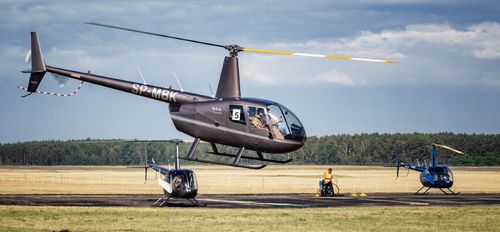
The FAI Helicopter World Cup 2026 took place on 13 June at Zielona Góra-Babimost Airport in Poland, bringing together top helicopter crews, international officials, aviation enthusiasts and over 25,000 spectators.
The Swiss crew of Ruedi Boser and Stefan Meier claimed overall the World Cup winners title of this FAI-sanctioned ("Cat-2") event, having secured victories in both Fender Rigging and Slalom events by demonstrating outstanding consistency.
The event attracted competitors from several countries and was officiated by an international panel of FAI judges led by Chief Judge Lothar Oehler of Germany.
FAI Helicopter World Cup 2026 results
General Classification
Winners: Ruedi Boser / Stefan Meier (Switzerland)
Slalom
Ruedi Boser / Stefan Meier (Switzerland)
Marcin Szamborski / Michal Szamborski (Poland)
Barbara Wilk / Piotr Wilk (Poland)
Fender Rigging
Ruedi Boser / Stefan Meier (Switzerland)
Tymoteusz Nowak / Marcin Matlak (Poland)
Barbara Wilk / Piotr Wilk (Poland)
Marcin and Michal Szamborski of Poland were also awarded the President of Polish Airports Trophy.
Beyond the sporting competition, the event was conceived as a major aviation festival promoting helicopter sport, aviation education and cooperation between civil and military aviation communities.
Visitors had the opportunity to watch displays and explore an extensive static exhibition featuring a variety of helicopters, vehicles and aviation technology. The event was attended by representatives of national and regional authorities, aviation organisations, the Polish armed forces, and industry partners.
The FAI Helicopter World Cup received extensive media coverage from national and regional television stations, newspapers, online media and social media channels, significantly increasing public awareness of helicopter sport and FAI activities.
Numerous journalists and television crews were present throughout the day, providing live reports and interviews with competitors, organisers and distinguished guests to showcase the dynamic world of rotorcraft.
FAI Helicopter Commission (CIG) President Serafina Ogonczyk-Makowska highlighted the importance of the event:
“The FAI Helicopter World Cup in Babimost demonstrated that helicopter sport continues to grow and inspire new generations of aviation enthusiasts. The outstanding attendance, strong international participation and support from public authorities and the military underline the unique value of our sport and its contribution to aviation culture.”
The event was organised by HeliSport who extended sincere thanks to all competitors, FAI officials, volunteers, sponsors, partners, security services and thousands of spectators whose enthusiasm created an unforgettable atmosphere.
The FAI helicopter sport community now looks forward to the next competitions on the international calendar and to continuing the development of helicopter sport worldwide.
Belgium Takes Delivery of First Airbus H145M Helicopter
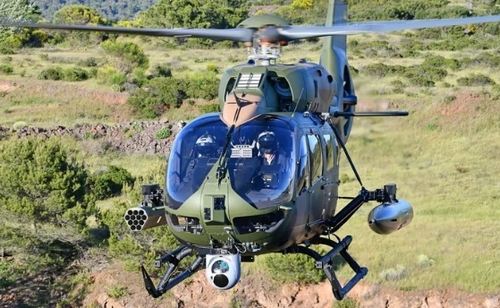
Airbus Helicopters has delivered the first H145M helicopter to the Kingdom of Belgium, marking a major milestone in the modernisation of the nation's defence and security capabilities.
The aircraft is part of a wider procurement contract signed in 2024 via the NATO Support and Procurement Agency (NSPA) to equip both the Belgian armed forces and the Federal Police. Highlighting the growing momentum of the programme, Belgium has also recently exercised its option for three additional H145M helicopters, bringing the nation's total fleet on order to 20 aircraft.
“We are proud to celebrate this first delivery to Belgium and are deeply honoured that they are joining a rapidly growing community of European nations that trust the H145M for their most critical operations,” said Thomas Hein, Head of Europe Region at Airbus Helicopters. “This platform has become the definitive European reference for military multi-mission capabilities. Belgium's decision to extend their fleet to 20 aircraft is a powerful testament to the deep trust placed in our team and the H145M's ability to meet today's evolving security challenges,” he added.
The H145M is a multi-role military helicopter that provides a broad range of mission capabilities. Within minutes, the helicopter can be reconfigured from a light attack role with axial ballistic and guided weapons and a state-of-the-art self-protection system into a special operations version with fast-rappelling equipment. The comprehensive mission packages include hoisting and external cargo capabilities. Its ability to seamlessly integrate into networked combat and team with uncrewed aerial systems, backed by advanced digital connectivity, makes it the most capable helicopter in its class.
The H145M is the military version of the tried-and-tested, light twin-engine H145 helicopter. The global fleet of the H145 family has accumulated more than 8.5 million flight hours. It is used by armed forces and law enforcement agencies around the world for the most demanding missions. The US Army employs almost 500 helicopters from the H145 family under the name UH-72 Lakota. Germany has ordered up to 82 H145M helicopters, with deliveries currently ongoing. Other military operators of the H145 family include Hungary, Serbia, Luxembourg, Thailand, Ecuador, and Honduras.
Piper Aircraft introduces 7-blade MT-Propeller as factory option for the M700 Fury
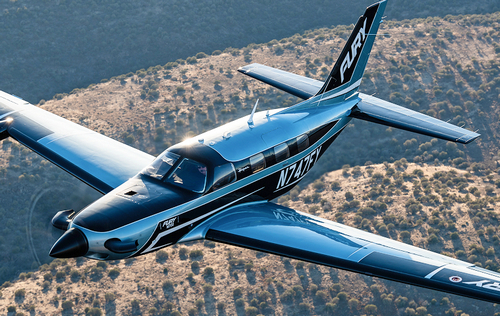
Piper Aircraft announced today that the advanced 7-Blade MT-Propeller received EASA Supplemental Type Certificate (STC) approval for the M700 FURY with FAA certification expected in the near future.
Designed with advanced composite materials and aerodynamic efficiency, the 7-Blade MT-Propeller enhances both performance and cabin comfort, offering pilots a refined and responsive flight profile.
This new 7-Blade MT-Propeller provides M700 FURY operators with notable performance improvements, including: decreased takeoff distance, higher climb rate, and a quieter cabin.“Integrating the 7-Blade MT-Propeller into the FURY platform underscores Piper's commitment to continuous innovation and customer-driven enhancements,” said Marc Ouellet, Vice President, Engineering and Manufacturing. “This option provides operators with improved takeoff and climb performance while reducing noise levels for both passengers and communities.”
European Customers interested in equipping their M700 FURY with the 7-Blade MT-Propeller STC are encouraged to contact their regional Piper Dealer.
MT-Propeller Entwicklung GmbH was founded in 1981 by Gerd Muehlbauer, and is well known in the world of general aviation as a leading manufacturer of natural composite propellers for single and twin-engine aircraft, airships, wind tunnels and other special applications.
Since 1968 Gerd Muehlbauer has been working intensively as Chief Engineer in composite propeller design and development. Currently, MT-Propeller operates out of its main office at the Airport Straubing-Wall muehle (EDMS) in Germany, where highly skilled people are producing the highest quality natural composite propellers.
Leonardo and Baykar set Major Milestone for Advanced Crewed/Uncrewed Capability Development with Successful First K-Swarm Live Trials
Leonardo and Baykar set a major milestone in the development of Crewed/UnCrewed Teaming (CUC-T) and swarm tactics capabilities, after successfully completing the first phase of live testing activities for the K-SWARM programme. The programme is aimed at designing and developing interoperability between crewed and uncrewed aircraft.
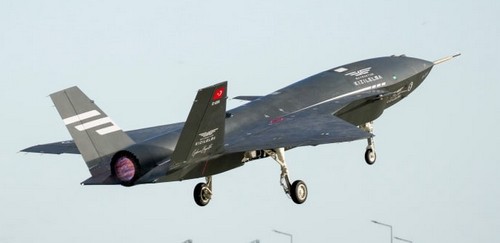
Collaborative combat teaming has increasingly become a key enabler of future combat air systems, and part of the evolution of current generation fighters. Today's design of Crewed/UnCrewed Teaming (CUC-T) is one of the fundamental strands for the transformation of military and security tools in all domains. Its' importance is not only technological, but also operational, doctrinal and industrial. The testing was carried out in May at one of Baykar's flight and test center in Çorlu, Türkiye. The flight test campaign involved two Leonardo M-346 airplanes - a Leonardo owned M-346 Fighter Attack Variant, with an Italian Air Force's T-346A acting as chase aircraft - and the Bayraktar KIZILELMA Uncrewed Fighter Aircraft.
Testing activities consisted of a series of missions aimed at assessing latest generation algorithms as well as the relevant tactics and procedures developed by Leonardo at its Avionic, Flight Control Innovation Labs and product capability and concept laboratory, PC2LAB, in Turin, linked with an M-346 Full Mission Simulator in Venegono, Italy. In parallel, leveraging state-of-the-art software and hardware at Baykar facilities, Baykar integrated advanced smart fleet autonomy capabilities into the CUC-T algorithms. KIZILELMA's advanced autonomy capabilities greatly simplified the integration process, allowing for seamless implementation and rapid deployment.
These were brought into action during the M-346/KIZILELMA formation flights, supporting the validation of advanced collaboration and coordination of different high performance combat platforms and air systems, as the programme marked the transition from simulation to live operations.
An advanced radio frequency data exchange system allowed for the synchronization of all data shared between the M-346 and KIZILELMA platforms, protected by Leonardo GCC Tactical Platform. This proprietary cyber defence platform protects and monitors systems in real time, allowing for effective command and control of the planned flight formations.
During the flight campaign, following an autonomous taxi and take-off, the KIZILELMA autonomously rejoined the M346 Fighter Attack using Smart Fleet Autonomy algorithms developed by the Baykar's Hardware-in-the-Loop (HIL) Laboratory, enabling the M346 to subsequently assume full control of the unmanned aircraft. Using a newly developed fully integrated onboard avionic suite, the M-346 pilots commanded different formations which were autonomously executed by KIZILELMA through a dedicated crewed/uncrewed computing system. Different maneuvers and formations, including position changes, separations and rejoins were successfully tested with the KIZILELMA accurately responding to the M-346 commands.
The activities performed in Çorlu were the result of extensive and intense preparation work, including pilots and technicians, which were jointly carried out over several months by the Leonardo and Baykar teams. This extensive work resulted in the trials achieving the required level of technical integration of the systems, the development of testing scenarios, the algorithms validation and ensured the tests could be managed and completed safely and effectively.
The data and analysis gathered has been crucial in defining the next steps in the K-SWARM programme, as it moves into more complex operations requiring greater situational awareness and assets working together 'as one' towards mission objectives.
The refinement and maturity of “AI” technology, algorithms and collaborative procedures will enable the uncrewed systems to incrementally shift from remote piloting to autonomy, with the aim of reducing pilot workload and increasing mission efficiency while maintaining full control and decision-making. New tests are planned in the coming months, with increasing complexity and additional functions.
The first phase of trials demonstrates the solid partnership between Leonardo and Baykar, and their respective technology and industrial competences. It confirms the companies' competitive advantage in the field and represents a concrete step towards the development of critical capabilities for modern combat air operations in multidomain operational scenarios.
29 June 2012
Tianjin Airlines Flight 7554 was a scheduled domestic passenger flight between Hotan and Ürümqi in China's Xinjiang Autonomous Region. On 29 June 2012, an Embraer E190 with 99 on board operating the flight, took off from Hotan at 12:25 pm; within ten minutes, six ethnic Uyghur men, one of whom allegedly professed his motivation as jihad, armed with aluminum crutches and explosives announced their intent to hijack the aircraft,
The crew and other passengers resist them and foiedl the hijacking attempt. Two hijackers were killed and 13 people (two hijackers, two security officers, two flight attendants, and seven passengers) were injured, and the plane returns safely to Hotan.
South Africa, near Fochville, Gauteng: A Bird Aviation Piper PA-28-180 Cherokee C with two on board that had taken off from Lanseria International Airport crashed under unknown circumstances near Fochville, Gauteng. Both occupants perished and the aircraft received substantial damage.
Brazil, rural area of Neropolis, GO: A Cirrus SR22 crashed and caught fire on a farm in the rural area of Neropolis, Goiás. The 74-year-old pilot was the only person on board. The primary cause is suspected to be a technical malfunction during takeoff at around 13:04 LT. Despite the impact and fire, the pilot suffered only minor injuries: a cut on his left knee, a head injury, and abrasions on his arms. He was airlifted to the hospital.
India, Kanpur Airport (KNU/VECX), Chakeri, Uttar Pradesh: A Tecnam P2006T, VT-NBV, had been engaged in night instructional flying at Kanpur Chakeri Airport (KNU/VECX), Chakeri, Uttar Pradesh. A flight instructor and a cadet were on board the aircraft. After landing, the trainee pilot deboarded the aircraft with the engines running and received serious injuries on her back due to a hit by the running propeller.
France, Tomblaine, near Nancy-Essey Airport (ENC/LFSN): A Pilatus PC-6/B2-H4 Turbo Porter skydiving plane, operating for Tandemotion Parachutisme, crashed immediately after takeoff from Nancy-Essey Airport (ENC), France. All eleven on board suffered fatal injuries. The aircraft had been engaged in skydiving flights during the morning. ADS-B data indicate that at 10:53, the flight landed on runway 21 following a drop. It vacated the runway to the apron and taxied back to the runway at 10:58. It commenced the takeoff from the taxiway B intersection of runway 21, just like the previous flights. The takeoff distance available from that point is about 750 meters. ADS-B datapoints then suggest the aircraft slightly drifted to the left on takeoff. From a position over the runway threshold it made a left hand turn and crashed on a road just outside the airport perimeter. “A mechanical failure caused the crash,” the prefect of Meurthe-et-Moselle said. The plane “plummeted straight down, and we do not yet know the cause of the accident,” he added. There was “no flight path consistent with an emergency landing.” “The victims include five instructors, their five students, and the pilot,” the prefect explained during a press conference. The students were a group of private healthcare worker who had come to try skydiving for the first time.
Gordon Dyne's Brakpan Based Mirage F1 Squadron Newest Addition 384