This Week in Midweek Updates
AAD 2026 to showcase unmanned systems as the next frontier for African air power.
Aero Club Communique # 16 of 2026.
Aura Aero to be at Airventure.
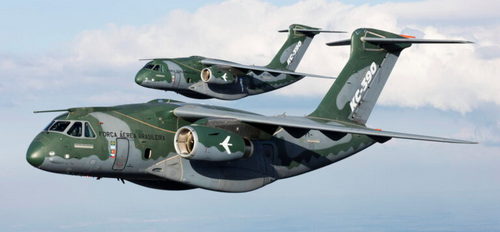
Embraer's C-390 Millennium gains momentum and market share.
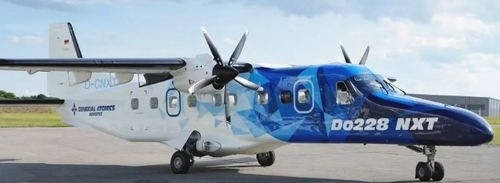
Do228 NXT demonstrator makes international trade fair debut at Farnborough.
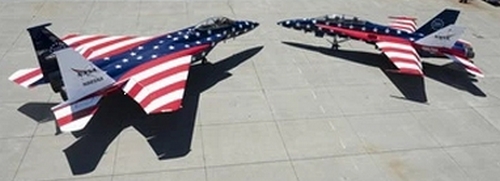
NASA brings legendary aircraft to celebrate America 250 at EAA AirVenture Oshkosh.
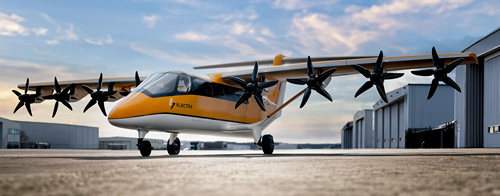
Electra Achieves FAA certification milestone for EL9 Ultra Short Aircraft.
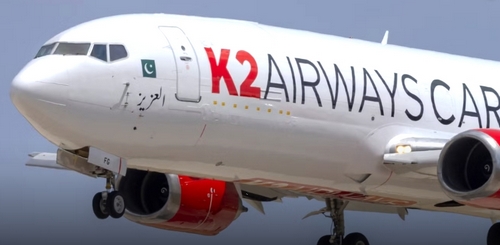
K2 Airways Cargo B737 wreckage recovered from 53 NM South of Ormara.
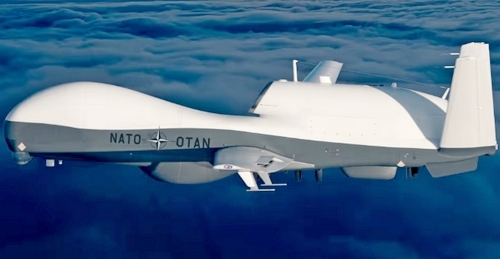
Four nations signed the LOI at the NATO Summit Defence Industry Forum.
This week in history - 13 July 1928
Bonus video - Atlas Impala Mk I SAAF Trainer & ground Attack Aircraft
AAD 2026 to Showcase Unmanned Systems as the Next Frontier for African Air Power
Africa Aerospace and Defence 2026 elevates unmanned aerial systems to centre stage, reflecting the continent's growing role in the world's fastest-evolving domain of modern warfare.
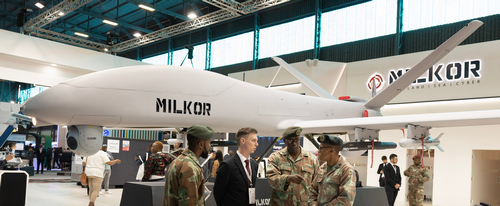
Africa Aerospace and Defence (AAD) 2026, the continent's premier tri-service defence and aerospace exhibition, will place unmanned aerial vehicles (UAVs) firmly in the spotlight when it opens at Air Force Base Waterkloof, Centurion, from 16 to 20 September 2026 - marking the show's 13th edition and 25th anniversary. Both large and small unmanned systems will feature across the exhibition and flying display, building on AAD 2022, when the show secured its first-ever regulatory clearance to fly UAVs during the air show.
Unmanned systems have become one of the fastest-growing areas of modern air power, moving from a specialised niche to a core capability for air forces worldwide. Their rise is reshaping how defence forces plan, train and invest.
At AAD's 100 Days Countdown media briefing in Pretoria, Chief of the South African Air Force, Lieutenant General Carl Moatshe, pointed to the sector's rapid growth and confirmed that unmanned systems will feature more prominently at AAD 2026 than ever before. Securing a mix of large and small platforms for static display and live flying demonstrations, extending an international aircraft line-up that has previously included China's Y-20 airlifter and Brazil's KC-390 transporter.
For AAD, the expanded UAV footprint is a statement of intent: a platform for African armed forces, procurement authorities and industrialists to engage directly with the technologies redefining air power, and for Africa's own UAV manufacturing base to move from consumer to contributor. It is a positioning consistent with AAD 2026's theme, Africa's Gateway to Global Defence and Aerospace Collaboration.
Aero Club Communique # 16 of 2026
Good day to all our Aero Club members, the general aviation community and anyone interested in aviation. We have news from other Aero Club stakeholders in this edition with a wide spectrum of aviation information.
12-Year Engine Rule
Our important issue remains the promulgation of Part 91 and the related Part 43 CATS with its Appendix 3. As mentioned in previous Communiques, the Minister of Transport must sign the amendments to Parts 43 and 91. These amendments are part of the 36th Amendment to the S A Civil Aviation Regulations which was finally sent to the minster on the 10th of June 2026.
There is a new development that is causing a delay in the promulgation of proposed amendments. In terms of legislation, all proposed legislative amendments have to be scrutinised by the Office of the Chief State Law Adviser (OCLA) to determine if proposed legislation agrees with the South African Constitution.
The Chief State Law Advisor's office is a department within the Department of Justice. The DoT had to send the amendments to Parts 91 and 43 to OCLA for their approval before the minister can sign it into law. The amendments are therefore currently with the OCLA.
This is a delay in the process, and it is most unfortunate. But it is a formally legislated requirement and there is not much we can do about this. In a meeting with the SACAA last week and another this week, this development was discussed. The CAA have been in contact with the DoT and the Dept of Justice about the signing of the amendments. It is my impression that the CAA are as concerned as we are and are seriously attempting to expedite the process.
Another matter that also surfaced in the last week is about a letter sent to the Minister of Transport by the Aircraft Owners and Pilots Association of South Africa (AOPA-SA). In the letter AOPA request the minister to not sign the proposed amendments that will enact the Condition Monitoring Program (CMP) as set out in Appendix 3 of the Part 43 CATS. The gist of AOPA's objection is that there was no meaningful representation by private aircraft owners during the formulation of the proposed amendments and during the CARCom process that approved the amendments for promulgation. We believe that a consultative process was followed by a group of general aviation industry representatives.
The Aero Club was only part of a greater collaboration that assisted with and supported the approval of the CMP.
The P 91 Collective, The Motorised Aviation and Gliding Association of South Africa (MOGAS) and the Commercial Aviation Association of South Africa (CAASA) all played a significant role in writing the amendment and in the process from meetings in January till the CARCom meeting in April.
It was due to this spirit of cooperation that letters were sent by the P 91 Consortium, MOGAS, CAASA and the Aero Club to the Minister of Transport to assure her of the general aviation industry's support for the proposed amendments to the mentioned regulations. It was mentioned that we do not agree with the stance of AOPA. The Minister was also urged to sign the promulgation of the regulations as soon as possible.
I want to thank the representatives of the P 91 consortium, MOGAS and CAASA for initiating and their cooperation in informing the minister of industry's part in the amendment process.
SACAA SKYwatch magazine
The CAA publishes a quarterly magazine with general aviation information about a wide range of topics. SKYwatch has been published for a few years now. The newsletter can be accessed on the SACAA website by accessing the link below. The latest and previous editions are also available www.caa.co.za/information-for-the-public/skywatch-magazine
CAASA Newsletter
The latest CAASA newsletter, the June 2026 edition, has been circulated. There is valuable information about aviation and about vital aspects of the future of aviation in South Africa. Also, some other thought-provoking information. The CAASA newsletter can be accessed via the link below at: https://share.google/wCUOQ2KiUkjA42XcQ
Other Aero Club information
The 2026 Aero Club membership renewal commenced on the 1st of December. Please visit the Aero Club website renewal portal at www.aeroclub.org.za/membership to renew or to register as a new member.
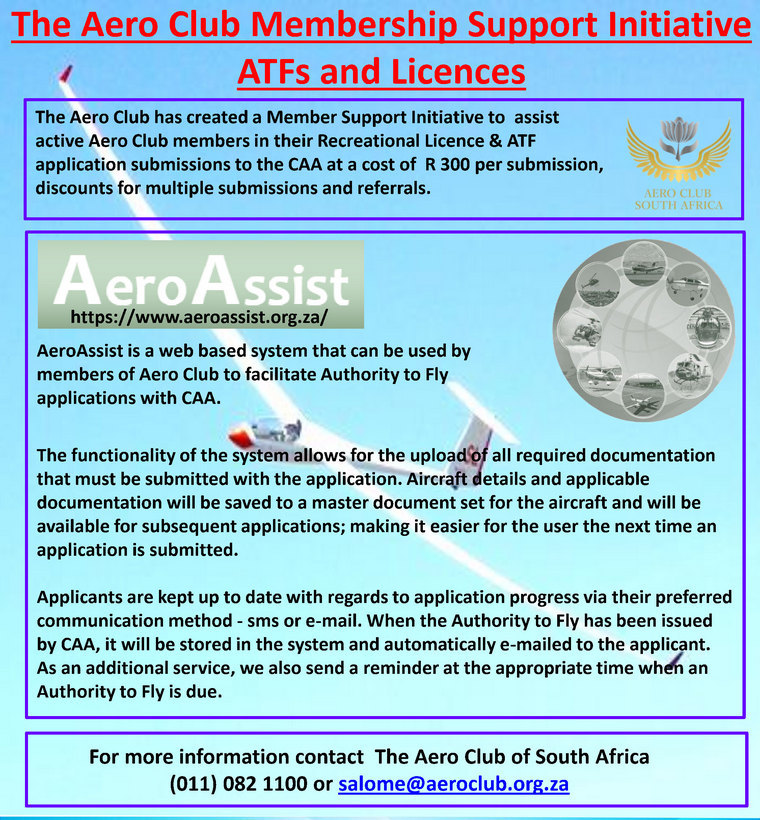
We list below the information on our Aero Assist system whereby you can easily renew your Authority to Fly. Also, please see below the contact numbers for the SACAA confidential hazard reporting system and the Aeronautical Rescue Coordination Centre.
Have a good week, be safe.
Regards,
Walter Doubell,
Chairman, Aero club of SA,
9 July 2026 walter@aeroclub.org.za
0798306452
AURA AERO to exhibit at Airventure
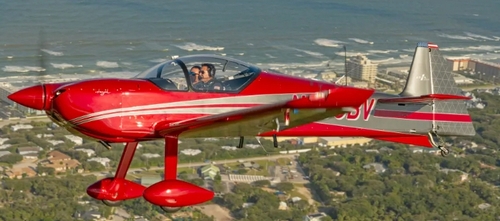
The European-certified aerobatic trainer is nearing FAA certification ahead of planned U.S. deliveries. From civil and military training to UPRT, as well as travel and leisure, INTEGRAL S covers a wide range of missions (VFR / IFR / UPRT). Its intuitive controls and modern avionics make it easy to handle and accelerate learning, offering every pilot the ideal companion to progress with confidence and develop their skills.
The aircraft is scheduled to fly two aerobatic demonstration flights during the show, on Monday, July 20, and Tuesday, July 21. AURA AERO said it will exhibit near the International Aerobatic Club Pavilion during AirVenture, which runs July 20-26.
Featuring a wide side-by-side cockpit, INTEGRAL S ensures smooth instruction and optimal communication between student and instructor. Intelligent flight data recording enables more accurate and effective debriefings.
“EAA AirVenture Oshkosh is an essential gathering for the global aviation community and a unique opportunity to meet pilots, flight schools and the wider U.S. aviation ecosystem,” Drew McEwen, chief commercial officer of AURA AERO, said. “With INTEGRAL R, we are bringing to market a modern, safe and high-performance aircraft, one that is ideally suited to North American expectations.”
Embraer's C-390 Millennium Gains Momentum and Market Share
Guy Martin www.defenceweb.co.za
Embraer's C-390 Millennium multi-role transport aircraft is rapidly growing its customer base, with over 60 firm orders and selections secured and multiple sales campaigns - including to South Africa - underway. The Brazilian company sees a market for 450 C-390s over the next 20 years.
The flurry of recent C-390 sales - as well as for Embraer's A-29 Super Tucano turboprop trainer and light attack aircraft - is in part due to rising global military spending amid increased geopolitical tensions, and the replacement of legacy equipment. Speaking during a media tour at Embraer's São José dos Campos facility in São Paulo state in June, Marcio Monteiro, Chief Marketing Officer for Embraer Defence & Security, said the growth in defence recapitalisation globally has resulted in very strong financial results for Embraer and its Defence & Security division.
The C-390 has witnessed significant market momentum, with sales growing rapidly: it has over 60 firm orders and selections and 29 options, but Embraer is confident of potentially reaching 100 orders, selections and options combined soon as the aircraft is gaining market share, especially against turboprops. Multiple sales campaigns are currently underway.
Monteiro describes the C-390 as a “trend setter” as it offers high speeds (greater than turboprops), quick turnaround time, multi-mission capabilities, efficient running, and low life cycle costs. It uses “truly 21st century technology,” Monteiro said, including fly-by-wire systems, a glass cockpit, two readily available International Aero Engines V2500 jet engines (rather than four like the Il-76 or C-130) for less maintenance, the latest avionics (Rockwell Collins Pro Line Fusion) etc. “With those arguments we have been pretty successful,” he said.
The launch customer was Brazil with 18 firm orders, followed by Portugal (6), Hungary (2), South Korea (3), the Netherlands (5), Austria (4), Czech Republic (2), Uzbekistan (2), Sweden (4), and the UAE (10). Portugal and the UAE have options for ten each and the Netherlands nine. Meanwhile, Lithuania and Slovakia have selected the type.
There are 14 Millennium aircraft currently in service with air forces around the world (Brazil: 8 since 2019; Portugal: 4 since 2023; and Hungary: 1 since 2024) and these have achieved a 93% mission capable rate and a 99% mission completion rate during 21 800 flight hours through to April 2026.
The C-390 customer base is set to grow further after the Greek Parliament in early June approved the purchase of three C-390s to replace long-serving C-130 Hercules amid a wider rearmament programme. €600 million has been set aside for an intergovernmental contract with Portugal, using some of the ten purchase options placed by Portugal last September after Lisbon ordered its sixth aircraft. This agreement was organised to establish a European base for the acquisition, leasing, and maintenance of the C-390, with European NATO countries able to secure purchase options from Portugal. In May, Embraer signed a memorandum of understanding with Hellenic Aerospace Industry covering future maintenance, repair, and overhaul activities for Greek C-390s.
Embraer has multiple sales campaigns underway around the world, including in Africa. Recent media reports indicate Morocco is close to reaching an agreement with Embraer for the C-390 to replace its ageing Hercules fleet. In 2025, Moroccan media reported a contract for four to five KC-390s was being finalised - the aircraft was demonstrated to the North African country in March and September 2025. In 2024 Morocco and Embraer signed a memorandum of understanding coverage aerospace, defence and industrial cooperation. Recent media reports suggest Morocco may also acquire command, control, and communications systems from Embraer subsidiary Atech.
The C-390 has also been demonstrated to South Africa and Rwanda and flown to Ghana and Namibia, amongst others on the continent, with a KC-390 twice visiting South Africa. It is being marketed to the South African Air Force as well as other government departments for things like airlift, disaster relief, and firefighting - in firefighting guise, the C-390's roll-on/roll-off fire-fighting system allows the aircraft to carry up to 11 000 litres of water or fire-retardant. South Africa has spent billions of rands chartering aircraft for peace mission logistics support due to low availability of its C-130BZ Hercules fleet, indicating that a replacement airlift is urgently needed.
India is another potential customer that is part of the BRICS (Brazil, Russia, India, China, and South Africa) grouping. Embraer and Mahinda Group recently partnered to produce the C-390 in India should it win a possible contract there - a formal tender has not yet been released, but India is believed to be looking to acquire as many as 80 new transport aircraft. A Request for Proposal is expected later this year for the Medium Transport Aircraft programme. Indian defence requirements stipulate about half of components be locally sourced for major purchases. A full assembly line could be established in India, mirroring the current C-390 production site at Gavio Peixoto.
Embraer sees a market for 450 C-390s over the next 20 years, with 40% of that coming from Asia, 20% from the Middle East, 17% from Europe, 13% from Africa, and 10% from South America. There are over 230 aircraft in the C-390's class that are over 45 years old and due for replacement now.
The C-390 is a market leader (59%) when measured against the Lockheed Martin C-130J Super Hercules (35%) and Airbus A400M (6%) in export, non-domestic sales, according to Embraer. Between 2019 and 2026, the Brazilian aircraft has recorded 38 orders versus 22 for the C-130J and 4 for the A400M.
Consequently, production is ramping up to meet demand. Three aircraft were manufactured in 2024 and four in 2025, with this set to double to eight in 2028 and reach ten a year in 2030. A total of six C-390s will be manufactured this year, with deliveries scheduled for South Korea, Uzbekistan, and the Czech Republic (the Czech Republic's first C-390 flew on 19 May).
Embraer's facility in Gavião Peixoto, São Paulo state, where the C-390 is produced, has a total capacity of 18 aircraft per year, provided there are minimal supply chain issues. Discussions are underway regarding potential production lines in India and the United States, depending on possible future orders from those countries.
Embraer CEO Francisco Gomes Neto said the current geopolitical situation has helped air forces accelerate their campaigns and contribute to a $4.4 billion C-390 backlog. “We are in a very good situation in terms of the backlog and continue to push for more sales. We are working to enhance production capability.”
Flexibility is one of the reasons for Embraer's success, Monteiro emphasised, with the company offering transfer of technology (ToT), for example. Some KC-390 parts are made in South Korea, which will also have its own maintenance, repair and overhaul facility established there. Embraer has signed cooperation agreements with Aero Vodochody, LOM Praha and Czech academic institutions, aiming to expand local industrial participation, maintenance know-how and future aerospace cooperation in the Czech Republic. This approach, along with having “the best product” have helped sell the aircraft. “Some customers are traditional US buyers and made the decision to change,” Monteiro said. Having “great support” from one's own government “is always a plus,” he added, as Brazil was the launch customer.
Being a multi-mission platform is a key attribute of the C-390, with the aircraft able to carry out firefighting, aerial refuelling (with probe and drogue systems as the KC-390) and many other missions. Looking towards the future, Embraer is partnering with Northrop Grumman to develop a boom tanker capability (the companies revealed their partnership on that project in February). Embraer is also evaluating the development of maritime patrol and intelligence, surveillance and reconnaissance (ISR) variants. The company has been approached by countries regarding an electronic warfare version, but development will be determined on what sort of funding transpires from customers.
The Millennium competes directly with Lockheed Martin's C-130J Super Hercules and to a lesser extent the Airbus A400M. The C-130J has a payload of about 19 tonnes and is powered by four turboprop engines. The C-390 flies about 50% faster (870 km/h vs 530 km/h), carries greater payload (26 tonnes), has a larger cargo bay, and offers a 30% reduction in operational cost per mission - multiple countries have chosen it over the C-130J Super Hercules or to replace legacy Hercules because of its lower operating costs (purchase prices for the Embraer and Lockheed Martin products are roughly similar). A review conducted by the Netherlands found the C-390 offered superior payload/range, reduced maintenance and operating costs and overall greater availability and efficiency when compared to the C-130J.
The Lockheed Martin product offers better short field performance and although jets are less well suited to rough or unprepared fields, Embraer believes the way the C-390 is designed ensures it can avoid foreign object debris ingestion and can easily operate from unprepared airstrips. Recently, Embraer carried out a full harsh environment campaign in the Middle East, helping it secure the UAE order, which was signed in May 2026. “It's hot and sandy, and has unpaved runways that require short takeoff and landing capability,” according to Caetano Spuldaro Neto, Vice President for Sales and Business Development for the Middle East and Asia Pacific at Embraer Defence & Security. Embraer highlighted that since delivery to the Brazilian Air Force in 2019, the C-390 has been successfully operating in extreme weather conditions, ranging from hot and high natural surface operations in central South America to missions to a research station in Antarctica.
One of the C-130's key advantages is that it has been in service with a very large number of countries for over half a century, with a well-established international maintenance and support network. Embraer does have a large commercial presence globally, however, which could be tapped to support the C-390 - various Millennium maintenance and training centres are also being opened around the world.
Meanwhile, the four-engined A400M turboprop has a greater payload, at 37 tonnes, and the longest range, but is also the most expensive to buy, has the lowest availability rate, and higher operating costs. Embraer promises a 93% mission capability rate for the C-390 fleet, far greater than the C-130Js in US Air Force service (about 72%).
According to Embraer, the C-390 Millennium is the right choice, right now for air forces as it is proven, certified and available. It has the range and speed of a turbofan allowing it to operate as a strategic asset, but at the same time, it has the cargo handling ability to be a military tactical airlifter, handling loads ranging from military cargo to humanitarian aid and medical evacuation. Add to this the precision, agility and low speed handling characteristics for natural surface operations, airdrop, firefighting, and air-to-air refuelling (fast jet and rotary wing) and Embraer maintains it has a truly versatile multi-mission capability airlifter for the 21st century.
Guy Martin was in Brazil as a guest of Embraer.
Do228 NXT Demonstrator makes international trade fair debut at Farnborough
General Atomics AeroTec Systems will showcase the brand-new Do228 NXT Demonstrator aircraft at the Farnborough International Airshow (July 20-24, 2026) in Great Britain, marking the aircraft's first presentation on the international stage. This appearance follows the aircraft's official Roll-Out and highly successful public debut at ILA Berlin in June 2026.
Farnborough International Airshow is one of Europe's leading aviation and defence trade shows, attracting over 100.000 visitors and over 1.400 exhibitiors. The Do228 NXT Demonstrator will be featured in the static display area (D010). For trade visitors, delegations and aviation enthusiasts, this is the first opportunity to visit the aircraft outside of Germany.
The United Kingdom is a familiar territory for the Do228. The aircraft has been in service in the country for over 40 years for a wide variety of operators, including in passenger transport, fishery patrols as well as a test aircraft for hydrogen-electric flying. Now, the new Do228 NXT Demonstrator will also land in the United Kingdom for the first time. The Do228 NXT is the new and modernized version of the classic Dornier 228, featuring an optimized supply chain, a modernized cabin and cockpit, new equipment options, as well as numerous new components, providing customers with a versatile aircraft for specialized missions.
NASA Brings Legendary Aircraft to Celebrate America 250 at EAA AirVenture Oshkosh
NASA Administrator Jared Isaacman and several NASA aircraft will be among the special guests on Boeing Plaza, in the Warbirds area, and during several airshows during EAA AirVenture Oshkosh 2026. The 73rd edition of the Experimental Aircraft Association fly-in convention is July 20-26 at Wittman Regional Airport in Oshkosh.
Isaacman will speak during a Warbirds in Review presentation on his personal MiG-29 and F-5 aircraft on Thursday, July 23, at 10 a.m. and during a Boeing Plaza presentation on Friday, July 24, at 10 a.m. Friday's event will highlight the future vision for NASA, including its upcoming space missions and ongoing aeronautics innovations.
Highlighting the aircraft from NASA will be an F-15 Eagle and F/A-18 Hornet with special patriotic livery celebrating America 250, including navy blue-and-white star covered fuselages and red-and-white striped wings. They are based at Armstrong Flight Research Center at Edwards Air Force Base, California. In addition, a NASA T-38 Talon, a legendary training jet for the astronaut corps, will be on display on Boeing Plaza. This Talon is based out of the NASA Johnson Space Center in Houston, Texas.
Rounding out the group will be four special livery F-5F Tiger IIs, with three of them decorated in special white and blue Freedom 250 paint schemes. The three “Freedom 250” F-5s will be on display in the Warbirds area throughout the week, apart from their participation in the July 23-24 air shows.
These iconic aircraft were featured during the July 4 flyover in Washington D.C., as a part of the America 250 celebrations. This will be the first time the aircraft will be available to be seen by the public on static display with their special liveries.
Electra Achieves FAA certification milestone for EL9 Ultra Short Aircraft
Electra, the global leader in ultra-short hybrid-electric aviation, today announced that the Federal Aviation Administration (FAA) has closed the G-1 Issue Paper, formally establishing the certification basis for Electra's EL9 Ultra Short aircraft and advancing the company toward the next big step in type certification of the company's nine-passenger hybrid-electric aircraft.
Electra submitted its Part 23 type certification application in November 2025. The swift completion of the G-1 Issue Paper in just seven months reflects years of early technical engagement with the FAA and establishes an agreed regulatory foundation for several industry-first technologies, including distributed hybrid-electric propulsion, blown-lift for ultra-short takeoff and landing, and advanced fly-by-wire controls designed to support low-speed handling and reduce pilot workload.
The swift G1 achievement reflects the hard work and productive collaboration between Electra and the FAA, who are working together to make the future of aviation real,” said Marc Allen, CEO of Electra. “We are focused now on carrying forward this strong momentum into the G-2 phase of our work with the FAA.”
“In the G-2 phase of the certification process, Electra and the FAA will take the next step and focus on defining the EL9's means of compliance,” said JP Stewart, Electra's Senior Vice President for Product Development. “This stage will guide how Electra demonstrates that the aircraft meets the FAA-approved certification basis through engineering analysis, ground and flight testing, inspections, conformity activities, and certification data.”
For novel aircraft, establishing the G1 certification basis is an important early milestone in the type-certification process. It determines how new technologies will be evaluated and provides the framework for proving that the aircraft meets the safety standards required for commercial passenger and cargo operations.
Electra's EL9 is the unlock for Direct Aviation, a new category of accessible, point-to-point air mobility. Direct Aviation connects people from where they are to where they want to go, avoiding long drives and congested airport hubs.
The EL9 is designed to make this possible by moving beyond reliance on large airports alone to a broader network of ultra-short access points, including novel access points, general aviation airports, and congestion-free airport integration. The EL9 can take off and land in 150 feet or less and is designed to carry up to nine passengers on routes up to 330 nautical miles, in a way that meets the Rule of Six: providing unparalleled access, quiet, payload, range, safety, and affordability.
“The next era of aviation depends on more than designing a breakthrough aircraft,” Allen said. “It depends on assuring commercial levels of safety for those aircraft. As we move the EL9 through the certification process, we remain laser focused on translating its novel capabilities into safe, scalable operations that will make Direct Aviation a reality.”
K2 Airways Cargo B737 wreckage recovered from 53 NM South of Ormara.
PN and PMSA after 12 hours of Search & Rescue operations in deep Sea have successfully located and identified wreckage of K2 Airways Cargo B737 which was declared missing.
The wreckage was found in the sea 53 NM (98 km) to the south of the Pakistani coastal town of Ormara. The town is located to the west of Karachi, near where the Gulf of Oman meets the Arabian Sea.
As for the disappearance of K2 Airways' Boeing 737 freighter last night, rescue efforts continue, with ABC7 noting that authorities have expanded the search despite their efforts being hampered by rough sea conditions. Boeing, the manufacturer of the aircraft, has yet to comment on the matter.
Shehbaz Sharif, Prime Minister of Pakistan, has released a statement confirming that the plane crashed into the sea. He expressed his "deep sorrow, grief, and regret over the tragic incident in which a private cargo aircraft flying from Sharjah to Karachi crashed into the Arabian Sea and went missing," and extended his condolences to the crew's families.
Four Nations Signed the LOI at the NATO Summit Defense Industry Forum
NATO has signed a Letter of Intent (LOI) to expand its Intelligence, Surveillance, and Reconnaissance (ISR) Force by pursuing acquisition of Northrop Grumman's MQ-4C Triton aircraft. This action signals NATO's commitment to enhance allied maritime security and situational awareness.
Working closely with NATO, the U.S. Navy and trans-Atlantic industrial partners, Northrop Grumman (NYSE: NOC) would build and deliver the aircraft. Key European industry partners would deliver components of the ground station and supporting data processing infrastructure.
NATO has operated Northrop Grumman's RQ-4D Phoenix (Global Hawk variant) from Sigonella, Italy, providing commanders with vital ISR data that informs joint decision making.
MQ-4C Triton adds unmatched maritime surveillance capabilities and operates collaboratively with crewed platforms across domains through the intelligent, timely exchange of data. It complements the Phoenix fleet by expanding NATO's organic ISR assets, enhancing surveillance coverage across the alliance's northern, eastern, and southern flanks. Given its lineage to the Global Hawk family of aircraft, Triton offers opportunities to leverage cost-saving synergies in operations, maintenance and training with the existing Phoenix fleet.
13 July 1928
Mme Maryse Bastié flew her Caudron C. 109, F-AHFE, from Le Bourget airport, Paris, France, to Trzebiatów, Pomeranina, a distance of 1,058 kilometers (657.4 statute miles). (The Fédération Aéronautique Internationale records database does not show this record.) Mme Bastié is credited with eight FAI world records.
An FAI news article dated 28 July 2019 credits Maryse Bastié with being the first woman to have held a world record in aviation.¹
Mme Bastié's airplane was a two-place, single-engine, Société Anonyne des Avions Caudron C. 109 parasol-wing monoplane, F-AHFE, serial number 5804.1.
The earliest record credited to Mme Bastié in the FAI online records database is Number 10446, 28 July 1929. However, the same database shows a number of earlier records credited to women: 12219, 2 January 1929, Evelyn Trout; 12216, 31 January 1929, Elinor Smith; 12220, 11 February 1929, Evelyn Trout; 12223, 17 March 1929, Louise McPhetridge; 12217, 24 April 1929, Elinor Smith; 12206, 28 May 1929, Marvel Crosson; 12214, 20 December 1928, Viola Gentry; 12221, 7 December 1928, Louise McPhetridge; 12212, 2 December 1928, Jane Heath; and 8221, 5 July 1927, The Hon. Bailey.
Zambia, Nakonde: A Sikorsky S-76C carrying Vice President Dr. W. K. Mutale Nalumango, crashed shortly after takeoff in Nakonde."Zambia's vice president and seven other people survived unharmed after their helicopter crashed just after takeoff Thursday while they were campaigning for next month's elections.
Poland, Miroslawice: On Saturday, July 11, 2026, at approximately 2:20 PM, a private Robinson R44 Raven II helicopter, struck a 110 kV high-voltage overhead power line during a low-altitude flight in Miroslawice, Poland. The collision severed two power lines, which fell to the ground and ignited a grass field, while also hanging over nearby railway tracks and forcing a total suspension of train traffic on the Kolobrzeg - Gryfice - Trzebiatów line. A single pilot, who escaped injury, operated a helicopter in a hazardous manner near Trzebiatów. Residents reported that the aircraft executed erratic, low-altitude maneuvers. Witnesses also noted that the pilot attempted to fly beneath overhead power lines.
Germany, near Riepe, Vahlde, Rotenburg, Lower Saxony: A Kitplanes for Africa Explorer UL-600 experienced an engine failure when approaching Lauenbrück Airfield (EDHU). The pilot activated the BRS rescue parachute and crashed in a field near Riepe, Vahlde, Rotenburg, Lower Saxony. The pilot suffered minor injuries and the ultralight received substantial damage.
Italy, Guspini, Medio Campidano, Sardinia: On July 10, 2026, while fighting a wildfire in the countryside near Guspini (southwestern Sardinia), a Canadair CL-415 (reg. I-DPCC, CAN 27, based in Olbia) and a Super Puma AS332 helicopter (reg. OE-XJP, part of the Sardinian Civil Protection fleet) came into contact mid-air. As the Canadair passed beneath the Super Puma, the helicopter's 30-meter Bambi Bucket (the flexible water bag slung under the helicopter) cable became snagged on the Canadair's wing, causing the actual Bambi Bucket to detach and fall to the ground. No one was injured, and both aircraft made safe emergency landings.