This Week in Midweek Updates
The biggest week in aviation is here!
AAD 2026 Conference to address the issues shaping Africa's Defence future.
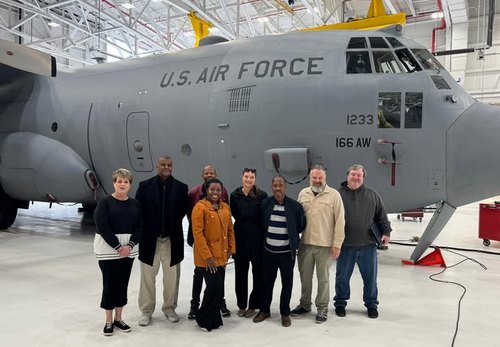
Botswana to get another C-130 Hercules from the United States.
Planning underway for SAAF force preparation exercise Eagle Dawn II.
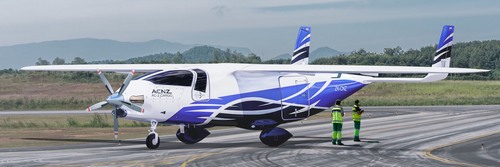
The AC-2 AveniQ- the future of regional cargo aircraft.
IATA releases 2025 world air transport statistics.
Nighthawk Guardian: A different take on synthetic vision, coming soon.
Reno Air Racing Association - The 2026 competitor field has arrived.
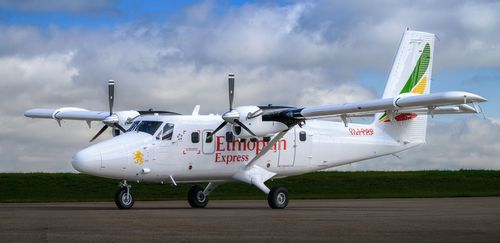
Ethiopian Airlines takes delivery of new Twin Otter Classic 300-G aircraft.
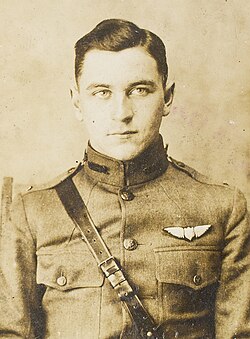
This week in history - 17July 1991 - The passing of Arthur Raymond Brooks an American World War I flying ace.
Worldwide Incidents and Accidents
Bonus video - Martin's Mars behemoth amphibian a video tour.
The biggest week in aviation is here!
From 20th to 26th July, we'll be at Sling Island (Booths 648-650) with Sling Aircraft North America, Sling Pilot Academy, and the Sling HQ South Africa team for an unforgettable week celebrating aviation.
Come and explore our complete Sling aircraft line-up, meet Aviation101 and check out their recently completed Sling Tsi featuring Garmin Aviation's all-new Garmin Axis avionics system, join us for the 8th Annual Sling Ding, and take part in our #MeetUsAtOshkosh challenge for your chance to win a fully loaded Sling merchandise hamper.
We'll also have an exciting lineup of guest speakers and presentations running throughout the week, making Sling Island the place to be during Oshkosh.
Whether you're already part of the Sling family or discovering us for the first time, we'd love to welcome you.
Read our latest blog for the full event guide, speaker schedule, Sling Ding details, and everything you need to know before joining us at Oshkosh!
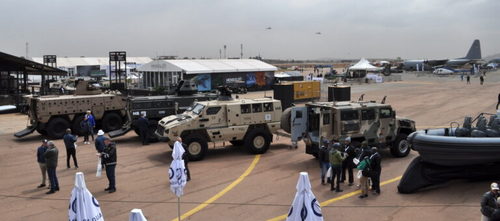
AAD 2026 Conference to Address the Issues Shaping Africa's Defence Future www.defenceweb.co.za
From artificial intelligence and autonomous systems to Africa's defence industrial future and the evolution of military and commercial aviation, the AAD 2026 Conference will tackle many of the issues shaping defence thinking across the continent.
Organised by DefenceWeb as part of Africa Aerospace and Defence (AAD) 2026, the three-day conference, taking place at Air Force Base Waterkloof from 16-18 September 2026, has been designed to bring together military leaders, government officials, defence industry executives, researchers and technology specialists to examine the challenges and opportunities facing Africa's defence and security sector.
The conference programme has been structured around three strategic themes that reflect the changing nature of warfare, the growing importance of sovereign industrial capability and the increasing role of aviation in Africa's defence and security landscape.
The opening day, The Future of Warfare, explores how artificial intelligence, autonomous systems, drones, cyber operations, and electronic warfare are transforming military operations and defence planning. Drawing on lessons from current conflicts, the programme will examine how armed forces are adapting to rapidly evolving operational environments.
Day two focuses on Building Africa's Defence Industry, with sessions examining local manufacturing, defence funding, research and development, public-private partnerships, supply chain resilience and export opportunities. Discussions will explore how African nations can strengthen sovereign capability while fostering regional collaboration and industrial growth.
The final day turns to Commercial & Military Aviation, addressing the future of aviation across the continent. Topics include maintenance, repair and overhaul (MRO), airspace management, unmanned aerial systems, aviation cybersecurity, sustainability and opportunities for greater collaboration between the civil and military aviation sectors.
According to Guy Martin, Editor of DefenceWeb, the conference has been designed to stimulate meaningful discussion around the issues that matter most to Africa's defence community.
“DefenceWeb has always sought to inform and stimulate debate on the issues shaping defence and security across Africa. The AAD 2026 Conference extends that role by bringing together military leadership, government, industry and academia to examine the technologies, policies and partnerships that will define the continent's defence future. Our aim is to provide delegates with practical insights, encourage collaboration and create conversations that continue long after the conference concludes.”
In addition to keynote presentations and panel discussions, delegates will have the opportunity to engage directly with senior military leaders, policymakers and defence industry executives through networking sessions and interactive speaker Q&A discussions.
Designed for professionals seeking more than exhibition access, conference registration includes three days of strategic conference sessions, attendance at the official AAD 2026 Opening Ceremony, three-day access to the AAD exhibition, networking opportunities with senior decision-makers and conference catering.
The AAD 2026 Conference forms part of Africa Aerospace and Defence (AAD) 2026, Africa's premier aerospace and defence exhibition, and is expected to attract delegates from across the defence, aerospace and security sectors.
The full conference agenda is available at: .
Registration is open, with Early Bird rates available until 31 July 2026.
For conference registration, programme information and sponsorship opportunities, visit:
About AAD 2026
Africa Aerospace and Defence (AAD) is the largest aerospace and defence exhibition and air show on the African continent. Held biennially, AAD provides a world-class platform for engagement between governments, armed forces, industry leaders, technology innovators and international partners while showcasing the latest developments across the landward, maritime, aerospace and security sectors.
Botswana to get another C-130 Hercules from the United States
Botswana has accepted the donation of another C-130H Hercules transport aircraft from the United States, following the donation of a surplus C-130H in May 2024.
The US Embassy in Gaborone made the announcement on Monday, saying the acceptance marks another milestone in decades of defence cooperation.
During her February 2025 visit to Botswana, Kelli L Seybolt, US Deputy Under Secretary of the Air Force for International Affairs, announced that the Botswana Defence Force (BDF) had been selected to receive the aircraft, and it was confirmed last week.
“The donation will strengthen Botswana's strategic airlift capability and further deepen the long-standing partnership between our two countries,” the US Embassy said.
In early 2023 Botswana was competitively selected to receive an upgraded C-130H model aircraft through the Excess Defence Articles (EDA) programme. The C-130H (OM4), worth $30 million, arrived in Botswana on 24 May 2024 and was formally handed over at Sir Seretse Khama International airport in a ceremony on 27 June that year.
At the time of the handover, the United States said it would enhance Botswana's ability to support military, humanitarian, and emergency response missions locally and within the Southern African Development Community (SADC) region.
The US Embassy in Botswana on 5 August 2025 said the United States government had formally notified Congress of the proposed donation of two additional C-130H Hercules to Botswana, each valued at $12 million.
The Botswana Defence Force has operated C-130s for many years. It acquired three former US C-130B Hercules for Z10 Squadron from the North Carolina Air Guard through the National Guard Bureau's State Partnership Programme. One (OM1) was subsequently placed in storage, leaving two (OM2 and OM3) in active service until the grounding of one in 2024.
Since 1997 the C-130B fleet has been the backbone of BDF air operations. It has been employed locally, regionally and internationally as one of Botswana's instruments of national power. C-130 missions over the years have included supporting the United Nations mission in Sudan, African Union missions, SADC Mission in Mozambique operations, security cooperation exercises such as SADC air power exercises, and special forces exercises with international forces.
In support of the 2024 C-130H donation, in January this year the US handed over more than 12 000 spare parts, from O-rings to altimeter test kits, air compressors, lubricants, and propeller maintenance workstations. In total, 26 pallets of brand-new maintenance equipment arrived in Botswana.
The C-130H features Allison T56-A-15 turboprop engines, which offer about 4 591 shaft horsepower each. This allows for better performance in the “hot and high” conditions typical of the Southern African plateau. The C-130H can carry twice the payload and travel 30% faster than the smaller CASA C212 and CN235 aircraft used by the BDF, and its range is twice that of the CASA fleet. The BDF has three C212s, two CN235s, one Dornier 328, and ten BN-2 Defenders in its transport fleet.
Planning Underway for SAAF Force Preparation Exercise Eagle Dawn II
The SA Air Force (SAAF) will put its mettle to the test come October/November when it stages Exercise Eagle Dawn II in the Northern Cape province. Exercise details are, according to the SA National Defence Force (SANDF) Directorate Corporate Communication (DCC), presently in the planning phase. What is known is it will be in two phases, starting with a Command Post Exercise (CPX) followed by a live exercise.
By Kim Helfrich/Guy Martin www.defenceweb.co.za
The first Eagle Dawn was staged across Gauteng and Limpopo in July/August last year to “test capabilities and align the airborne service with deployment requirements”. Another reported focus of Eagle Dawn I was given as “regaining the force preparations needed to make the SAAF proficient again”. In line with this objective air defence capabilities were specifically named.
The arrival of the Eagle Dawn exercises, taking the name from former SAAF chief Lieutenant General Wiseman Mbambo's 2022 injunction and campaign to “Free the Eagle”, seemingly puts an end to the Winter Solstice series of force preparation exercises for the airborne service of the SA National Defence Force (SANDF).
There are 10 documented Winter Solstice exercises going back to 2011 in the Eastern Cape and KwaZulu-Natal provinces. This was followed by the North West and Northern Cape provinces in 2012 with a four-year break to 2016 when it was conducted alongside exercises Young Eagle and Ndlovu. In 2017 Mkhuze in northern Kwazulu-Natal was from where joint operations training ran before another four-year break saw Winter Solstice take the form of a scenario-based CPX. The SAAF training area at Ditholo, north of Pretoria, hosted the last known Winter Solstice in 2022 with the emphasis on field training and mission readiness ahead of the Southern African Development Community (SADC) peacekeeping mission to Mozambique.
DCC informed this publication more detail will be provided once the Eagle Dawn II planning phase is finalised.
The 2026 Department of Defence Annual Performance Plan (APP) stated that through the conducting of the Eagle Dawn exercise, the Air Defence Programme will ensure the SAAF's combat readiness and the ability to provide air defence combat-ready capabilities in accordance with the Joint Force Employment requirements.
The SAAF plans to fly 7 000 force preparation hours, 4 000 force employment and 1 000 VVIP hours for the 2026/27 financial year for a total of 12 000 hours. During the 2024/25 financial year, 5 286 force preparation hours, 247 force employment hours and 675 VVIP hours were flown, for a total of 6 209 hours.
The Air Defence programme of the SANDF receives 13% of the total defence budget vote, for a total of R7.5 billion for the 2026/27 financial year (this goes up to R7.9 billion the next year and R8.1 billion the year after). These figures are much less than required, according to the latest Annual Performance Plan, which estimates full Air Defence costs at R13 billion.
The budget deviation of R5.5 billion (under funded by approximately 42%) “will adversely impact on the preparation and provision of combat-ready Air Defence capabilities, maintenance of air defence capabilities and maintenance of facilities as well as the compliance with prevailing aviation safety requirements,” the Annual Performance Plan stated. “Furthermore, the estimate budget deviation will impact on the Programme's ability to fund and execute the cardinal pillars of the SANDF Long-Term Capability Development 'Journey to Greatness' Plan over the 2026/27 MTEF (Medium Term Expenditure Framework).”
More positive news, according to the APP, is that an additional R1.3 billion allocated over the next three years for the maintenance of the fighter capability will contribute to the progress in aircraft serviceability of the fighter fleet which will enhance force preparation.
“Over the 2026/27 MTEF, the fighter jet aircraft additional funding will be dispersed to align with the original intent of the Gripen Support Contract through the extension of Financial Authority from the currently approved two years to three full years. Funding across the MTEF period provides for the Gripen Engine Support and Hawk Engine Support contracts, following earlier reprioritisation of uncommitted future-year funds to their respective airframe support contracts due to past underfunding,” the APP said.
The Hawk Mission System Support Contract is similarly funded, including component repair, replacement and calibration, software updates, and obsolescence management of the Hawk Navigational Weapon Systems, as well as the Combat Ground Support and Test Equipment (GS&TE) supply and support services. Provision has also been made for the maintenance of thirteen Hawk canopies, in batches of three per year, together with the replacement of the Miniature Detonating Cords between January 2026 and September 2029. In addition, funding over the MTEF period now covers the Gripen Statement to Operate (STO) requirement including full STO for four aircraft and partial STO for aircraft currently in operation.
In terms of medium air transport, it is envisaged that the first C-130BZ Hercules (409) will return to South Africa this year after servicing at Marshall Aerospace in the United Kingdom, and a second C-130BZ (401) will undergo a major service during September 2026. Only one of the SAAF's C-130BZs is currently flying in South Africa.
The 2026 APP also provided an update on the SAAF's Space Command Capability, which was officially launched in May 2024, following the establishment of a Space Command Implementation Project Team in October 2022. The proposed initial location as the Space Command Section (SCS), will be located within the Sub-programme “Command and Control Capabilities” effective as from 1 April 2026, with full staffing envisaged by 1 April 2028 and formal establishment by 2030, according to the 2026 APP.
“The establishment of the Space Command Capability aligning with international best practices where air forces manage outer space matters. Costs for the Space Based Sensing Capabilities have been determined including facility upgrades and the establishment of centres of excellence (COE) requiring additional posts for departmental consideration,” the Annual Performance Plan stated.
Immediate Space Command tasks include signing of a Service Level Agreement (SLA) with the South African National Space Agency (SANSA), and developing the National Defence Space Strategy building on SANSA's National Space Strategy (approved by Cabinet in December 2008 and launched in 2010 under the SANSA Act 36 of 2008) treating space as a critical operational domain to secure national interests, maintain superiority, deter aggression, protect assets from threats that include debris or anti-satellite weapons, integrate capabilities into operations, enhance resilience, and foster partnerships for ongoing departmental consideration.
The AC-2 Aveniq- The Future of Regional Cargo Aircraft
Aviation Composites New Zealand launched its groundbreaking AC-2 design to the international market at the Warbirds over Wanaka International Airshow, alongside other leading releases in the event's Future of Aviation pavilion. On show was the AC-2 AveniQ: a full-composite regional cargo single-turboprop with a maximum take-off weight of around 16,800 lb, intended to dramatically simplify and reduce production cost while improving operating efficiency and future-proofing the platform from the outset.
With a 22-metre wingspan, 6,000 lb payload and approximately 200 kt cruise on a single PT6-class engine, the AC-2 AveniQ is a purpose-built, all-composite answer to the world's most pressing need in regional feeder aviation: a modern replacement for an ageing global fleet. An all-composite airframe of roughly 200 structural parts (against the thousands in legacy aluminium designs) makes it dramatically simpler and more economical to build, operate and maintain.
From day one the AC-2 AveniQ was architected as a versatile platform. The same common airframe addresses multiple markets and roles, switching mission without a structural redesign, which expands the addressable market and maximises the return on every aircraft built.
The AC-2 AveniQ platform was designed from the outset to adopt new propulsion as it reaches the market, so the airframe does not need to be reinvented to evolve. The future edition re-engineers the turbine for hybrid, hydrogen and electric propulsion, targeting zero in-flight emissions and fully autonomous freight operation.
ACNZ brings together more than 35 years of certified composite design and manufacturing: NZ CAA and FAA-certified aerospace structures, composite components for state-of-the-art racing yachts including America's Cup campaigns, and advanced certified aviation systems. That depth of real-world composite experience is the foundation on which the AC-2 AveniQ is built.
IATA Releases 2025 World Air Transport Statistics
The International Air Transport Association (IATA) has released the latest edition of the World Air Transport Statistics (WATS), providing comprehensive statistical data through to 2025.
Updated annually, WATS provides data related to demand, supply and operational performance. WATS also includes data collections on the global airline fleet, top routes, employment and financial performance (costs and revenues).
WATS incorporates data from the 1,315 airlines in the IATA Annual Statistics collection, including more than 250 international airlines providing specific data contributions to WATS.
Premium-Class Travel Shows Strong Growth
In 2025, the number of international premium-class passengers-business and first class-reached 109.7 million, up 4.5% year-on-year. This accounted for 5.5% of all international travelers.
Latin America saw the largest jump in premium-class passengers, rising 22.1% to 4.0 million. Europe remained the biggest market for premium travel, with 39.7 million passengers in 2025. However, North America (10.4%) and the Middle East (9.5%) accounted for the highest shares of premium-class passengers as a proportion of total passenger numbers.
Asia Dominates Busiest Airport Pairs
Asia Pacific dominated the ranking of the world's busiest airport pairs, with Jeju International Airport-Seoul's Gimpo International Airport (CJU-GMP) remaining the most popular route globally, with 13.3 million passengers traveling between the two airports. In the top 10, only one airport pair-Jeddah's King Abdulaziz International Airport-Riyadh's King Khalid International Airport (JED-RUH)-was outside the Asia Pacific region. All of the top 10 busiest airport pairs were domestic connections.
An overview of the regions showed:
• Cape Town International Airport-Johannesburg's OR Tambo International Airport (CPT-JNB) was Africa's busiest airport pair in 2025, with 3.4 million passengers.
• Bogotá's El Dorado International Airport-Medellín's José María Córdova International Airport (BOG-MDE) was the busiest airport pair in Latin America with 3.5 million passengers.
• Barcelona's Josep Tarradellas-El Prat Airport-Palma de Mallorca (BCN-PMI) remained the busiest airport pair in Europe with 2.1 million passengers. Stockholm Arlanda Airport-Malmö Airport (ARN-MMX) was the airport pair with the fastest growth in Europe, with passenger numbers surging 85% to 271,031.
• New York's John F. Kennedy International Airport-Los Angeles International Airport (JFK-LAX) was the busiest domestic airport pair in North America with 2.2 million passengers, and JFK-London Heathrow (JFK-LHR) was the busiest international airport pair from North America with 2.1 million passengers.
Top Passenger Markets by Country
The United States remained the world's biggest passenger market, with 890.1 million passengers (both arriving and departing) recorded in 2025. However, it recorded the slowest growth of the world's top 10 markets, up just 1.6% year-on-year compared to 2024. China was the second-biggest passenger market, with 776.1 million passengers in 2025, a growth of 4.8% compared to 2024.
Several Central Asian countries were among the world's fastest-growing passenger markets. Kazakhstan recorded a 40.0% year-on-year surge in 2025 to 18.1 million passengers while Uzbekistan welcomed 12.5 million passengers, up 16.9% on the previous year. Outside of Central Asia, Vietnam also recorded strong growth, with 80.9 million passengers in 2025, up 14.8% year-on-year.
Most Used Aircraft Types
Over the past six years, newer, more efficient widebody aircraft have taken to the skies. The Boeing 787 (+40.8%) and Airbus A350 (+117.4%) recorded significantly more flights in 2025 than in 2019. By contrast, the Airbus A380 showed a considerable decline in usage, operating 24.4% fewer flights in 2025 than in 2019.
Narrowbody aircraft from Boeing and Airbus maintained their position as the most used aircraft in 2025. Boeing 737 aircraft (including all variants) operated 10.8 million flights in 2025, up 12.0% from 2024. This was followed by the Airbus A320 with 8.7 million flights and the Airbus A321 with 4.2 million flights.
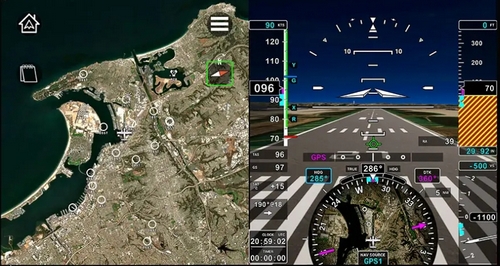
Nighthawk Guardian: A Different Take on Synthetic Vision, Coming Soon
There is an interesting piece of avionics working its way toward certification, and as the South African dealer for Nighthawk Flight Systems, we want owners to know about it early. The Nighthawk Guardian brings a genuinely different approach to synthetic vision. It is not yet available here - more on that below - but it is worth understanding now if a panel upgrade is somewhere on your horizon.
Status, stated plainly: Guardian is approaching FAA certification and is not yet certified. That means it cannot be sold or installed on South African-registered aircraft today. This article is a look ahead, not an offer to buy - we will publish availability once certification is complete and the system is cleared for installation.
What synthetic vision is for
Synthetic vision presents a computer-generated view of terrain, obstacles, and the horizon, aligned to the aircraft's attitude and position. Its value is greatest exactly where the natural view outside is worst: at night, in IMC, on low-visibility approaches, and over terrain-dense or mountainous country. Done well, it lowers the mental effort of building a picture of where the aircraft is relative to the ground - and in single-pilot operations, mental effort is the scarce resource.
What Nighthawk does differently
Most synthetic vision is assembled from separate ingredients - a terrain database, attitude data, GPS position, obstacle overlays - each updating on its own and combined on the display. Guardian instead renders its view from a single continuously updated model of the aircraft and the world around it, so terrain, horizon, motion, and trajectory all come from the same source. The practical intent is a picture that stays smooth and coherent, with less of the stepping or lag that can creep in when separate layers update at different rates.
Nighthawk also designed Guardian to be a lighter-touch installation - a compact hardware footprint that works alongside existing GPS, nav, and comm equipment rather than requiring a full panel rebuild. For a retrofit aircraft where downtime and budget matter, that is a meaningful consideration.
Where Guardian fits in a panel
We sell and install a broad range of avionics - Garmin, Dynon, Avidyne, Collins, and more - and our view is consistent across all of them: the right answer depends on the aircraft, the mission, and how the owner actually flies. Guardian is not a replacement for a well-integrated Garmin or Dynon flight deck, and it is not the answer for every panel. It is another capable option to weigh, with particular appeal for owners who want strong synthetic vision and terrain awareness without a wholesale panel overhaul.
That is exactly the kind of trade-off worth thinking through before any hardware is bought - which is where our advisory comes in.
Plan ahead of certification
If a panel upgrade is on your horizon in the next 6 to 18 months, Guardian is one of several developments worth factoring into your planning now, so that decisions you make today do not close off options that are about to open. Our complimentary Upgrade Advisory is a structured, no-obligation review of your aircraft, your mission, and a sensible staging path - including where emerging systems like Guardian may fit once available.
Book a Complimentary Upgrade Review
Tell us your aircraft and how you fly it, and we will help you build a calm, staged plan - and let you know the moment Guardian is certified and available in South Africa. You can also reach the team directly at sales@aeronautical.co.za or +27 11 659 1033.
Guardian is a product of Nighthawk Flight Systems, Inc. Aeronautical Aviation is the South African dealer for Nighthawk Flight Systems. Guardian is approaching FAA certification and is not yet certified or available for installation on South African-registered aircraft; availability will be confirmed once certification is complete. Aeronautical Aviation (Pty) Ltd is based at Hangar 202, Gate 7, Lanseria International Airport. SACAA AMO No. 1033. Clinton Carroll is a qualified pilot and the founder and CEO of Aeronautical Aviation.
Reno Air Racing Association - The 2026 Competitor Field has Arrived
History Takes Flight This September. For the first time in Roswell, all seven National Championship Air Races classes will compete together in one unforgettable weekend of aviation excitement.
With the return of the Unlimited and Sport classes, the debut of the all-new Jet Class Mach Course, and nearly 90 elite pilots from around the world, the 2026 National Championship Air Races promises to be the biggest event yet.
Now it's time to meet them!
This year's field features nearly 90 accomplished pilots representing the very best in competitive air racing.
Returning champions include:
• Josh Watson (Formula One)
• Tom Marden (Biplane)
• Chris LeFave (T-6)
• Bob McCormack (Jet)
• Eddie Sanches (STOL)
The return of the Unlimited and Sport classes also welcomes legendary competitors including:
• Steven Hinton
• Vicky Benzing
• Dennis Sanders
• Brent Hisey
• Tom McNerney
• Conrad Huffstutler …and many more.
Competitors from across the United States and around the world will converge in Roswell to compete in the world's only event featuring six classes of high-speed, wingtip-to-wingtip closed-course pylon air racing PLUS the straight-line, head-to-head shootout of the STOL Drag class!
New For 2026
Introducing the Jet Class Mach Course
This year marks a major milestone in air racing with the debut of the all-new Jet Class Mach Course.
Designed to deliver longer, faster and more dynamic racing, the expanded course showcases the incredible speed and precision of jet competition while meeting FAA-approved qualification and safety standards.
Fans can also look forward to the exciting addition of two MiG-17 aircraft, adding even more excitement to the fastest class on the course.
Experience five unforgettable days packed with aviation excitement.
• All Seven Race Classes
• USAF Thunderbirds
• Military & Civilian Flight Demonstrations
• STEM Education Discovery Zone
• Incredible Static Aircraft Displays
• Family Activities
• Expanded RV Camping
• VIP experiences
Whether you're a lifelong fan or planning your very first visit, this is the year to experience the National Championship Air Races at full strength.
“We're ecstatic to announce our September family is whole once again at the National Championship Air Races. Following extensive collaboration across all classes, our vision of a wide-open, full house has come to fruition. This September, both first-time attendees and lifelong fans will experience the power of the complete racing roster roaring through Roswell.” Fred Telling, Chairman & CEO, Reno Air Racing Association
Ethiopian Airlines Takes Delivery of New Twin Otter Classic 300-G Aircraft
Ethiopian Airlines Group, Africa's largest airline, is delighted to announce the delivery of the first of two DHC-6 Twin Otter Classic 300-G aircraft from De Havilland Aircraft of Canada Limited. The addition of the aircraft will support Ethiopian Airlines' efforts to expand domestic connectivity and provide access to remote areas and tourism destinations across Ethiopia.
Commenting on the arrival of the new aircraft, Ethiopian Airlines Group CEO, Mr. Mesfin Tasew, stated: “The acquisition of the DHC-6 Twin Otter Classic 300-G aircraft will complement the extensive domestic air transport service provided by Ethiopian Airlines. This new aircraft is configured for multi-purpose missions, including charter operation to tourist destinations, airport calibration, aerial surveys, air ambulance and others. Our commitment to promoting tourism and providing essential air services in Ethiopia will remain at the core of our strategic objectives.”
“We appreciate Ethiopian Airlines' confidence in De Havilland Canada and the Twin Otter Classic 300-G,” said Ryan DeBrusk, Vice President, Sales and Marketing, De Havilland Canada “The Twin Otter's proven reliability, versatility, and ability to operate in challenging environments make it well suited to the diverse missions Ethiopian Airlines will undertake across the region. We value the trust Ethiopian Airlines has placed in De Havilland Canada and look forward to supporting their continued growth and commitment to connecting communities throughout East Africa.”
The Twin Otter Classic 300-G combines the legendary aircraft's proven short takeoff and landing (STOL) performance and greater payload capability with a modern Garmin G1000 integrated flight deck, new lightweight cabin seats, enhanced electrical systems, and upgraded cockpit ergonomics. Its versatility delivers greater operational efficiency and mission flexibility while retaining the rugged capabilities required to operate reliably in remote and challenging environments.
This acquisition marks the introduction of the 300-G into Ethiopian Airlines' fleet and underscores the airlines commitment to connecting communities across diverse and remote regions.
17July 1991
The passing of Arthur Raymond Brooks an American World War I flying ace
Born on 1 November 1895 Arthur Raymond Brooks was an American World War I flying ace credited with shooting down multiple enemy aircraft. Among his most prominent achievements was when he single-handedly took on a squadron of German Fokker airplanes, officially downing 2 of them in one aerial battle piloting his SPAD XIII named Smith IV.
In later life he was a pioneered the development of radio navigational aids (NAVAIDs) used by pilots for location and navigation as well as air-to-ground communications. Brooks also participated in early endeavors to commercialize aviation as a passenger-carrying business and was one of the earliest commercial pilots involved with carrying mail (air mail) for the US Post Office Department.
His combat actions earned him a recommendation for the Medal of Honor. The U.S. Army, upon review of the action awarded him the Distinguished Service Cross.
Morocco, near Marrakech: A Royal Moroccan Air Force Mudry CAP-232 aerobatic trainer, was on a local training flight out of Marrakech (RAK) when it suffered a reported mechanical failure and made a forced/crash landing in a field in Al Haouz Province, near Marrakech. The aircraft sustained substantial damage, with the left wing and canopy separated from the fuselage on impact. The pilot, the sole occupant, sustained injuries of varying severity and was evacuated for medical treatment; no other casualties were reported. Royal Gendarmerie, local authorities and civil protection personnel responded to secure the site, and a field investigation was opened into the circumstances of the accident.
Mali, Kouakourou: A Malian Army Mil Mi-24 helicopter on its way to Mopti to evacuate fallen and wounded personel, was shot down by rebel militias in Kouakourou. The entire crew is said to have been killed in the crash.
Brazil, Itaruma, Goiás: A Cessna plane transporting drugs made an emergency landing in Itaruma, Goiás and was destroyed by fire. The pilot fled the scene. Near the airplane, 300 kg of cocaine were confiscated. The pilot who made an emergency landing of a plane loaded with cocaine in the rural area of Itaruma, in the southwestern region of Goiás, was arrested early Thursday morning 16 July according to Anhanguera television, 32-year-old Henrique Donizeti Ferri was arrested approximately 5 kilometers from the landing site while waiting for his family to help him escape.
UK, London-Gatwick Airport (LGW/EGKK): The crew of British Airways flight BA2673 couldn't steer the nose gear after arriving into London Gatwick closing the runway for 30 minutes. This caused many flights to hold and subsequently divert to nearby airports. Nine aircraft squawked 7700 at one time, likely signaling a low fuel emergency.