This Week in Midweek Updates
Securing SA's borders: Milkor 380 positions industry to support BMA surveillance requirements.
Nigerian Air Force completes factory acceptance testing for first M-346FA jets.
Daher Aircraft delivers the 400th Kodiak, underscoring this airplane family's expanding global reach and mission versatility.
Cessna Citation CJ3 Gen3 achieves first flight, advancing next-generation light jet toward certification.
Joby and Virgin Atlantic Finalize Deal to Bring Electric Air Taxi Service to the UK.
Turkish Aerospace's KAAN's new fighter prototype clears key test.
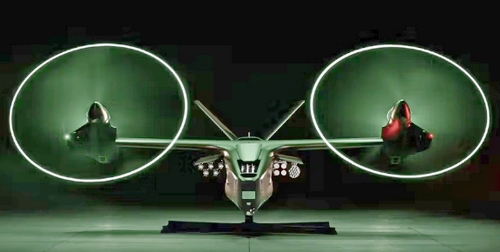
Anduril Aerospace Introducing Thunder: Autonomous Attack Rotorcraft for the Near-Surface Fight.
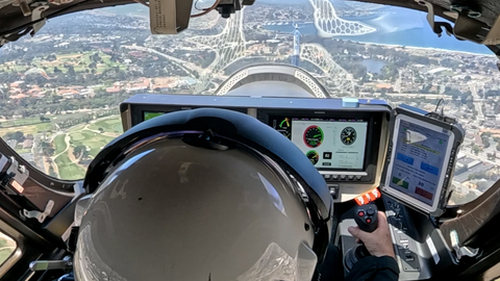
Archer's Midnight Completes City-to-City Flights in California Ahead of White House's eIPP.
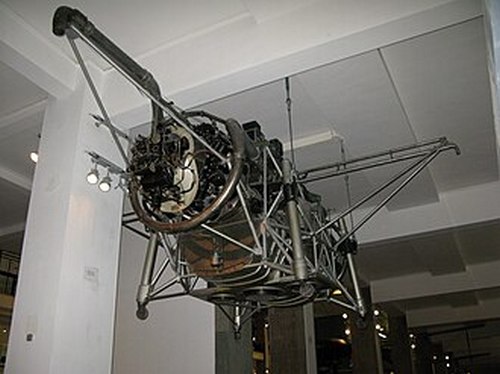
This week in history - 3 Aug 1954 First flight of the Rolls-Royce thrust measuring rig.
Worldwide Incidents and Accidents
Bonus video - Tedderfield Sling Aircraft May 2025 Fly in
Securing SA's Borders: Milkor 380 positions industry to support BMA surveillance requirements
By Milkor www.defenceweb.co.za
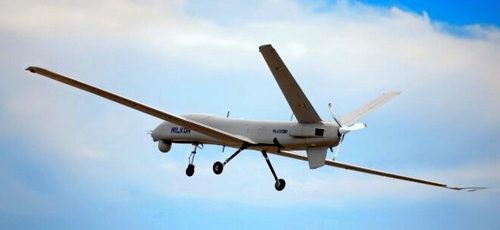
Milkor is highlighting how its indigenously developed Milkor 380 unmanned aerial vehicle (UAV) can support the Border Management Authority (BMA) as it moves to secure the country's borders through sustained aerial surveillance, following a period of intensified repatriation and deportation activity nationally.
Government has accelerated the removal of undocumented foreign nationals under the Comprehensive Approach for Migration Management announced by President Cyril Ramaphosa, with Justice Minister Mmamoloko Kubayi confirming more than 53 000 foreign nationals processed for deportation or voluntary repatriation within a single month, most originating from Malawi, Zimbabwe and Mozambique. Several countries, including Ghana, Nigeria and the Democratic Republic of Congo, have engaged government to repatriate their citizens. This scale of activity, together with continuing arrests for immigration offences, has sharpened focus on the systems needed to manage cross-border movement on an ongoing basis.
The BMA has set out an integrated plan combining high-tech aerial surveillance at the most vulnerable border segments with closer inter-agency coordination. Aerial surveillance already deployed at four priority sections has played a significant role in detecting and apprehending undocumented migrants, and drones now monitor border areas around the clock. This sits alongside a wider modernisation drive, including the planned Electronic Movement Control System (EMCS) 2.0 for facial recognition and electronic verification, and recent pilot deployments of drones, armoured vehicles and mobile surveillance platforms in partnership with local industry. Government has been clear that immigration enforcement remains exclusively the State's responsibility, but these pilots show South African industry has a substantial role to play in equipping the BMA to carry it out, particularly where persistent, wide-area coverage is required.
Milkor believes its Milkor 380 medium-altitude, long-endurance (MALE) UAV, the largest such aircraft designed and built in Africa, is well suited to complement the BMA's surveillance architecture. Ground-based technology and short-range drones are effective for a specific port of entry or defined stretch of borderline, but South Africa's land borders run to several thousand kilometres, much of it remote. A long-endurance platform offers a genuine complement to systems already planned to be implemented.
Endurance of up to 30 hours and range in excess of 4 000 km, for continuous coverage of remote, high- risk segments beyond the limits of short-range unmanned systems. Operating altitude of up to 30 000 feet, for wide-area, persistent observation from a single asset.
A modular sensor suite, including electro-optical, infrared and synthetic aperture radar, for day and night detection of foot and vehicle movement.
Optional Satellite communications supporting control from up to 4 000 km away, allowing one command centre to oversee multiple border sectors.
A fully South African-developed, ITAR-free platform manufactured in Cape Town, supporting national industrial capability.
Deployed in this role, the Milkor 380 would function as a persistent overwatch asset, feeding real-time detection data to BMA command centres so ground teams can be directed to genuine incursions rather than patrolling reactively, mirroring the detect-and-respond model already proven during recent peak-period deployments. Its maritime surveillance capability is equally relevant given South Africa's approximately 2 800 km coastline, an area outside the scope of most land-based border technologies.
“The recent activities regarding undocumented foreign nationals have placed a spotlight on the urgent need for modern technologies to address our country's porous borders. Milkor, a prime systems integrator of defence and security solutions, has tremendous capacity to assist with the implementation of dedicated solutions to be used to enhance border security and increase surveillance,” Said Daniel du Plessis, vice president: Africa at Milkor.
Nigerian Air Force completes factory acceptance testing for first M-346FA jets
By Guy Martin www.defenceweb.co.za
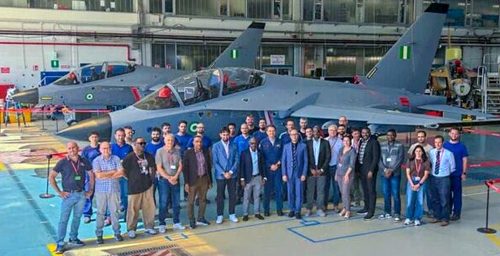
The Nigerian Air Force (NAF) has successfully completed Factory Acceptance Tests for the first batch of three M-346FA aircraft built by Leonardo in Venegono, Italy, in what it says is another major milestone in its ongoing fleet modernisation programme.
Conducted by a joint delegation comprising representatives of the NAF and the Ministry of Defence (MoD) between 29 June and 9 July, the exercise successfully concluded all contractual acceptance requirements ahead of the aircraft's delivery to Nigeria, the Nigerian Air Force said on 27 July.
The successful acceptance confirms that the three aircraft have met all required contractual, technical and airworthiness standards for delivery. Beyond the acceptance process, the delegation also engaged with Leonardo Aircraft Division on pilot and maintenance training, logistics support and long-term fleet sustainment, while inspecting simulation and ground-based training systems that will strengthen indigenous training capacity, enhance operational readiness and ensure the effective employment of the M-346FA fleet. Included in the M-346FA acquisition is a 25-year maintenance contract.
Commenting on the milestone, the Chief of the Air Staff, Air Marshal Sunday Kelvin Aneke, stated that the M-346FA's unique blend of advanced pilot training and frontline combat capability will significantly enhance the NAF's ability to generate combat-ready aircrew while expanding its capacity to conduct precision strike, close air support, air interdiction and other air combat missions in response to Nigeria's evolving security environment.
The first three M-346 are expected to arrive in Nigeria by December, following a 2023 order for 24 aircraft valued at approximately €1.2 billion. Deliveries were supposed to begin in late 2024, a Leonardo representative said early that year. The delivery plan is structured in four tranches of six aircraft each, including armaments, support equipment, tools, spare parts, and comprehensive training and logistics support services.
The M-346FA that Nigeria is getting is an upgraded version of the M-346 advanced jet trainer, and is fitted with the Leonardo Grifo-346 multimode fire-control radar, defensive aids suite, tactical datalink, and helmet-mounted display. It is equipped with seven hardpoints, including three under each wing and one on the centreline for an optional cannon pod.
The aircraft can carry over 2 000 kg of 'dumb' and 'smart' munitions, such as guided and unguided bombs, air-to-surface missiles (such as the Brimstone), air-to-air missiles (AIM-9L, IRIS-T), as well as electronic countermeasures, targeting and other pods. The M-346 has a top speed of over 1 065 km/h, a range of 1 960 km, and a service ceiling of 45 000 feet (13 715 metres). It is powered by two Honeywell F124-GA-200 engines providing 2 850 kg of thrust each.
In early October 2025, Nigeria's then Chief of the Air Staff, Air Marshal Hasan Bala Abubakar, said that under his leadership, the Nigerian Air Force had recorded significant strides, including the acquisition of 15 new aircraft, with 46 more expected. Future orders and deliveries are expected to include three Airbus C295 transport aircraft; ten Leonardo AW109 Trekker helicopters; 12 AH-1Z attack helicopters; and the M-346s.
In the last couple of years the Nigerian Air Force has received six Turkish Aerospace Industries T-129 ATAK helicopters; three Beechcraft King Air aircraft; and four Diamond 62 reconnaissance aircraft, amongst others.
Between 29 June and 3 July the Nigerian Air Force completed factory acceptance testing of another three AW109 Trekker helicopters at the Leonardo Helicopters facility in Vergiate. The completion of testing brings the NAF's ready Trekker fleet to six of ten ordered units, moving the light twin-engine platforms closer to operational deployment.
Daher Aircraft delivers the 400th Kodiak, underscoring this airplane family's expanding global reach and mission versatility
Daher Aircraft has delivered the 400th Kodiak, marking a significant achievement for the multi-role airplane family as its customer base continues to expand across government, commercial, business and private aviation operations.
The milestone airplane was a Kodiak 100 Series III delivered to a Canadian customer from Daher Aircraft's production facility in Sandpoint, Idaho.
Since acquiring the Kodiak program in 2019, Daher Aircraft has continually developed the airplane family by broadening the product line, introducing design improvements and enhancing the production capabilities. « Our success with these efforts is reflected in the marketplace, » Chabbert added. « Today, more than half of all Kodiak aircraft in service have been sold under the Daher brand.
Kodiak also benefits from its integration into the Daher Care customer service organization - which also supports more than 1,300 TBMs, as well as the 3,000 legacy airplanes built by Daher Aircraft's predecessor companies.
The Kodiak family is comprised of the Kodiak 100 Series III - introduced by Daher Aircraft in 2021, and the larger, faster Kodiak 900 - unveiled in 2022. Kodiak is one of two turboprop-powered airplane product lines in Daher Aircraft's portfolio, along with the fast, efficient TBM 980 and TBM 960.
Worldwide, the Kodiak fleet has accumulated more than 520,000 flight hours since entering service in 2008. North America is the largest market for the airplane family, followed by Asia-Pacific, Europe, South America and Africa.
Humanitarian and relief operations continue to reflect the Kodiak's original mission, while representing one part of its broad and expanding operational profile. The designed-in capability to operate from short, unimproved runways while transporting passengers, equipment and supplies makes the aircraft perfectly suited to remote and challenging environments.
Under Daher Aircraft's management, the Kodiak 100 and Kodiak 900 have gained significant momentum in the multi-mission market. Acquisitions by government and law enforcement agencies, conservation entities and other operators underscore the aircraft's combination of durability, flexibility and operating efficiency. In response to this demand, Daher Aircraft is stepping up its in-house integration capability for mission equipment to provide a more comprehensive offering for customers.
Contributing to the Kodiak's all-around capabilities are its Garmin G1000 NXi fully integrated flight deck and modern avionics, along with Flight Into Known Icing (FIKI) qualification with the TKS® ice protection system. Propulsion is provided by Pratt & Whitney Canada's proven PT6A-series turboprop powerplant.
The Kodiak's handling characteristics benefit from the wing's unique discontinuous leading-edge design - combining two high-performance airfoils that work together to maintain predictable controllability at slow-speeds, as well as resistance to aerodynamic stalls.
Loading flexibility is facilitated by the large pallet-sized cargo door, which enables the airplane to accommodate oversized cargo after a quick-change removal of the passenger seats. Together with two separate crew doors and a cabin designed for rapid reconfiguration, the Kodiak can transition efficiently between passenger, cargo and mixed-role operations.
For passenger flights and executive/VIP operations, the Kodiak's large, high-mounted windows offer excellent outward visibility, and everyone has a window seat. The cargo pod - available for the Kodiak 100 and integrated into the Kodiak 900 - incorporates multiple compartments separated by internal bulkheads that enable baggage and supplies to be organized while minimizing movement during flight.
Approximately 15 percent of the in-service Kodiak 100s are equipped with floats, adding to the aircraft's operational flexibility for missions requiring water operations.
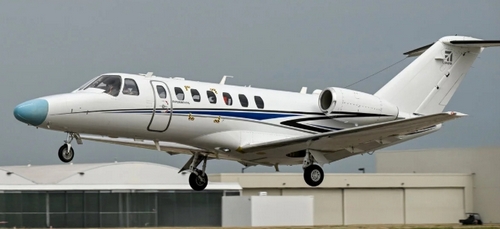
Textron Aviation Inc., a Textron Inc. (NYSE:TXT) company, recently achieved a key milestone as the Cessna Citation CJ3 Gen3 prototype aircraft completed its first flight, advancing the next-generation light jet toward certification. With this milestone, all three next-generation Citation light jets - the CJ4 Gen3, CJ3 Gen3 and M2 Gen3 - have entered flight testing, demonstrating continued momentum across the Cessna next-generation light jet portfolio.
“This achievement continues the forward momentum of the CJ3 Gen3 program and reflects the discipline, innovation and commitment of this team,” said Chris Hearne, senior vice president, Engineering & Programs. “Comprehensive flight testing will now begin for this aircraft with rigorous validation of its performance as we continue to work toward FAA certification and entry into service.”
Taking off from Wichita Dwight D. Eisenhower National Airport, pilots Steve Helmer and Dave Wellbrock focused on testing software functionality in the cockpit during the initial nearly two-hour flight. The aircraft reached a maximum altitude of 41,000 feet and a maximum speed of 278 knots indicated.
“From takeoff to landing, the aircraft demonstrated the handling qualities and system performance we expected,” said Helmer, flight test pilot. "This first flight validated months of preparation and provided a strong foundation as we expand testing and continue the certification program."
Designed from customer feedback, the Citation CJ3 Gen3 brings Garmin Emergency Autoland to the proven Garmin G3000 avionics platform, offering even greater peace of mind to the journey for both pilots and passengers. The aircraft combines advanced intuitive flight deck technology with the performance, payload and operating efficiency customers expect from Cessna Citation business jets.
"The Citation CJ3 Gen3 builds on everything customers value about the CJ3 family while incorporating technology they've asked for to make flying even more intuitive and confidence-inspiring," said Lannie O'Bannion, senior vice president, Global Sales & Marketing. "From advanced Garmin avionics to a refined cabin experience, this aircraft reflects our commitment to delivering practical innovations for customers.”
The Cessna Citation CJ3 Gen3 cabin offers a customizable, luxurious space with amenities like swivel seating, RGB accent lighting and modern connectivity options, alongside a naturally lit lavatory with optional upscale features.
The Citation CJ3 Gen3 features a maximum range of 2,040 nm and a maximum payload of 2,135 pounds. With standard seating for up to 10 occupants and a 1,000-pound baggage capacity, the aircraft offers excellent range, payload and superior field performance to enable pilots to achieve a variety of missions.
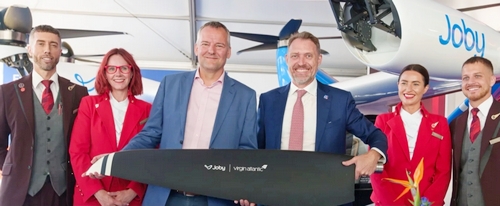
Joby and Virgin Atlantic Finalize Deal to BringElectric Air Taxi Service to the UK
Joby Aviation, Inc. (NYSE: JOBY), a company developing electric air taxis for commercial passenger service, and Virgin Atlantic, a premium long-haul UK airline, today signed a definitive agreement at the Farnborough International Airshow, formalizing the partnership the companies first announced in 2025 to bring Joby's air taxi service to the UK.
The agreement converts the partnership announced in 2025 into a binding, multi-year commercial framework, establishing Virgin Atlantic as Joby's exclusive airline partner for air taxi services in the UK. The collaboration builds on Joby's existing partnership with Delta Air Lines, which holds a 49 percent stake in Virgin Atlantic, bringing together three brands focused on faster, more convenient travel across the UK.In 2022, Joby and Delta announced a multi-city partnership to pioneer community-to-airport transportation, which is mutually exclusive across the US and UK. Delta and Virgin Atlantic operate as partners across a shared transatlantic network, and Joby's UK partnership with Virgin Atlantic complements and expands its partnership with Delta.
This agreement marks an exciting next chapter in our partnership with Joby and a significant step towards bringing electric air taxi services to the UK,” said Corneel Koster, CEO of Virgin Atlantic. “Together, we'll create more seamless journeys for our customers, making it easier than ever to travel between towns, cities and our airports. Innovation has always been part of Virgin Atlantic's DNA, and we're proud to partner with Joby to help shape the future of travel while delivering the premium customer experience we're known for."
"Virgin Atlantic's dedication to a world-class customer experience makes them the right partner to represent Joby in the UK, and this agreement reflects the next step in that relationship,” said JoeBen Bevirt, Founder and CEO of Joby Aviation. ”The UK is one of the most exciting markets for this technology, and this partnership could drive significant opportunities for Joby as we bring air taxi service to some of the country's busiest cities."
Under the agreement, Virgin Atlantic will offer Joby's air taxi service through its booking platforms, including mobile app and website. This will allow travelers in the UK to book a seamless air taxi connection alongside their long-haul flights.
Joby plans to launch service at Virgin Atlantic's hubs in London and Manchester, with Manchester anchoring Joby's connections across the North of England. Early routes are expected to include Manchester Airport to Leeds in approximately 15 minutes and Heathrow to Central London in as little as 8 minutes, journeys that take over an hour by car today.
Turkish Aerospace's KAAN's new fighter prototype clears key test
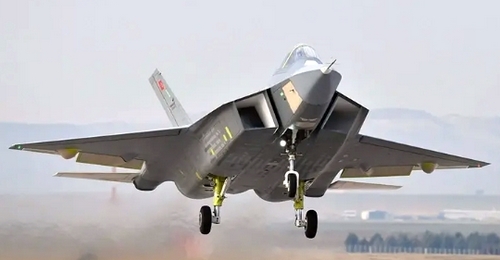
Türkiye's first indigenous fifth-generation fighter jet, KAAN, has reached another key milestone as its P1 prototype successfully completed its maiden taxi test, Turkish Aerospace Industries (TUSAS) announced on July 31.
The successful trial marks the latest stage in the development of one of Türkiye's flagship defense technology programs. Footage released by TUSAS showed the new prototype carrying out its first taxi test on the runway.
KAAN made its maiden flight on Feb. 21, 2024, after completing an extensive series of pre-flight evaluations, including ejection seat tests, full-scale static testing, control surface inertia and structural assessments, landing gear drop tests, avionics integration trials, fuel system verification and other ground-based validation procedures.
Before its inaugural flight, the aircraft also underwent low- and high-speed taxi tests, paving the way for its successful takeoff from TUSAS facilities in the capital Ankara.
The twin-engine fighter measures 21 meters in length with a 14-meter wingspan and is capable of reaching a maximum speed of Mach 1.8 (approximately 2,210 kilometers per hour).
Designed as Türkiye's next-generation multirole combat aircraft, KAAN can carry eight beyond-visual-range air-to-air missiles, with four housed in internal weapon bays and four mounted on external hardpoints along the fuselage.
TUSAS has previously announced that six prototypes will be produced as part of the aircraft's development program.
The first KAAN fighters are scheduled to enter service with the Turkish Air Force in 2028, while full deliveries are expected to be completed by 2030.
On July 10, the proposed U.S. sale of F110 engines for Türkiye's first fighter jet KAAN has cleared a key congressional hurdle after Congress did not oppose the bid during the 15-day review period.
The notified sale covers the integration, assembly, external modification, certification, testing, defense services and technical data transfer related to the F110-GE-129E/F engines that will power the KAAN fighter aircraft.
Anduril Aerospace Introducing Thunder: Autonomous Attack Rotorcraft for the Near-Surface Fight
The proliferation of drones in land warfare has brought maneuver to a stalemate, extracting a significant toll in terms of both man and machine. Attack helicopters and their crews, long the lifeblood of maneuver warfare, are increasingly held at risk by a combination of loitering munitions, cheap air defenses, and ubiquitous persistent ISR platforms that have rendered the near-surface domain one of the most lethal places on the battlefield.
In this robotic kill zone, maneuver warfare hinges on the ability to exploit an adversary's weaknesses through principles like speed, agility, reach, and decisive mass. Any one of these attributes on their own is insufficient. Instead, it is the combination and orchestration of these elements that unlocks the decisive blows that enable friendly forces to maneuver to a position of advantage. All of these dynamics point to a new reality for maneuver warfare: one that must be driven by autonomous technology in attack aviation.
Anduril recently unveiled its answer to these changing conditions: Thunder, a Group 5 autonomous attack rotorcraft specifically designed to multiply the combat power and increase the survivability of current and next-generation crewed attack and assault aircraft. Thunder is equipped with the payload capacity and open architecture required to deliver overwhelming effects for any mission, engineered with the survivability, speed and range critical for the deep fight, and built on flight-proven autonomy that enables validated, high-performance teaming with crewed assets.
Thunder is the defense-specific variant of a dual-use platform co-developed with Archer Aviation, bringing the commercial VTOL sector's rapid innovation in electric propulsion and rotor design directly into defense. A series hybrid-electric powertrain enables Thunder to achieve significant range and endurance, while still maintaining the necessary precision to closely optimize power through the full range of flight conditions. Meanwhile, Optimum-Speed Tiltrotors (OSTR) vary rotor RPM to maintain efficiency across flight regimes, reducing power demand and fuel burn in cruise and minimizing acoustic signature to enhance survivability during low-altitude ingress.
The tiltrotor configuration, series hybrid-electric powertrain, and rotor technology provides Thunder with the range necessary to support global self-deployment. Alternatively, Thunder can be packed into a standard shipping container for transport by air, road, rail, or sea, offering the multi-modal transport logistics required to reach any fight.
Anduril has configured Thunder to bring affordable mass to the deepest, most heavily-defended parts of the battlefield. Whether the aircraft is needed as a missile carrier, air-launched effects mothership, maritime patrol aircraft, or contested logistics platform, Thunder offers the payload capacity and flexibility required to overwhelm sophisticated defenses and finish the mission.
Thunder's main payload module can be configured with ten air-to-ground missiles (e.g. Hellfire, JAGM, Barracuda-100M), sixteen launched effects (e.g. Altius-600), or seventy-six 70mm rockets, plus an additional twelve counter-UAS effectors in the nose payload module, providing a mix of effects to address a wide variety of threats during a single sortie.
Teaming multiplies the mass that Thunder brings to the fight. By pairing multiple Thunder aircraft with a single crewed platform, commanders can achieve a step-change in combat mass that enables formations to defeat more targets, sustain operations longer, and keep crews farther from the most lethal threats. By teaming three Thunder aircraft with each Apache, for example, a Combat Aviation Brigade will achieve a 3x increase in available munitions without placing additional pilots in harm's way, all at a fraction of the cost of a similarly-sized formation of exclusively crewed aircraft.
Being able to see and decide at machine speed is what enables Thunder to fly near-surface missions at pace. Thunder's multi-modal machine perception stack and sensor suite combines passive and selective active sensors with onboard computer vision, map data, and edge compute, enabling Thunder to continuously detect, classify, and track terrain, obstacles, and threats. That sensor data provides the inputs necessary to facilitate the visual navigation, inertial positioning, and terrain feature mapping that enable Thunder to remain on course when GPS, visibility, and communications are degraded or denied.
The near-surface fight has become one of the most lethal parts of the battlefield. By combining the range and speed necessary to penetrate contested airspace, the autonomy required to maneuver and team with crewed aircraft, and the payload capacity to overwhelm sophisticated defenses, Thunder brings the combination of capabilities necessary to achieve maneuver dominance on the modern battlefield.
Archer's Midnight Completes City-to-City Flights in California Ahead of White House's eIPP
Acher Aviation (NYSE: ACHR) recently announced the completion of a piloted roundtrip journey with its all-electric Midnight aircraft on July 30th, departing from Salinas Municipal Airport and landing at Monterey Regional Airport before making the return flight. Archer worked closely with the FAA to execute this piloted, round trip inter city flight, a major step toward launching Midnight operations under the White House's eIPP program later this year.
Midnight covered each leg of the journey in roughly nine minutes, a trip that can take ~35+ minutes by car, demonstrating the kind of short, time-saving hops the aircraft was built to fly.
“This roundtrip journey is exactly the kind of route we plan to fly with Midnight under the eIPP and in LA during the Olympic Games,” said Adam Goldstein, founder and CEO of Archer. “This mission provides a template for us to replicate with our partners across Texas, Florida and New York as we get ready for eIPP operations later this year.”
As part of its broader eIPP efforts, Archer is working closely with the FAA, federal, state and local partners to establish the procedures, infrastructure and local operational capabilities needed to support future commercial air taxi operations. That work also supports preparations in Los Angeles, where Archer will serve as the Official Air Taxi Provider for the LA28 Olympic Games.
Archer's Midnight air taxi is designed to enable passengers to replace 60-90 minute trips on the ground with quiet, all-electric flights, dramatically reducing travel times compared to traditional ground transportation and helping avoid growing levels of congestion.
3 Aug 1954
First flight of the Rolls-Royce thrust measuring rig
The Rolls-Royce Thrust Measuring Rig (TMR) was a pioneering vertical take-off and landing (VTOL) aircraft developed by Rolls-Royce in the 1950s. It has the distinction of being "the first jet-lift aircraft to fly anywhere in the world”
The design of the TMR is unique. It was powered by a pair of Nene turbojet engines, which were mounted back-to-back horizontally within a steel framework; in turn, this framework was raised upon four legs fitted with castors for wheels. The TMR lacked any lifting surfaces, such as wings; instead, lift was generated purely by the thrust being directed downwards. Due to its unconventional appearance, it was nicknamed the Flying Bedstead.
The TMR had been envisioned specifically for conducting research, specifically to explore the potential applications of then-newly developed jet propulsion towards carrying out vertical flights. First flying in August 1954, extensive studies were conducted during a series of test flights into how stabilisation could be performed during the aircraft's hover. It contributed to a greater understanding of the level of power and appropriate manners of stabilisation involved in a VTOL aircraft, as well as proving the feasibility of the concept in general.
Indonesia, en route Makassar (UPG) - Jakarta (CGK): Batik Air flight ID6143, an Airbus A320-232, was about 20 to 30 minutes into the flight from Makassar to Jakarta when a power bank being used to charge a mobile phone in the cabin suffered a thermal runaway and began emitting smoke. The flight crew contained the situation. There were no injuries. The passenger involved was seated in seat 21E. Although the crew had previously reminded passengers that the use of power banks was prohibited during the flight, the passenger continued to use the device to charge their phone.
Australia, Sydney-Kingsford Smith International Airport, NSW (SYD/YSSY): Qantas flight QF124, a Boeing 737-800 (VH-XZG), and Qantas flight QF1424, a DHC-8-400 (VH-QOC), were involved in a runway incursion incident at Sydney Airport (SYD), Australia. The Boeing 737 had landed on runway 34R and Air traffic control (ATC) cleared the flight on runway 25 to cross runway 34L while the DHC-8 was in the landing roll on runway 34L. ATC detected the conflict and advised both crews, with the 737 stopping after the holding point.