This Week in Midweek Updates
Update on status of promulgation of the 36th amendment of the civil aviation regulation.
Project Stargaze aims to revive SAAF Museum planetarium.
NAC and Netcare 911 join forces.
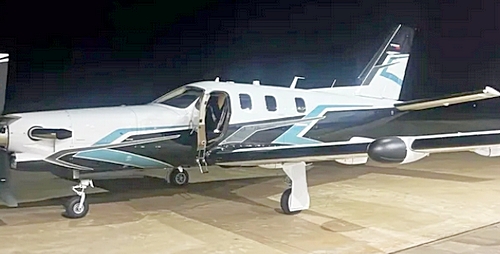
Daher Aircraft delivers the first TBM 980 in Brazil, introducing this latest-generation TBM to a major business aviation market.
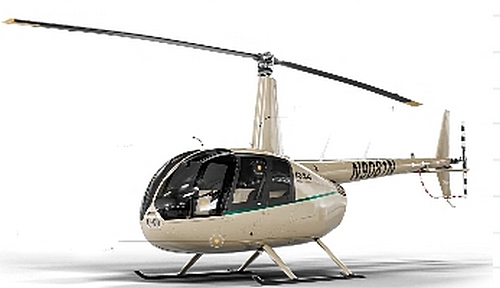
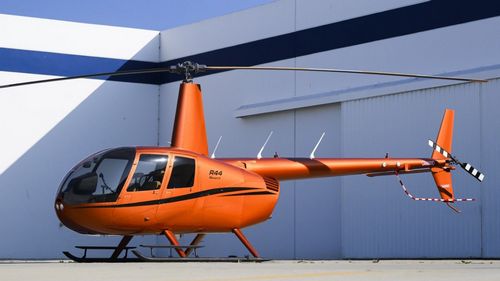
Robinson Helicopter company to deliver 5000th R44 Raven II marking major milestone.
Atoms and Joby Aviation form strategic partnership to build America's vertiport network.
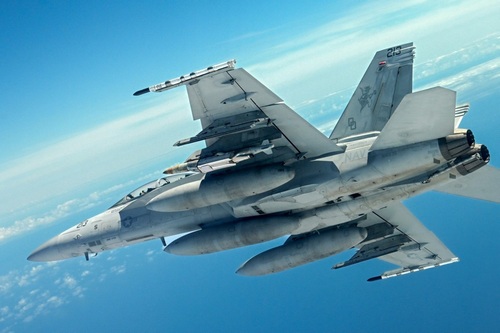
US Air Force greenlights long-range JDAM production.
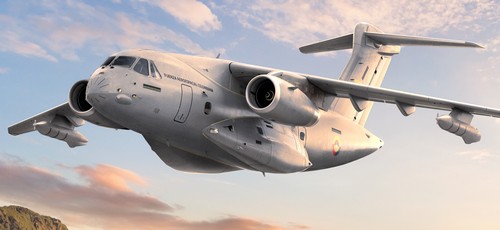
Colombia acquires the KC-390 Millennium to modernize its airlift and aerial refueling capabilities.
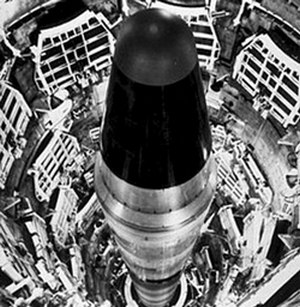
This week in history - A fire in a Martin LGM-25C Titan II missile silo at Searcy, Arkansas kills 53 men, all of them civilians.
Worldwide Incidents and Accidents
Bonus video - EAA Chapter 322 Sun 'n Fun 2024 Quintin's Slide Show
Update on Status of Promulgation of the 36th Amendment of the Civil Aviation Regulation Containing Parts 91 & 43 to Enable Appendix 3
The Commercial Aviation Association of Southern Africa (CAASA) met with the Department of Transport (DoT) yesterday to discuss matters raised in CAASA's letter to the Honourable Minister Barbara Creecy dated 19 June 2026.
The meeting was hosted by the Acting Director-General of Transport, Mr Mathabatha Mokonyama, together with the Acting Deputy Director-General for Civil Aviation, Ms Elizabeth Mpye.
During previous engagements, the Director of Civil Aviation advised CAASA that clarification had been sought from the State Law Advisers regarding an additional process that had been introduced during the promulgation of regulations.
While the contents of that correspondence could not appropriately be shared, the DCA conveyed the general position arising from those engagements. CAASA fully supports the Director of Civil Aviation in her efforts to obtain legal clarity and fast track this promulgation due to the significance of the economic impact on industry, particularly given the extended delays in the promulgation process and their impact on aviation safety and industry operations.
The meeting included conveyance of the heightened need for improved communication between the Department of Transport, especially the aviation section, and industry stakeholders. The operational and economic implications of prolonged delays were also conveyed, and agreement was reached to improve communication and stakeholder engagement going forward. This is good for the industry and industry will remain vigilant and maintain a robust stance on such issues where the DOT and the Regulator may not enable the industry as effectively as they should.
The Acting Director-General advised that further enquiries would be undertaken to determine the causes of the delays and indicated that, where appropriate, a formal acknowledgement would be provided via a response letter and if necessary, an apology may be forthcoming.
The Department reaffirmed its commitment to enabling a sustainable and compliant aviation sector within the framework of South African legislation and the Civil Aviation Regulations.
A significant outcome of the meeting was the Department's commitment to expedite the outstanding regulatory amendments. This includes the 33rd Amendment, submitted to the Department on 20 February 2026 in accordance with CARCom records, and the 36th Amendment, submitted on 10 June 2026.
The Department indicated that both amendments will be prioritised for promulgation using the established process followed for previous amendments, without requiring the extended State Law Adviser review process.
THE DEPARTMENT ADVISED THAT THIS PROCESS IS EXPECTED TO BE CONCLUDED WITHIN THE NEXT TWO WEEKS.
We await formal written confirmation of the commitments made during the meeting. The Acting Director-General advised that the Department intends to complete the remaining promulgation process and submit the amendments to the Honourable Minister for signature within this timeframe.
The meeting was formally recorded by the DOT, and CAASA awaits the official transcript and minutes. In the interim, industry participants are encouraged to continue preparing for implementation of the amendments in consultation with their Approved Maintenance Organisations (AMOs), in accordance with previous guidance.
We remain optimistic that the Department of Transport, the South African Civil Aviation Authority and the relevant regulatory structures will be prepared to implement the amendments once promulgated, consistent with the assurances provided through the CARCom process.
Industry appreciates the constructive engagement that has taken place over recent months and remains committed to working collaboratively with government and industry stakeholders to advance practical, safe and internationally aligned regulatory solutions. This includes continuing discussions on expanding operational flexibility for Part 91 aircraft, including owner training, in line with recognised international best practice.
We as the consortium on the letterhead, look forward to the return of affected Part 91 aircraft to normal operations once the amendments have been promulgated. Pilots and operators are encouraged to ensure that appropriate proficiency and currency training is completed before resuming flying activities following the extended period during which many aircraft have remained grounded.
While CAASA spearheaded this engagement which was part of other CAASA specific matters, it remains a combined effort and continued thanks to the leaders of these organisations in this consortium and we reaffirm unity in industry wth all effective organisations which remains critical going forward. This most probably will be the penultimate media statement in an effort to manage communication expectations.
For further information or media enquiries or interviews, please contact:
• Kevin Storie, CEO of CAASA, kev@caasa.co.za
• Walter Doubell, Chairman AeCSA, walter@aeroclub.org.za
• Morne Kleinhans AWAC, morne@awac.org.za
Project Stargaze Aims to Revive SAAF Museum Planetarium
By Dean Wingrin www.defenceweb.co.za
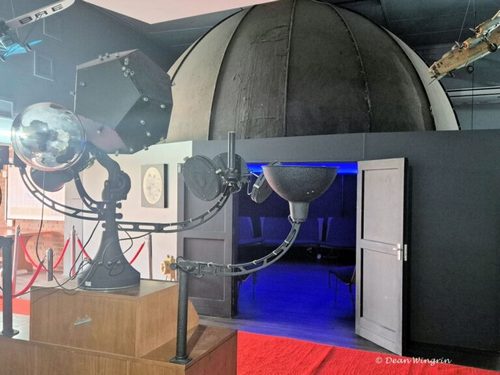
The South African Air Force (SAAF) Museum at Air Force Base (AFB) Ysterplaat has launched an ambitious campaign to restore its historic planetarium by replacing its inoperative 1956 Spitz Model A-2 star projector with a modern digital projection system.
Known as Project Stargaze, the initiative was unveiled on 4 August 2026 during a presentation attended by Western Cape Minister of Cultural Affairs and Sport Ricardo Mackenzie, City of Cape Town Safety and Security Portfolio Committee Chairperson Mzwakhe Nqavashe, members of the Aeronautical Society of South Africa (AeSSA) and other invited guests.
Opening the event, Officer in Charge of the SAAF Museum, AFB Ysterplaat, Lieutenant Colonel James du Toit, described the planetarium as far more than a museum exhibit.
“The SAAF Planetarium is more than just a dome of stars. It is a gateway to learning, curiosity and exploration,” he said, adding that the facility offers young South Africans “a unique opportunity to engage with science, astronomy and the wonders of flight”.
Du Toit explained that the original 1956 Spitz projection equipment had become obsolete and appealed for financial support to create “a more contemporary, engaging and educational experience” while preserving the facility's historical significance.
Project Manager Major Marcel Bester, a 35 Squadron pilot detached to the Museum, gave an overview of the project, noting that despite having only three staff members, the team was determined to transform the ageing facility.
The Spitz Model A-2, designed by American inventor Armand Spitz, was originally developed as an affordable planetarium for schools, universities and military institutions. The museum's projector was initially acquired by the South African Naval College before being transferred to 80 Air Navigation School in 1982, where it trained navigators in celestial navigation before being transferred to the SAAF Museum, where it introduced thousands of visitors to astronomy.
Drawing on lessons learnt from visits to other South African planetariums, the team has already repainted the dome and installed dimmable LED horizon lighting using volunteer effort.
Bester even enlisted his nine-year-old daughter to help install the lighting during the school holidays.
The remaining work requires an estimated R360 000, covering a high-luminosity Epson projector, a specialised fisheye lens, surround sound system, acoustic treatment, dehumidifier, control system and new seating.
“We really want to turn our planetarium into a world-class planetarium,” Bester said. “I would like people to come to the Air Force and, when they leave, say: 'I'm speechless. I did not know that the Air Force can do this.'”
He added that if the funding were secured immediately, the refurbishment could be completed within approximately two months.
Although modest entrance fees may eventually be introduced to help sustain operations, Bester stressed that education remains the primary objective.
“The goal is to impart knowledge, not to make money,” he said. “I'd rather not charge anything and have people walk away with a wealth of knowledge.”
Speaking after the presentation, Mackenzie praised the initiative and said the museum deserved greater public recognition.
“It's my first time here at the museum. It's fantastic to see what's happening here, and this needs to be more broadcast in our communities,” he said.
He said his department would investigate ways of supporting the museum through existing provincial programmes, including the Year Beyond youth initiative, educational partnerships and archival support.
“We support museums in the Western Cape, we fund museums in the Western Cape, and we love museums in the Western Cape,” Mackenzie said. “This is an opportunity to do something different and to support a military museum.”
While the SAAF Museum's planetarium is the smallest of South Africa's five planetariums, Project Stargaze demonstrates that its ambitions are far larger. It hopes to preserve an important piece of aviation heritage while creating a modern STEM education facility that will inspire future generations to look skywards.
NAC and Netcare 911 Join Forces
Our long-standing partnership with the National Airways Corporation (NAC) has been instrumental in enabling Netcare 911 to deliver world-class aeromedical emergency services across South Africa and the broader African continent.
Through this collaboration, we have access to a fleet of state-of-the-art helicopters, purpose-configured as mobile intensive care units, allowing our clinical teams to deliver advanced, life-saving interventions from the moment we arrive on scene. The quality and capability of NAC's aircraft significantly enhance our ability to respond rapidly and effectively in critical situations, where time is often the difference between life and death.
Equally important is NAC's unwavering commitment to accreditation, safety, and quality assurance. As a BARS Gold Standard operator and a leader in aviation safety on the continent, NAC consistently meets and exceeds internationally recognised benchmarks. This aligns seamlessly with our own clinical governance and quality assurance frameworks, ensuring that every mission is conducted with the highest levels of oversight and patient care.
The calibre of NAC's pilots and technical teams is exceptional. Their experience, professionalism, and deep understanding of aeromedical operations ensure that each flight is executed with precision, safety, and efficiency. This level of expertise allows our medical crews to focus fully on patient care, confident in the aviation support behind them.
Furthermore, NAC's heliport infrastructure of international standard, together with its operational bases, provides a critical foundation for our extensive aeromedical network. From these strategically located hubs, we are able to coordinate and manage complex operations seamlessly, ensuring rapid deployment and continuity of care across vast and often challenging environments.
Ultimately, our partnership with NAC is built on shared values: a commitment to excellence, innovation, and, most importantly, saving lives. Together, we continue to set the benchmark for aeromedical services in Africa, combining aviation excellence with clinical expertise to deliver the highest standard of emergency care when it matters most.
Atoms and Joby Aviation Form Strategic Partnership to Build America's Vertiport Network
Atoms, the Industrial AI and Infrastructure company, and Joby Aviation, Inc. (NYSE: JOBY), the company developing electric air taxis for commercial passenger service, today announced a strategic partnership to acquire and develop vertiport sites in the United States. The companies will initially focus on Florida, New York, and Texas, the markets where Joby is preparing to launch early operations under the White House-backed eVTOL Integration Pilot Program (eIPP), as well as California.
Joby's aircraft is approaching commercial readiness. The company has flown its first FAA-conforming aircraft and entered the final stage of FAA type certification. Piloted flights across the San Francisco Bay Area and New York City have demonstrated its operational capability. As air taxis move from certification to early operations, the constraint will shift to the ground: aircraft will need places to land, charge, and connect passengers to the rest of their journey. Building that infrastructure rapidly, in the right locations, and at scale is expected to be the critical path to making electric flight part of daily life.
"Smart cities require innovative real estate and infrastructure development," said Travis Kalanick, Founder and CEO of Atoms. “As new transport modes and smart city services become available, designing and deploying a new asset class to support them is critical. We're focused on serving city stakeholders with inspired, efficient buildouts that deliver great experiences for residents and communities alike.”
Atoms Real Estate builds smart city infrastructure for cities: power-intensive, complex deployments delivered by in-house architects, engineers, technology and construction teams. In this partnership with Joby, Atoms will develop vertiports as next-generation transportation hubs, where electric aircraft, autonomous ground vehicles, and ridesharing services will converge. The hubs will enable passenger connections, aircraft servicing, and last-mile ground transportation.
"Thoughtful urban planning can take a decade or more, and making electric flight part of everyday life will require a new generation of transportation hubs connecting aircraft, ground transportation, and communities," said JoeBen Bevirt, Founder and CEO of Joby Aviation. "As air taxis move closer to early commercial service in the U.S., the right infrastructure becomes increasingly important, not just where aircraft land and charge, but how cities embrace this new form of transportation. Atoms has a vision of building ambitious infrastructure projects that combine technology, operations, and customer experience, making them a natural partner for Joby."
US Air Force Greenlights Long-Range JDAM Production
The U.S. Air Force has awarded Boeing [NYSE:BA] a $75 million Undefinitized Contract Action (UCA) to acquire the BSU-111/B Payload Delivery Unit (PDU) Joint Direct Attack Munition Long Range (JDAM LR), a precision-guided munition that can travel over 300 nautical miles with a 500-pound class (226-kilogram) payload. The UCA follows Boeing's nearly $100 million internal investment in the program and clears it for initial production of PDUs for the U.S. Navy.
JDAM LR combines the proven JDAM guidance tail kit and aircraft interface with a wing kit and compact turbojet engine to provide long-range capability for precision conventional land strike, naval strike and maritime aerial-mining missions. By leveraging existing JDAM infrastructure, it enables high-volume production and rapid integration with any aircraft capable of carrying conventional JDAM. Boeing is an industry leader in affordable precision-guided munitions and continues to invest in derivative capabilities to meet customers' current and future needs.
“This first production contract is a major milestone for the JDAM LR program, demonstrating our ability to deliver long-range precision-strike capability at a significantly lower cost,” said Bob Ciesla, vice president of Boeing Precision Engagement Systems. “Scaling production of the GBU-75 will provide the fleet with an affordable, sustainable solution designed to eliminate long-range land and sea-based threats to U.S. and international forces and enable them to safely and effectively operate in a contested battlespace.”
The system recently completed its first flight test off the coast of California, meeting the objectives of sustaining powered flight on a predefined test profile and using military-code GPS navigation while maintaining consistent guidance directly to its target.
“JDAM LR gives operators an affordable, mass-producible option for striking targets from beyond the effective range of enemy defenses,” said Ciesla.
Daher Aircraft Delivers the First TBM 980 in Brazil, Introducing this Latest-Generation TBM to a Major Business Aviation Market
The first TBM 980 for a Brazilian customer has been delivered by Daher Aircraft, marking the introduction of thisnewest fast and efficient turboprop-powered airplane in a market where the TBM family continues to expand among business aviation operators and entrepreneurs.
This milestone aircraft was received by a Brazilian entrepreneur who upgraded from a TBM 900 version, selecting the TBM 980 for its third-generation Garmin G3000® PRIME avionics and the TBM's combination of speed, efficiency and operational flexibility. The customer owns multiple cattle ranches and farms throughout Brazil and will use the aircraft to travel between these locations, including operations performed from semi-prepared runways.
Brazil represents an important market opportunity for both airplane families in Daher Aircraft's portfolio: the pressurized six-seat TBM 980 and TBM 960, as well as the utility-category 10-seat Kodiak 100 and Kodiak 900. The country's geographic size and strong industry sectors such as agribusiness, construction and mining create a demand for efficient regional transportation solutions for which the TBM and Kodiak are particularly well suited.
Daher established its São Paulo-based Daher Aircraft Brasil entity last October to strengthen the local presence for customer relationships and technical support. The initiative has contributed to a new phase of growth for Daher Aircraft in Brazil, where five TBM 980s and one TBM 960 have been sold since October.
Today, approximately 60 TBMs of various versions are operated in Brazil, along with seven Kodiak 100s.
Daher Aircraft unveiled the TBM 980 in January and has delivered more than 30 aircraft to customers worldwide. The Garmin G3000® PRIME avionics introduces a highly intuitive interface with three 14-inch edge-to-edge touchscreen displays, improving cockpit ergonomics and reducing pilot workload through customizable presets and a streamlined user interface.
Operational safety remains paramount on the TBM 980 with Daher Aircraft's e-copilot® concentration of technological innovation and automated systems, proven across the TBM 900-series aircraft. This includes advanced weather detection, icing protection, flight envelope monitoring and emergency descent mode, along with the game-changing HomeSafe™ emergency autoland functionality.
Precision piloting and excellent operational efficiency are ensured with the TBM 980's features adopted from Daher's popular TBM 960 version, including Pratt & Whitney Canada's PT6E-66XT intelligent turboprop engine and the five-blade Hartzell composite propeller - both of which are controlled by a Full Authority Digital Engine Control (FADEC) system.
Robinson Helicopter Company to Deliver 5000th R44 Raven II Marking Major Milestone
The R44 is known for its simple design, low operating cost and reliable performance. Pilots and small businesses fly it for training, tours, farm work, news coverage and personal travel. It has become one of the most common helicopters in the sky today.
"Delivering the 5,000th R44 Raven II reflects the enduring trust operators around the world place in Robinson,” said David Smith, president and CEO of Robinson Helicopter Company. “The R44 remains the most widely sold and flown light civil helicopter on the planet because it delivers unmatched reliability, low direct operating costs, and multi-mission versatility. Whether it is powering flight schools, supporting agricultural operations, or serving private and utility operators, the Raven II is the benchmark for modern light rotorcraft'."
Robinson certified the R44 in 1990 and delivered the first R44 in 1993. Since then, the model has grown into one of the best-selling helicopters ever made with owners and operators in more than 100 countries flying it today. The R44 comes in multiple variants, including the Raven I, Clipper I, the Cadet for training and the Raven II and its counterpart the Clipper II. Robinson recently unveiled a new Utility Interior available on all R44s, with easy to clean seat fabrics and replacing the carpet and headliner with a more ruggedized materials for tough missions.
For more than 50 years, Robinson Helicopter Company has focused on making helicopter missions accessible, reliable, and safe. By maintaining a vertically integrated manufacturing foundation in the United States, Robinson provides global operators with practical tools for modern missions. From its top-selling R22, R44, R66 helicopters, to an expanding portfolio including the 10-seat R88. With the addition of its new business unit, Robinson Unmanned, the company offers both small and large autonomous and remotely piloted aircraft (UAS) for civil, commercial, or defense missions. Robinson is committed to developing, manufacturing, and supporting the most reliable and efficient helicopters in the industry.
Colombia Acquires the KC-390 Millennium to Modernize its Airlift and Aerial Refueling Capabilities
Colombia becomes the first Latin American nation beyond Brazil to acquire the Millennium and the 13th country worldwide to select the standard-setting aircraft. The KC-390 has been selected as the best platform to meet the operational needs and mission requirements of the Fuerza Aeroespacial Colombiana (FAC)
Embraer (NYSE: EMBJ/ B3: EMBJ3) announced today that the Fuerza Aeroespacial Colombiana (FAC) has signed a contract for the acquisition of two KC-390 Millennium multi-mission aircraft, marking a significant milestone in the modernization of Colombia's airlift and aerial refueling capabilities. The contract also includes mission equipment, an integrated services and support package, and a comprehensive offset program designed to meet Colombia's regulatory requirements.
The FAC's KC-390 Millennium fleet will be capable of performing a wide range of missions, including humanitarian assistance, disaster relief, cargo and troop transport, airdrop operations, and air-to-air refueling. The aircraft will also feature full connectivity to operate seamlessly alongside Colombia's recently acquired Gripen fighters, enhancing the nation's operational readiness and interoperability.
"We are honored by the FAC's decision to select the KC-390 Millennium. This choice reinforces a partnership that spans more than 35 years, dating back to the FAC's acquisition of its first Embraer aircraft, an EMB-312 Tucano followed by the A-29 Super Tucano. The KC-390 will significantly expand and strengthen Colombia's airlift and aerial refueling capabilities, setting a new standard for operational excellence," said Bosco da Costa Junior, President and CEO of Embraer Defense & Security.
The KC-390 Millennium, built and designed in the 21st century, is the most modern military transport aircraft in its class. It can carry more payload (26 tons) compared to other medium-sized military transport aircraft, flying faster (470 knots) and farther. It can perform a wide range of missions, including cargo and troop transport, equipment and personnel airdrops, medical evacuation, search and rescue (SAR), firefighting, and humanitarian missions, operating from temporary or unpaved runways. The aircraft, when configured with quick-installation air-to-air refueling equipment (AAR), can operate both as a tanker and as a receiver.
In addition to the Brazilian Air Force, this next-generation multi-mission aircraft has been selected by the air forces of Portugal, Hungary, the Republic of Korea, the Netherlands, Austria, the Czech Republic, Uzbekistan, Sweden, the United Arab Emirates, Slovakia, and Lithuania. The KC-390 Millennium delivers unmatched capability, reliability, versatility, and performance to meet the tactical and strategic needs of air forces worldwide with seamless interoperability.
1965
A fire in a Martin LGM-25C Titan II missile silo at Searcy, Arkansas kills 53 men, all of them civilians, in the worst accident in U.S. space age defence when a diesel generator catches fire, smothering the victims.
The missile silo was an underground, eight-story deep concrete and steel structure designed during the Cold War to house and protect the largest liquid-fueled intercontinental ballistic missile in the U.S. arsenal.
The missile, fully loaded with liquid fuel, did not burn. Its nuclear warhead had been removed while the civilian workmen updated the physical plant of the complex.
Two civilians were able to flee the fire area through an underground tunnel to the access rooms and launch centre.
Germany, 1 km SE of Uetersen Airfield (EDHE): A Dyn'Aéro MCR4S crashed near Uetersen-Heist Airfield, Germany. The pilot died in the crash. ADS-B data indicate that the flight departed Reinsdorf Airfield (EDOD) at 11:26 local time. It landed at Uetersen Airfield (EDHE) at 12:45. The aircraft refueled and then took off again from runway 09 at 12:57. The aircraft lost engine power immediately after takeoff and tried to turn back to the runway, the speed dropped and the aircraft commenced a spin and crashed in a wooded area.
Germany, Leipzig Airport (LEJ/EDDP): A Boeing 757-200 (SF) cargo plane operated by EAT Leipzig as Flight QY9LE reportedly hit an object during a go-around at Leipzig Airport (LEJ). According to German media, the aircraft was approaching runway 08L at LEJ when the crew was instructed to perform a go-around and divert to Hanover Airport (HAJ) after an earlier sighting of what was understood to be a drone. During the go-around, the aircraft reportedly collided with the object.
USA, near Bend, OR: A Cirrus SR22T GTS G7 GTS platinum, N625LK, was destroyed when it crashed near Shevlin Park, west of Bend, Oregon. The pilot was killed. ADS-B data indicate that the aircraft took off from Bend at 13:34 local time. The aircraft flew an erratic flight path with many orbits and turns. During the final 2,5 hours of the flight, the aircraft remained flying orbits with a diameter of about 1.3 nm at the same location until it crashed. It was later determined that the pilot stole the airplane and committed suicide.
Japan, near Tokyo International Airport/Haneda (HND/RJTT): ANA flight NH968, a Boeing 767-381ER, and a Cessna 525C Citation CJ4 of the Civil Aviation Bureau suffered an airprox incident near Tokyo/Haneda (HND) on the morning of 4th August. NH968 from Shanghai/Pudong, China was on the final approach to runway 34R, when the Cessna 525C, which had just taken off from runway 05, made a right climbing turn to 975 feet, heading 220 degrees to cross the approach path for runway 34R. The flight crew of the Boeing 767 responded to a TCAS-RA, initiated a climb and executed a missed approach. The second approach by NH968 was also abandoned for unknown reasons, and the 767 made a safe landing at the third attempt at 06:01 LT. No reported injuries. At the time of the incident, the Cessna flew in VFR.ADS-B data indicate that the vertical separation between the two aircraft was about 0.7 nm when the Cessna 525C crossed in front of the B767. On 5th August, JCAB announced that the occurrence is not rated a serious incident, since the flight crew of both aircraft were visually identified each other at the time, and the ATC informed the Cessna about the ANA flight 28 seconds prior to the activation of TCAS-RA in the ANA cockpit. The minimum separation between two aircraft was 0.6 nm in horizontal, 150 feet in vertical, and Cessna crossed the Boeing's approach course 20 seconds before the ANA.
EAA Chapter 322 Sun 'n Fun 2024 Quintin's Slide Show 180