For generations experimenters and dreamers focused their attention on machines in which flapping wings generated both lift and propulsion. They contributed nothing substantial to the final solution of the problems blocking the route to mechanical flight. The most important landmarks and events include an understanding of the dynamic reaction of lifting surfaces (or wings), building absolutely reliable engines that produce sufficient power to propel an airframe, and solving the problem of flight control in three dimensions.
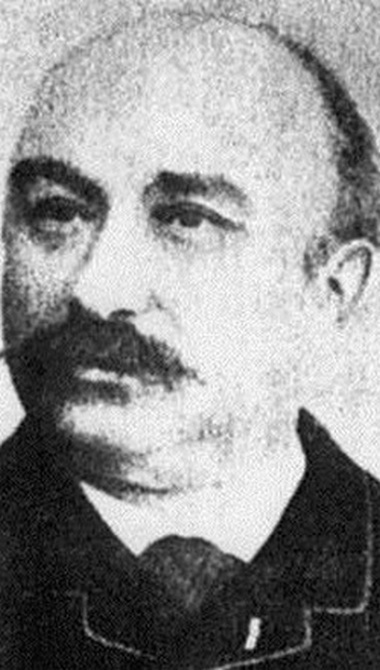
Clément Ader a French innovator and electrical and mechanical engineering born on 2 April 1841 was one of the people whose pioneering work in aviation eventually contributed to men taking to the sky. In 1878 he improved on the telephone invented by Alexander Graham Bell and in In 1903, he devised a V8 engine for the Paris-Madrid race, but although three or four were produced, none was sold.
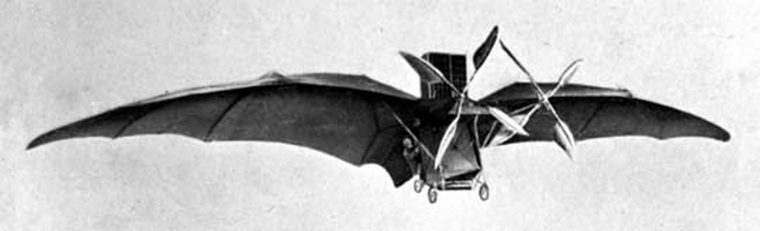
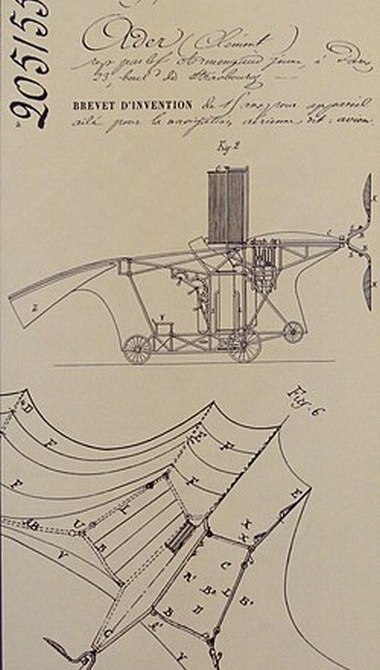
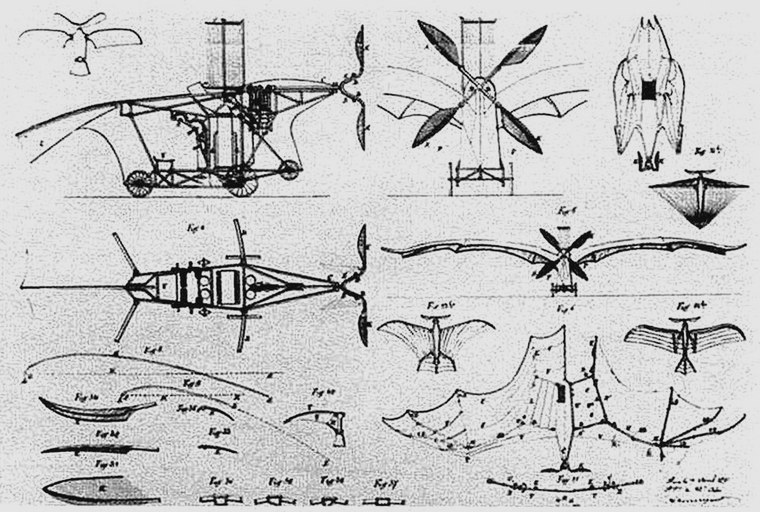
In 1886 he had set his on building a flying machine. Like most similar machines of era its wing was bat-like. Power was by a lightweight four cylinder 15 kW steam engine of his own invention. The wings had a span of 14 m (46 ft). All-up weight was 300 kg (660 lb). He is credited for having made a powered take-off and uncontrolled flight in ground effect of approximately 50 m at a height of approximately 20 centimetres.
He build two more aircraft, none of which flew. None the less he attracted the interest of the French minister of war, and with his backing and that of the French War Office, he developed and constructed the Avion III. Made of linen and wood with a 15 m (48 ft) wingspan equipped with two four-bladed tractor propellers, each powered by a steam engine of 30 hp (22 kW).
On 12 October 1897 he carried out taxi trials and on the 14th attempted flight. After a short run the machine was caught by a gust of wind, slewed off the track, and came to a stop. The French army withdrew its funding.
In 1909 he published L'Aviation Militaire, a very popular book which went through 10 editions in the five years before the First World War. Ader remained an active proponent of the development of aviation. He turned to the problem of mechanical flight and until the end of his life gave much time and money to this.