Boeing to Build the USAF's 6th-Gen Air Superiority Fighter
By Willie Bodenstein
16.08.2026
Google Banner Ad
The last two American stealth fighters, the F-22 Raptor and F-35 Lightning II, were both developed by Lockheed Martin. With Lockheed Martin having been at the forefront of advanced combat aircraft development for more than 35 years, one might therefore have expected the company to be the logical choice to develop America's sixth-generation air-superiority fighter.
That, however, was not to be. Three manufacturers, Boeing, Lockheed Martin and Northrop Grumman, were initially involved in the competition for the US Air Force's Next Generation Air Dominance (NGAD) fighter. Northrop Grumman withdrew as a prime contractor in 2023, leaving Boeing and Lockheed Martin to compete for the contract. Boeing had not developed a new USAF fighter since the F-15, although its F-15EX Eagle II represents the latest development of the long-serving Eagle family.
Behind the scenes, considerable research and development had already taken place. Under research and development contracts with DARPA, Boeing and Lockheed Martin developed two experimental X-planes to reduce the risks associated with the NGAD programme. The aircraft first flew in 2019 and 2022 respectively and went on to accumulate several hundred hours of flight testing. According to DARPA, the programme tested advanced technologies and concepts that helped lay the foundation for the F-47.
The work also involved advanced propulsion technology. The USAF has been developing the Next Generation Adaptive Propulsion programme, with General Electric Aerospace and Pratt & Whitney involved in developing technologies intended for the next-generation fighter. Many details of the final propulsion system remain classified.
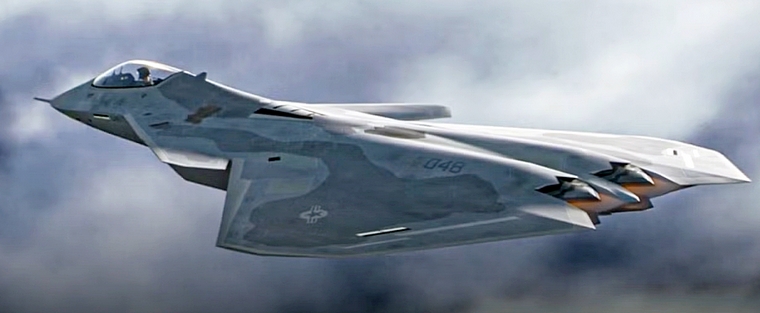
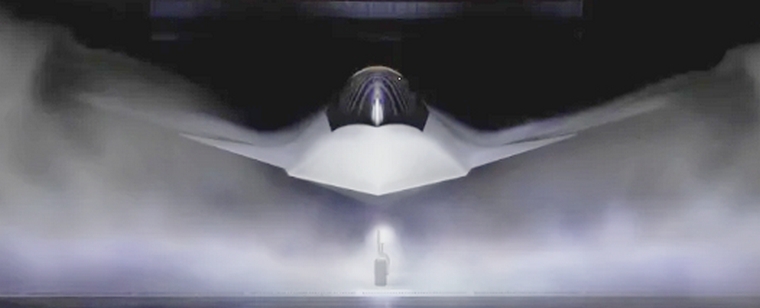
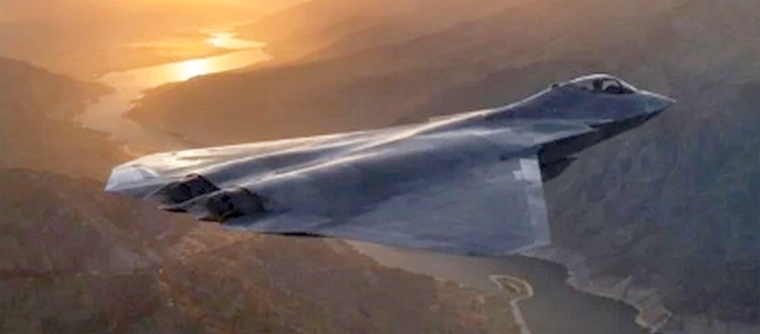
The result of years of research and development culminated on 21 March 2025 when the Department of the Air Force announced that Boeing had been awarded the Engineering and Manufacturing Development contract for the NGAD platform. The aircraft was officially designated the F-47.
Boeing's selection represented a significant return to prominence in the development of advanced USAF fighter aircraft. The company has, of course, a long and distinguished fighter heritage that includes the P-51 Mustang, F-4 Phantom II, F-15 Eagle and F/A-18 Hornet.
The USAF plans to acquire 185 or more F-47s. Although most of the aircraft's technical details remain classified, Air Force officials have stated that it will have a combat radius of more than 1,000 nautical miles (1,900 km) and a top speed exceeding Mach 2. It is intended to detect, engage and defeat enemy aircraft at extended ranges while surviving against advanced radars, electronic warfare systems, surface-to-air missiles and hostile fighters.
The F-47 will not, however, be merely an air-to-air fighter. Its mission is expected to include long-range strikes against ground targets, while its modular digital architecture should allow new sensors, software, electronic warfare systems and weapons to be integrated as they become available.
An equally important part of the NGAD concept is its ability to operate alongside Collaborative Combat Aircraft (CCA). These uncrewed aircraft are intended to act as force multipliers, extending the formation's reach and situational awareness while increasing survivability and combat mass. In this concept, the F-47 becomes the crewed centrepiece of a much larger family of interconnected manned and unmanned systems.
The F-47 is expected to be larger and heavier than the F-22 Raptor. Its long range, high speed and demanding electrical-power and thermal-management requirements point towards a twin-engine configuration, although the final propulsion arrangement has not been publicly disclosed.
The USAF is targeting 2028 for the F-47's first flight, with the aircraft expected to become operational before the end of the decade and the service planning to field it more widely during the 2030s. The F-47 is intended ultimately to replace the F-22 as America's premier air-superiority fighter.
The origin of the 47 designation is particularly interesting. It pays tribute to the legendary Republic P-47 Thunderbolt of World War II, the year 1947, when the US Air Force became an independent service, and Donald Trump, the 47th President of the United States. The P-47 earned a formidable reputation as both a high-altitude escort fighter and a low-level fighter-bomber, with more than 15,600 built during the Second World War.
There has also been speculation that the F-47 could eventually carry the name Phoenix. An Air Force patch associated with the F-47 System Management Office featured a phoenix and carried the Latin motto “We overcome, we persevere, we rejoice.” However, the Air Force has indicated that the patch was still an early design concept, so Phoenix should for now be regarded as a potential rather than an official name.
Whatever its eventual name, the F-47 represents a major shift in the way the USAF envisages air combat. Rather than being simply another fighter aircraft, it is intended to be the crewed centre of a networked family of advanced aircraft, sensors, weapons and autonomous systems.
If Boeing and the USAF succeed in meeting their ambitious schedule, the F-47 could become the first operational American sixth-generation fighter and the cornerstone of US air superiority for decades to come.