This Week in Midweek Updates
Aero Club Communique # 18 of 2026 .
Regulatory Update: Status of the Part 91/43 Amendments affecting grounded aircraft.
Going to AAD 2026? Make the most of your three days at Waterkloof.
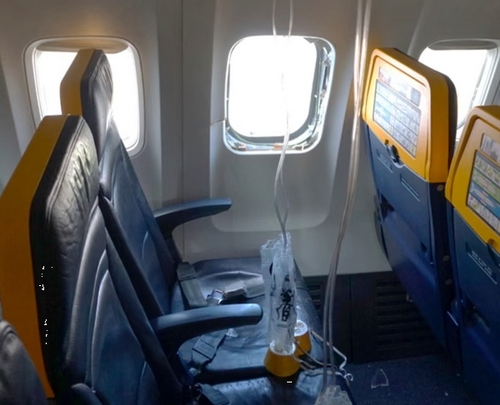
Bird strikes and broken engine parts were responsible for shattering a window on a Ryanair plane.
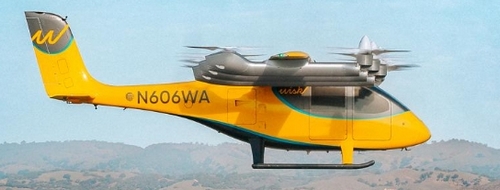
Archer to acquire Boeing's Wisk Aero, Insitu and SkyGrid subsidiaries; Boeing to invest in Archer and collaborate.
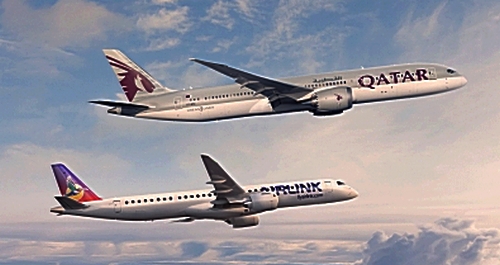
Airlink adds Doha to its network through Qatar Airways Codeshare.
MQ-25A Stingray completes second test flight.
This week in history - Two Boeing B-29 Superfortress bombers collide over Weatherford, Texas during a bomber training exercise
Worldwide Incidents and Accidents
Bonus video - AirVenture 2024 Monday Fun Fly and Arrivals
Aero Club Communique # 18 of 2026
Good day to all our Aero Club members, and to all of the general and recreational aviation community. This Communique is a brief update on the 12-Year Engine Rule.
The following can be confirmed: The Minister of Transport has signed the 36th Amendment to the S A Civil Aviation Regulations. This is the amendment that includes the amendments to Part 43 of the Regulations that allow for engines older than 12 years to be checked in terms of the Condition Monitoring Programme.
There are some aspects of the 12-year process that cannot be confirmed: Although it is standard process for a signed statute to be published as soon as possible in the Government Gazette, it cannot be said with any certainty when the 36th Amendment will be published. We do not know exactly how the process will work once aircraft have been inspected and cleared in terms of the Condition Monitoring Programme.
Given the above, I fear we are still somewhat uncertain about definite time frames with respect to the process ahead. However, the news that the 36th Amendment has been signed is a positive step forward.
As always, as soon as we hear anything, we will update you.
SKYwatch magazine
The CAA publishes a quarterly magazine with general aviation information about a wide range of topics. We at the Aero Club have been part of SKYwatch since its inception. The newsletter can be accessed on the SACAA website by accessing the link below. The latest and previous editions are also available. You can also subscribe to SKYwatch on the SACAA website. Click on Quick Find, then SKYwatch, then Subscribe www.caa.co.za/information-for-the-public/skywatch-magazine
SACAA General Aviation Accident Reduction Seminar (GAARS)
on 27 August 2026. The SACAA is hosting a safety seminar. It will be virtual from 18:00 to 20:00, so it is easy to attend. Please try to be there.
CAASA Newsletter
The latest CAASA newsletter, the July 2026 edition, has been circulated.
There is valuable information about aviation and about what is happening in aviation
in South Africa.
The CAASA newsletter can be accessed via the link below at: www.share.google/wCUOQ2KiUkjA42XcQ
The 2026 Aero Club membership renewal commenced on the 1st of December.
Please visit the Aero Club website renewal portal at to renew or to register as a new member. https://aeroclub.org.za/membership/
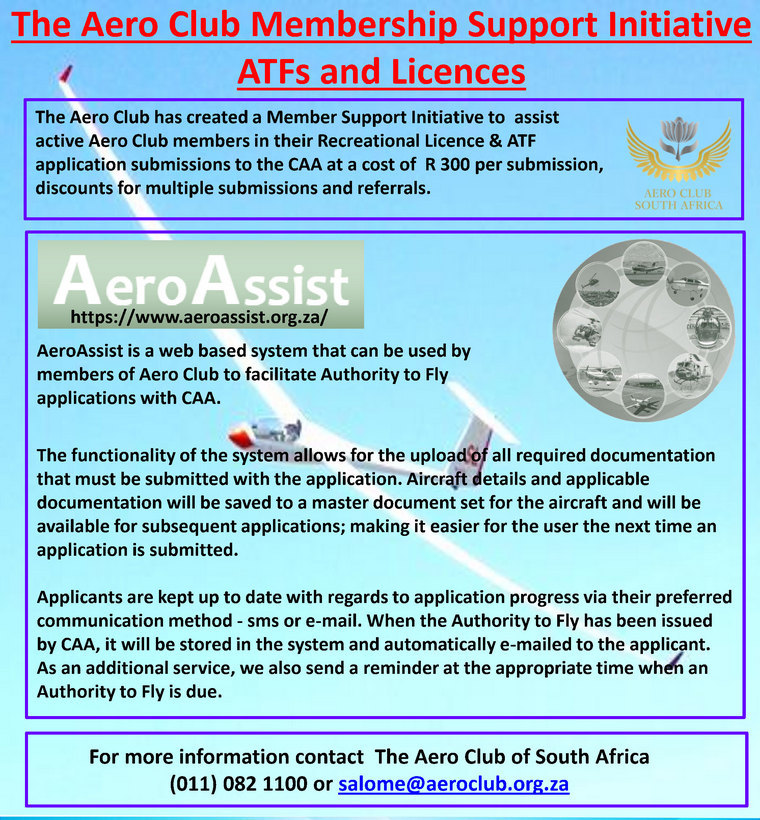
We list below the information on our Aero Assist system whereby you can easily renew your Authority to Fly. Also, please see below the contact numbers for the SACAA confidential hazard reporting system and the Aeronautical Rescue Coordination Centre.
Have a good week, I hope for good news next time.
Regards,
Walter Doubell,
Chairman, Aero club of SA,
17 August 2026 walter@aeroclub.org.za
0798306452
Regulatory Update: Status of the Part 91/43 Amendments Affecting Grounded Aircraft
An industry consortium representing commercial and general aviation stakeholders has issued an update on the status of two outstanding amendments to the Civil Aviation Regulations - regulatory changes that directly affect a number of grounded Part 91 aircraft in South Africa. Here is a factual summary of where things stand.
What the update says
On 5 August 2026, the Commercial Aviation Association of South Africa (CAASA) met with the Department of Transport (DoT) to follow up on correspondence sent to Minister Barbara Creecy in June. The meeting was hosted by the Department's Acting Director-General, Mathabatha Mokonyama, and Acting Deputy Director-General for Civil Aviation, Elizabeth Mpye.
The discussion centred on two pending amendments to the Civil Aviation Regulations, covering Parts 91 and 43, intended to enable Appendix 3:
The 33rd Amendment, submitted to the Department on 20 February 2026. The 36th Amendment, submitted on 10 June 2026.According to the update, the Department indicated that both amendments will now be prioritised for promulgation using the process previously used for similar amendments, rather than the extended State Law Adviser review that had been causing delays. The Department advised that it expects this process to conclude within two weeks, with the amendments going to the Minister for signature within this timeframe.
The industry consortium - which includes CAASA, the Aeroclub of South Africa, the Aviation Watch Action Committee, the Aviation Action Group, and a group of concerned aircraft owners, pilots, engineers and operators - says it is awaiting written confirmation of these commitments and the official minutes of the meeting.
What this means if you have an affected aircraft
If your Part 91 aircraft has been affected by this delay, the consortium's guidance is to continue preparing for the amendments to take effect, in consultation with your Approved Maintenance Organisation (AMO). Once your aircraft is cleared to return to service, plan for proper proficiency and currency training before resuming normal flying, particularly if it has been grounded for an extended period.
Aeronautical Aviation as your AMO, we're following this update closely and are ready to support the compliance steps needed once the amendments are formally promulgated. If you're unsure what this means for your specific aircraft, get in touch and we'll talk it through.
Going to AAD 2026? Make the most of your three days at Waterkloof
With just 30 days to go until AAD 2026, the question is no longer simply whether you will be at Waterkloof - but how much value you will get from being there.
The AAD 2026 Conference, taking place from 16-18 September at Air Force Base Waterkloof, gives you three days of strategic insight, industry engagement and high-level networking alongside the AAD exhibition.
Three days. Three critical themes.
DAY 1 | THE FUTURE OF WARFARE
AI in military operations • Drones and autonomous systems • Lessons from current conflicts • Cyber defence • Electronic warfare • Multi-domain operations • Smart military logistics • Maritime unmanned systems
DAY 2 | AFRICAN DEFENCE INDUSTRY SHOWCASE
Africa's defence industrial future • Funding models • Public-private partnerships • Defence R&D • Indigenous capability • Denel's future • Ammunition and production capacity • Supply chain resilience • Dual-use technology
DAY 3 | COMMERCIAL & MILITARY AVIATION
Africa's aviation growth • UAS • SAAF future combat capability • Airport infrastructure and airspace management • Skills development • AI and aviation safety • Cyber security • Aerospace supply chains • Civil-military partnerships
And that is only part of the programme.
Across the three days, delegates will hear directly from senior military representatives, defence industry executives, academics, technology specialists and aviation experts addressing the issues that will influence defence and aerospace strategy, investment and capability in the years ahead.
Your conference pass gives you more than conference access.
Your delegate registration includes:
• Three full days of conference presentations and panel discussions
• Access to the AAD exhibition across all three days
• Dedicated networking and exhibition periods throughout the programme
• Opportunities to engage with senior representatives from military, government and industry
• Daily catering
If defence, security or aerospace is your business, these are conversations worth being part of.
With only 30 days remaining, now is the time to secure your place.
We look forward to welcoming you to the AAD 2026 Conference.
Kind regards,
AAD 2026 Conference Team
Bird Strikes and Broken Engine Parts were Responsible for Shattering a Window on Ryanair Plane
A preliminary report by the National Transportation Safety Board (NTSB) found an engine fan blade broke off shortly after takeoff on the 10 July flight from Greece to Germany shattering the window and damaging the fuselage which resulted in a passenger being partly sucked out mid-flight in July.
The passenger was saved from being completely sucked out of the window by other passengers, who grabbed hold of him.
The NTSB said the flight, which was scheduled to fly from Thessaloniki in Greece to Memmingen near Munich, “experienced a No 2 (right) engine fan-blade-out (FBO) failure during climb out from the Thessaloniki international airport (SKG)”. The flight was operated by the budget airline's subsidiary Malta Air.
Investigators found the cabin depressurised and the two pilots decided to return to Thessaloniki airport, where they made an uneventful landing.
Archer to Acquire Boeing's Wisk Aero, Insitu and Skygrid Subsidiaries; Boeing to Invest in Archer and Collaborate
The Boeing Company (NYSE: BA) and Archer Aviation Inc. (NYSE: ACHR) today announced the companies have signed definitive agreements in which Archer will acquire Boeing's Wisk Aero, SkyGrid and Insitu subsidiaries. The deal will combine complementary capabilities developed over decades in autonomy, electric vertical takeoff and landing (eVTOL) aircraft, and unmanned aircraft systems (UAS) - creating a groundbreaking end-to-end physical AI platform for aerospace and defense.
Wisk, SkyGrid and Insitu have pioneered and incubated core autonomous flight technologies for the future that, in combination with Archer's air taxi, UAS and AI technologies, will bring new and innovative solutions to the market. These companies, with nearly two million combined flight hours, are expected to bring a deep autonomy foundation to Archer's ZEE artificial intelligence platform. This positions Archer to deliver an end-to-end physical AI platform across commercial aerospace, defense and air traffic management that can lead the next generation of aviation.
Archer's Founder and CEO, Adam Goldstein said, “This is a watershed moment for Archer and the future of physical AI in aerospace and defense. This is the next big step forward in becoming a diversified platform, rapidly growing our revenue base and bringing scale to our business.”
In conjunction with the transaction, Boeing and Archer are entering into a collaboration and technology-sharing arrangement through which Boeing will retain access to the Wisk core autonomous flight technology for its current and next-generation commercial and defense aircraft. The transaction allows Boeing to retain strategic upside through its stake in Archer and simultaneously focus current and future investments into Boeing's core businesses.
“This transaction is a win-win for Boeing and Archer,” said Brian Yutko, Boeing vice president, Commercial Airplanes Product Development. “It allows Wisk, SkyGrid and Insitu to accelerate capability development and time to market while ensuring Boeing capitalizes on its investments in these technologies over the past two decades through continued development in our core businesses. Having worked with the incredible teams in these companies firsthand, it's clear this transaction will create an industry leader in the advanced aviation market. We look forward to collaborating with Archer to drive continued innovation in aerospace, defense and autonomy.”
Wisk is the only company that has designed, built and flown six generations of eVTOL aircraft, amassing 1,700+ flight tests. Over the past 16 years, Wisk's world-class team has developed unmatched autonomy capabilities powered by a next-gen flight-control computer, sensor suite, and radar system designed for certification in both civil and potential defense markets.
SkyGrid has built a leading ground-based, aircraft-agnostic air traffic management solution that establishes the digital foundation for the future of automated airspace. SkyGrid enables safe integration, scalable automation and coordinated traffic management that is necessary for commercialization across the aviation ecosystem.
Insitu is a pioneer in designing, developing and manufacturing uncrewed aircraft systems (UAS) used in intelligence, surveillance and reconnaissance. Its product portfolio spans high-performance, cost-effective, resilient, VTOL-capable UAS and AI-enabled software solutions. Insitu's technologies have helped the armed forces of 35 nations make quicker, more informed decisions to bring warfighters home safely. With offices in the US, Australia, the UK, and the UAE, Insitu has manufactured and fielded more than 3,500 UAS and provides operations and support networks in every hemisphere of the globe.
Airlink adds Doha to its network through Qatar Airways Codeshare
Airlink and Qatar Airways will expand their codeshare agreement when the privately owned, South African-based carrier places its code on Qatar Airways-operated flights from 31 August 2026 and begins marketing Doha as its first long-haul destination.
The agreement will enable Airlink (4Z) to codeshare on Qatar Airways flights currently operating twice daily from Johannesburg to Doha, up to twice daily from Cape Town, and daily from Durban. Over the coming months, the codeshare partnership will be expanded to include additional destinations across Qatar Airways' global network.
“This codeshare is an important initial element in Airlink's expanded network and market-reach strategy. It strengthens the airline's market relevance and, leveraging Qatar Airways' global presence, opens
unparalleled connectivity opportunities for its customers,” said de Villiers Engelbrecht, CEO of Airlink.
The codeshare with Airlink deepens Qatar Airways' commitment to improving connectivity to, and from, South Africa. Qatar Airways' presence in Africa spans more than three decades, dating back to its inaugural flight in 1994, which laid the foundation for a strategic commitment to connect the continent with the world. As of August 2026, the airline operates 194 weekly flights to 27 cities across 20 African countries, complemented by interline and codeshare agreements, including the one with Airlink.
It reciprocates the 2022 codeshare agreement entered into between the two independently-managed airlines, which enabled Qatar Airways to place its code (QR) on Airlink's domestic flights in South Africa and across several regional routes. It also builds on Qatar Airways' 25 per cent minority shareholding in Airlink, which it acquired in 2024.
The expanded collaboration further strengthens the loyalty agreement between Airlink Skybucks and Qatar Airways Privilege Club, launched in early 2025. Under the programme, Skybucks members can earn and redeem Skybucks, while Privilege Club members can earn and redeem Avios on flights operated by either airline.
These codeshare flights significantly enhance travel options between South Africa and Qatar, providing consistent schedules, modern widebody aircraft, the fastest Wi-Fi in the sky with Starlink, premium travel experiences and seamless onward connections through Qatar Airways' global network via Hamad International Airport.
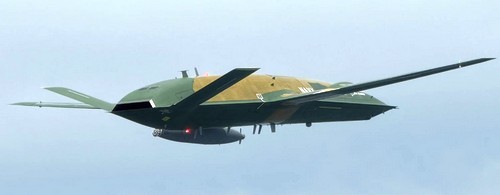
MQ-25A Stingray completes second test flight
The milestone further validates the unmanned aerial refueler's flight controls and performance capabilities.
Boeing and U.S. Navy Air Vehicle Pilots facilitated the flight by sending the aircraft commands from the Unmanned Carrier Aviation Mission Control System MD-5 Ground Control Station at MidAmerica St. Louis Airport.
The aircraft received the commands and autonomously managed the propulsion, subsystems, guidance and flight controls necessary to achieve both landing gear up and landing gear down phases of the mission plan.
Why it matters: The flight further validates the aircraft's flight controls and performance, moving it another step closer to carrier operations. The second flight built upon the success of the first flight and included landing gear cycles and a new software load to support future flight envelope expansion tests. Before the second flight, Boeing teams, in coordination with the Navy test team, uploaded a new software load to the aircraft.
The software included vehicle management system and mission computer improvements. It will also support flight envelope expansion in future test flights.
Boeing teammates will apply the U.S. Navy livery to the aircraft and then conduct additional test flights out of MidAmerica St. Louis Airport.
17 August 1945
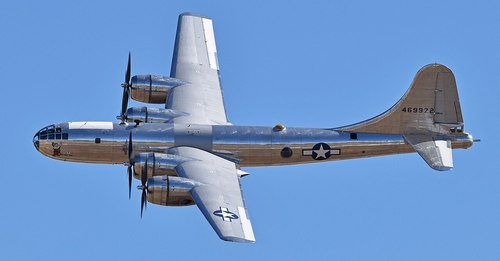
Two Boeing B-29 Superfortress bombers collide over Weatherford, Texas during a bomber training exercise. Eight crew members were killed, 2 managed to escape from the falling wreckage and parachute to safety.
The Boeings B-29A Superfortress, 42-93895, of the 234th Combat Crew Training Squadron, Clovis Army Air Field, New Mexico, and Boeing B-29 Superfortress, 44-86276, of the 231st CCTS, Alamagordo Army Air Field, New Mexico, involved.
Ethiopia, East Shewa, Oromia: An L-39C from the Ethiopian Air Force crashed in East Shewa, Oromia, Ethiopia after reportedly coming under fire from the Oromo Liberation Army (OLA). Both pilots apparently ejected safely and were rescued by Ethiopian commandos.
Germany, München-Franz Josef Strauss Airport (MUC/EDDM): Vietnam Airlines flight VN34,A Boeing 787-9,registered VN-A867, was involved in an incident at Munich Airport (MUC). Video footage and ADS-B data indicate that the aircraft made a full length takeoff from runway 26L, which has a Take-Off Run Available (TORA) of 4000 meters. The aircraft became airborne close to the threshold, kicking up a plume of dust. The flight then entered a holding pattern and conducted two low passes over runway 26R. At 13:57 UTC, the aircraft landed on runway 26R, shredding multiple tires on the left main gear. The B787 vacated onto taxiway A6 and became immobilized there. Post-accident photos show extensive damage to the underside of the rear fuselage, damage is also present on the horizontal and vertical stabilizers. Tyre skid marks leaving the runway at the end were found on 26L after the aircraft's departure.
Bulgaria, Nessebar - A self-built, unregistered and illegally operated powered delta-wing crashed in 200-300 meters into the Black Sea around Nessebar. The flight was operated by the owner of the aircraft (without a license) with one passenger on board. Only the pilot survived. Suspected wind shear has caused loss of control and the subsequent crash at sea. Authorities had been notified of the illegal flights days prior to the incident but were unable to ground the vehicle.
Australia, near Sydney-Kingsford Smith International Airport, NSW (SYD/YSSY): The aircraft was operating Jetstar Airways flight JQ987 from Perth, Western Australia, to Sydney. During the approach into Sydney and while descending below about 3,500 ft, the autopilot disengaged and the aircraft began an uncommanded climb. The flight crew re-engaged the autopilot, continued the approach and landed without further incident.