This Week in Midweek Updates
SACAA general notice relating to car 91.09.2 read together with SA CATs 43.02.8
Aero Club Communique # 20 of 2026
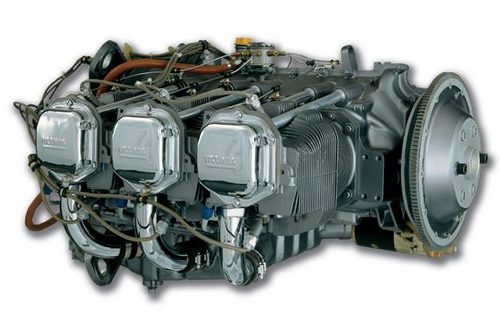
2600 hour tbo the new Lycoming standard
UAV operator training first step to full SAAF capacity in this area of operations.
Rand Airport Airshow 2026 returns after three-year break.
Pan American Airways System selects the amphibious NGAA Catalina II for its luxury "Clipper" Fleet
Do228 NXT set to make its African debut at El Alamein Airshow and AAD 2026
Heart Aerospace completes first flight of world's largest electric aircraft.
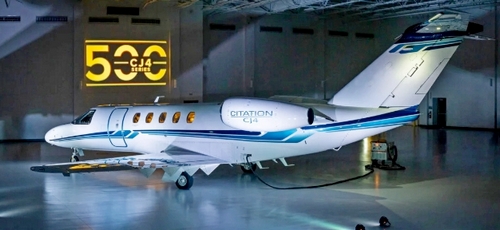
Textron Aviation celebrates 500th Cessna Citation CJ4 delivery as Gen3 era advances
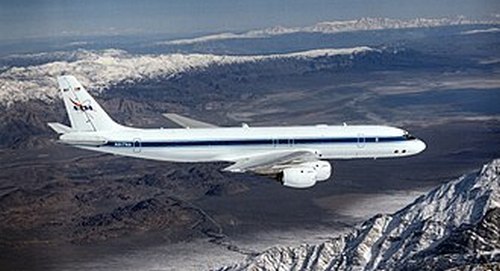
This week in history - A Douglas DC-8 became the first civilian airliner to exceed the speed of sound.
Worldwide Incidents and Accidents
Bonus video - Denel Rooivalk Battle Proven
GENERAL NOTICE RELATING TO CAR 91.09.2 READ TOGETHER WITH SA CATs 43.02.8
APPENDIX 3
1. Applicability
The South African Civil Aviation Authority (SACAA) Director of Civil Aviation (DCA) issues this General Notice to industry in terms of Part 11.01.3 of the Civil Aviation Regulations.
This Notice applies to all Aircraft Maintenance Organisations (AMOs) approved to maintain and certify Textron Lycoming or Teledyne Continental piston engines, as well as to owners and operators of aircraft fitted with these engines.
2. Purpose and Background
The purpose of this General Notice is to provide clarity on the regulatory position and implementation of the Condition Monitoring Programme (CMP) contemplated in SA-CATs 43.02.8 Appendix 3 read together with Sections B and C of SA-CATs 43.02.8.
Following consideration of the promulgation process and engagements with industry, the SACAA identified a need to clarify the application and implementation of the CMP provisions.
The CMP provides an alternative maintenance approach for certain piston aircraft engines through the use of condition-based monitoring techniques. To ensure consistent implementation and appropriate regulatory oversight, the Authority provides the following guidance to industry.
2.1 Applicability of CMPs
The Authority confirms that the CMP provisions introduced in SA-CATS 43 Appendix 3 are applicable exclusively to aircraft operated privately under Part 91. Aircraft used for commercial air transport, flight training or any other commercial operation may not operate under these CMP provisions.
2.2 Adoption of the CMPs
Where an owner of a privately operated aircraft elects to implement a CMP, they shall ensure that the aircraft piston engine CMPs must be appropriately developed, formally adopted, and signed by the owner. However, it must be furnished to SACAA as and when requested by inspectors and for reference purpose.
By formally adopting and signing the CMP, the owner accepts full responsibility for the continuing airworthiness decisions associated with operating the engine under the programme.
The Aircraft Maintenance Programme (AMP) must appropriately reflect the condition monitoring methodology to be applied in accordance with SA-CATS 43.02.8 Appendix 3 including Sections B and C as applicable.
Following the completion of the required maintenance, the AMO must complete the Annual Maintenance Review report (CA 43-02 or CA 43-03) and issue the appropriate certificate of release.
2.3 Certificate of Airworthiness Restrictions
Where applicable, the Authority will impose operating limitations on the Certificate of Airworthiness of an aircraft operating under a CMP. Such limitations may include, but are not limited to: • private operations only under Part 91; • no commercial operations permitted; etc. • The engine being operated in accordance with an approved Condition Monitoring Programme.
2.4 Initial Implementation and Inspection Requirements The normal Certificate of Airworthiness application and inspection requirements to the issue, re-issue (CA 21-08) or renewal (CA 21-03) of a Certificate of Airworthiness remain applicable.
These include applications submitted using the applicable prescribed forms, including CA 21 08 for the issue or re-issue of a Certificate of Airworthiness and CA 21-03 for renewal as applicable.
However, special implementation arrangements will apply to aircraft: • whose Certificate of Airworthiness expired on or after 26 November 2024 and before the CMP provisions came into effect; and • where it can be demonstrated that the Certificate of Airworthiness was not renewed as a direct consequence of the 12-year Time Between Overhaul (TBO) service letter matter.
Due to the volume of aircraft potentially falling within this category, the Authority will, where appropriate, conduct a desktop review instead of a physical inspection as part of the Certificate of Airworthiness process, subject to the submission of all required documentation and satisfactory demonstration of compliance with the applicable requirements.
The Authority reserves the right to require physical inspection where the documentation submitted is insufficient, where compliance cannot be satisfactorily established through the desktop review, or where an inspection is otherwise considered necessary in the interests of aviation safety.
Aircraft owners and operators are reminded that all applicable continuing airworthiness requirements remain in force. The adoption of a CMP does not exempt an aircraft, engine, owner, operator or AMO from compliance with any other requirement.
This includes compliance with the relevant Original Equipment Manufacturer's (OEM) storage and preservation instructions where an engine has been inactive for an extended period.
2.5 Application Fees
All applications for the issue, re-issue or renewal of a Certificate of Airworthiness must be accompanied by the applicable fee and proof of payment.
An exception will apply to applications that were previously submitted and subsequently rejected, cancelled or left incomplete as a direct consequence of the 12-year TBO service letter matter and the Director's General Notice dated 26 November 2024.
2.6 Pilot Proficiency
For a South African licensed pilot, returning to the cockpit after an extended period on the ground often informally called being "rusty" presents significant legal and biological safety risks. The South African Civil Aviation Authority (SACAA) enforces strict regulations under SA-CAR Part 61 to manage these risks.
The regulatory frameworks, legal limits, and practical steps required to regain currency in South Africa are detailed as follows.
2.6.1. Legal Requirements
A pilot must maintain both recency (recent flight experience) and competency (formal testing) before they can act as Pilot-in-Command (PIC).
• The 90-Day Recency Rule (when carrying passengers): a pilot may not carry passengers unless they have executed at least 3 take-offs and 3 landings within the preceding 90 days in an aircraft of the same class/type (or an approved simulator).
• The 6-Month PPL Rule: If a Private Pilot Licence (PPL) holder has not flown at least 3 hours as PIC within the last 6 months, they must undergo ground and flight training at an Approved Training Organisation (ATO) before doing a revalidation check.
Annual Currency and Medicals: To keep a licence valid, pilots must submit an annual summary of their logbook and pay a currency fee. Additionally, their SACAA Medical Certificate (Class 1 for CPL/ATPL, Class 2 for PPL) must be actively maintained. A long break usually means the medical has expired and must be completely redone.
3. Effective Date
This General Notice will take effect from the date on which CAR 91.09.2, read together with SA-CATS 43.02.8 Appendix 3, become effective and will remain in force until amended, superseded or withdrawn by the Director of Civil Aviation.
4. Conclusion
This General Notice will be effective from date of approval of SA CAR 91.09.2 together with SA CATS 43.02.8 Appendix 3 and shall remain in force until amended, superseded or withdrawn by the Director of Civil Aviation.
5. Queries
The SACAA remains available to engage with industry and provide further guidance on the implementation of this General Notice.
Any queries or requests for further guidance should be directed to:
Mr Lobang Thabantso
Senior Manager Airworthiness
Email: thabantsol@caa.co.za
Mobile: 083 461 6508.
Issued by the South African Civil Aviation Authority (SACAA)
signed electronically
Ms. POPPY KHOZA
2600 HOUR TBO
THE NEW LYCOMING STANDARD
For 97 years, Lycoming has built engines that pilots trust with their lives. Today, that trust goes even further. With Lycoming's new Time Between Overhaul extension, even more engine models now reach 2600 hours between overhauls, helping owners spend more time in the air and less time counting down to their next overhaul.
Frequently Asked Questions
Does My Engine Qualify?
The 2600 hour TBO applies to a large majority of Lycoming factory new and rebuilt engines across fixed wing an rotorcraft. Exclusions apply to turbo, high speed, and higher horsepower engine models. Contact an authorized Lycoming distributor to confirm eligibility for your specific engine model.
When will my engine be eligible for the extension?
Eligibility is determined by your engine model and how it was built or last overhauled, not by a future date. If your engine is a factory new or factory rebuilt Lycoming, the new 2600 hour TBO applies to your current overhaul cycle. Contact an authorized Lycoming distributor to find out where your engine stands.
Does the calendar TBO change as well?
No. All Lycoming engines are still required to be overhauled within twelve calendar years of entering service or last overhaul, regardless of operating hours. The 2600 hour extension applies to operating hours only. Both limits apply and whichever is reached first determines when your overhaul is due.
My engine was overhauled by a third party maintenance shop. Do i qualify for the TBO extension?
Engines that have been overhauled, whether at the factory or by a third-party maintenance shop, are not eligible for the 2600 hour TBO. Engines overhauled using genuine Lycoming parts and approved procedures may be eligible for a maximum 2400 hour TBO. Contact your authorized Lycoming distributor to confirm your engine's eligibility.
UAV operator training first step to full SAAF capacity in this area of operations
By www.defenceweb.co.za
There is no squadron in the SA Air Force (SAAF) tasked specifically with operating unmanned aerial vehicles (UAVs). What it does have are counter-drone defence systems housed in an Air Force Mobile Deployment Wing (AF MDW) squadron.
140 Squadron is, along with other MDW units, housed on the eastern side on the Wing adjacent to the N1 in Centurion. Its responsibilities are listed by Dean Wingrin's Unofficial SAAF Website as providing operationally deployable Umlindi AR3D long-range radars, mobile control and reporting posts (CRP) along with mobile air traffic control (ATC) towers for SAAF force employment and preparation. The squadron, according to the SA National Defence Force (SANDF) Directorate Corporate Communication (DCC), is equipped with counter-drone defence systems to form part of the SAAF's layered defence capability, ensuring protection against unauthorised or hostile drone activity.
The advent and ever-increasing use of UAVs, also known as drones or remotely piloted aircraft systems (RPAS), in military aviation has seen Lieutenant General Carl Moatshe's service add drone operator training to its offerings aimed at improving SAAF efficiency and effectiveness.
The first outcome of the new training menu addition became reality late in July when four SAAF personnel were presented with certificates confirming successful drone operator training. The presentation was done by Brigadier General Jan Augustin, Director Command and Control Systems, at the SAAF Ditholo Training Centre, north of Pretoria and part of the wider Wallmannsthal military area.
Course presenter, Lieutenant Colonel Terence Turnbull, told Ad Astra editor Major Tebogo August the course was vital as it revolved around battlefield survival, precise targeting and seamless communication. Key components included tactical integration, resilience under pressure and field maintenance.
"I've been fascinated by UAVs since they first entered the market and I have invested my time and energy in ensuring that the skills I transferred to the students met the required standards and covered the reasons why drones are becoming the direction in which modern warfare is moving.
"Today, military forces use drones in modern warfare to protect human lives, gather real-time intelligence and strike targets with high-cost efficiency. I am proud of the students. They gave this training their all and made the classes interesting, even for me as their trainer.
"This [the certificate presentation] was a particularly proud and memorable culmination of the counter-UAV visual line of sight competency course - a Class 2 UAV rating under the custodianship of the Directorate Command and Control Systems," Turnbull stated.
The five-day course saw those selected demonstrate practical competency and operational skills during a counter-UAV exercise, putting into practice knowledge, procedures and skills encountered and developed during training. All five are non-commissioned officers and are listed as flight sergeant MR Nxasana and sergeants MS Molepo, TC Mokgohloa, NW Moss and T Msimang.
Augustin is reported as telling the certification event: "We had to start somewhere with establishing a capability. I shared a scenario with the students and they passed it with flying colours. The purpose of the training is to prepare ourselves. The threat out there is real and growing closer every day, so combat readiness and safety cannot be emphasised enough and neither can our reaction time and operational range".
"After all the future of air power is not just in the cockpit; it is behind the controller. A good drone operator sees the battlefield before the battlefield sees them."
SAAF Directorate Command and Control Systems staffer, Lieutenant Colonel Linde Munzhelele, gave the SAAF publication an insight into the airborne service's approach to UAVs, saying a crucial advantage was reducing human risk.
"Drones perform dangerous combat, scouting and supply missions without placing pilots or frontline soldiers directly in harm's way," he is reported as telling the SAAF communicator. "They provide constant surveillance, with unmanned systems capable of remaining above a target area for many hours while delivering continuous tracking and high-definition video feeds. They are cost-effective, as drones are significantly cheaper to build, maintain and operate than traditional crewed fighter aircraft or military helicopters.
"In the age of artificial intelligence, the precision and flexibility of modern UAVs enables them to carry guided weapons and execute dynamic targeting with minimal collateral damage."
With a first hurdle successfully overcome, Munzhelele told the newly minted UAV operators: "There is still much work ahead of us, beginning with the development of an effective curriculum that can be implemented across the SA National Defence Force [SANDF] to establish a truly functional and credible drone operating capability. I will always maintain that there can be no effective counter-UAV capability without a strong UAV capability."
The UAVs used in the training course appear to be DJI minis and the counter-UAV systems Droneshield DroneSentry devices. The latter incorporates multiple sensors for 360-degree coverage coupled with a synchronised jamming system that automatically jams a UAV's data link. Droneshield is an Australian company specialising in electronic detection and counter-drone technologies and provides solutions for military and security applications worldwide.
In 1986 the then SAAF, at that time under the command of Lieutenant General Denis Earp, reinstated Potchefstroom-based 10 Squadron as a specialist UAV unit to provide artillery reconnaissance and fire control for then SA Artillery Corps, now the SA Army Artillery Formation. It was deployed operationally in Angola between 1987 and 1991 and disbanded on 31 March 1991 when its air assets were moved to what was Kentron, at that time an Armscor division and now part of Denel Dynamics. Apart from the Seeker UAV range, the Denel Dynamics product range includes tactical missiles, precision guided weapons and space solutions.
The South African Army mainly uses small multi-rotor drones like the DJI Mavic Pro, DJI Matrice for border security as well as external deployments to places like the Democratic Republic of Congo (DRC). It is acquiring multi-rotor and fixed wing aircraft, mainly for border security - in 2023, National Treasury allocated funding for border security technology including R16 million for 16 quadcopter unmanned aerial vehicles and R24 million for long-range UAVs.
Defence Intelligence (DI) has acquired Seeker 400 UAVs from Denel but these are not believed to be used for border security or on deployments. They are intended more for national security efforts rather than tactical intelligence. Defence Intelligence took delivery of the first Seeker 400 in late 2015, although operational testing and evaluation was still underway in 2019 ahead of the type being granted full military type certification.
Rand Airport Airshow 2026 returns after three-year break
The Rand Airport Airshow 2026 returns to Rand Airport, Germiston, on Sunday, 30 August 2026, marking the first Rand Airport Airshow since 2023. After a three-year break, the much-anticipated airshow returns with a thrilling day of aviation, entertainment and family fun. Gates open at 08:00, with the flying display and airshow programme running from 10:00 to 15:30.
Visitors can look forward to a spectacular programme of aerial displays featuring some of South Africa's most exciting aircraft and display pilots. Aircraft displays will include the Rand Airport-based Puma Flying Lions, Harvards, Master Power Extra 330s, the classic Beech 18 and many more. The flying programme will showcase a mix of aerobatics, historic aircraft and high-energy aerial performances.
Tickets for the Rand Airport Airshow 2026 are available online through Quicket and will also be available for purchase at the gate on the day of the airshow. A variety of food and drinks will be available for purchase throughout the day while a dedicated beer tent will provide visitors with a relaxed area to enjoy refreshments and soak up the atmosphere.
The return of the event is expected to attract aviation enthusiasts and families from across Gauteng and beyond, providing visitors with the opportunity to experience the excitement of aviation up close while celebrating South Africa's rich flying heritage.
Static aircraft displays will be on show throughout the event with flight schools also present to showcase their training programmes and opportunities for those interested in pursuing a career in aviation.
"We're proud to be the headline sponsor of this year's Rand Airport Airshow, an event that brings people together to celebrate the excitement and possibility of aviation," says Paul Kruger, General Manager of Essential Fuels. "For us, supporting the airshow is about more than just aircraft and displays. It's about opening young eyes to a world of opportunity, sparking curiosity about the industry and showing the many career paths aviation can offer. We're honoured to help showcase the sector and inspire the next generation of pilots, engineers and innovators," concludes Paul Kruger.
After a three-year absence, the skies over Germiston are set to come alive once again. Don't miss this high-energy day of aerobatics, historic aircraft and pure aviation excitement. Tickets are now on sale via Quicket: Adults R160, Pensioners R120, Kids under 12 R100, and under 2s free. Get your tickets now and be part of the return of the Rand Airport Airshow on Sunday, 30 August 2026.After a three-year absence, the skies over Germiston will once again come alive as the Rand Airport Airshow returns on Sunday, 30 August 2026.
Pan American Airways System Selects The Amphibious NGAA Catalina II For Its Luxury "Clipper" Fleet
Pan American Airways System (PAAS) has submitted a funded Letter Of Intent (LOI) to Catalina Aircraft Trust, LLC (Catalina Aircraft) for the purchase of up to forty-six (46) new production amphibious flying boats. Equipped with spacious Art Déco passenger cabins, each Next Generation Amphibious Aircraft (NGAA) Catalina II will be powered by modern turboprop engines and certified as commercial airliners to the FAA's rigorous Transport Category standards.
The PAAS Catalina II amphibious "Clippers" will be the first flying boats to operate under Pan Am's classic 'Winged Globe' logo since April 1946 and the cabin will be uniquely configured to the specific needs of PAAS' high-end passengers. To be deployed initially in Africa, the first multi-sector trunk route will operate the length of the continent, between Alexandria (Egypt) and Cape Town (South Africa). Thereafter, further such routes across the Mediterranean will follow, before prudent expansion into routes around the Caribbean, across South Asia and down the Eastern Seaboard of South America to Rio de Janeiro and Buenos Aires.
Passengers aboard the PAAS Catalina II Clippers will be pampered and cosseted at all times, and will enjoy a level of comfort and service not commonly available even in first class aboard today's modern airliners. With only ten deep-recline "Clipper Class" executive seats in a VVIP suite-style configuration on each aircraft, the Catalina II Clippers will afford PAAS passengers not only the room to stretch out but also the room to move about. The cabins will be configured to meet PAAS' own requirements and will boast a restroom, an observation deck, a communal lounge and a galley, and will provide for inflight service by two cabin crewmembers trained to provide the impeccable service that passengers enjoyed aboard Pan Am's original Clippers during the 1930s and 40s.
Both PAAS and Catalina Aircraft are committed to company-wide sustainable operations and the highest of environmental standards. A range of green initiatives will be incorporated into all aspects of both companies' operations, including the use of Sustainable Aviation Fuel (SAF) compatible with the turbo prop engines of the NGAA Catalina II.
Do228 NXT Set to Make its African Debut at El Alamein Airshow and AAD 2026 By www.defenceweb.co.za
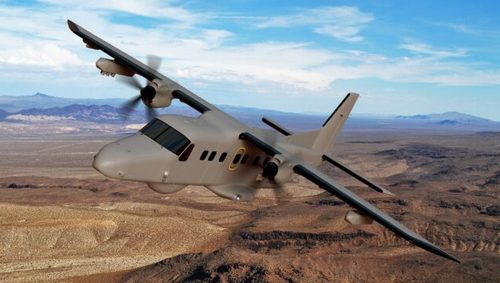
General Atomics AeroTec Systems (GA-ATS), the German aircraft manufacturer, has confirmed it will be bringing its newly launched Do228 NXT twin-turboprop aircraft to Africa just months after its unveiling in Germany. The company is set to exhibit the aircraft at Egypt's El Alamein International Airshow, 8-10 September 2026, and at South Africa's Africa Aerospace and Defence (AAD) 2026 Expo, 16-20 September.
The Do228 NXT's static display at the El Alamein International Airshow will mark the first time it has appeared on display outside of Europe and only the third time at a trade show, having previously been displayed at ILA Berlin 2026 and Farnborough International Airshow. GA-ATS said it had "already generated significant interest among customers, delegations and industry professionals" at those events.
A little under a week later, the aircraft is set to make its South African debut at the biennial Africa Aerospace and Defence Expo in Hangar 1 at Booth 1CW6 at Waterkloof Air Force Base, just south of Pretoria.
By bringing the Do228 NXT to two of the continent's leading trade shows, the company said it highlights the importance of Africa and the Middle East as large and growing markets for the new turboprop aircraft.
Built originally by Dornier between 1981 and 1998, licensed production has continued in India by Hindustan Aeronautics Limited. While GA-ATS acquired the rights to the aircraft from RUAG in 2021, it later announced its intention to start production of a modernised version of the aircraft, formally launching the Do228 NXT at Oberpfaffenhofen, Germany, in June 2026.
In bringing the Do228 NXT to Africa so soon after its launch, GA-ATS hopes to capitalise on the aircraft's previous success across the continent. Having seen service in approximately 20 countries across more than 30 operators, the Do228 has been a mainstay of African civil and military aviation for decades.
This success can, in large part, be attributed to the aircraft's relatively low operating costs, strong reputation for reliability, and its short take-off and landing (STOL) capabilities, vital characteristics for an aircraft often used to connect remote areas with only unpaved airfields.
"To this day, the Do228 serves as a vital platform for connecting remote areas, landing at unpaved airfields, STOL operations and conducting demanding operations under harsh conditions. With the new Do228 NXT, this success story continues," GA-ATS said in a press release.
The Do228 NXT is designed to perform a wide range of roles. These include passenger and cargo transport missions, search and rescue missions, medical evacuations, reconnaissance flights, and border surveillance operations. "This offers operators the key advantage of being able to carry out multiple missions with a single aircraft," the company noted.
Powered by twin Honeywell TPE331-10 turboprop engines producing 579 kW each, the Do228 NXT is capable of a maximum cruise speed of approximately 444 km/h. The aircraft has a 16.97 m wingspan, is capable of carrying up to 19 passengers or a maximum useful load of 2 700 kg, and has a range of up to 2 450 km, payload depending.
Notably, GA-ATS has already secured the Do228 NXT's first sale, signing a contract with an undisclosed non-governmental humanitarian organisation earlier this year, with delivery slated for some time in early 2027.
"The two appearances at international trade shows in Africa mark the beginning of a broader strategic focus on the continent, where the new Do228 NXT aircraft has significant market opportunities and enormous potential for deployment," the company said.
Heart Aerospace Completes First Flight of World's Largest Electric Aircraft
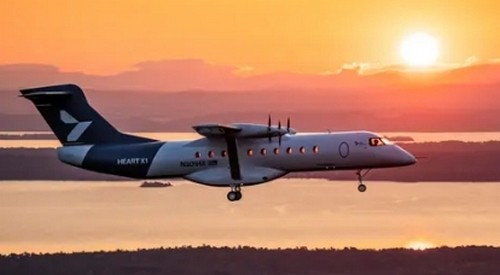
Heart Aerospace recently announced the successful first flight of the company's X1 demonstrator aircraft. Spanning 106 feet, measuring 76 feet nose to tail, and weighing more than 25,000 pounds at takeoff, X1 is the largest battery-electric aircraft ever flown. The piloted mission lasted 27 minutes, during which X1 reached an altitude of 1,100 feet AGL and its all-electric propulsion system delivered more than one megawatt of power.
The flight was conducted under an FAA Special Airworthiness Certificate in the Experimental Category (SAC-EC), with a test profile that included taxi, takeoff, climb, maneuvering, and landing. The mission was designed to demonstrate all-electric flight at a scale relevant to commercial airline operations.
Powered entirely by batteries, X1 used approximately $5 worth of electricity during its first flight. The flight came amid a sustained surge in global jet fuel prices, which averaged $3.50 per gallon for the week ending August 7, up 63% year over year, highlighting the potential for electric propulsion to deliver structurally lower aircraft operating costs while decoupling airlines from the volatility of global oil markets.
"With the first flight of X1, Heart Aerospace has demonstrated electric flight at the scale of a commercial airliner," said Anders Forslund, Founder and CEO of Heart Aerospace. "Electric commercial aircraft have the potential to fundamentally reshape airline economics and, ultimately, lower the cost of air travel for passengers. This is at the heart of our vision for abundant air travel, with electrification enabling more affordable, frequent, and cleaner air service to and from airports closer to home."
X1 is a full-scale demonstrator representative of Heart's ES-30 production aircraft, designed to validate key technologies, aerodynamics and flight performance, and Heart's organizational capabilities. The ES-30 is a conventional fixed-wing, 30-seat hybrid-electric regional airliner being developed for FAA Part 25 certification. It has attracted customer commitments from major air carriers including United Airlines, Air Canada, and JSX.
"The first flight of X1 is a major technical achievement for Heart Aerospace, a company United has been proud to support," said Michael Leskinen, Chief Financial Officer of United Airlines. "Electric commercial aircraft have real potential to deliver a better travel experience for passengers while strengthening our business, and we look forward to Heart's continued development of the ES-30 and its potential future role in United's network."
With entry into service targeted for 2031, Heart expects the ES-30 to reduce aircraft operating costs by more than 40% compared with legacy regional aircraft. This reduction is driven by lower energy costs, reduced maintenance requirements from simplified electric propulsion and electrified flight systems, and greater aircraft uptime and reliability enabled by an integrated electronics and software architecture.
Textron Aviation Celebrates 500th Cessna Citation CJ4 delivery as Gen3 era advances
Textron Aviation Inc., a Textron Inc. (NYSE:TXT) company, today announced the 500th delivery of a Cessna Citation CJ4 series business jet, underscoring more than a decade of customer confidence in the company's largest light jet and setting the stage for the next chapter of the aircraft with the upcoming Cessna Citation CJ4 Gen3. The milestone aircraft, a Citation CJ4 Gen2, was delivered to a customer based in the Philippines, reflecting the platform's global reach.
The delivery milestone reflects the CJ4's position as a trusted light jet for customers who need a balance of performance, efficiency and mission flexibility. The aircraft is valued by owner-operators and fleet customers around the world for its versatility across a wide range of missions, from business travel to special mission operations.
"The Citation CJ4 has set the standard in its class for more than a decade, and with the Citation CJ4 Gen2 and the upcoming Citation CJ4 Gen3, we're continuing to invest in the innovation, technology and capabilities our customers value most," said Lannie O'Bannion, senior vice president, Sales & Marketing. "As we look to the future, our focus remains on delivering the performance, efficiency and confidence operators need to succeed in an evolving aviation landscape. Reaching 500 deliveries is a meaningful milestone that reflects the strength of the CJ4 platform and the trust customers around the world place in Textron Aviation."
The Cessna Citation CJ4 Gen3 is expected to achieve Federal Aviation Administration certification this year. The aircraft's flight test program has completed more than 880 flight test hours across two test articles thus far.
21 August 1961
A Douglas DC-8 became the first civilian airliner to exceed the speed of sound
On this day in aviation history, 65 years ago a Douglas DC-8 became the first civilian airliner to exceed the speed of sound. Douglas test pilot William Magruder was at the controls of DC-8-43 N9604Z, accompanied by copilot Paul Patten, flight engineer Joseph Tomich, and flight test engineer Richard H. Edwards. During a test flight over Edwards Air Force Base, California, the four-engine jet reached Mach 1.01 in a controlled dive.
The flight was intended to demonstrate the DC-8's capabilities beyond its normal operating envelope. Magruder climbed the aircraft to approximately 52,000 feet before beginning a half-G pushover. During the descent, the DC-8 encountered buffeting around Mach .96 before accelerating through the sound barrier at approximately 45,000 feet. The aircraft remained at Mach 1.01 for around 16 seconds before beginning its recovery.
South Africa, South African Air Force Museum Tswane: An Atlas AM.3CM Bosbok suffered substantial damage when looping on lading.
Kenya, Mount Ololokwe: The Kenyan Civil Aviation Authority confirmed that a helicopter crashed in an inaccessible area at the feet of mount Ololokwe. Seven people were onboard the helicopter. All onboard were killed.
USA, near Cape Newenham Airport, AK (EHM/PAEH): A Security Aviation Cessna 441 Conquest II, N128EZ, crashed near Cape Newenham Airport (EHM), Alaska. There are believed to be no survivors among the eight occupants. The airport is located at the Cape Newenham Long Range Radar Site. The flight had been chartered by the US Army Corps of Engineers. The NTSB stated the aircraft crashed during the second missed approach to runway 15. ADS-B data indicates that the flight departed Anchorage (ANC) at 09:12 local time (17:12 UTC) with destination EMH. At 10:44 (18:44 UTC) the flight entered a holding to the east of EMH. Visibility at the airport at the time was poor: 400 m with a ceiling at 200 feet. About 11:05 (19:05 UTC) the flight commenced the approach to EMH. The local METAR showed a 3 mile visibility and broken clouds at 300 ft. Flightaware ADS-B data stops at 11:11, north of EMH, and resumes at 11:36 to the nort-east of EMH. The final datapoint was recorded at 11:45 close to the airport. Weather recorded at 11:49 show a 400 m vibility in fog with a 300 ft overcast.
USA, Carlisle Airport (N94), Carlisle, PA: A Cessna 150H (N23330) collided with a Pennsylvania State Police Bell 407GX (N873ST) at Carlisle Airport, PA (N94). The helicopter was conducting a routine training exercise and had landed on runway 28. It had hover taxied off the right side of the runway and was still hovering when the Cessna was attempting to land. Video footage show the Cessna veering to the right, impacting and shearing off the main rotor assembly of the helicopter. The pilot of the Cessna suffered fatal injuries. The two crew on board the helicopter were injured.