One of the world's last operational Douglas DC-8s, a 56-year-old cargo aircraft, may have reached the end of the runway - quite literally.
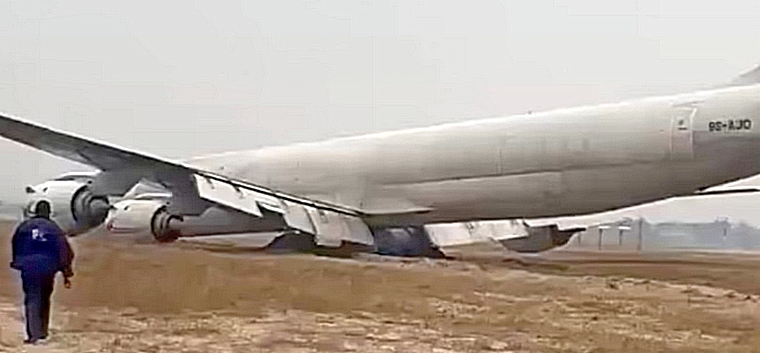
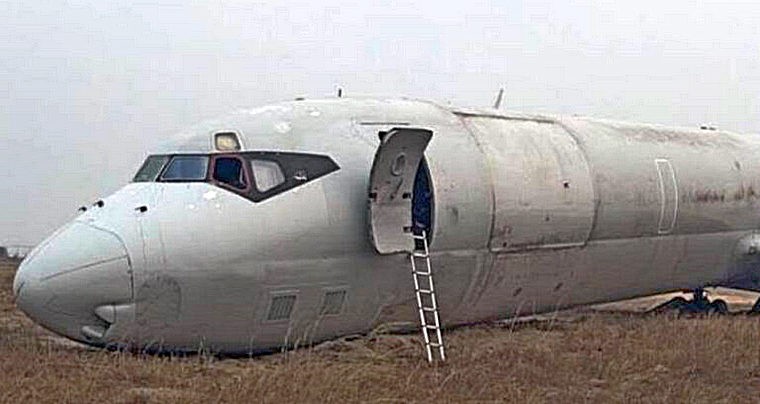
The aircraft, DC-8-73CF 9S-AJO, operated by Trans Air Cargo Service, ran off Runway 24 while landing at N'Djili International Airport in Kinshasa on 8 September 2026.
There were four crew members on board. The aircraft reportedly veered to the left after leaving the paved surface and came to rest on soft ground, with the nose close to the ground after the nose landing gear collapsed. Fortunately, there were no reported fatalities.
But for aviation enthusiasts, the incident represents something more than another runway excursion. It may mark the end of the flying career of a genuine aviation dinosaur born in the jet age
9S-AJO was around 56 years old and was the only active DC-8 in Trans Air Cargo Service's fleet. More importantly, she was one of a tiny number of DC-8s still earning her keep commercially more than half a century after the type first entered airline service.
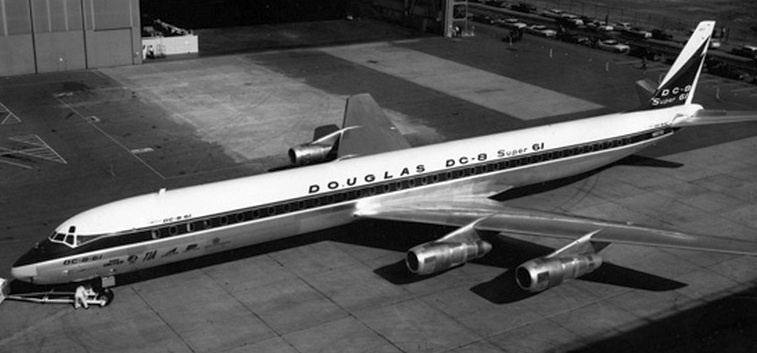
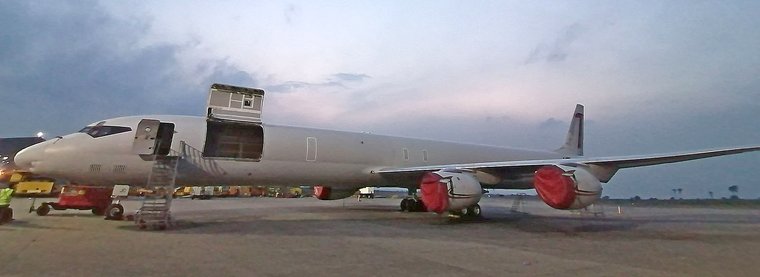
And she was not even born as a DC-8-73. She started life as a DC-8-63, one of Douglas's Super 60 series. She was later converted to DC-8-73CF standard, receiving four CFM56 turbofan engines in place of her original power plants.
The conversion transformed the aircraft. The CFM56s offered considerably better fuel economy and lower noise, helping give these ageing airframes a remarkable second - and in some cases third - lease on life.
That was the secret of the DC-8. It was built tough.
Douglas, and later McDonnell Douglas, eventually produced 556 DC-8s, with production ending in 1972. By then, an entirely new generation of wide-body aircraft was arriving. The Boeing 747, McDonnell Douglas DC-10 and Lockheed L-1011 were changing the face of commercial aviation.
The DC-8 gradually disappeared from passenger fleets. But she wasn't finished. While most DC-8s were retired, some found a new life as freighters. An aircraft that had carried passengers in the 1960s could, after conversion and re-engining, still be hauling freight decades later.
But few commercial jetliners can claim a working life spanning more than five decades. That is what makes 9S-AJO special.
She was not simply an old freighter. She was a surviving example of the generation of aircraft that ushered the world into the Jet Age, a dinosaur that refused to die. 9S-AJO was one of them.
Whether she can be repaired after the Kinshasa accident remains to be seen. At her age, the economics of a major structural repair are likely to be as important as the technical feasibility.
If she never flies again, however, her story will still be an extraordinary one. She began her career during the dawn of the commercial Jet Age and, more than half a century later, was still carrying freight. Not many aircraft can claim that.
So, if 9S-AJO has indeed flown her last sector, perhaps it is appropriate to pause and salute an aviation dinosaur. She was old. She was noisy by modern standards. She was thirsty compared with today's jetliners. But she was also a survivor.
And for more than five decades, she kept doing what Douglas designed her to do. Fly.