This Week in Midweek Updates
Paramount reveals V-Raven VTOL UAV.
ExecuJet MRO Services highlights SAAF support at AAD 2026.
Airbus celebrates 50 years of building Africa's aerospace capabilities.
Cessna SkyCourier UX: What to know about the autonomous logistics concept.
ITPS Canada expands its engagement across Africa.
Landlocked Burkina Faso has introduced a new air defence system into service - the Sky Dragon manufactured by China's Norinco.
X-VOLT Takes to the Skies Again in Rochefort.
International air travel is about to get way better for everyone.
This week in history - The first prototype Avro Vulcan strategic bomber crash.
Worldwide Incidents and Accidents
Bonus video - EAA Chapter 322 Silver Creek Pancake Fly In.
Paramount reveals V-Raven VTOL UAV
By www.defenceweb.co.za
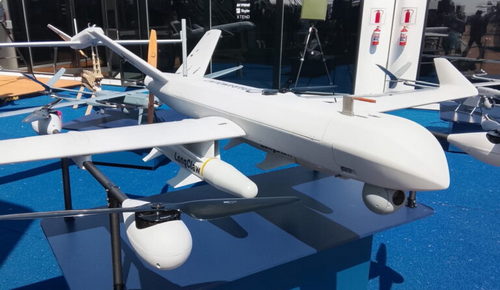
Paramount Aerospace Systems has revealed a new fixed wing vertical takeoff and landing (VTOL) unmanned aerial vehicle (UAV), which evolved from its N-Raven programme. Designed for intelligence, surveillance and reconnaissance (ISR) and light attack, it can be armed with weapons such as the new LongClaw glide bomb.
V-Raven represents a significant evolution in both the aircraft and the operational concept behind the original N-Raven programme, Paramount said, noting it has moved from the original catapult-launched concept towards a returnable VTOL aircraft family capable of operating from dispersed locations without a runway, catapult or fixed launch infrastructure.
The development comes as African armed forces face increasingly complex security challenges across vast and often difficult-to-access areas. From the Sahel to northern Mozambique, forces require persistent surveillance to monitor remote territories, track movements and improve situational awareness in environments where conventional aviation infrastructure may be limited or unavailable.
“The V-Raven has been developed for the realities of the modern African battlefield,” said Paramount's Sello Ntshiele. “Vast operating areas, remote terrain, dispersed threats and the increasing use of drones mean that forces need to be able to see further and stay on station longer. V-Raven brings those capabilities together in a highly flexible, reusable unmanned system.”
V-Raven is designed to address these requirements through a returnable, reusable ISR and light attack capability. Unlike expendable loitering munitions, the aircraft takes off vertically, conducts its assigned mission and returns to land for subsequent use. This enables the platform to provide persistent surveillance while offering a different operational model and through-life economics from single-use unmanned systems, Paramount explained.
The ISR configuration is equipped with an electro-optical sensor system providing day-and-night surveillance capability, allowing operators to assess points and areas of interest, monitor movements and identify potential targets. The platform supports automatic target tracking and can accommodate multiple electro-optical and infrared sensor options according to mission requirements.
The V-Raven family is being developed to support more than one mission configuration. The ISR configuration is intended for persistent surveillance and reconnaissance, while a separate ISR and light-attack configuration is planned to integrate precision-guided glide munitions for selected targets.
The light-attack configuration displayed at AAD 2026 - where the aircraft is fitted with Rheinmetall's new LongClaw glide bomb - illustrates the planned integration of precision-guided weapons within the V-Raven architecture. Paramount said it will mature this capability through a phased programme of systems integration, ground testing and flight trials, allowing the platform and its mission systems to be progressively developed and validated.
“What we are unveiling at AAD is the next stage of the V-Raven journey,” said Ntshiele. “It is a common aircraft architecture that can evolve as operational requirements develop. The immediate focus is a highly capable ISR platform, while the family architecture provides a pathway towards additional mission configurations, including light attack.”
The petrol-powered V-Raven offers up to eight hours of endurance, a range of up to 1 200 km and a cruise speed of approximately 140 km/h. Its communications range with the ground station is up to 150 km. An electric configuration provides up to two hours of endurance and a range of up to 250 km.
Both configurations use VTOL operation, allowing V-Raven to be deployed rapidly from dispersed or difficult locations without the need for conventional launch and recovery infrastructure. The aircraft has a wingspan of 3.6 metres, a fuselage length of 2.1 metres and a maximum take-off weight of 65 kg.
V-Raven forms part of Paramount's expanding portfolio of aerospace and unmanned systems, reflecting the company's focus on developing mission-ready capabilities for Africa's evolving security environment and international markets, the company said.
Development of the original N-Raven loitering munition began in 2021. The N-Raven - also on display at Africa Aerospace and Defence 2026 - weighs 55 kg and has a speed of 180 km/h and loitering endurance of two hours for the electric version, and 4.5 hours for the petrol version, and range of up to 100 km. It has a wingspan of 3.6 metres and carries a 13.5 kg payload.
ExecuJet MRO Services highlights SAAF Support at AAD 2026
By www.defenceweb.co.za
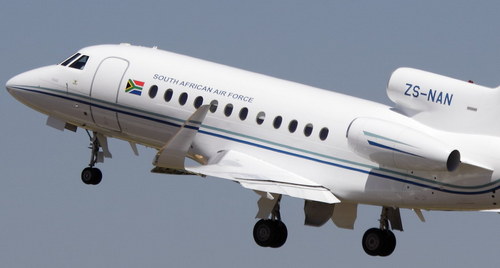
Dassault Aviation subsidiary ExecuJet MRO Services South Africa recently had its Falcon executive jet maintenance contract with the South African Air Force (SAAF) extended, and is showcasing its commitment to the SAAF and the wider industry at the Africa Aerospace and Defence (AAD) 2026 exhibition.
“As AAD celebrates 25 years of bringing together the aerospace and defence industries in the region, we are proud to support this important event and demonstrate our ongoing commitment to the industry including the South African Air Force (SAAF),” said Vince Goncalves, Regional Vice President Africa at ExecuJet MRO Services.
The SAAF recently extended the company's contract to provide airframe heavy maintenance and component support for its fleet of two Falcon 50 and one Falcon 900 aircraft. ExecuJet also recently supported the SAAF in completing a major C-check on one of its Falcon 50 aircraft, including extensive refurbishment of the landing gear and interior.
ExecuJet MRO Services, which has its global headquarters at South Africa's Lanseria International Airport outside Johannesburg, provides aircraft maintenance services and support to both civil and military operators, including the SAAF.
“ExecuJet started in 1991 with the SAAF as its founding customer. Our longstanding relationship reflects our success in delivering high-quality maintenance, engineering and technical services for critical aviation operations,” said Goncalves, adding that defence customers, including the SAAF, account for a significant portion of its overall business.
ExecuJet also provides Honeywell TPE331 engine overhauls and repairs for the SAAF's fleet of CASA C-212 military transports as well as major periodic inspections (MPI) and repairs on the Honeywell TFE731 engines installed on the Falcon fleet.
In the past, ExecuJet has also done maintenance work on the SAAF's Beechcraft King Air fleet, including airframe heavy maintenance checks. In addition to work for the SAAF, ExecuJet serves operators across the region and is Africa's largest business aviation MRO organisation, with approximately 130 personnel, including 70 in engineering.
“We are seeing continued growth in the African business aviation market with additional aircraft entering the region,” said Goncalves, citing the recent addition of a Dassault Falcon 2000 and an Embraer Phenom 300 to the South African aircraft registry as notable examples.
“The need for efficient air connectivity across Africa is driving the growth. Business aviation remains a vital enabler of economic development and connectivity across the continent, where vast distances and limited airline networks often make efficient air transport essential,” added Goncalves.
ExecuJet MRO Services South Africa is an authorised service centre for Dassault, Bombardier, Embraer, Rolls-Royce, and General Electric, and also carries out heavy maintenance on Hawker and Beechcraft aircraft.
Airbus Celebrates 50 Years of Building Africa's Aerospace Capabilities
By Kgothatso Malepe www.defenceweb.co.za
In 2026, Airbus marks a significant milestone in its relationship with the African continent - 50 years of continuous operations and flying in Africa. The journey dates back to 1976, when Airbus delivered its first A300 to the continent. Now, the aerospace giant is at the Africa Aerospace and Defence (AAD) 2026 exhibition focussing firmly on the future. Its presence reflects an ambition to support African nations as they respond to increasingly complex requirements, from border security and humanitarian relief to maritime surveillance, peacekeeping and emergency response.
For Airbus, the anniversary demonstrates how its relationship with Africa has evolved from aircraft delivery into a broader partnership encompassing technology, industrial development, skills and local capability.
Taking centre stage at AAD 2026 is Airbus' C295 tactical multi-mission transport aircraft. The C295 supports missions including troop and cargo transport, medical evacuation, maritime patrol and airborne surveillance. Its ability to operate from short and unpaved airstrips makes it suited to environments where infrastructure is limited. Beyond defence, tactical airlift can provide a critical link to communities affected by floods, fires and conflict. The platform has an established African presence and is operated by Egypt, Algeria, Senegal, Mali, Angola, Gabon, Ivory Coast and Burkina Faso.
At AAD 2026, Airbus Helicopters is showcasing the versatility of modern rotary-wing platforms across a broad range of missions. The single engine H125, widely used across Africa thanks to its excellent hot and high performance, is suited to law enforcement, border surveillance, emergency services, wildlife management and anti-poaching activities. In South Africa it is used by the South African Police Service and South African National Parks, amongst others.
The H130 - with its ultra-quiet Fenestron tail rotor - brings a different combination of capabilities, with applications including emergency medical services, passenger operations, tourism and VIP transport, demonstrating how aviation assets can support both public-sector and commercial requirements.
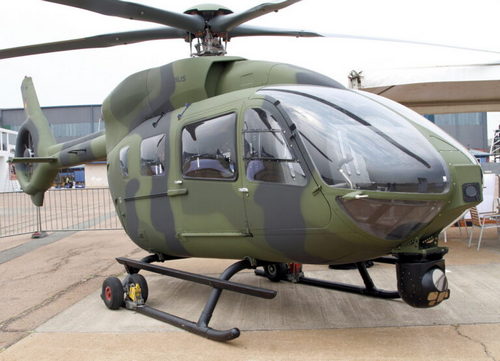
For military users, the H145M represents Airbus' approach to modernising light military helicopter capabilities. The multi-role platform can support tactical operations, special forces support, search and rescue and armed missions, providing an option for defence forces transitioning from ageing platforms. The type is in service with German's Bundeswehr, the US Army (UH-72 Lakota), Hungarian Air Force, Serbian Air Force, and Thai Armed Forces and is being marketed in Africa as an effective replacement for the legacy Gazelle. A 1:1 H145M scale model is being displayed at AAD 2026.
The heavier H215M, part of the Super Puma family, addresses another requirement: moving personnel (up to 24 troops) and equipment over considerable distances. It supports tactical transport, heavy-lift operations, search and rescue and peacekeeping missions where greater payload and endurance are required.
The future of defence aviation is not solely about manned platforms. Airbus' exhibition features the Flexrotor unmanned aerial system, with a full scale model present at AAD 2026. The Flexrotor provides operational intelligence gathered through infrared and radar payloads and is designed to integrate seamlessly with naval vessels or manned helicopters to act as a force multiplier. Its vertical take-off and landing capability requires zero runway infrastructure.
For African nations responsible for monitoring extensive coastlines and Exclusive Economic Zones (EEZs), unmanned systems can provide an additional layer of maritime domain awareness. Maritime security solutions offered by Airbus extend to its satellite portfolio, which includes optical and radar satellites. South Africa, for example, is already a user of Airbus satellite products, with the South African National Space Agency buying Airbus satellite imagery for various government departments. Airbus is expanding its high-resolution satellite imagery services (such as Pléiades Neo) and virtual space data centres across Southern Africa, which can be used for EEZ monitoring, combating deforestation, counter-poaching etc.
Developing sovereign capability is not only about acquiring technology. It also requires the skills, infrastructure and industrial capacity to sustain that technology over the long term. This is an area in which Airbus is seeking to deepen its African footprint.
Airbus' Commercial Aircraft Customer Support Centre in Johannesburg provides regional operators with technical engineering and customer support capabilities, while Airbus' wider supply chain includes more than 180 African suppliers. The deployment of an H125 virtual reality pilot training simulator at its Midrand hub also illustrates how advanced technology can help develop local aviation expertise.
According to Airbus forecasts, Africa will need over 35 000 new pilots, mechanics, and engineers over the next two decades. Airbus' engagement with youth and STEM initiatives, including the AAD Youth Development Programme, connects the technology showcased at the exhibition with the people who will ultimately design, operate and maintain future aerospace capabilities.
Airbus' engagement with Africa extends beyond the exhibition grounds. Its participation in major aviation and defence events provides opportunities to engage with governments, military forces, airlines, aviation authorities and industry stakeholders on evolving market requirements. These engagements form part of a wider strategy encompassing defence modernisation, commercial aviation growth, industrial partnerships, space technology and sustainability.
Sustainability is increasingly relevant to African aviation. Airbus is pioneering sustainable aerospace, including the development of Sustainable Aviation Fuel (SAF)-compatible products and the active support of ecosystems to enable its deployment. For a continent balancing increased connectivity with decarbonisation, viable local pathways to lower-carbon aviation will be important.
From the arrival of its first A300 in Africa in 1976 to the connected, multi-domain capabilities showcased at AAD 2026, Airbus' presence on the continent has evolved considerably. For Airbus, the next chapter of its African journey will be measured not only by the aircraft that take to the skies, but by the partnerships, skills, technology and industrial capabilities developed on the ground.
Cessna Skycourier UX: What to Know About the Autonomous Logistics Concept
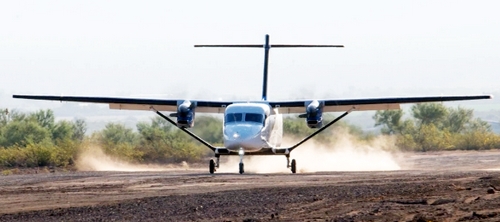
Textron Aviation Inc., a Textron Inc. (NYSE: TXT) company, and Merlin, Inc. recently introduced a concept Cessna SkyCourier UX™ aircraft that combines Textron Aviation's proven Cessna SkyCourier platform with Merlin's aircraft-agnostic software solution for autonomous aviation.
Revealed at the Air, Space & Cyber Conference, the concept explores a new cost-efficient and scalable approach to addressing logistical challenges with supplying forces dispersed across contested operational environments when traditional supply routes are constrained, vulnerable or otherwise unavailable.
Defense organizations worldwide are evaluating new approaches to logistics resilience as forces operate farther from traditional supply hubs and adversaries gain greater ability to disrupt established transportation routes. Interest in contested logistics continues to grow as defense organizations evaluate how to sustain dispersed forces operating from austere locations and across extended distances. Recent experimentation involving autonomous and pilot-optional cargo aircraft, combined with investments in autonomous resupply programs, highlights increasing attention on logistics resilience and distributed sustainment.
The SkyCourier UX concept explores how a medium-payload, fixed-wing aircraft with the ability to fly autonomously could help address logistics requirements through right-sized lift, offering commanders additional options while adding flexibility and preserving the force's core mobility fleet. Designed to support cargo movement within a theater of operations, and with the ability to take off and land on unimproved runways, the SkyCourier UX could provide an option for sustaining operations when access becomes challenged.
The Cessna SkyCourier UX aircraft concept is designed to occupy a space between small tactical cargo drones and large military transport aircraft. Not every logistics mission requires a large airlifter, and many autonomous cargo systems lack the payload capability required for operational sustainment missions. Leveraging the capabilities of the Cessna SkyCourier platform, the UX concept offers fully autonomous takeoff and landing alongside meaningful payload capacity, short-field performance and the flexibility needed to support intra-theater distribution and expeditionary operations.
ITPS Canada Expands its Engagement Across Africa
By www.defenceweb.co.za
ITPS Canada has increased its focus on Africa, developing strong relationships and strategic partnerships with key African air forces.
In January 2026, during the Black Lion Air Show in Addis Ababa, ITPS signed a collaboration agreement with the Ethiopian Air Force covering potential cooperation in aircraft modernisation and advanced training.
ITPS has also continued to strengthen its relationship with the Nigerian Air Force. This engagement has included professional exchanges and reciprocal visits, the delivery of an Introduction to Flight Test Course in Nigeria in November 2025, a Military Airworthiness Seminar in Abuja earlier in 2026, and an April visit by the Chief of the Air Staff, Air Marshal Sunday Kelvin Aneke, to the International Test Pilots School in Canada. The South African Air Force is amongst ITPS customers, and has sent multiple pilots and engineers to its facility in Canada over the years.
ITPS Canada, together with its subsidiaries, the International Test Pilots School and the International Tactical Training Centre, recently achieved accreditation under NATO Flight Training Europe. Together, the two organisations offer a comprehensive range of services, including training for flight test and evaluation personnel, advanced and tactical fighter pilot training, technical instruction, and specialist military aviation courses.
ITPS Canada's engineering division is also becoming increasingly active in providing maintenance, repair and overhaul solutions for military jet trainers, together with comprehensive avionics modernisation and long-term fleet sustainment services - particularly for operators of the L-39.
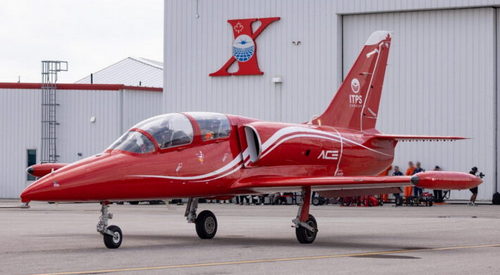
The company on 3 September flew the demonstrator of its L-39 ACE upgrade, incorporating modern avionics and a fly-by-wire flight control system. Building upon this achievement and its extensive experience in operating, modifying, upgrading and extending the service life of one of the world's largest civilian L-39 training fleets (ITPS Canada operates 14 L-39s at present), ITPS is offering several modernisation options capable of transforming existing L-39s into advanced-capability aircraft at what it says is a highly competitive price point. These options are complemented by reliable, long-term sustainment solutions for both the aircraft and its engine.
The L-39 ACE (Advanced Controls Evaluator) features fly-by-wire controls, allowing the instructor to essentially pre-programme the aircraft's handling characteristics. It can, for example, simulate an F-16 or introduce deliberate control instabilities. The ACE retains the L-39's original controls in the instructor's rear cockpit, but the front has been retrofitted with fresh avionics and a fully programmable sidestick.
ITPS has also signed collaboration agreements with the Odesa Aircraft Plant and JSC Ukrainian Defence Industry, widely known as Ukroboronprom. These partnerships strengthen the company's links with the Ukrainian aerospace industry and support the continued development of its L-39 upgrade, overhaul and sustainment capabilities for its own fleet and international customers.
ITPS is seeing huge growth in its contracted military training services, with an increased focus on NATO and its allies. It is growing its fleet as a result, and is in the process of acquiring six Leonardo M-346 T Block 20 trainers, which will be delivered from 2029. Another six may also be ordered. These will join the 35 fixed wing, rotary and unmanned aerial vehicles in the ITPS Canada fleet, which include Hunter, L-29 and L-39 jets.
Landlocked Burkina Faso has introduced a new air defence system into service - the Sky Dragon manufactured by China's Norinco
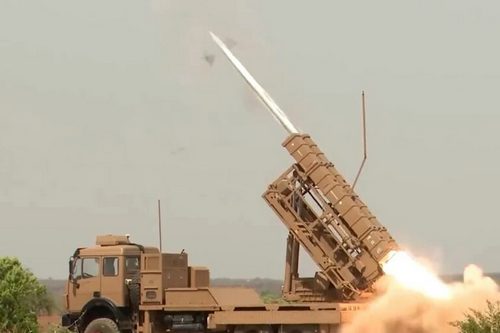
The Burkinabe Presidency on 1 September published a video showing the air defence system in operation, including the launch of a missile. A mobile air surveillance radar was also seen in the footage, prompting Janes to conclude the system is the Sky Dragon 30 manufactured by Norinco (China North Industries Corporation).
Burkina Faso's new air defence system closely resembles the Sky Dragon 30 displayed at the Zuhai Air Show in 2022. The missile displayed then appeared to be the front-end of the PLE-10E air-to-air missile fitted to a larger rocket motor, Janes reported. A brochure released at that event had it the Sky Dragon 30 has a 30 km maximum range and a maximum altitude of 18 km. It is reportedly fitted with an infrared seeker and is capable of engaging 12 targets simultaneously.
The Sky Dragon 30 is designed for international buyers seeking low maintenance, short range point defence. Its launch vehicle could also launch a Sky Dragon 50 missile, which has a 50 km range, state broadcaster CCTV reported in 2018.
Other equipment, including Norinco armoured vehicles and artillery systems, in the newest video have previously been seen in the west African country, most of it in events post January 2024. The video is part of a series marking the fourth anniversary in power of Burkina Faso's military leader Ibrahim Traore.
Speaking in the 1 September video, Burkinabe Minister of War and Patriotic Defence, Major General Célestin Simporé, mentioned other acquisitions including what is reported as “surface-to-air artillery” without naming components or systems.
Burkina Faso has turned to China in recent years to supply new military hardware. A large consignment of equipment was officially handed over to the country's military in October 2025, including VN22B 105 mm fire support vehicles, SR5 multiple rocket launchers, SM6/WMA09 120 mm self-propelled mortars, and WZ551-based command vehicles, all made by China's Norinco. DongFeng EQ2050 (Mengshi) armoured vehicles were also seen during the handover.
According to Jane's, also observed at the October 2025 handover were what appeared to be 14 SH1 122 mm self-propelled howitzers, at least 16 towed howitzers (possibly second hand Soviet 122 mm M-30s/Chinese Type 54), and at least 10 Shaanxi trucks.
The SR5 MLRS is able to fire different calibres of guided and unguided rockets, including 122 and 220 mm guided/unguided rockets. It is based on a 6×6 military truck chassis. It has been in Chinese military service since 2013 and exported as well.
The VN22 is a family of Chinese wheeled 6×6 armoured fighting vehicles intended for export. The VN22B is an assault gun variant featuring a larger, manned turret that resembles the one used on the WMA301. It is armed with a 105 mm cannon. A V-shaped hull is designed to protect against mines.
Norinco's PLL-05 (WMA029/SM6) is a 120 mm self-propelled mortar-howitzer system based on a WMZ 551 6×6 chassis. It can operate in both indirect fire and direct fire modes. The maximum effective range is 8.5 km for 120mm mortar rounds, 9.5 km for a howitzer-like projectile, and 12.8 km for rocket-assisted mortar shells. In service with the Chinese military, it has also been exported.
Burkina Faso also appears to have taken delivery of South African-built Paramount Mbombe 4 armoured vehicles. Video in October 2025 surfaced on social media showing at least a couple of Mbombe 4s fitted with machinegun turrets apparently in Burkinabe service.
The West African nation continues to expand its armed forces in the face of relentless terror attacks. For the last five years, the country has been the epicentre of violent events and fatalities linked to militant Islamist groups in the Sahelian theatre. The deteriorating security situation in Burkina Faso is accompanied by a growing loss of territory to the militant groups.
As part of efforts to counter militants, Burkina Faso in June 2024 received 100 new armoured vehicles from China, including at least 40 Norinco VP11 and 50 Norinco CS/VP14 armoured vehicles, along with 17 Caterpillar excavators.
Other deliveries were recorded in 2024, notably at least two Egyptian-built Temsah 6×6 armoured vehicles, seven Fahd armoured ambulances, and 20 GAZ 3308 Sadco 4×4 trucks. A number of KrAZ-6322 6×6 trucks were also seen. According to local media reports, a total of 75 vehicles were handed over in April and these included 20 KrAZ fuel tanker trucks, 20 “M53” vehicles, and several armoured cars.
In January 2024, Burkina Faso received at least eight Norinco 81 mm CS/SM1 self-propelled mortars mounted on Dongfeng EQ2050 light tactical vehicles. According to the Stockholm International Peace Research Institute's Arms Transfers Database, Burkina Faso also received 16 VN22s in 2024, as well as ten WZ-551 armoured personnel carriers and six Assaulter fire support vehicles from China.
In December 2024, a large batch of trucks and armoured vehicles was handed over to the military. The consignment included approximately 50 CS/VP14 armoured vehicles, 25 VN22 armoured fighting vehicles, and an unknown number of Norinco CS/VN9 6×6 armoured personnel carriers as well as about Shacman 100 trucks and 50 tankers.
China has also firmed up ties with Burkina Faso's neighbours, Mali and Niger, amid waning Western influence. Mali signed a defence deal with Norinco in 2024 for military equipment and training and to transfer technology.
Norinco has established sales offices in at least four African countries as demand for its military equipment has increased in Africa, the South China Morning Post reported.
X-VOLT Takes to the Skies Again in Rochefort
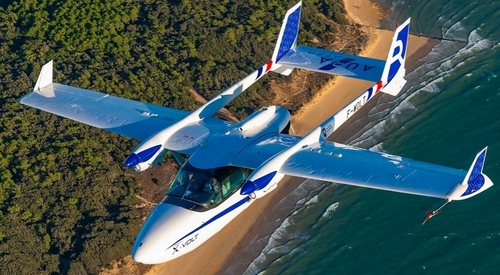
Aura Aero completed the first flight of the newly renamed X-Volt hybrid-electric demonstrator aircraft from Rochefort Airport in France on 16 September 2026. The flight occurred two months after Aura Aero acquired the assets of the insolvent startup VoltAero.
The aircraft now serves as a flying testbed for propulsion technology destined for Aura Aero's planned 19-seat ERA hybrid-electric regional airliner.
The X-Volt is outfitted with Safran Engine Us electric motors, matching the configuration selected for the ERA.Flight Experience: Combined with the Integral E program, Aura Aero has now completed more than 350 hybrid-electric and all-electric test flights.
XVOLT is to become a flying testbed for ERA, AURA AERO's future 19-seat hybrid-electric regional aircraft.
International Air Travel is About to Get Way Better for Everyone
Global leaders are coming together to make flying smoother and fairer for passengers
The managers of the world's skies must make the most of a rare upcoming opportunity to make international air travel more predictable and protective of consumer rights. The International Civil Aviation Organization (ICAO) is inviting the governments of its 193 Member States to negotiate these issues in Montreal this November: it will be the first time they reform the global framework in over ten years.
Modern travel has tons of perks: more choices, creative fare bundles, and of course almost everything happening online. Still, lots of us still don't know what our rights are (or if we have any) when things go wrong abroad, and even if we do know, ensuring these rights are respected is not always as easy as it should be. The good news? The upcoming Worldwide Air Transport Conference is all about making travel simpler and friendlier for everyone, no matter where or how you book.
The passenger protection gap
Since ICAO first introduced its Core Principles on Consumer Protection in 2015, the aviation industry has changed rapidly through technologies, new business models, and increased cross-border travel. These developments have made it increasingly complex for national policies to keep up, and many travellers find gaps in support when their journeys cross different systems.
Modern travel contracts also often involve multiple intermediaries. When disruptions happen, it can be unclear which company is responsible, and information provided may be contradictory or confusing. Sometimes, even strong national rules are not enough if they aren't part of coordinated contingency plans or if they don't fully align with international obligations.
Differences in how countries actually apply the rules add further uncertainty for passengers, regulators, and airlines. And as passenger numbers continue to grow and operations become more complex, inconsistent policies will make it harder to build trust and even weaken the global flight system as a whole.
Six key improvements for air travel
ICAO is calling for resolute, coordinated action by governments. First and foremost, it is urging all governments to become parties to the Montreal Convention 1999* on passenger rights, as this treaty provides the global legal baseline. Forty-eight ICAO Member States have not yet become parties.
However, ICAO wants governments to go much further than solidifying this foundation. At the Worldwide Air Transport Conference this November, ICAO is asking all governments to support these improvements to the international passenger rights framework:
• Consistency across borders: Greater harmonization of consumer protection frameworks will help ensure travellers receive consistent treatment throughout their journey
• Aligned national policy: Countries are encouraged to adopt ICAO's Core Principles, build them into their own laws, and share what works or doesn't with other governments.
• Clear division of responsibility: Laws should specify the roles of all travel players-airlines, intermediaries, airports-to remove confusion.
• Timely, accurate information: Passengers need to know their rights and where to get help, especially when disruptions occur.
• Integrated emergency planning: Consumer protection policies must be linked with contingency plans so responses are coordinated and care is delivered quickly.
• Regular information sharing: Open communication and use of ICAO platforms help identify and address issues as they emerge, keeping standards effective and up to date.
ICAO is also asking governments to support its efforts to deliver updated guidance and increased technical support to Member States. Boosting opportunities for exchanging best practices among governments is also a priority for ICAO, because it will enable countries with different legal systems to find ways to strengthen their protections.
What governments must do right now
With ICAO bringing everyone to the table in Montreal and providing clear leadership on what needs to be done, governments must work together to find consensus on how to adopt these priorities and implement them. Then, each country must ensure its framework and rules align with the commitments its government has made at the Worldwide Air Transport Conference. In this way, the improvements agreed on at the Conference will make air travel smoother, more reliable, and fairer for travellers all over the world. This will also be key to ensuring a vibrant and prosperous future for international civil aviation and the people and industries it serves.
20 September 1958
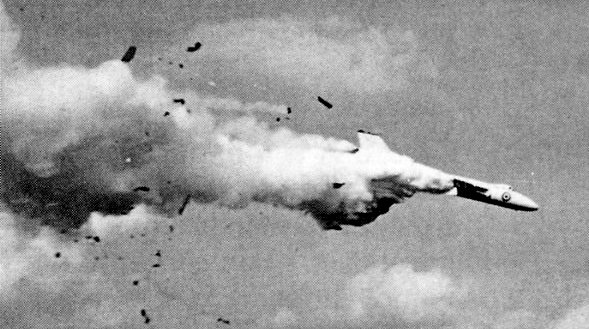
The first prototype Avro Vulcan strategic bomber piloted by Rolls-Royce test pilot Keith Roland Sturt, was on a test flight from the Rolls-Royce Flight Test Establishment, RAF Hucknall, when it diverted to make a scheduled fly-past for an air show being held at RAF Syerston in Nottinghamshire.
As the Vulcan passed the control tower at an estimated speed of 350 knots, it began a right turn. Witnesses saw a “kink” form in the leading edge of the Vulcan's right wing, which then began to disintegrate from the leading edge aft. Wing surface panels could be seen being stripped off before the wing spar failed completely.
The top of the vertical fin came off, the nose pitched upward toward vertical, then straight down, and with both wings on fire, the airplane crashed near the east end of the runway.
All four crew members were killed, as were three RAF fire/rescue personnel on the ground. Several others were injured.
USA, near Blair Township, MI: An F-16 assigned to the 149th Fighter Wing, Texas Air National Guard, crashed under unknown circumstances, according to the ATC recording the aircraft may have suffered a bird strike. The aircraft was performing a routine training mission from the Alpena Combat Readiness Training Centre (KAPN), and the single pilot ejected successfully.
Yemen, Marib Governorate: Houthi rebels shot down an RSAF Boeing F-15SA over the Marib Governorate, using an anti-air missile. The fate of the pilots is unknown.
USA, Los Angeles, CA: A Eurocopter AS 350 B2 Ecureuil, N358TV, crashed during a local news gathering flight in Chatsworth, Los Angeles, California. The helicopter was maneuvering at a low altitude to film the scene of a fatal traffic collision when it lost altitude and struck a commercial property. A severe post-crash fire completely consumed the fuselage, heavily damaged four vehicles, and affected two shipping containers. Both occupants on board the helicopter were killed. Additionally, one pedestrian on the ground was killed and another bystander was injured.